Bobbatlu Recipe with Maida – Soft, No-Crack Sweet Poli
If your bobbatlu keep tearing or turn out thick and chewy, this Bobbatlu Recipe with Maida solves exactly that problem. Maida gives the thinnest, softest covering of any flour, so the sweet chana dal filling almost glows through each poli.
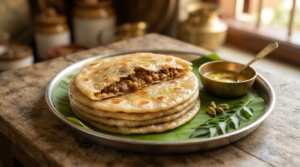
Soft, thin bobbatlu made with a maida covering and a chana dal-jaggery filling.
This Bobbatlu Recipe with Maida hands you the exact dal-to-jaggery ratio, plus the resting trick that stops cracks before they start. Because maida behaves differently from wheat, a few small changes make all the difference. Master it once, and this “hard” festival sweet becomes an easy weekend treat.
Bobbatlu with Maida at a Glance
- What it is: a soft South Indian sweet flatbread stuffed with chana dal and jaggery.
- Covering: plain flour, or maida, which rolls far thinner than wheat.
- Filling: cooked chana dal mashed with jaggery and cardamom.
- Total time: about 2 to 3 hours, since the dough needs a long rest.
- Best for: Ugadi, Sankranti, Holi, weddings, or any festive craving.
- Makes: roughly 10 to 12 bobbatlu.
What Makes Bobbatlu Special
Bobbatlu is the Telugu name for a sweet many families know by other names. In Maharashtra it is Puran Poli, while Karnataka calls it Holige or Obbattu. Tamil kitchens say Boli, and parts of Telangana call it Bakshalu. You can read more about these regional variations of puran poli, though the heart stays the same everywhere.
Traditionally, cooks reach for maida because it stretches. A thin, even covering lets the filling dominate, which is the whole point of a good poli. Wheat flour works too, although it gives a sturdier, thicker bread. That soft, festive bite is exactly what this Bobbatlu Recipe with Maida delivers.
The sweet carries real cultural weight across South India. Cooks prepare it for new-year feasts, temple offerings and family celebrations. Grandmothers often guard their own filling ratios like a small secret. Once you learn the method, you join that long kitchen tradition.
Bobbatlu Recipe with Maida: Ingredients You Need
Good bobbatlu starts with a handful of pantry staples. Measure everything before you begin, so the process flows without pauses. The Bobbatlu Recipe with Maida below makes about 10 to 12 medium poli.
For the filling (poornam)
- 1 cup chana dal, or Bengal gram, soaked for 1 to 2 hours
- 1 cup jaggery, grated or powdered
- 1/2 teaspoon cardamom powder
- a pinch of dry ginger powder or nutmeg, if you like
For the maida covering
- 1.5 cups maida, or plain flour
- 1/4 teaspoon salt
- 1/4 teaspoon turmeric, for a warm yellow colour (optional)
- 3 to 4 tablespoons oil, plus extra for soaking the dough
- water, as needed, to reach a very soft dough
- ghee, for cooking and serving
Jaggery and Dal for the Bobbatlu Recipe with Maida
Two ingredients decide the flavour of your bobbatlu: the jaggery and the dal. Small choices here shape the taste far more than the flour does. A little care at the shop pays off later at the tawa.
Pick a soft, dark jaggery for a deep, caramel-like sweetness. Rock-hard blocks work too, although you must grate or melt them first. For the dal, choose clean, evenly sized chana dal, since old stock cooks unevenly. Rinse it well, then soak it so it cooks faster and mashes smoothly.
Some families add a spoon of grated coconut or a few strands of saffron to the poornam. These extras are optional, yet they lift a plain filling nicely. Keep the base ratio steady, and treat the additions as gentle accents.
Bobbatlu Recipe with Maida vs Wheat vs Rava Covering
The flour you pick changes the whole character of the poli. Maida keeps it thin and festive, while wheat makes it heartier and grainier. This quick comparison helps you decide before you knead.
| Covering flour | Texture | Best for | Watch out for |
|---|---|---|---|
| Maida (plain flour) | Thinnest, softest, very stretchy | Festive, melt-in-mouth bobbatlu | Tears if the dough is too dry |
| Wheat (atta) | Thicker, sturdier, nutty | Everyday, higher-fibre poli | Harder to roll paper-thin |
| Rava with maida | Slightly grainy, firm | Quicker, instant-style poli | Needs resting to soften |
If you prefer wholewheat, our wheat-based Puran Poli with jaggery covers that method. For a grainier bite, the semolina poli uses rava instead. This Bobbatlu Recipe with Maida stays the softest of the three.
How to Make Bobbatlu Recipe with Maida Step by Step
Follow the stages in order, because the dough rests while the filling cools. This Bobbatlu Recipe with Maida comes together in five simple stages.
- Make the dough early. Mix maida, salt, turmeric and 2 tablespoons oil. Add water slowly to a very soft, slightly sticky dough. Pour the rest of the oil over it, then rest it for at least 1 hour.
- Cook the dal. Pressure-cook the soaked chana dal with just enough water for 4 to 5 whistles. Cook it soft but not mushy. Drain every drop of extra water, because moisture ruins the filling.
- Make the poornam. Mash the dal, add jaggery, then cook on low heat until thick. Stir in cardamom, and cool it fully. Roll the mixture into smooth balls.
- Stuff and flatten. Take a small dough ball and flatten it. Place a filling ball inside, then seal the edges. Pat it thin on a greased sheet using oiled fingers.
- Roast well. Cook each bobbatlu on a medium tawa, flipping once. Wait until golden spots appear on both sides. Smear ghee generously, and serve hot.
Getting the dough consistency right
The dough should feel softer than roti dough, almost sticky to the touch. That looseness is what lets maida stretch into a thin cover. If it feels firm, drizzle in a little more oil and rest it again. A well-rested dough is the real secret behind this Bobbatlu Recipe with Maida.
Flattening without breaking
Work on a greased plastic sheet or a banana leaf, never on a dry board. Press from the centre outward with oiled fingers, turning as you go. Keep the filling centred, so it does not push through the edges. Patience here beats speed every single time.
Why Does the Bobbatlu Recipe with Maida Crack or Tear?
Bobbatlu usually cracks for two reasons: the dough is too stiff, or the covering is rolled too thick over a wet filling. A soft, oil-rested dough stretches without splitting, while a dry filling holds its shape. Fix those two things, and most tears simply disappear.
The table below maps the common problems to quick fixes.
| Problem | Likely cause | Quick fix |
|---|---|---|
| Covering tears | Dough too stiff or cover too thick | Use a soft, rested dough; pat thinner |
| Filling oozes out | Poornam too wet or still warm | Cook filling till dry; cool it fully |
| Poli turns hard | Dry flour dusting or high flame | Grease with oil, not flour; use medium heat |
| Raw, floury taste | Undercooked on the tawa | Roast till golden spots show on both sides |
Insider Tips for a Perfect Bobbatlu Recipe with Maida
- Rest the dough longer, since a 2 to 3 hour soak in oil makes it stretch paper-thin.
- Keep the filling on the drier side, because a loose poornam leaks while roasting.
- Grease your sheet and fingers with oil, not dry flour, so the poli stays soft.
- Cook on medium heat, as a high flame browns the outside while the inside stays raw.
- Taste and balance the jaggery, because older jaggery can be sharper or darker.
- Warm any leftovers with a little ghee to bring the softness back.
Bobbatlu Recipe with Maida: Storage and Make-Ahead
Fresh bobbatlu tastes best on the day you make it. Still, you can plan ahead to save time on a busy festival morning. The filling and the covering behave differently, so treat them separately.
The poornam keeps well in the fridge for 2 to 3 days in an airtight box. Because coconut spoils faster, skip it if you plan to store the filling. A maida covering turns firm once chilled, so a cooked poli is harder to reheat than a wheat one. For the softest result, store only the filling, then roll fresh covers when you need them.
For a big festival batch, prepare the filling a day ahead and refrigerate it. On the morning itself, bring it to room temperature and knead a fresh maida dough. Roll and roast as needed while guests arrive. This split saves time and still gives you soft, fresh bobbatlu.
Serving Your Bobbatlu Recipe with Maida
Bobbatlu shines during Ugadi, Sankranti and Holi, and it appears at many South Indian weddings. Families serve it hot with a spoon of ghee, and some pour warm milk over it. A side of Ugadi pachadi rounds out a festive plate beautifully.
For a simple everyday treat, ghee alone is enough. Children often love it with a drizzle of honey, though purists stick to ghee. However you serve it, offer it warm, because that is when the maida covering feels softest.
A warm bobbatlu with a glass of cold milk is a beloved combination in many homes. Some cooks serve it alongside a bowl of payasam during big feasts. Try the pairing once, and you will see why it endures.
Healthier Swaps for Bobbatlu Recipe with Maida
Bobbatlu is a treat, and it is meant to be enjoyed as one. Still, a few swaps make it a little lighter without losing the soul of the dish. These changes suit everyday cooking better than a full festival feast.
Swap half the maida for wheat flour to add fibre, and the poli still stays reasonably soft. Reduce the jaggery slightly if you prefer a gentler sweetness. Cook with a modest amount of ghee rather than drowning each poli.
Anyone watching blood sugar should keep portions small and pair the sweet with a protein-rich meal. A spoon of millet flour in the covering adds nutrition as well. These tweaks keep this Bobbatlu Recipe with Maida friendly for regular kitchens.
The Bottom Line
A great Bobbatlu Recipe with Maida comes down to three habits: a soft rested dough, a dry sweet filling, and patient medium-heat roasting. Get those right, and thin, non-cracking bobbatlu is well within reach for any home cook. Start with a small batch, and scale up once your hands learn the flattening motion. Keep the ghee finish generous, and this festival classic will earn a lasting place in your kitchen.
Frequently Asked Questions
Is maida or wheat flour better for bobbatlu?
Maida is better for a thin, soft, festive covering, because it stretches easily. Wheat flour is healthier and sturdier, yet the poli turns thicker. Many cooks blend both to balance texture and nutrition.
Why is my bobbatlu filling watery?
A watery filling means the dal held too much moisture, or the jaggery was not cooked down enough. Drain the cooked dal fully, then cook the jaggery mixture until it thickens and leaves the pan. Cool it completely before stuffing.
Can I make bobbatlu without a rolling pin?
Yes, and it is the traditional way. Grease a plastic sheet or banana leaf, then pat the stuffed ball thin with oiled fingers. Maida stretches well, so gentle pressing gives an even, thin poli.
What dal is used in bobbatlu?
Chana dal, also called Bengal gram, is the classic choice. Some families use moong dal for a softer, quicker-cooking filling. Chana dal gives the traditional taste and a firmer poornam.
How many calories are in one bobbatlu?
A single bobbatlu roughly ranges between 150 and 250 calories, depending on size, jaggery and ghee. Since it is a festive sweet, enjoy it in moderation. People managing blood sugar should treat it as an occasional indulgence.
Can I use sugar instead of jaggery?
Yes, sugar works, although it changes the flavour and colour. Jaggery gives the deep, traditional taste and a darker filling. If you use sugar, add a pinch of cardamom to keep the aroma rich.
How do I store bobbatlu for later?
Keep cooked bobbatlu in an airtight container for a day at room temperature, or refrigerate for 2 to 3 days. Reheat with a little ghee to soften the maida cover. For the best result, store only the filling and roll fresh covers.
Which festivals is bobbatlu made for?
Bobbatlu is a classic for Ugadi, Sankranti, Holi and Ganesh Chaturthi. Many families also make it for weddings and housewarmings. It suits any celebration that calls for a warm, traditional sweet.