Rava Laddu Without Coconut | Easy Festive Sweet
The biggest reason to make rava laddu without coconut is shelf life. These soft semolina balls stay fresh for about a week at room temperature, and up to three weeks when you bind them with ghee alone. They taste warm with cardamom, rich with ghee, and lightly crunchy from roasted cashews.
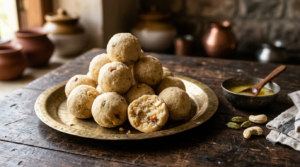
Soft, ghee-rich rava laddu without coconut, flavoured with cardamom and cashews.
My mother makes a batch of rava laddu without coconut every Diwali in Andhra Pradesh, so the method below is exactly how she does it. There is no sugar syrup to test, no thermometer, and no fresh coconut to cut the shelf life short. Because the steps are so forgiving, this is a good sweet to learn first.
Rava Laddu Without Coconut at a Glance
- Total time: about 25 minutes from start to finish.
- Yield: 12 to 14 medium laddus.
- Skill level: easy, because there is no tricky syrup stage to get wrong.
- Keeps: roughly a week at room temperature, and longer when bound with ghee only.
- Best for: Diwali, Navratri, Ganesh Chaturthi, or simple everyday gifting.
If you want the short version, roast the rava, powder your sugar with cardamom, fry the nuts, and bind everything while it is still warm. The full walkthrough and the tricky bits are below, so nothing is left to guesswork.
Why Make Rava Laddu Without Coconut?
Skipping coconut gives the laddu a longer shelf life and a cleaner semolina flavour. Fresh coconut carries moisture, so a coconut laddu turns within two to three days unless you refrigerate it. Without coconut, the same sweet stays good for a week or more at room temperature. This version also suits anyone who dislikes coconut or avoids it for dietary reasons.
There is a texture difference too. Coconut adds chew and a slightly wet bite, while the coconut-free version is drier and melts faster on the tongue. Because these laddus travel and store so well, they are the batch you make ahead for festival hampers. Many home cooks keep this recipe purely as their make-ahead option, since it does not spoil while the coconut ones get eaten first.
Ingredients for Rava Laddu Without Coconut
- 1 cup fine rava / sooji (semolina), about 150 g
- ¾ cup powdered sugar, about 150 g
- ½ cup ghee, melted and divided
- 1 teaspoon cardamom powder, freshly ground for the best aroma
- 10 to 12 cashew nuts, halved
- 10 to 12 raisins, optional
- 2 to 3 tablespoons warm milk, or warm water for a dairy-free batch
Use fine rava rather than coarse, because fine semolina binds into a softer, smoother ball. The sugar quantity is roughly a 1:1 ratio with the rava, so you can drop it to ⅔ cup if you like a milder sweetness. Freshly ground cardamom matters more than people expect, since pre-ground powder loses most of its fragrance within weeks.
How to Make Rava Laddu Without Coconut, Step by Step
Step 1: Roast the Rava (5 to 7 minutes)
Heat a heavy-bottom pan on low flame and add the dry rava. Stir constantly until it smells nutty and turns very light golden. Do not let the semolina brown, because a browned rava turns the laddus bitter and dull.
This slow roast takes about five to seven minutes, so keep the heat low and stay at the pan. Transfer the roasted rava to a plate and let it cool a little before the next step.
Step 2: Powder the Sugar and Cardamom (2 minutes)
Mix the powdered sugar with the cardamom powder in a small bowl. For an even smoother laddu, blitz the cooled rava together with the sugar in a grinder for a few seconds. Keep the mixture slightly coarse if you prefer a little bite, since over-grinding makes the laddus stick to your mouth.
Step 3: Fry the Nuts (3 minutes)
Add one tablespoon of ghee to the same pan on low heat. Fry the cashews until they turn golden, then add the raisins so they puff slightly. Watch them closely, because nuts scorch in seconds on a hot pan. Remove the nuts and keep the leftover ghee in the pan.
Step 4: Combine and Mix (3 minutes)
Return the roasted rava to the pan along with the remaining warm ghee. Stir in the sugar-cardamom blend, the fried cashews, and the raisins. Now pour in two tablespoons of warm milk or water and mix. The mixture should feel like damp sand that holds its shape when pressed, so add one more tablespoon only if it stays crumbly.
Step 5: Shape the Laddus (5 to 7 minutes)
Shape the laddus while the mixture is still warm, since it firms up and cracks once it cools. Scoop a heaped tablespoon and press it tightly between your palms into a round ball. Set each one on a plate and let them rest for at least 20 minutes. As the ghee resets, the laddus firm up and hold their shape.
Coconut vs No-Coconut: Shelf Life Compared
The clearest gain from leaving out coconut is how long the sweet lasts. Fresh coconut spoils fast, so it forces you to refrigerate and eat quickly. The table below shows the practical difference at a glance.
| Version | Room temperature | Refrigerated |
|---|---|---|
| With fresh coconut | 2 to 3 days | up to 1 week |
| Without coconut, bound with milk | about 1 week | up to 2 weeks |
| Without coconut, bound with ghee only | up to 3 weeks | 3 to 4 weeks |
So if you want the longest-lasting batch, skip the milk and bind with ghee alone. That single change is what makes rava laddu without coconut the classic festival make-ahead sweet.
Sugar, Jaggery, or Condensed Milk?
Plain powdered sugar gives the cleanest, most traditional taste, and it is what most Andhra kitchens use. Jaggery powder works too and brings a deep caramel note, though it darkens the colour and adds a little moisture. If you go the jaggery route, add it while the rava is warm so it melts in smoothly, as shown in our rava laddu with jaggery recipe.
Condensed milk is another popular binder, and it makes the laddus softer and slightly fudgy. It also shortens the shelf life, so eat those within three to four days. For that softer style, follow our rava laddu with condensed milk recipe instead. Each sweetener changes the texture, so pick the one that matches how quickly you plan to finish the batch.
Common Mistakes to Avoid
Most laddu problems trace back to two things: the roast and the binding. Get those right and the rest is easy.
- Browned rava: high heat darkens the semolina and leaves a bitter edge, so always roast on low and stop at light golden.
- Crumbly laddus that will not hold: the mixture is too dry, so add melted ghee one teaspoon at a time until it binds.
- Hard, dense laddus: you added too much liquid or pressed too late, so use warm milk sparingly and shape while warm.
- Grainy bite: the rava was too coarse, so use fine sooji or grind the roasted rava briefly before mixing.
Pro Tips for Rava Laddu Without Coconut
These are the small details that make the first batch work.
- Keep the flame low the entire time, because rava scorches the moment you turn your back.
- Grease your palms with a little ghee before rolling, so the mixture does not stick to your hands.
- Warm milk binds better than cold, yet water works fine when you want a dairy-free, longer-keeping laddu.
- Bind the mixture while it is warm, since the ghee hardens as it cools and the balls stop holding together.
- Taste the mix before shaping and adjust sugar then, because you cannot fix sweetness after rolling.
How to Store Rava Laddu Without Coconut
Cool the laddus completely before you store them, or trapped steam will soften them. Keep them in an airtight container at room temperature, where they hold for about a week. Refrigeration adds another week, so bring them back to room temperature before serving for the best melt. For festival gifting, make the batch two to three days ahead, because rava laddu without coconut only gets a chance to settle and taste better.
A Quick Note on Allergens and Swaps
Rava is made from wheat, so these laddus contain gluten and are not suitable for anyone who is gluten-intolerant. They also carry tree nuts from the cashews, which you can leave out if needed. For a dairy-free batch, bind with warm water instead of milk, though ghee still gives the traditional flavour. None of these swaps changes the basic method, so adjust freely to suit your kitchen.
Nutrition Information (Per Laddu)
| Nutrient | Amount (approx.) |
|---|---|
| Calories | 170 to 200 kcal |
| Fat | 10 to 12 g |
| Saturated fat | 7 to 9 g |
| Carbohydrates | 20 to 25 g |
| Protein | 2 to 3 g |
| Fiber | 1 to 2 g |
These values are approximate and shift with the exact ghee and sugar you use. As a reference point, a similar traditional recipe runs around 167 calories per 40 g serving. Semolina itself is a milled form of durum wheat, and you can read more about it on the Wikipedia entry for semolina.
Final Thoughts on Rava Laddu Without Coconut
This is a forgiving sweet, so do not overthink it. Roast the rava gently, bind while warm, and you will get soft laddus on the first try. Because rava laddu without coconut stores so well, this is the batch to make first when you plan a spread of Diwali sweets.
For a wider look at the many regional styles of these treats, the Wikipedia entry on laddu is a useful starting point. Make a batch this week and keep a jar ready for the next festival.
Frequently Asked Questions
How long does rava laddu without coconut last?
It keeps about a week at room temperature when bound with milk, and up to three weeks when bound with ghee alone. Refrigeration extends that by another week or two. Always store the laddus in an airtight container so they stay soft.
Can I make rava laddu without coconut ahead of time?
Yes, and they actually taste better after a day of resting. Make them two to three days before a festival to save time on the day. Store them airtight at room temperature until you need them.
Can I make rava laddu without coconut and without milk?
Yes, and this is the longest-keeping version. Bind the mixture with extra melted ghee instead of milk, adding one teaspoon at a time. These stay fresh for up to three weeks because there is no dairy or coconut to spoil.
Why did my laddus crumble and not bind?
Crumbly laddus almost always mean the mixture was too dry or too cool. Add melted ghee a teaspoon at a time and shape while the mix is still warm. If it has cooled fully, gently reheat it so the ghee softens again.
What is the best rava to use?
Fine rava, also sold as Bombay rava or fine sooji, gives the softest laddus. Coarse semolina leaves a grainy bite that only some people enjoy. If coarse rava is all you have, grind the roasted rava briefly before mixing.
Can I use jaggery instead of sugar?
Yes, jaggery powder works and brings a caramel-like sweetness. Grind it fine and add it while the rava is warm so it melts evenly. Note that jaggery darkens the colour and adds moisture, so adjust the ghee accordingly.
Can I use water instead of milk?
You can, and water is the better choice for a longer shelf life. Warm water binds the mixture just like milk, though milk gives a slightly richer taste. Use whichever suits your dietary needs and how quickly you plan to finish the batch.
Can I double or triple the recipe?
Yes, and rava laddu without coconut scales up cleanly for large festival batches. Roast the rava in two smaller lots rather than one big one, since a crowded pan roasts unevenly. Keep the ghee and sugar in the same ratio, and bind in stages while each portion is still warm.
Are these laddus gluten-free?
No, because rava is made from wheat and therefore contains gluten. There is no simple one-to-one swap that keeps the same texture. Anyone avoiding gluten should choose a different sweet, such as a besan or coconut-based laddu.