Chiroti Rava Poli Recipe With Sugar: Crisp & Simple
Chiroti rava poli recipes with sugar is a crisp South Indian sweet made from extra-fine semolina, fried gently, then finished with powdered sugar and cardamom. This version does not soak the fried poli in milk. That distinction matters because milk-soaked paal poli is a different preparation, while this page is for readers looking for the dry sugar-coated style.
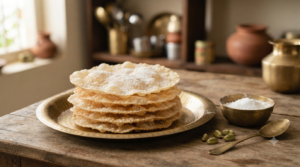
Thin chiroti rava poli fried until crisp and finished with fine cardamom sugar.
The method is simple, but the texture depends on three details: a firm rested dough, very thin rolling, and moderate frying heat. Get those right and the poli turns light, crisp, and easy to coat without becoming oily or soggy.
Chiroti Rava Poli Recipes at a Glance
This chiroti rava poli recipe uses chiroti rava, also called extra-fine semolina, as the main dough ingredient. The dough rests before rolling so the fine grains hydrate. Each portion is then rolled thin, fried until crisp, drained briefly, and dusted with cardamom-flavoured powdered sugar.
| Detail | Guide |
|---|---|
| Recipe style | Dry, crisp sugar-coated poli |
| Main ingredient | Chiroti rava / extra-fine semolina |
| Sweetener | Powdered sugar with cardamom |
| Prep time | About 20 minutes plus resting |
| Cook time | About 20 to 25 minutes |
| Yield | About 8 to 10 small polis |
| Key skill | Rolling the dough very thin |
- Use very fine chiroti rava rather than coarse upma rava.
- Make a firm dough, since soft dough absorbs more oil.
- Rest the dough before rolling so the semolina hydrates fully.
- Roll each piece almost paper-thin for a brittle, crisp finish.
- Fry over low-to-medium or medium heat, not on a fierce flame.
- Add powdered sugar after a short draining rest, while the poli is still slightly warm.
Ingredients for Chiroti Rava Poli Recipes
The ingredient list is short, so technique matters more than extra flavourings. Chiroti rava is much finer than standard coarse semolina. That fine grain makes it easier to form thin sheets and is one reason this style can fry up crisp instead of heavy.
| Ingredient | Quantity | Purpose |
|---|---|---|
| Chiroti rava | 1 cup | Main dough |
| Ghee | 1 tablespoon | Flavour and tenderness |
| Salt | 1 small pinch | Balances sweetness |
| Water | About 1/3 to 1/2 cup, as needed | To form a firm dough |
| Rice flour | 1 to 2 tablespoons, as needed | Light dusting while rolling |
| Sugar | 1/3 cup | Dry coating |
| Cardamom powder | 1/2 teaspoon | Flavours the sugar |
| Neutral oil | For deep frying | Cooks the thin polis |
Water absorption can vary with the brand and fineness of rava. Therefore, add water gradually rather than pouring the full amount at once. The finished dough should feel firm and smooth, closer to poori dough than soft chapati dough.
How to Make Chiroti Rava Poli Recipes Step by Step
The easiest workflow is to prepare the sugar first, make and rest the dough, then roll the full batch before frying. This keeps the oil temperature steady because you are not stopping between pieces to roll another disc.
1. Make the cardamom sugar
Add sugar and cardamom powder to a dry mixer jar. Grind until the sugar becomes fine and powdery. Keep the mixture covered while you make the dough so kitchen moisture does not cause clumping.
2. Make a firm chiroti rava dough
Add chiroti rava, salt, and ghee to a wide bowl. Rub the ghee through the fine semolina with your fingertips until it feels evenly coated. Then add water little by little and knead until you have a firm, cohesive dough.
Cover the dough and rest it for about 30 minutes. During this time, the fine semolina absorbs moisture and becomes easier to roll. If the dough cracks badly after resting, wet your fingertips and knead briefly instead of adding a large splash of water.
3. Divide and roll very thin
Divide the rested dough into 8 to 10 small portions and keep them covered. Dust the board lightly with rice flour, then roll one portion into a very thin circle. Aim for a sheet that is close to papad-thin without tearing.
The shape does not need to be perfect. Thinness matters more because a thick centre can turn hard rather than crisp. Use only enough rice flour to stop sticking, since excess dry flour can fall into the hot oil.
4. Fold or fry as thin rounds
You can fry the thin rounds as they are, or fold them once or twice for a compact layered shape. Both methods keep the same sugar-coated flavour. If you fold them, press lightly so the layers stay together without turning the centre thick.
5. Fry gently until crisp
Heat neutral oil in a kadai over medium heat, then reduce slightly if the surface browns too fast. Slide in one poli and fry until the bubbling slows and the sheet looks dry and crisp. Turn as needed so both sides cook evenly.
A high flame can brown the outside before moisture escapes from the centre. On the other hand, oil that is not hot enough can make the poli greasy. A steady moderate heat gives the best balance.
6. Drain, then dust with sugar
Lift the fried poli from the oil and drain it on a rack or absorbent paper for a short time. While it is still slightly warm, sprinkle the cardamom sugar over both sides. The warmth helps the powder cling, while the brief drain prevents it from turning into an oily paste.
Let the finished polis cool fully in a single layer. Stack them only when they are cold, since trapped steam quickly softens a crisp fried sweet.
Why This Chiroti Rava Poli Recipes Works
This chiroti rava poli recipe depends on moisture control. A firm dough contains less free water than a soft one, while resting gives the semolina time to absorb what is there. Thin rolling then allows the remaining moisture to escape quickly during frying.
Frying temperature is the second control. Moderate heat cooks the whole sheet before the surface becomes too dark. Finally, the sugar goes on after draining instead of into the hot oil, so the coating stays dry and clean.
The result should be brittle rather than chewy. When you break a cooled piece, it should snap instead of bend. If it bends, the sheet was probably too thick or did not fry long enough.
Sugar Poli and Milk Poli Are Different
The current live Bhimas Cook page had mixed these two preparations together, which creates confusion for readers. A dry sugar poli is fried and finished with powdered sugar. Paal poli, by contrast, is fried and then soaked in sweetened milk until it softens.
| Version | Finishing method | Texture |
|---|---|---|
| Chiroti rava sugar poli | Powdered sugar after frying | Dry and crisp |
| Paal poli | Soaked in sweetened milk | Soft and milky |
| Chiroti / pathir pheni | Powdered sugar or syrup; often layered | Flaky and crisp |
| Stuffed poli / holige | Sweet filling inside dough | Soft flatbread |
That is why this refreshed page keeps the sugar-coated route only. If you want the milk-soaked version, use the separate Bhimas Cook recipe rather than adding milk to this one.
Chiroti Rava Poli Recipes: Common Problems and Fixes
Why is my poli hard instead of crisp?
The most common cause is thick rolling. Roll the next portion thinner and keep the frying heat moderate. A thin sheet dries through evenly, while a thick one can become dense before its centre turns crisp.
Why does the dough crack?
The dough may be too dry or may need more resting time. Wet your fingertips, knead briefly, and cover the dough for another five to ten minutes. Avoid adding too much water at once because that can make the dough sticky.
Why is the fried poli oily?
Soft dough, low oil temperature, or overcrowding can all increase oil absorption. Keep the dough firm and fry only one or two pieces at a time. Also let the oil recover its heat between batches when needed.
Why does the sugar coating become wet?
The poli was probably too hot or still had excess surface oil. Drain it briefly before dusting, then add sugar while it remains slightly warm. Cool the finished pieces uncovered before moving them to a storage container.
Serving the Chiroti Rava Poli Recipes
This chiroti rava poli recipe works well as a festival sweet, tea-time treat, or part of a mixed snack plate. Because the finished poli is dry rather than milk-soaked, it is also easier to pack and serve later.
For a larger festive menu, pair it with savoury snacks or another sweet with a different texture. Bhimas Cook’s Sankranti special recipes page gives more ideas for a full festive spread. For another sugar-based fried sweet, see the gavvalu sweet recipe with sugar.
You can also serve the crisp poli beside warm milk or badam milk instead of soaking it in advance. That way, each person can keep the sweet crisp or soften each bite according to preference.
Storage and Frying-Oil Safety
Let the polis cool completely before storing them. Keep them in a clean, dry, airtight container at room temperature and protect them from humidity. Because crisp fried sweets soften when they absorb moisture, make smaller batches during very damp weather.
For frying oil, use clean oil and avoid repeated frying cycles. The Food Safety and Standards Authority of India (FSSAI) RUCO guidance states that repeated frying increases Total Polar Compounds in oil. FSSAI sets a 25% TPC limit beyond which used vegetable oil should not be used for food.
At home, visual changes such as persistent foaming, very dark oil, or unusual smoke are warning signs that the oil has deteriorated. Do not pour discarded oil into drains. Follow local disposal guidance instead.
Because this is a fried sweet with added sugar, treat it as an occasional food rather than an everyday snack. The ICMR-National Institute of Nutrition Dietary Guidelines for Indians recommend keeping added sugar limited within the overall diet.
What Beginners Often Get Wrong
The first mistake is using coarse rava and expecting it to behave like chiroti rava. Coarse grains make thin rolling harder and can leave a rougher texture. If chiroti rava is unavailable, use the finest semolina you can find and expect some variation.
The second mistake is using too much dusting flour. A little rice flour is useful, but a thick coating falls into the oil and can burn. Dust lightly, then brush away loose flour before frying.
The third mistake is chasing deep colour. This sweet should become crisp before it becomes dark. If the poli browns in seconds, lower the heat and give the centre more time to dry.
The last mistake is stacking hot pieces. Even a well-fried poli can soften when steam gets trapped between layers. Cooling in a single layer protects the crisp finish you worked for.
Chiroti Rava Poli Recipes: Final Tips
The best chiroti rava poli recipe is controlled rather than complicated. Keep the dough firm, rest it well, roll it very thin, and fry at a steady moderate heat. Then drain briefly and add fine cardamom sugar while each piece is still slightly warm.
Most importantly, keep the dry sugar version separate from milk poli. That gives this recipe a clear identity and helps the reader get the crisp sweet they searched for.
Chiroti Rava Poli Recipes FAQs
What is chiroti rava?
Chiroti rava is an extra-fine form of semolina used in several South Indian sweets. Its fine texture helps dough roll more smoothly than coarse upma rava. For this recipe, that makes it easier to create thin sheets that fry crisp.
Can I use regular sooji instead of chiroti rava?
Yes, but use the finest sooji available and grind it finer if needed. Coarse sooji will not roll as smoothly, so the finished poli may be thicker. The recipe still works, but the texture can differ.
Should I add sugar to the dough?
No sugar is needed in the dough for this dry-coated version. The sweetness comes from the powdered sugar added after frying. This also lets you control how sweet each finished poli becomes.
Can I use sugar syrup instead of powdered sugar?
Yes, but syrup changes the finished texture and moves the recipe toward another chiroti style. Powdered sugar keeps the poli dry and crisp, while syrup gives a sweeter, slightly softened surface.
How thin should I roll the poli?
Roll it close to papad-thin while keeping the sheet intact enough to lift. Thin rolling lets moisture escape during frying, which creates crispness. If the sheet keeps cracking, rest the dough longer before trying again.
Can I bake chiroti rava poli instead of frying?
You can experiment with baking or air frying, but the texture will differ from the traditional deep-fried version. Deep frying produces the characteristic crisp, light sheet. Treat other methods as variations rather than exact substitutes.
How do I keep sugar poli crisp?
Cool every piece completely before stacking or sealing the container. Keep the container dry and airtight because humidity quickly softens thin fried sheets. Do not refrigerate unless you have a specific food-safety reason, since condensation can reduce crispness.
Is chiroti rava poli the same as paal poli?
No. A dry chiroti rava sugar poli is dusted with sugar after frying, while paal poli is soaked in sweetened milk. They can use similar dough ingredients, but the finishing method creates a completely different texture.