Paal Poli Recipe With Chiroti Rava: Soft Milk Poli
Paal poli recipes with chiroti rava is a South Indian milk sweet made by frying fine-semolina pooris and soaking them in reduced, sweetened milk. The best version is not hard-crisp or mushy. The poori should hold its shape while absorbing enough cardamom milk to become tender.
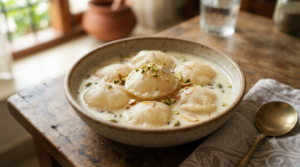
Fine-semolina pooris soaked in sweet cardamom milk and finished with saffron and chopped nuts.
This refresh keeps the original page’s chiroti-rava-and-milk identity but removes unsupported claims and tightens the method. It also separates this dish from stuffed puran poli and from layered chiroti pastry.
Paal Poli Recipes at a Glance
- Main base: chiroti rava, also sold as very fine semolina.
- Milk: whole milk reduced slightly, then sweetened and flavoured.
- Texture: lightly crisp fried poori outside, tender after soaking.
- Yield: about 10 to 12 small polis.
- Dough rest: about 20 minutes.
- Soaking: start checking after 15 minutes.
- Serving: warm, room temperature, or chilled.
Traditional paal poli recipes vary in flour mix and sweetness. Some use maida with semolina, while others use chiroti rava as the main dough ingredient. For this page, the focus stays on the fine-semolina version because that matches the existing URL and recipe identity.
Ingredients for This Chiroti Rava Paal Poli
The quantities below make a moderate home batch. Sugar preference varies widely across established paal poli recipes, so taste the milk before soaking the pooris and adjust only if needed.
| Ingredient | Quantity | Use |
|---|---|---|
| Chiroti rava | 1 cup | Fine-semolina dough |
| Ghee | 2 tsp | For the dough |
| Salt | 1 pinch | Balances sweetness |
| Warm water | As needed | To form a firm dough |
| Whole milk | 4 cups | Sweet milk base |
| Sugar | 3/4 cup | Starting sweetness level |
| Cardamom powder | 1/2 tsp | Flavour |
| Saffron | A few strands, optional | Flavour and colour |
| Almonds, cashews, or pistachios | 2 tbsp, chopped | Optional garnish |
| Neutral oil | As needed for deep frying | For the pooris |
Chiroti rava is a wheat semolina. The Food Safety and Standards Authority of India defines semolina or suji as a wheat product, so this recipe should not be described as gluten-free.
How to Make Paal Poli Recipes With Chiroti Rava
The method works best when you prepare the milk and dough in parallel. Let the dough rest while the milk reduces, then fry the pooris and soak them while the milk is still warm.
- Mix the dough. Combine chiroti rava, salt, and ghee. Add warm water little by little until the dough becomes firm and smooth rather than sticky.
- Rest for 20 minutes. Cover the dough so the fine semolina can hydrate. After resting, knead it briefly again.
- Reduce the milk. Bring the milk to a gentle boil in a wide, heavy pan. Lower the heat and simmer, stirring often, until it reduces by roughly one-quarter.
- Sweeten the milk. Add sugar, cardamom, and saffron if using. Stir until the sugar dissolves, then turn off the heat. Keep the milk warm.
- Shape small pooris. Divide the dough into 10 to 12 balls. Roll each one into a small, fairly thin round without making it paper-thin.
- Deep-fry on medium heat. Fry one or two at a time until they puff and turn pale golden. They should feel lightly crisp, not brittle like papad.
- Drain briefly. Let excess surface oil drain for a short time. Then move the warm poori into the warm milk.
- Soak before serving. Start checking after about 15 minutes. Serve when the centre has softened but the poli still lifts without tearing.
Why a Firm Dough Works Better
A firm dough is easier to roll into thin pooris without becoming sticky. Chiroti rava also needs a short rest because its fine wheat particles absorb water after mixing.
If the dough cracks badly after resting, wet your fingertips and knead again. Add only a little water at a time, since a loose dough is harder to fry cleanly.
How Far Should You Reduce the Milk?
Reduce the milk enough to concentrate flavour, but keep it fluid. Established paal poli methods commonly simmer milk before adding the pooris, and one widely used approach reduces it to about three-quarters of the starting volume.
Do not cook it down to rabri thickness. Very thick milk coats the fried poori instead of moving into its centre, so the dessert can taste rich outside but dry inside.
Getting the Frying Texture Right
The poori is the structural part of this paal poli recipe, so frying matters more than colour. It should puff, cook through, and develop a slight crispness before it meets the milk.
If the oil is too hot, the outside colours quickly while the centre stays dense. If the oil is too cool, the dough absorbs more oil. Medium heat and steady bubbling give you more control.
Do not chase a dark golden colour. Several established paal poli methods specifically warn against over-frying because a papad-like poori takes longer to soften and can stay leathery after soaking.
How Long Should Paal Poli Soak?
Start with 15 to 20 minutes, then judge by texture. That range is a useful first checkpoint because traditional recipes vary from a short soak to much longer resting, depending on poori thickness and serving style.
For a firmer dessert, serve once the centre turns tender but the edges still hold. For a softer milk poli, let it rest longer in the refrigerator after the initial soak.
Avoid stacking many hot, soaked pooris in a deep pile. A shallow dish makes them easier to lift because heavily soaked pieces can tear when pressed under several layers.
Paal Poli Recipes Troubleshooting
| Problem | Likely reason | What to do |
|---|---|---|
| Dough cracks while rolling | Too dry or under-rested | Rest longer and knead in a few drops of water |
| Pooris absorb too much oil | Oil is not hot enough | Raise the heat slightly before the next batch |
| Pooris brown very fast | Oil is too hot | Lower the heat and allow the oil to settle |
| Poli stays hard after soaking | Too thick or over-fried | Roll thinner and fry only to light crispness |
| Poli breaks in the milk | Too thin or soaked too long | Shorten the soak and handle in a shallow dish |
| Milk does not soak in well | Milk is too thick | Thin it with a little warm milk |
| Milk tastes too sweet | Sugar added before tasting | Start lower and adjust after reduction |
Most failures come from texture rather than ingredients. Fix the dough firmness, frying level, and milk thickness first before adding more ghee, nuts, or sweetener.
Is Chiroti Rava the Same as Regular Rava?
Both are forms of semolina, but chiroti rava is sold as a finer grade. Fine semolina is commonly used for paal poli because it makes a smoother dough than coarser upma-style rava.
The Food Safety and Standards Authority of India cereal standard identifies semolina as a wheat product. That also means adding rice flour to a chiroti-rava dough does not make the finished sweet gluten-free.
If you only have regular fine sooji, you can use it, but the dough may need a little more resting time. Very coarse rava is less suitable because the rough grains make thin rolling harder.
Paal Poli, Milk Poli, and Chiroti: What Is the Difference?
Paal poli and milk poli are names used for fried poori soaked in sweetened milk. The poori may use maida, semolina, or a combination, depending on the household and regional method.
In this recipe, chiroti rava describes the fine semolina used for the dough. That is different from chiroti or chirote, the layered fried pastry that is usually dusted with sugar or served with milk.
It is also different from stuffed sweet flatbreads. Bhimas Cook’s bobbatlu recipe and puran poli with chana dal use a sweet lentil filling and cook on a tawa rather than soaking fried pooris in milk.
Can You Make Paal Poli Ahead?
Yes, but keep the fried pooris and milk separate until closer to serving. That approach gives you control over softness and prevents the pooris from becoming fragile during storage.
Cool the fried pooris completely before storing them in an airtight container. Refrigerate the prepared milk once it has cooled, then warm it gently before soaking if you want to serve the dessert warm.
If you prefer chilled paal poli, soak the pooris first and refrigerate the finished dessert promptly. The texture will continue to soften as it sits.
Food Safety for Milk-Based Paal Poli
Because paal poli contains cooked milk, treat the soaked dessert as a perishable food. The Food Safety and Standards Authority of India food-safety guidance says perishable foods should be refrigerated within two hours, or within one hour when the temperature is above 90°F, about 32°C.
FSSAI also advises keeping the refrigerator at 40°F, about 4°C, or below. Use a clean, covered container and avoid leaving soaked paal poli on a dining table for several hours during hot weather.
For the best eating quality, make only what you expect to serve soon. The milk remains safe only when handled correctly, while the poori texture becomes progressively softer during refrigeration.
Ways to Adjust the Paal Poli Recipes
The basic method is flexible because sweetness, milk richness, and garnish vary between households. Keep the core technique unchanged, then adjust one flavour element at a time.
- Less sweet: start with 1/2 cup sugar, taste after the milk reduces, and add more only if needed.
- Richer milk: simmer the whole milk a little longer rather than adding large amounts of thickener.
- Nutty version: blend a small quantity of soaked almonds or cashews into the milk. Keep the mixture pourable so the pooris can still absorb it.
- Extra aroma: use saffron with cardamom, or add a very small pinch of nutmeg.
- Chilled serving: soak until just tender, then refrigerate instead of leaving it at room temperature.
If you want another semolina-based sweet, the site’s rava kesari with condensed milk uses a completely different cooking method but shares the familiar rava, milk, cardamom, and nut flavour profile.
What the Old Recipe Got Wrong
The biggest factual issue was the suggestion that adding rice flour could make a chiroti-rava recipe gluten-free. It cannot, because semolina is made from wheat. Anyone who needs a gluten-free dessert needs a recipe built without wheat semolina from the start.
The old nutrition table also gave precise calories and macronutrients without a measured oil-absorption calculation. Deep-fried sweets can absorb different amounts of oil, so a confident per-serving figure is not reliable unless the finished batch is weighed and analysed from the actual ingredient usage.
The earlier storage advice was also too casual for a milk-based dessert. The refreshed guidance now follows current FSSAI chilling rules instead of treating the finished sweet like a shelf-stable snack.
Paal Poli Recipes: Final Method Check
A reliable paal poli recipe depends on three things: a rested firm dough, a lightly crisp poori, and warm milk that remains fluid enough to soak in. Get those right and the sweet does not need complicated additions.
Taste the milk only after it reduces, because sweetness becomes stronger as water evaporates. Then soak one poori first and use it as your texture test before adding the whole batch.
Serve when the poori is tender but still easy to lift. That gives you the classic contrast between soft milk-soaked centre and a little structure around the edge.
Frequently Asked Questions
Is paal poli recipe traditionally made with chiroti rava?
Chiroti rava is one established option for paal poli, although recipes also use maida, regular semolina, or a mixture. Fine semolina works especially well when you want a smooth dough for small fried pooris.
Can I use normal sooji instead of chiroti rava?
Yes, if it is a fine grade. Give the dough enough resting time and add water slowly. Coarse upma rava produces a rougher dough and is harder to roll thin.
How do I know when the milk is reduced enough?
Stop when the milk tastes fuller and has reduced by roughly one-quarter. It should still pour easily around the pooris rather than sitting on top like thick rabri.
Why did my paal poli turn hard?
The poori was probably rolled too thick or fried too crisp. Roll smaller, thinner discs and remove them while they are only pale golden and lightly crisp.
Why did my paal poli become mushy?
It likely soaked too long or was very thin before frying. Start checking after 15 minutes, and move the pieces gently because fully soaked pooris can tear.
Can I make paal poli recipe the previous day?
You can prepare the fried pooris ahead and keep them separate from the milk. For the best texture, soak them closer to serving and refrigerate the finished milk dessert promptly.
Is chiroti rava gluten-free?
No. FSSAI standards define semolina as a wheat product, so chiroti rava contains wheat. Adding rice flour to the same dough does not make it gluten-free.
Can I use condensed milk?
Yes, some modern versions use condensed milk for faster richness. Reduce the added sugar first because condensed milk is already sweet, and keep the final milk mixture thin enough to soak into the pooris.