Easy Rasam Recipe: Fast South Indian Soup, Step by Step
This easy rasam recipe gives you a bright, tangy South Indian soup in about 40 minutes, using tamarind, ripe tomatoes, and freshly pounded pepper and cumin. Known as rasam in Tamil Nadu, chaaru in Andhra and Telangana, and saaru in Karnataka, it is the everyday comfort bowl that finishes almost every South Indian meal.
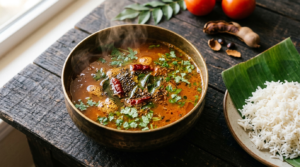
A hot bowl of easy rasam recipe finished with mustard tempering and fresh coriander.
You can pour it over hot rice with a spoon of ghee, or sip it warm from a cup when you feel under the weather. The method below is simple enough for a first-timer, yet it carries the one habit that separates a dull rasam from a fragrant one.
Easy Rasam Recipe at a Glance
Here is the quick version before the full method. This easy rasam recipe is a no-dal, tomato-and-tamarind version, so it stays light and clear rather than thick.
- Base: tamarind extract, tomatoes, turmeric, and a fresh cumin-pepper-garlic mix.
- Golden rule: never let rasam roll-boil once the spice mix goes in. Switch off when it froths.
- Time: 15 minutes prep, 25 minutes cooking, four generous bowls.
- Finish: a ghee tempering of mustard, red chilli, and curry leaves poured in at the end.
- Best with: steamed short-grain rice, papad, and a dry vegetable side.
Recipe Card
| Detail | Value |
|---|---|
| Prep Time | 15 minutes |
| Cook Time | 25 minutes |
| Total Time | 40 minutes |
| Servings | 4 bowls |
| Cuisine | South Indian |
| Difficulty | Easy |
What Is Rasam?
Rasam is a thin, spiced, tamarind-based soup from South India. The word itself means “juice” or “essence” in Sanskrit and Tamil. Unlike a thick lentil stew, a classic rasam stays watery and pourable, built on sourness from tamarind, heat from pepper, and aroma from a final tempering.
People often confuse rasam with sambar, but they are cousins, not twins. Sambar is a thick lentil-and-vegetable curry, while rasam is a light, mostly liquid broth. This version skips dal entirely, so it cooks faster and tastes cleaner. If you want a heartier bowl, our Andhra pappu charu uses cooked toor dal for body.
Easy Rasam Recipe Ingredients
Everything in this easy rasam recipe is a common South Indian pantry item. Measure the tamarind carefully, because that single ingredient decides how tangy your bowl turns out.
Main ingredients:
- Water – 6 cups (about 1.4 litres)
- Tamarind pulp – 2 tablespoons, soaked in ½ cup warm water
- Tomatoes – 2 medium, ripe, finely chopped
- Turmeric powder – ¼ teaspoon
- Salt – 1 teaspoon, adjusted to taste
- Fresh coriander leaves – 3 tablespoons, chopped
For the tempering (tadka):
- Ghee or sesame oil – 2 tablespoons
- Mustard seeds – 1 teaspoon
- Dry red chillies – 2, broken
- Curry leaves – 10 to 12
- Asafoetida (hing) – ¼ teaspoon
Fresh spice blend:
- Cumin seeds – 2 teaspoons
- Black peppercorns – 1 teaspoon
- Garlic cloves – 4, crushed with the skin on
Because you are grinding your own spice mix, you do not need any store-bought rasam powder. Fresh cumin and pepper give a sharper, warmer aroma than a jar that has sat open for months.
How to Make Easy Rasam Recipe: Step by Step
This method comes together in four short stages. Each one is quick, so keep your tempering pan ready before you start the base.
Step 1: Prepare Tamarind and Spice Mix (10 minutes)
- Soak the tamarind in ½ cup warm water for 10 minutes. Then squeeze and strain it, so you keep the smooth pulp and discard the fibres and seeds.
- Lightly crush the cumin, peppercorns, and garlic together into a coarse mix. You can pound them in a mortar or pulse them briefly. Keep the texture coarse, not powder-fine, since a fine grind cooks out too fast.
Step 2: Cook the Rasam Base (12 minutes)
- Pour 6 cups of water into a pot and bring it to a gentle boil.
- Add the strained tamarind pulp, chopped tomatoes, turmeric, and salt.
- Lower the heat and simmer for 6 to 8 minutes, until the tomatoes soften and the raw smell of tamarind fades.
- Stir in the crushed cumin-pepper-garlic mix and simmer gently for another 3 to 4 minutes.
Step 3: Temper the Rasam (3 minutes)
- Heat the ghee in a small pan on medium heat.
- Add the mustard seeds and wait until they pop, which takes about 30 seconds.
- Toss in the red chillies, curry leaves, and asafoetida, then stir for 20 to 30 seconds until fragrant.
- Pour this hot tempering straight into the simmering rasam and switch off the heat at once.
Step 4: The Finishing Touch (2 minutes)
- Stir in the chopped coriander leaves, then cover the pot for 2 minutes so the aromas settle.
- Serve hot over rice, or ladle it into cups as a warming drink.
The One Mistake That Ruins Your Easy Rasam Recipe
If you remember only one thing from this easy rasam recipe, make it this: never let rasam reach a hard, rolling boil after the spice mix goes in. A vigorous boil turns the soup flat, dull, and slightly bitter. The moment a light froth rises to the surface, cut the heat.
This single habit matters more than any other tip. Most disappointing home rasam is simply over-boiled rasam. Keep the flame low, watch for that froth, and switch off. Some cooks even splash in a little cold water at the end to stop the spices from cooking further, because pepper and cumin taste best when barely cooked.
Pro Tips for the Best Easy Rasam Recipe
Small habits make a big difference to the final bowl. These come from years of everyday South Indian cooking, not from a packet.
- Add a ½ teaspoon of jaggery if your tamarind is very sour. It rounds off the tang without making the rasam sweet.
- Country or desi tomatoes give more depth than watery hybrid ones. If yours are bland, lean a little harder on the tamarind.
- Crush the garlic with its skin and add it just before switching off for a stronger, rounder aroma.
- Always add coriander after the heat is off, so its fresh scent survives.
- Use fresh curry leaves, since stale leaves lose the aroma that carries the whole dish.
Easy Rasam Recipe Substitutions and Storage
Ran out of something? A few easy swaps keep the recipe on track without a trip to the shop.
Ingredient swaps:
- No tamarind? Stir in 1 to 2 tablespoons of lime or lemon juice after the rasam finishes simmering, never during.
- No curry leaves? A pinch of dried curry-leaf powder still lends some aroma.
- No ghee? Toasted sesame (gingelly) oil gives an earthy, traditional South Indian note.
How to store it:
- Refrigerate rasam in an airtight container for up to 2 days, then reheat gently. Do not boil it hard again.
- Freeze it without the coriander for up to a month, and stir fresh coriander in after thawing.
Rasam actually tastes better a few hours after cooking, once the spices settle, so it suits making ahead. If you are cooking for a crowd, prepare the tamarind base early and add the tempering just before serving to keep the aroma lively.
Easy Rasam Recipe: Regional Styles
One broth, many houses. Every state tweaks rasam to its own taste, so treat this easy rasam recipe as a base you can shift in any direction.
- Tamil Nadu: often uses a homemade rasam powder and a splash of cooked dal water for body.
- Andhra and Telangana: the chaaru leans hotter, with extra green chilli or pepper. Our pepper rasam without tomato is a classic Andhra-style cold remedy.
- Karnataka: saaru is often milder and slightly sweeter, sometimes finished with a hint of jaggery.
- Kerala: cooks may add extra pepper and a heavier hand of curry leaves for aroma.
Serving and Pairing Your Easy Rasam Recipe
Rasam rarely stands alone, though it can. The classic plate pairs it with rice, but the soup bends easily to your mood.
- Rasam rice: mash hot steamed rice with a spoon of ghee, then pour warm rasam over it. Short-grain rice like Sona Masuri soaks it up best.
- Vada rasam: soak crisp medu vada in piping-hot rasam for an indulgent brunch.
- Lemon rasam: add fresh lemon juice at the end for a bright, citrusy version. See our lemon rasam without dal.
- Pepper rasam: raise the peppercorns for a fiery bowl on a cold evening.
A crisp papad or appalam on the side adds crunch, while a simple potato fry or a spoon of curd balances the sharp, spiced broth. For a fuller South Indian meal, serve it alongside our hotel-style sambar.
Easy Rasam Recipe Nutrition (Per Serving)
Rasam is naturally light. One cup carries roughly 60 calories, which is why it works so well as a pre-meal soup or a comforting sip.
| Nutrient | Per Serving (1 Cup) |
|---|---|
| Calories | ~60 kcal |
| Protein | ~2 g |
| Carbohydrates | ~8 g |
| Fat | ~2 g |
| Fibre | ~2 g |
| Vitamin C | ~24 mg |
These figures are approximate and shift with your exact ingredients and portion size.
Why Rasam Feels Good Beyond the Taste
Rasam is comfort food with a long tradition behind it. In many South Indian homes, a warm bowl is served when someone feels heavy after a big meal or is nursing a cold. The pepper, cumin, and garlic are warming spices that people traditionally link with easy digestion, while the tamarind and tomato add a fresh, sour brightness.
These are long-held home beliefs rather than medical claims, so enjoy rasam as nourishing everyday food and see a doctor for any real health concern. As a light, mostly liquid dish, it is easy to eat and gentle on the stomach, which is a big part of its enduring appeal.
The Bottom Line
A good bowl of rasam comes down to balance and restraint. Get the tamarind right, pound your spices fresh, and above all keep the heat low so the soup never hard-boils. Do that, and this easy rasam recipe will taste like the one from a seasoned South Indian kitchen.
Start with the base version, then push it toward lemon, pepper, or a hotter Andhra style once you find your rhythm. Serve it hot over rice with ghee, and you have a full, comforting plate any day of the week.
Frequently Asked Questions
Can I make rasam without tamarind?
Yes. Add 1 to 2 tablespoons of lime or lemon juice after the rasam finishes simmering, rather than during, so the tang stays fresh. The flavour differs slightly from tamarind but still gives that essential sourness.
Why does my rasam taste bitter or flat?
The usual reason is over-boiling. A hard, rolling boil after the spices go in makes rasam dull and bitter, so switch off the moment it froths. Burnt tempering spices or stale rasam powder can also cause a flat taste.
Do I need rasam powder for this recipe?
No. This easy rasam recipe uses a fresh cumin, pepper, and garlic mix instead of a packaged powder. Grinding whole spices just before cooking gives a brighter, more aromatic result than an old jar of rasam powder.
Which rice goes best with rasam?
Short-grain white rice such as Sona Masuri or Ponni is the traditional choice. Mash the hot rice slightly with a little ghee so it soaks up the tangy, spiced soup.
Is rasam good for digestion?
Many South Indian families believe the pepper, cumin, and garlic in rasam support easy digestion, especially after a heavy meal. This is a traditional belief rather than proven medicine, though the light, warm broth is certainly gentle to eat.
How long does rasam keep?
Store rasam in an airtight container in the fridge for up to 2 days, and reheat it gently without hard-boiling. You can also freeze it for about a month if you leave out the coriander until serving.
Can I add dal to this rasam?
Yes, if you want a heartier bowl. Stir in about ½ cup of mashed cooked toor dal after the base has simmered, which gives the rasam more body and a little protein. The core method stays the same, so keep the heat low once the dal goes in.
Can I make rasam spicy or mild?
Easily. Adjust the black pepper and red chillies to your taste. For a mild bowl, reduce the pepper and chilli, while a spicier version simply uses more of both.
For more background on the dish, see the Rasam entry on Wikipedia, which covers its history and regional names, and the Tamarind reference for the souring ingredient at its heart.