Gutti Vankaya Vepudu Recipe: Andhra Stuffed Brinjal Fry
Gutti Vankaya Vepudu Recipe is the dry, roasted version of Andhra’s famous stuffed brinjal, and that one word decides everything. In Telugu, vepudu means fry, while kura means curry. So a real vepudu finishes semi-dry, with a thick masala crust clinging to the skin.
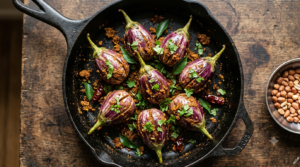
Andhra-style stuffed baby brinjals pan-roasted until dry, with the peanut-sesame masala clinging to the skins.
Most versions online quietly add half a cup of water and turn the dish into gravy. This Gutti Vankaya Vepudu Recipe does not, because the final open roast is the whole point. Below you get exact quantities, honest stage timings and the fixes for what usually goes wrong.
Gutti Vankaya Vepudu Recipe at a Glance
- What it is: baby brinjals stuffed with a roasted peanut and sesame masala, then pan-fried until dry.
- Texture: semi-dry with a roasted crust, so it will not pool into gravy.
- Total time: about 55 minutes, since grinding and stuffing take longer than the cooking.
- Serves: 4 people as a side dish.
- Skill level: medium, because stuffing a brinjal without splitting it takes a little practice.
- Best with: hot rice and ghee, or a thin pappu.
| Detail | Value |
|---|---|
| Prep time | 25 minutes |
| Cook time | 30 minutes |
| Total time | 55 minutes |
| Servings | 4 |
| Cuisine | Andhra, South Indian |
| Difficulty | Medium |
Vepudu or Kura: Which Gutti Vankaya Are You Making?
Vepudu is the fried, semi-dry version. Kura is the gravy version. Both start from the same stuffed brinjal, yet they part ways at the last ten minutes of cooking.
That distinction matters when you shop. A gravy version can absorb slightly older brinjals because liquid softens them. A dry fry cannot hide anything, so the brinjals must be fresh and tender.
| Point | Vepudu (fry) | Kura (curry) |
|---|---|---|
| Added water | 2 to 3 tbsp only | Half cup or more |
| Final texture | Dry, masala coated | Thick gravy |
| Cooking style | Covered, then open roast | Covered and simmered |
| Best partner | Rice and pappu | Rice or roti |
If you actually want the gravy version instead, our Gutti Vankaya Kura recipe covers it properly. The masala curry version sits somewhere between the two.
Ingredients for Gutti Vankaya Vepudu Recipe
Main ingredients
- 12 to 14 small tender brinjals (baby eggplants), washed and wiped dry
- 3 tbsp oil, preferably groundnut oil
- 1 tsp salt for the masala, plus 1 tsp for the soaking water
- 2 to 3 tbsp water, only if the pan looks dry
- 1 sprig curry leaves
- Fresh coriander leaves, chopped, 2 tbsp
For the roasted masala stuffing
- Half cup raw peanuts
- 2 tbsp white sesame seeds (nuvvulu)
- 1 tbsp coriander seeds
- 1 tsp cumin seeds
- 6 to 8 dry red chillies, adjusted to your heat tolerance
- 2 tbsp dry coconut (kopra), grated
- Quarter tsp turmeric powder
- 1 tbsp thick tamarind pulp
- 4 to 5 garlic cloves
- Half tsp jaggery, which rounds off the tamarind
Notice that the oil goes up to 3 tbsp here. A dry fry needs that extra spoon because there is no gravy carrying flavour, so the oil does that job instead.
Choosing the Best Brinjals for Gutti Vankaya Vepudu Recipe
Pick brinjals that feel heavy for their size and look glossy. A tender one has a green calyx covering at least a third of the fruit. When the skin looks dull or wrinkled, the seeds inside are usually mature and bitter.
Press the brinjal gently with your thumb. If it dents easily and springs back slowly, it is old. Fresh ones stay firm, so they hold their shape through a dry roast.
Size matters more than colour here. Both the striped purple variety and the small round green variety work well for this Gutti Vankaya Vepudu Recipe, although the striped ones hold together slightly better.
Step-by-Step Gutti Vankaya Vepudu Recipe Method
Step 1: Slit and soak the brinjals (10 minutes)
Keep the stem intact and slit each brinjal into a cross from the base upward. Stop about a centimetre short of the stem, otherwise the pieces fall apart during frying. Drop them into salted water as you go, since cut brinjal browns within minutes.
Step 2: Dry-roast the masala (8 minutes)
Heat a heavy pan on low. Roast the peanuts first for about four minutes, then add sesame seeds, coriander seeds, cumin and red chillies. Finish with the dry coconut and turmeric for the last minute, because coconut burns fastest.
Pull everything off the heat when the peanuts smell nutty and the sesame starts popping. Burnt spices turn the whole dish bitter, so err on the pale side.
Step 3: Cool and grind (7 minutes)
Let the roasted mixture cool completely on a plate. Warm spices release oil in the grinder and the paste turns pasty rather than crumbly. Then grind with garlic, tamarind pulp, jaggery and 1 tsp salt into a thick, coarse mixture.
Add water one teaspoon at a time, and stop at two. The stuffing should hold together when pressed, yet still crumble. A loose paste leaks out of the brinjal during frying.
Step 4: Stuff the brinjals (8 minutes)
Drain the brinjals and pat them dry, because wet skin will not brown. Open each slit gently and press the masala in with your thumb or a small spoon. Do not overfill, since the stuffing expands as it heats.
Keep the leftover masala aside. You will need roughly a third of it later for the pan.
Step 5: Fry covered on low heat (15 minutes)
Heat 3 tbsp oil in a wide pan and add the curry leaves. Arrange the stuffed brinjals in a single layer, cut side up, then lower the flame. Cover and cook for 15 minutes, turning them gently every five minutes with a flat spoon.
Sprinkle 2 tbsp water only if the pan starts smoking. Otherwise leave it alone, because steam is exactly what you are trying to avoid.
Step 6: Open-roast to finish (7 minutes)
Remove the lid and scatter the reserved masala around the brinjals. Raise the heat slightly and roast uncovered for about seven minutes. This last stage is what turns a curry into a vepudu, so do not skip it.
The masala should darken and cling to the skins. Garnish with coriander leaves and serve hot.
Timing Breakdown for This Gutti Vankaya Vepudu Recipe
| Stage | Time | Note |
|---|---|---|
| Slit and soak | 10 mins | Soaking continues while you roast |
| Dry-roast masala | 8 mins | Low flame throughout |
| Cool and grind | 7 mins | Cooling is not optional |
| Stuff brinjals | 8 mins | Slowest step for beginners |
| Fry covered | 15 mins | Turn every 5 minutes |
| Open roast | 7 mins | Creates the dry finish |
Those stages add up to 55 minutes in total. First-timers usually take longer at the stuffing stage, so allow an extra ten minutes if this is your first attempt.
What Usually Goes Wrong
The brinjals collapsed. You either slit too deep or turned them too often. Cut only three-quarters of the way up, and move them just three times during the covered stage.
The stuffing fell out. The masala was too wet, or the brinjals were overfilled. Grind the paste drier next time, then press it in firmly rather than heaping it.
It turned into gravy. Too much water went in early, so the dish became a kura by accident. Keep water under 3 tbsp and always finish uncovered.
The masala tastes bitter. Something scorched during roasting, and dry coconut is the usual culprit. Add it in the final minute only, while the flame stays low.
Pro Tips for Gutti Vankaya Vepudu Recipe Success
- Use a wide pan. Crowded brinjals steam each other instead of roasting.
- Groundnut oil helps. It echoes the peanuts in the masala, so the flavour reads as one thing.
- Grind coarse, not smooth. A slightly grainy stuffing gives the dish its texture.
- Add jaggery. Half a teaspoon balances tamarind without making anything sweet.
- Rest before serving. Five minutes off the heat lets the masala settle into the skin.
- Salt in two places. Some in the masala and a little in the soaking water seasons the brinjal itself.
Gutti Vankaya Vepudu Recipe Substitutions and Storage
Sensible swaps
No sesame seeds? Use an extra tablespoon of peanuts, although you will lose some of the nutty depth. If tamarind is unavailable, 2 tsp lemon juice added at the end works, though the sourness sits sharper on the tongue.
Garlic is optional in temple-style and satvik cooking, so the Gutti Vankaya Vepudu Recipe adapts easily to festival menus. It still tastes good without garlic, because the roasted peanut base carries plenty of flavour.
Storing leftovers
Cool completely, then refrigerate in an airtight box for up to two days. Reheat in a pan rather than a microwave, since dry heat revives the roasted texture.
Freezing is a poor idea here. Brinjal cells hold a lot of water, so they turn mushy after thawing.
Gutti Vankaya Vepudu Recipe Nutrition Per Serving
| Nutrient | Approximate value |
|---|---|
| Energy | 285 kcal |
| Carbohydrates | 12 g |
| Protein | 6 g |
| Fat | 24 g |
| Fibre | 6 g |
| Sodium | 880 mg |
These figures are calculated for this exact ingredient list, divided by four servings. Most of the fat comes from peanuts, sesame and the 3 tbsp of oil, while the brinjal itself contributes very little. Raw eggplant carries roughly 25 kcal per 100 g according to the USDA FoodData Central database.
Sodium is the number worth watching. Halving the salt brings it down to about 440 mg per serving, and the dish still tastes properly seasoned because the tamarind and chillies do heavy lifting.
Allergy and Safety Note
This dish contains peanuts, sesame and tree-nut-adjacent ingredients, all of which are declared allergens under Indian labelling rules from the Food Safety and Standards Authority of India. Do not serve it to anyone with a peanut or sesame allergy.
Brinjal belongs to the nightshade family. A small number of people report discomfort after eating it, so introduce it cautiously if you have a known sensitivity. Anyone on a sodium-restricted diet should reduce the salt as described above.
What to Serve With Gutti Vankaya Vepudu Recipe
Hot rice with a spoon of ghee is the classic partner. Add a thin pappu or sambar alongside, because the dry fry needs something liquid on the plate.
It also works as a side with jowar roti or chapati. For a full Andhra spread, pair it with a tangy dal and papad, or serve it beside Andhra pesarattu at a weekend brunch.
About the Andhra Roots of This Dish
Stuffed brinjal appears across Telugu households in several forms, and the vepudu style is the everyday one. Weddings and feasts usually favour the gravy version because it stretches further. At home, though, the dry fry wins on weeknights since it needs no gravy planning.
Regional habits differ too. Rayalaseema cooks lean harder on chilli, while coastal kitchens often push the tamarind. You can read more on the broader tradition at the Andhra cuisine overview.
Before You Start Cooking
Get the brinjals right and the rest follows. Buy them fresh, slit them shallow, keep the masala dry, and finish the pan uncovered for those last seven minutes. That final open roast is the difference between a proper fry and an accidental curry.
If you only remember one thing from this Gutti Vankaya Vepudu Recipe, remember the water limit. Three tablespoons, no more.
Gutti Vankaya Vepudu Recipe FAQs
What does vepudu mean in Telugu?
Vepudu means fry or roast. A vepudu dish finishes dry or semi-dry, with the masala coating the vegetable rather than surrounding it. Kura, by contrast, means curry and carries gravy. So gutti vankaya vepudu is the fried version of stuffed brinjal.
Can I make this Gutti Vankaya Vepudu Recipe without peanuts?
Yes, although the character changes. Replace the half cup of peanuts with roasted chana dal or cashews in the same quantity. Chana dal keeps the dish closer to the original texture, while cashews make it richer and milder.
Why do my brinjals turn bitter?
Bitterness usually comes from mature seeds inside an older brinjal. Choose small, glossy ones with a firm green calyx. Soaking the slit brinjals in salted water for ten minutes also draws out some bitterness before cooking.
Can I use a pressure cooker?
You can, but it defeats the purpose. Pressure cooking traps steam and softens the brinjals into a curry texture. If you are short on time, cook covered on low in a pan instead and simply shorten the final roast.
How many brinjals per person?
Three small brinjals per person works well as a side dish. That is why this recipe uses 12 to 14 for four people, allowing one or two extra for anyone who wants seconds.
Is this Gutti Vankaya Vepudu Recipe vegan?
Yes, the recipe as written contains no dairy. Just skip the optional ghee when serving, and check that your jaggery is unrefined rather than processed with any animal-derived clarifying agent.
How spicy is it?
Six to eight dry red chillies give a genuine Andhra heat level. Use Byadgi or Kashmiri chillies for colour with less burn, or drop the count to four if you are cooking for children.
Can I prepare the masala in advance?
Yes, and it helps a lot on busy days. Roast and grind the dry ingredients up to a week ahead, then store the powder in an airtight jar. Add the tamarind, garlic and salt only when you are ready to stuff, since fresh ingredients spoil the mix quickly.
What can I serve if I want a fuller meal?
Build the plate around rice, this fry, a dal and yoghurt. Add a papad for crunch and a simple tamarind chickpea curry if you need a second cooked dish with protein.