Iyengar Style Rava Kesari – Best Easy Recipe
Iyengar Style Rava Kesari is the soft, glowing, saffron-orange semolina sweet that Iyengar households in Tamil Nadu and Karnataka make for festivals, weddings and temple offerings. It looks simple, yet one small mistake turns it lumpy or gluey.
This recipe fixes that. Because it comes straight from a home kitchen, you get the exact ratios, the roasting cue, and the one traditional ingredient that separates the authentic version from an ordinary kesari bath.
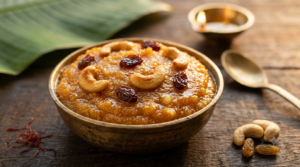
Soft, saffron-orange Iyengar Style Rava Kesari topped with fried cashews and raisins.
The dish carries many names. Tamils and Telugus call it rava kesari, while Kannadigas say kesari bath, and North Indians know a close cousin as sheera. The Iyengar preparation stands apart because of how it is finished and offered, which we will unpack before the first spoon of ghee even hits the pan.
Iyengar Style Rava Kesari at a Glance
Short on time? Here is everything the recipe promises, in one quick-scan list.
- What it is: a melt-in-the-mouth semolina pudding sweetened with sugar and perfumed with cardamom, saffron and a whisper of edible camphor.
- Total time: about 30 minutes, start to serving bowl.
- Skill level: easy, once you nail the water temperature.
- The golden ratio: 1 cup rava to 2½ cups water to ¾ cup sugar, with a generous hand of ghee.
- The Iyengar signature: a tiny pinch of food-grade pachai karpooram (edible camphor) and a clean kesari-orange colour, because the sweet doubles as naivedyam.
What Makes Iyengar Style Rava Kesari Different
Most online recipes treat every kesari as the same dish. It is not. The Iyengar style, rooted in Sri Vaishnava (Iyengar) tradition, is prepared as a temple and pooja offering first and a dessert second. That single fact shapes three real differences.
First, a tiny pinch of edible camphor, called pachai karpooram in Tamil, goes in at the end. This gives the sweet its distinct, cooling, faintly medicinal fragrance that devotees instantly recognise. Second, the colour stays a clean, bright kesari-orange from saffron or a little food colour, never a muddy brown. Third, the texture is soft and grainy at once, so it holds its shape on the spoon yet melts on the tongue.
Because it is meant as naivedyam, the traditional version skips anything that would make it un-offerable. There is no tasting mid-cook in strict households, so the measures have to be right the first time. That is exactly why this recipe leans on ratios instead of guesswork.
Ingredients for Iyengar Style Rava Kesari
These quantities serve four people generously. Fine semolina works best for Iyengar Style Rava Kesari, since it drinks up water evenly and gives that signature smooth grain.
| Ingredient | Quantity |
|---|---|
| Fine semolina (Bombay rava / sooji) | 1 cup (approx. 150 g) |
| Water | 2½ cups (600 ml) |
| Ghee (clarified butter) | 4 tablespoons (60 ml) |
| Sugar | ¾ cup (150 g), adjust to taste |
| Saffron strands | 8–10, soaked in 1 tbsp warm water (optional) |
| Cardamom powder | ¼ teaspoon |
| Cashew nuts | 10–12 pieces |
| Raisins | 10 pieces (optional) |
| Edible camphor (pachai karpooram) | 1 tiny pinch (optional, food-grade only) |
You can raise the sugar to 1 cup if you like a sweeter, halwa-style finish. For a lighter version, ¾ cup is plenty. Keep the ghee generous, because ghee is what lifts this from a plain porridge into a festive sweet.
The Rava, Water and Ghee Ratio That Never Fails
Get the ratio right and the rest is easy. Iyengar Style Rava Kesari lives or dies on this balance. For fine Bombay rava, use two to two-and-a-half parts water for every one part semolina. This recipe uses 2½ cups, because a slightly wetter cook keeps the kesari soft rather than dry.
Coarser rava drinks more, so add a splash extra water if your grain is thick. Millet rava is thirstier still and needs close to four parts water, plus a slower cook. Sugar sits around three-quarters to one part, and ghee should never feel shy.
One rule matters above all others. Always add boiling-hot water to the roasted rava, never cold or lukewarm. Cold water is the single biggest cause of hard lumps, since it shocks the semolina before it can swell evenly.
How to Make Iyengar Style Rava Kesari Step by Step
Follow these six stages in order. Keep the flame low whenever sugar or rava is in the pan, because both scorch fast. Read all six before you start, so nothing catches you off guard.
1. Roast the Cashews and Rava (5 minutes)
Heat a heavy-bottomed pan on medium flame and add 2 tablespoons of ghee. When it melts, fry the cashews until golden, which takes about a minute. Toss in the raisins and cook until they plump, then scoop everything onto a plate.
Add the semolina to the same ghee and roast on low. Stir constantly until it smells nutty and turns very lightly golden, around three minutes. It should not brown deeply, because over-roasting makes the kesari gummy later.
2. Boil the Water (3 minutes)
While the rava roasts, bring 2½ cups of water to a rolling boil in a separate pan. If you are using saffron, soak the strands in 1 tablespoon of warm water now so the colour bleeds out. Keep the water on a boil until you need it.
3. Combine Rava and Water (5 minutes)
Lower the flame under the rava. Pour the boiling water in a slow, steady stream while you stir hard with the other hand. The mixture will hiss and steam, so stand back a little. Keep stirring until the water is absorbed and the semolina thickens, about three to four minutes.
4. Add Sugar, Saffron and Camphor (5 minutes)
Add ¾ cup sugar and stir on low. The mix loosens again as the sugar melts, which is normal. Once it thickens back up, sprinkle in the cardamom powder and stir in the saffron water for that kesari glow. Now crush one tiny pinch of edible camphor and mix it through, since this is the Iyengar signature note.
5. Finish With Ghee and Rest (2 minutes)
Drizzle in the remaining 2 tablespoons of ghee. Stir until the kesari starts to leave the sides of the pan, roughly two minutes. Switch off the heat, cover the pan, and let it rest for three to five minutes so the grains settle and the aroma deepens.
6. Garnish and Serve
Spoon the warm kesari into bowls and scatter the fried cashews and raisins on top. Serve it hot or warm, because this sweet is at its best fresh off the stove. A tiny extra dab of ghee on top never hurts.
Iyengar Style Rava Kesari: Pro Tips From My Kitchen
These are the small details that guides rarely mention, learned from decades of home cooking.
- Roast the rava only to a nutty aroma, not a deep colour. Under-roast slightly if unsure, since a pale rava still sets well while a dark one turns sticky.
- Warm the sugar-and-water stage gently. If you rush it on high heat, the sugar caramelises and dulls the bright kesari colour.
- Homemade ghee beats store-bought here. Its aroma carries the whole dish, so use the good stuff when you have it.
- Stir like you mean it when the water goes in. This one step, done fast and steady, is what most people get wrong.
- Serve promptly. As it cools the kesari firms up, so reheat with a splash of milk or water to bring back the soft texture.
Iyengar Style Rava Kesari Variations to Try
Once the base recipe feels familiar, these swaps open up new flavours. Each one keeps the Iyengar Style Rava Kesari method the same and changes only an ingredient or two.
Jaggery kesari: replace the sugar with an equal measure of grated jaggery for a deeper, earthier sweetness. The colour turns amber rather than orange, which is worth expecting.
Milk kesari: swap half the water for hot milk to get a richer, creamier finish, closer to a payasam. Many Bangalore families cook it this way, though the classic offering version sticks to water.
Pineapple kesari: stir in a few spoons of finely chopped, lightly cooked pineapple with the sugar. The fruit adds a tang that cuts through the ghee beautifully.
Substitutions, Storage and Reheating
Small changes let you adapt this to whatever your kitchen holds. None of them break the recipe.
- Nuts: almond slivers or pistachios stand in nicely for cashews if you want extra crunch.
- Colour: if saffron is out of reach, a pinch of natural turmeric or a drop of orange food colour gives the kesari shade.
- Storage: keep leftovers in an airtight box in the fridge for up to three days.
- Reheating: warm it with a splash of milk or water, because the semolina tightens once chilled.
A Quick Note on Edible Camphor
Edible camphor deserves one caution, because it is easy to get wrong. Use only food-grade pachai karpooram sold for cooking, never regular camphor tablets meant for pooja lamps or moth control, which are toxic if eaten. A tiny pinch is enough, since too much turns bitter and overpowering. When in doubt, leave it out and the kesari is still delicious with cardamom alone.
Iyengar Style Rava Kesari Nutrition Per Serving
These figures are approximate, based on four servings from the quantities above. Actual values shift with how much ghee and sugar you use.
| Nutrient | Approximate Amount |
|---|---|
| Calories | ~300 kcal |
| Carbohydrates | ~45 g |
| Fat | ~11 g |
| Protein | ~4 g |
| Fiber | ~1 g |
As a ghee-and-sugar sweet, this is a treat rather than an everyday dish. If you are watching sugar, cut the quantity to half a cup and you still get a pleasant, lightly sweet result.
When to Make It and How to Serve
Iyengar Style Rava Kesari shines at festivals like Diwali, Varalakshmi Vratam and Krishna Jayanti, and at any pooja where a quick naivedyam is needed. It comes together faster than most sweets, which is why it appears at short notice for guests. South Indian homes often pair it with a savoury like ven pongal for the classic sweet-and-savoury “chow chow bath” plate. For more festive ideas, our Diwali sweets collection has plenty to choose from.
Final Thoughts Before You Cook
Iyengar Style Rava Kesari rewards attention to two things above all: hot water and a light hand with roasting. Get those right and you will turn out a soft, glowing sweet every single time. Start with the classic water version, then branch into jaggery, milk or pineapple once you trust the method.
Keep the ghee generous, the camphor tiny, and serve it warm for the best experience. If you enjoy semolina sweets, try our rava laddu with jaggery next.
FAQs About Iyengar Style Rava Kesari
What makes Iyengar Style Rava Kesari different from regular kesari?
The Iyengar version is made as a temple and pooja offering, so it finishes with a pinch of food-grade edible camphor and keeps a clean kesari-orange colour. This gives it a distinct fragrance that ordinary kesari bath lacks. The texture also stays soft yet grainy rather than pasty.
Can I make Iyengar Style Rava Kesari without saffron?
Yes. Saffron mainly adds colour and a light aroma, both of which are optional. Use a pinch of natural turmeric or a drop of orange food colour for the classic shade. The cardamom and camphor still carry the flavour beautifully.
Why is my kesari lumpy or sticky?
Lumps form when water is added too fast or the water is not hot enough. Always pour boiling water in a slow stream while stirring hard. Stickiness usually means the rava was over-roasted, so keep the roast light and nutty.
What is the correct rava to water ratio?
For fine Bombay rava, use two to two-and-a-half cups of water per cup of semolina. Coarser rava needs a little more, and millet rava needs close to four cups. This recipe uses 2½ cups for a soft, non-dry finish.
Can I add milk instead of water?
Yes. Swapping half the water for hot milk gives a richer, creamier kesari. Many families cook it this way for a dessert version. The traditional offering, however, uses only water.
Is edible camphor safe to eat?
Only food-grade pachai karpooram sold for cooking is safe, and only in a tiny pinch. Never use ordinary camphor tablets meant for lamps, as those are not edible. If you are unsure, simply skip it.
How long does rava kesari stay fresh?
Stored in an airtight container in the fridge, it keeps for up to three days. Reheat with a splash of milk or water to loosen the texture. It tastes best fresh and warm, so make only what you will serve soon.
Can I use jaggery instead of sugar?
Yes, jaggery works as an equal swap and adds a deeper flavour. Expect an amber colour rather than the bright kesari orange. Melt and strain the jaggery first if it has impurities.