Payasam With Appalam: Kerala-Style Sweet & Crisp Pairing
Payasam with appalam is a sweet-and-crisp South Indian pairing, not a separate payasam in which appalam cooks inside the milk. The best version keeps the rice payasam creamy and the appalam crisp until serving. In Kerala-style feast settings, the crisp wafer is usually called pappadam, while Tamil households commonly use the word appalam.
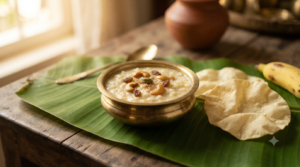
Creamy rice payasam served with crisp appalam on the side for a sweet-and-salty South Indian contrast.
The old version of this recipe treated the combination as a standard “hotel-style” formula. That is too broad. There is no single restaurant recipe for this pairing, and serving customs vary by family and region. Kerala Tourism lists both pappadam and payasam as familiar sadya foods, while regional serving traditions may also add ripe banana.
Payasam With Appalam at a Glance
- What it is: creamy rice payasam served with crisp appalam or pappadam.
- Best texture: pourable payasam with a crisp wafer added only at the table.
- Prep time: about 15 minutes, including rice soaking.
- Cook time: about 35 to 45 minutes on the stovetop.
- Servings: 4 small dessert portions.
- Sweetener: white sugar for this milk-based version.
- Optional serving addition: ripe banana, mashed lightly into the payasam at the table.
For a reference point, Kerala Tourism’s paal payasam recipe uses the classic rice, milk and sugar foundation. Its sadya guidance also lists pappadam and payasam among traditional feast foods.
Why Payasam With Appalam Works
Payasam with appalam works because the two foods solve each other’s texture problem. Milk payasam is soft, rich and sweet, while appalam is dry, salty and crisp. If you crumble a small piece over each spoonful, the contrast stays lively instead of turning soggy.
The key is timing. Do not drop the whole appalam into the pot. Steam and moisture soften it quickly, so keep every fried or roasted piece separate until people are ready to eat.
This also explains why the old instruction to “sprinkle appalam over the payasam” needs a small change. It is better to let each person break appalam into the bowl themselves. That keeps the wafer crisp and lets them control the sweet-salty balance.
Ingredients for Payasam With Appalam
| Ingredient | Quantity | Purpose |
|---|---|---|
| Full-fat milk | 1 litre | Creates a creamy base |
| Raw rice | 1/4 cup, about 50 g | Softens and thickens the milk |
| White sugar | 1/2 cup, about 100 g | Sweetens the payasam |
| Green cardamom powder | 1/4 tsp | Adds fragrance |
| Ghee | 1 tsp | Roasts the garnish |
| Cashews | 8 to 10 | Optional garnish |
| Raisins | 1 tbsp | Optional garnish |
| Appalam or pappadam | 4 pieces | One crisp accompaniment per serving |
| Ripe banana | 1 small | Optional sadya-style addition |
Short- or medium-grain raw rice gives the smoothest texture because it releases starch as it softens. Sona Masuri and Ponni both work well. Basmati is usable, although the grains stay more separate and the flavour becomes more aromatic.
If you want a simpler rice-only version without the serving combination, use the site’s rice payasam recipe. For a quicker stovetop method, compare the instant pal payasam recipe.
How to Make Payasam With Appalam
This payasam with appalam method keeps the original recipe’s useful one-litre milk ratio, but it tightens the cooking order. The rice cooks fully before sugar goes in. The appalam stays completely separate until serving.
- Rinse and soak the rice. Wash the rice two or three times, then soak it for about 15 minutes. Drain well before cooking.
- Warm the milk. Pour the milk into a wide, heavy-bottomed pan. Bring it to a gentle simmer over medium heat, then lower the flame.
- Cook the rice until very soft. Add the drained rice and stir well. Simmer gently, scraping the bottom and corners often so the milk does not catch.
- Check the grain. Press a grain against the side of the pan. It should mash easily before you sweeten the payasam.
- Add sugar gradually. Stir in the sugar and keep the heat low. Cook only until the sugar dissolves and the mixture returns to a gentle simmer.
- Add cardamom. Stir in the cardamom, then switch off the heat while the payasam is still slightly loose. It thickens as it rests.
- Roast the garnish. Heat the ghee in a small pan. Fry the cashews until lightly golden, then add the raisins and remove them once they puff.
- Prepare the appalam separately. Fry or roast it according to the packet directions. Drain fried appalam well and keep it uncovered until crisp.
- Serve immediately. Ladle warm payasam into bowls and place the crisp appalam on the side. Break it into the bowl only as you eat.
Payasam With Appalam Texture Checkpoints
The easiest way to judge payasam with appalam is by texture rather than a rigid timer. When the rice is ready, it should crush with almost no pressure. The milk should coat a spoon lightly but still pour without falling in heavy clumps.
Stop cooking a little earlier than you think. Rice continues absorbing milk after the flame goes off, so a perfect hot consistency can become too thick after ten minutes. If that happens, stir in warm milk a little at a time.
Appalam, Pappadam and Papad: What Is the Difference?
For this recipe, the practical difference is mainly regional naming and product style. Tamil speakers commonly say appalam, while Kerala usage often says pappadam. Across India, papad is the wider umbrella term for thin dried wafers made from pulse flour or other starches.
Brands vary in salt, spice, thickness and ingredients, so one appalam may taste stronger than another. A plain urad-dal style wafer is the easiest match for milk payasam because it adds crunch without covering the cardamom and milk flavour.
Kerala Tourism’s sadya material specifically names pappadam as a feast component. It also notes that payasam appears during the meal, so the combination belongs in a feast context rather than being presented as a universal restaurant dessert rule.
The Traditional Serving Idea Behind the Pairing
In a Kerala sadya, payasam is not always eaten exactly like a Western pudding. Depending on the region and household, people may enjoy it with banana, pappadam, boli or another sweet accompaniment. Kerala Tourism also notes that southern Kerala has its own payasam pairings and serving customs.
A useful way to serve the combination at home is to keep three textures separate: warm payasam, crisp appalam and soft ripe banana. Then each person can choose plain payasam, crumble in a little appalam, or mash in a small piece of banana.
Do not call any one version the only “authentic” method. Sadya menus change across districts, communities and homes. The reliable core is the contrast: creamy sweet payasam against something crisp, salty or soft-fruity.
Common Mistakes That Spoil Payasam With Appalam
| Problem | Likely cause | Best fix |
|---|---|---|
| Payasam is too thin | Milk has not reduced enough | Simmer gently before serving |
| Payasam is too thick | Rice kept absorbing liquid | Stir in warm milk gradually |
| Rice is still firm | Sugar went in too early | Cook rice fully before sweetening |
| Burnt flavour | Milk caught on the pan | Transfer the upper layer without scraping |
| Appalam is soggy | It sat in payasam too long | Add only while eating |
| Payasam curdles | Acid or jaggery was added carelessly | Use the sugar method or follow a jaggery-specific recipe |
One old tip should be removed completely: do not add lemon juice to an overly sweet milk payasam. Acid can curdle hot milk, so it is a poor rescue method. If the batch is too sweet, dilute it with unsweetened warm milk and rebalance the texture.
Jaggery also needs different handling because some jaggery can split hot milk. Use the dedicated paal payasam with jaggery recipe instead of making a straight sugar swap.
Frying or Roasting the Appalam
Fried appalam gives the lightest, crispest texture and the most familiar feast-style crunch. Heat neutral cooking oil, fry one wafer at a time, and remove it as soon as it expands and crisps. Drain it well before serving.
Roasting is also fine if you prefer less oil. Hold the appalam over a low flame with tongs, or use a dry pan if the product allows it. Turn it often because thin wafers scorch quickly.
Whichever route you choose, prepare the appalam close to serving time. Humid air softens it, while covering warm fried appalam traps steam. Keep it on a dry plate until everyone is ready.
Hotel-Style Payasam Without the Myth
“Hotel-style” works best as a texture description, not as a claim that every South Indian hotel follows one formula. A good restaurant-style bowl is creamy, smooth and easy to ladle. It should not be so thick that it sits like cooked rice pudding.
For a richer taste, use full-fat milk and a heavy pan. Slow, gentle simmering develops more dairy flavour than hard boiling. However, do not chase colour by scorching the milk or adding unnecessary condensed milk.
The old recipe also used two tablespoons of ghee. That is more than this small batch needs. One teaspoon for the garnish is enough because the appalam already brings richness when fried.
Serving Payasam With Appalam for a Sadya-Style Meal
Payasam with appalam is best served after the savoury rice courses, with the wafer still crisp. For four people, one appalam per bowl is enough because the wafer is an accent, not the main ingredient. Offer extra pieces separately if your guests want more crunch.
If you add banana, use a ripe but firm fruit and serve it on the side. Mash only a small piece into the bowl so the banana does not overpower the milk and cardamom. This is optional, not a requirement.
For a banana-leaf meal, keep the payasam and crisp items separate until the dessert course. Kerala Tourism’s Onasadya guide is useful for understanding how regional feast menus and payasam pairings can differ.
Storage and Food Safety
Milk payasam is perishable, so do not leave it standing for long after the meal. The Food Safety and Standards Authority of India advises keeping prepared food either cold below 5°C or hot above 60°C when it must be held.
At home, cool leftovers promptly and refrigerate them in a covered container. Keep appalam in a separate dry container because refrigeration will make it soft. Reheat only the payasam portion you plan to eat, and stir in a little milk if it has thickened.
FSSAI also advises thorough reheating of cooked leftovers. See its Food Safety at Home guidance for the official storage principles.
Payasam With Appalam: Final Tips
The strongest version of payasam with appalam is simple: cook the rice until completely soft, sweeten only after that point, and stop while the milk still pours easily. Then keep the crisp wafer away from the payasam until the first bite.
This refreshed method also avoids two common rescue mistakes. Do not add lemon to sweet milk payasam, and do not stir jaggery straight into a boiling dairy base. Both can cause splitting.
Most importantly, treat the pairing as a serving tradition rather than a rigid hotel recipe. Appalam, pappadam, banana and payasam can meet in different ways across South India, so the best home version is the one that keeps each texture at its best.
Frequently Asked Questions
Is payasam with appalam a traditional combination?
Yes, the sweet-and-crisp idea has a genuine regional food context, especially around Kerala-style feasts. However, practices vary by household and district. Some diners crumble pappadam into payasam, while others eat the two separately or add banana.
Should I cook appalam inside the payasam?
No. Cook or roast the appalam separately and add it only while eating. If it sits in the payasam, it absorbs moisture quickly and loses the crisp texture that makes the pairing interesting.
Can I use pappadam instead of appalam?
Yes. In this context, pappadam is the more common Kerala term, while appalam is common in Tamil usage. Choose a plain, crisp wafer with a flavour you already enjoy because salt and spice levels vary by brand.
Can I add banana to payasam and appalam?
Yes. Ripe banana is an optional addition in some Kerala feast traditions. Mash a small piece into your bowl with the payasam, then crumble a little crisp pappadam or appalam over it just before eating.
Why did my milk payasam become too thick?
Rice keeps absorbing milk after cooking, so the payasam becomes thicker as it rests and cools. Stir in warm milk a little at a time until it pours easily again. Next time, switch off the heat while the mixture still looks slightly loose.
Can I replace sugar with jaggery?
Not as a direct one-for-one step in this dairy method. Jaggery can cause hot milk to split, so it is safer to use a jaggery-specific technique that dissolves, strains and cools the syrup before combining it carefully.
Can I roast appalam instead of frying it?
Yes. Roasted appalam works well and gives the same crisp contrast with less added oil. Turn it often over low heat or use the preparation method printed on the packet, since thickness and ingredients vary.
How do I keep appalam crisp for serving?
Cook it close to mealtime and let fried pieces drain without covering them while hot. Store cooled appalam in a dry airtight container if needed. Keep it completely separate from the payasam until serving.