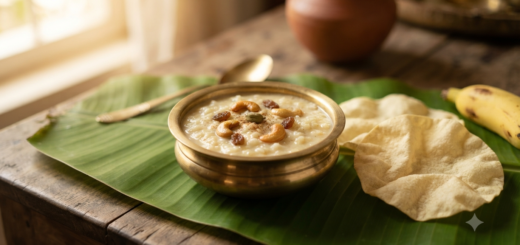
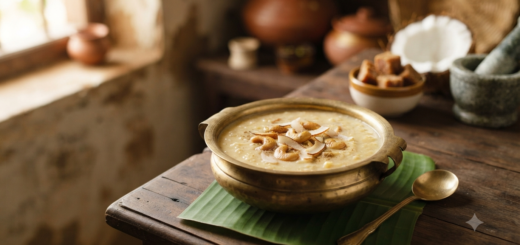
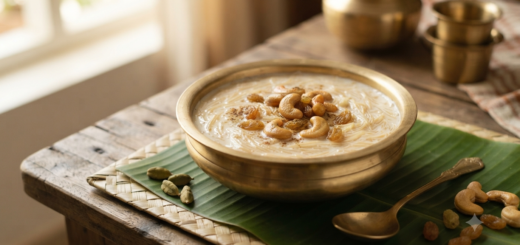
Rice Payasam With Jaggery: Creamy Hotel-Style Recipe
Rice payasam with jaggery works best when the rice becomes fully soft before the jaggery ever touches the milk. This version keeps the creamy hotel-style body, but it changes the old heat sequence so the milk is far less likely to split. You also get exact ratios, a faster option, storage guidance, and fixes for the problems that usually ruin jaggery payasam.
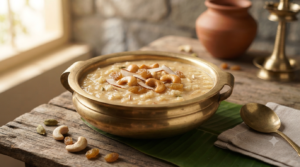
Creamy rice payasam sweetened with jaggery and finished with roasted cashews and raisins.
“Hotel-style” here describes the result, not one official restaurant formula. The target is a smooth, pourable dessert with soft rice, reduced milk, a warm caramel note from jaggery, and lightly roasted nuts. The biggest control point is simple: finish the milk-rice base first, then add cooled jaggery syrup off the heat.
Rice Payasam With Jaggery at a Glance
- Prep time: about 15 minutes, including soaking
- Cook time: about 45 to 55 minutes
- Yield: 5 to 6 small dessert bowls
- Best rice: Sona Masuri, Ponni, or another short- to medium-grain raw rice
- Main sweetener: cane jaggery, dissolved and strained
- Texture: creamy and pourable while warm, thicker after cooling
- Key rule: do not boil the finished milk payasam hard after adding jaggery
The old post used 1 cup rice, 5 cups milk, 4 cups water, and 1½ cups jaggery. That ratio makes a much heavier rice pudding and also dilutes the milk flavour. This refresh uses less rice, more milk relative to grain, and a measured jaggery range so the payasam stays creamy rather than stodgy.
Ingredients for Hotel-Style Jaggery Payasam
| Ingredient | Quantity | Why it matters |
|---|---|---|
| Full-fat milk | 1 litre | Builds body and richer dairy flavour |
| Raw rice | 1/4 cup, about 50 g | Thickens the milk naturally |
| Jaggery | 90 to 110 g | Adds sweetness and caramel depth |
| Water | 1/4 cup | Dissolves jaggery for straining |
| Cardamom powder | 1/2 tsp | Adds classic aroma |
| Ghee | 1 tbsp | Roasts the garnish |
| Cashews | 10 to 12 | Adds crunch |
| Raisins | 1 tbsp | Optional sweet garnish |
| Salt | 1 tiny pinch | Optional; sharpens flavour |
Use grams for jaggery when possible because cup measures vary with block size and grating. Start near 90 g if you prefer a mild dessert, then increase only after tasting. Jaggery quality and sweetness vary, so one fixed cup measure can make the same recipe taste very different from batch to batch.
Which rice gives the creamiest result?
Short- or medium-grain raw rice is the easiest choice because it softens well and releases enough starch to thicken the milk. Sona Masuri and Ponni both work well. Basmati also works, although its longer grains stay more separate and create a less cohesive texture.
Rinse the rice two or three times, then soak it for about 15 minutes. Soaking is not mandatory, but it helps the centre soften more evenly. Drain well before adding it to the hot milk.
How to Make Rice Payasam With Jaggery Without Curdling
The safest sequence is to cook the rice completely in milk, make the jaggery syrup separately, cool that syrup slightly, and combine the two only after switching off the heat. Heat and acidity can destabilise milk proteins, so controlling the final temperature matters more than adding extra ingredients.
- Warm the milk gently. Pour 1 litre of full-fat milk into a wide, heavy-bottomed pan. Bring it to a gentle boil over medium heat, then reduce the flame.
- Add the rice. Stir in the drained 50 g rice. Keep the pan uncovered because milk can rise quickly under a lid.
- Cook until very soft. Simmer for about 30 to 35 minutes. Stir across the bottom every few minutes, and stir more often as the mixture thickens.
- Check the texture. The rice should mash easily against the side of the pan. The milk should still flow from the ladle rather than sit like porridge.
- Make the jaggery syrup. Add 90 to 110 g jaggery and 1/4 cup water to a small saucepan. Warm only until the jaggery dissolves.
- Strain the syrup. Pass it through a fine metal strainer if you see grit. Let the syrup cool until warm rather than piping hot.
Finish Rice Payasam With Jaggery Off the Heat
- Switch off the milk-rice base. Remove the pan from active heat. Let it stand for 5 to 8 minutes so vigorous bubbling stops.
- Add jaggery slowly. Pour the warm syrup in a thin stream while stirring. Add cardamom and the optional pinch of salt.
- Roast the garnish. Heat ghee in a small pan. Fry cashews until golden, then add raisins just until they puff.
- Rest before serving. Stir the garnish into the payasam and rest it for 10 minutes. The texture will tighten slightly as the rice absorbs more liquid.
Do not return the finished rice payasam with jaggery to a rolling boil. If you want it hotter, warm it only briefly on very low heat and stir continuously. A hard second boil is unnecessary and increases the chance of a grainy or split finish.
What Makes This Version “Hotel Style”?
A hotel-style bowl usually feels richer and more integrated than plain sweet milk with rice. That effect comes from controlled reduction, soft rice, and a glossy final consistency. It does not require cornflour, condensed milk, or a huge quantity of rice.
The most useful cue is the ladle test. Before adding jaggery, the milk-rice base should coat the ladle lightly while still pouring in a steady ribbon. If the mixture already looks very thick in the pan, it will become heavier after cooling.
| Method | Time | Result |
|---|---|---|
| Slow stovetop | 45 to 55 min | Best milk flavour and smooth texture |
| Cook rice separately, then simmer in milk | 30 to 40 min | Faster, slightly less integrated |
| Leftover cooked rice shortcut | 15 to 20 min | Fastest, but less creamy |
For the closest hotel-style texture, use the slow stovetop method. If speed matters, cook the rice separately in a small amount of water until very soft, then simmer it in milk for 15 to 20 minutes before adding jaggery off the heat.
Rice Payasam With Jaggery: Common Mistakes and Fixes
| Problem | Likely cause | Best fix |
|---|---|---|
| Milk splits after jaggery | Mixture was too hot | Add cooled syrup only after switching off heat |
| Payasam is too thick | Too much rice or excess reduction | Loosen with warm milk before serving |
| Payasam is too thin | Rice was not fully cooked | Reduce the milk-rice base before jaggery goes in |
| Bottom tastes burnt | Heat was too high | Transfer the upper layer to a clean pan |
| Jaggery tastes gritty | Syrup was not strained | Dissolve and strain before mixing |
| Dessert is too sweet | Jaggery added all at once | Start at the lower end of the range |
If the milk catches on the bottom, do not scrape the dark layer back into the dessert. Pour the clean upper portion into another pan and continue gently. Burnt milk spreads quickly, so moving the good portion early is the best rescue.
Why does jaggery sometimes split milk?
Milk proteins become less stable when acidity and heat act together. Jaggery can vary by source, processing, mineral content, and acidity, so one batch may behave differently from another. The practical answer is not to guess which jaggery is “safe”; instead, lower the temperature before combining it with milk.
This is why the old instruction to add warm jaggery syrup and cook for another 10 minutes needed correction. The flavour does not require that final boil. Off-heat mixing gives the jaggery enough contact to dissolve evenly without keeping the dairy under avoidable heat stress.
Is Jaggery Really Healthier Than Sugar in Payasam?
Jaggery gives a deeper taste and colour, but rice payasam with jaggery is still a sweet dessert. The Food Safety and Standards Authority of India (FSSAI) regulates jaggery as a sugar-based food product. Therefore, choose jaggery mainly for its flavour rather than treating the dessert as sugar-free.
The World Health Organization also recommends limiting free sugars as part of a healthy diet. For this recipe, the practical approach is portion control and moderate sweetness. If you prefer a less sweet bowl, reduce the jaggery rather than adding another sweetener.
Can I make it “sugar-free” by using more jaggery?
No. Jaggery itself is a concentrated sweetener, so replacing white sugar with jaggery does not make the dish sugar-free. A reduced-sugar version simply uses less jaggery and a smaller serving.
Serving, Storage, and Reheating
Serve the payasam warm if you want the strongest cardamom aroma. Serve it chilled if you prefer a thicker, pudding-like texture. Either way, stop cooking while the dessert still looks slightly loose because rice continues absorbing liquid during resting.
For food safety, cool leftovers promptly and refrigerate them in a covered container. The USDA Food Safety and Inspection Service advises refrigerating perishable leftovers within two hours, or within one hour when temperatures exceed about 32°C.
For quality, this milk dessert is usually best within two to three days. Reheat only the portion you need, using low heat and a small splash of milk. Stir gently because chilled payasam becomes much thicker than it was on the stove.
Can you freeze jaggery payasam?
You can freeze it, but the texture may turn less smooth after thawing because cooked rice and dairy both change during freezing. If texture matters, refrigeration is the better option. Thaw frozen portions in the refrigerator and reheat gently.
How This Recipe Differs From Other Payasam Types
This recipe is a dairy-based rice payasam sweetened with jaggery. It is not the same as sugar-based paal payasam, coconut-milk pradhaman, or dal payasam. Those desserts share the payasam name, but the base, sweetener, and finishing method can be very different.
For a sugar-based version with a lighter colour, see the rice payasam recipe. If you want a jaggery sweet with a different texture, the palathalikalu recipe with jaggery uses rice-flour noodles. The moong dal payasam with jaggery uses lentils instead of rice.
What the Old Recipe Got Wrong
The earlier version had the right ingredient family, but several details weakened both reliability and trust. The rice-to-liquid ratio was unusually heavy, the jaggery step kept the dairy on heat too long, and the article linked readers to a hotel-booking website that had nothing to do with the recipe.
The old “sugar-free” answer was also misleading because jaggery is still a sugar-rich sweetener. In addition, the nutrition table used modelled estimates rather than a transparent calculation. This refresh removes that unsupported nutrition block and focuses on quantities readers can actually measure in the kitchen.
Rice Payasam With Jaggery: Final Cooking Notes
Rice payasam with jaggery becomes reliable once you separate two jobs: cook the rice in milk first, then sweeten after the heat drops. That one change protects texture better than any special ingredient. A heavy pan, moderate flame, and regular stirring solve most of the remaining problems.
Start with less jaggery if you are unsure because sweetness can always go up. Stop the milk-rice base while it still pours easily because the rice will keep thickening the dessert. Then let the finished payasam rest before making any final texture adjustment.
Frequently Asked Questions
Can I add jaggery directly to boiling milk?
It is better not to add jaggery to actively boiling milk because some batches can make the milk split. Dissolve and strain the jaggery separately, let the syrup cool slightly, then mix it into the milk-rice base after switching off the heat.
What is the best rice for rice payasam with jaggery?
Sona Masuri, Ponni, or another short- to medium-grain raw rice gives a creamy result. Basmati works too, although the grains stay more separate. Whichever rice you choose, cook it until very soft before adding jaggery.
How much jaggery should I use for 1 litre of milk?
Start with about 90 g and increase toward 110 g if you prefer a sweeter dessert. Jaggery batches vary in sweetness, so grams are more reliable than a loose cup measure. Taste before adding more.
Why does my payasam become thick after cooling?
Cooked rice keeps absorbing liquid while it rests, so the mixture naturally tightens. Stop cooking while the payasam still looks pourable. If it becomes too thick later, stir in a little warm milk before serving.
Can I use coconut milk instead of dairy milk?
Yes, but the result becomes a different style of payasam with a stronger coconut flavour. Add thick coconut milk near the end and avoid prolonged boiling. Treat it as a variation rather than a direct one-for-one copy of this dairy recipe.
Can I make rice payasam with jaggery ahead of time?
Yes. Make it earlier the same day, cool it promptly, and refrigerate it in a covered container. Since it thickens when chilled, loosen it with a little milk before reheating or serving.
Can I make this recipe without ghee or nuts?
Yes. Ghee, cashews, and raisins are optional finishing ingredients. The core dessert depends on milk, rice, jaggery, and cardamom, so you can skip the garnish if needed.
Is jaggery payasam suitable as naivedyam?
Many families prepare rice-and-jaggery sweets as naivedyam, but customs differ by region and household tradition. If you are preparing an offering, follow the ingredient rules and preparation practices observed in your own family or temple tradition.