Semiya Payasam Recipe: Easy Hotel-Style Vermicelli Kheer
Semiya payasam recipe becomes noticeably better when you control three things: roast the vermicelli gently, cook it fully before adding sugar, and stop while the milk is still slightly loose. That gives you soft strands in a creamy base instead of a thick, clumpy pudding. This version keeps the familiar South Indian flavour of milk, cardamom, ghee, cashews and raisins while using a simple hotel-style finishing method.
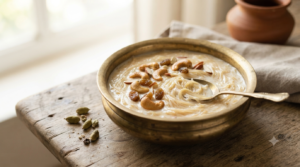
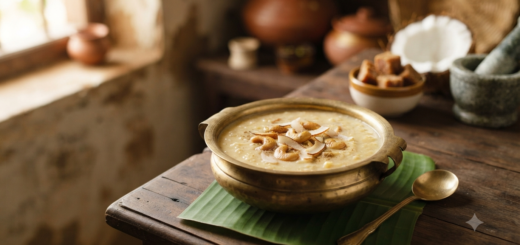
Creamy semiya payasam with soft vermicelli, roasted cashews and raisins in a rich milk and cardamom base.
The older version of this post had the right basic idea, but it was too brief and left out the details that decide texture. This refresh keeps the core milk-and-semiya method, removes an unrelated hotel-booking link, and adds exact texture cues, jaggery guidance, storage safety and troubleshooting.
Semiya Payasam Recipe at a Glance
- Style: creamy South Indian vermicelli payasam with a light hotel-style finish.
- Prep time: 10 minutes.
- Cook time: about 25 minutes.
- Total time: about 35 minutes.
- Serves: 4.
- Main rule: add sugar only after the semiya turns fully soft.
- Best texture: flowing while hot, because it thickens as it cools.
A good semiya payasam should coat the spoon lightly but still pour easily. If it already looks very thick in the pan, it will usually become too dense after resting.
Recipe Card
| Item | Amount | Why it matters |
|---|---|---|
| Roasted wheat semiya | 75 g | Gives soft strands without making the payasam too dense |
| Full-fat milk | 4 cups / about 950 ml | Creates the creamy base |
| Sugar | 1/4 to 1/3 cup | Use the lower amount for a lightly sweet finish |
| Ghee | 2 tbsp | Roasts the nuts and deepens aroma |
| Cashews | 10 to 12 | Add crunch and richness |
| Raisins | 1 tbsp | Add soft bursts of sweetness |
| Cardamom powder | 1/2 tsp | Provides the classic payasam aroma |
| Saffron | 6 to 8 strands, optional | Adds colour and a floral note |
Use the same semiya brand each time when possible, because strand thickness changes cooking time. Pre-roasted semiya still benefits from a brief ghee roast, but it needs much less time than plain vermicelli.
Why This Hotel-Style Method Works
This semiya payasam recipe gets its richer result without requiring condensed milk. Whole milk, a heavy pan and a short final simmer give the base enough body while keeping the dessert clean and milky. Roasting the semiya also adds a nutty aroma, so the finished payasam tastes fuller without extra flavouring.
The second important detail is timing. Sugar goes in only after the semiya has softened, because the goal is to cook the strands first and sweeten the milk second. Finally, switch off the heat before the payasam reaches your final serving thickness, since the vermicelli keeps absorbing liquid as it stands.
Ingredients for Creamy Vermicelli Payasam
Semiya: Use roasted wheat vermicelli for the easiest result. If yours is unroasted, fry it gently until pale golden. Do not take it to a deep brown colour, because burnt strands make the whole pot taste bitter.
Milk: Full-fat milk gives the richest texture, although toned milk also works. If you use toned milk, simmer it a little longer before you judge the final consistency.
Sugar: Start with 1/4 cup if your family prefers moderate sweetness. Increase toward 1/3 cup after tasting. This is more reliable than starting very sweet and trying to dilute the finished payasam.
Ghee, nuts and cardamom: Cashews and raisins are the classic finish, while almonds are optional. Freshly crushed cardamom gives a stronger aroma than old powder, so use less if it is very fragrant.
How to Make This Semiya Payasam Recipe
- Measure first. Keep the semiya, milk, sugar, cardamom, nuts and raisins ready before heating the pan. Milk can catch quickly, so this prevents rushed measuring later.
- Fry the garnish. Heat 1 tablespoon ghee in a heavy-bottomed pan on low to medium heat. Fry the cashews until light golden, then add raisins for about 20 to 30 seconds. Remove both to a plate.
- Roast the semiya. Add the remaining ghee. If the semiya is already roasted, stir it for about 30 to 60 seconds until fragrant. If it is plain, roast gently until pale golden while stirring constantly.
- Add the milk. Pour in the milk slowly and stir once so the semiya separates. Bring it to a gentle simmer rather than a hard rolling boil.
- Cook until fully soft. Simmer on low to medium-low heat for roughly 8 to 10 minutes. Stir every minute or two, especially across the bottom and corners of the pan.
- Add sugar only now. Test a strand between your fingers or bite one carefully. Once it is completely soft, add 1/4 cup sugar and cardamom. Simmer for another 2 to 3 minutes.
- Adjust the sweetness. Taste after the sugar dissolves. Add a little more sugar if needed, then stir until dissolved.
- Finish while still loose. Turn off the heat when the payasam pours in a smooth ribbon. Add the fried cashews and raisins, then rest it for 5 minutes before serving.
This semiya payasam recipe is meant to stay spoonable rather than set like pudding. If you plan to serve it chilled, leave it even looser because refrigeration makes it thicker.
How to Get the Hotel-Style Texture Without Condensed Milk
The easiest route is controlled milk reduction, not extra thickener. After the semiya becomes soft, simmer only until the milk lightly coats the strands. Scrape any milk solids from the sides back into the pan, because they add flavour and body.
Do not add cornflour, custard powder or extra starch for a classic version. Those shortcuts can make the base pasty, while semiya naturally thickens the milk as it rests. If you want a richer variation, you can add 2 tablespoons condensed milk near the end, but reduce the sugar first and taste before adding more.
For another milk-forward dessert, see Bhimas Cook’s paal payasam with condensed milk. It uses rice rather than semiya, so the texture develops differently.
Semiya Payasam Recipe Troubleshooting
| Problem | Likely cause | Best fix |
|---|---|---|
| Too thick | Cooked too long or rested too long | Stir in warm milk, a little at a time |
| Too thin | Not enough simmering time | Simmer uncovered for a few more minutes |
| Clumpy semiya | Milk added without stirring or heat too high | Lower heat and separate strands gently with a spoon |
| Burnt flavour | Thin pan or milk caught at the base | Transfer the top portion to a clean pan without scraping the burnt layer |
| Greasy surface | Too much ghee for the amount of semiya | Use the measured amount and fry garnish separately |
| Milk curdled after jaggery | Jaggery added to very hot milk | Use jaggery syrup only after the payasam cools slightly |
If milk catches at the bottom, do not scrape it back into the dessert. Move the unburnt payasam to a fresh pan immediately, because even a small amount of scorched milk can spread a bitter flavour.
Can You Use Jaggery Instead of Sugar?
Yes, but treat jaggery as a separate variation rather than a direct one-for-one swap. Dairy can split when acidic or impure jaggery hits very hot milk, so melt the jaggery with a small splash of water, strain it, and let both mixtures cool slightly before combining.
For the safest texture, switch off the payasam once the semiya is cooked. Wait about 5 minutes, then stir in the strained jaggery syrup gradually. Do not bring the mixture back to a strong boil after adding jaggery.
If you want a coconut-based sweet instead, Bhimas Cook also has a coconut payasam recipe. That style handles jaggery differently because coconut milk replaces part of the dairy.
Can You Add Sago to Semiya Payasam?
Yes. Sago adds soft, translucent pearls and makes the dessert feel more substantial. However, it also absorbs liquid, so a semiya-and-sago version needs different soaking and milk ratios from this simple recipe.
Use the dedicated sago and vermicelli payasam when you want both textures in one bowl. That keeps this page focused on classic semiya payasam while giving the sago version its own method.
Serving, Cooling and Storage
Semiya payasam can be served warm, at room temperature or chilled. For warm service, rest it for 5 to 10 minutes so the milk settles around the strands. For chilled service, cool it promptly and refrigerate it in a covered container.
Because this is a milk-based dessert, food-safety rules matter. The Food Safety and Standards Authority of India advises keeping prepared food cold below 5°C when it must be stored. The USDA Food Safety and Inspection Service also advises refrigerating perishables within two hours and using most cooked leftovers within three to four days.
For best texture, use this semiya payasam recipe within 2 to 3 days after refrigeration. Reheat gently over low heat and add warm milk if it has thickened. Do not repeatedly heat and cool the whole batch; warm only the portion you plan to serve.
How to Scale the Recipe for a Family Function
Doubling the ingredients is easy, but cooking time does not double neatly. A larger milk volume takes longer to reach a simmer, so use a wider heavy pan and keep the heat moderate. Stir more often near the bottom because a bigger batch catches more easily.
For eight servings, double the semiya, milk, sugar, garnish and cardamom. Start with slightly less sugar than the exact double, then taste at the end. Sweetness feels stronger in large milk desserts after cooling, so a final adjustment is better than over-sweetening early.
Do not crowd a small saucepan. A wide kadai gives the milk more surface area and makes gentle reduction easier, while also giving you room to stir without breaking the vermicelli.
What Beginners Get Wrong
- Roasting on high heat: semiya browns quickly, so low heat gives you more control.
- Adding sugar too soon: cook the strands fully first, then sweeten.
- Waiting for a thick finish in the pan: the payasam continues to thicken after cooking.
- Using too much garnish: nuts should add contrast, not overpower the milk and cardamom.
- Boiling jaggery with dairy milk: cool the payasam slightly before adding strained jaggery syrup.
- Leaving milk unattended: a heavy pan helps, but regular stirring still matters.
The best visual cue is simple: when you lift a spoon, milk should run off smoothly while a few soft semiya strands cling to it. That is the point to stop if you want a creamy bowl after resting.
Semiya Payasam Recipe: Final Notes Before Serving
This semiya payasam recipe works best when you treat consistency as the final ingredient. Roast gently, cook the vermicelli until fully soft, sweeten afterward, then stop while the milk still flows. Those small decisions matter more than adding extra richness.
Serve it warm for the clearest cardamom and ghee aroma, or chill it for a firmer dessert. Either way, keep some warm milk nearby so you can loosen the texture just before serving.
Frequently Asked Questions
Can I make semiya payasam without roasting the vermicelli?
Yes, especially if you buy pre-roasted semiya. However, a brief 30 to 60 second roast in ghee improves aroma and helps separate the strands. Plain unroasted vermicelli needs longer roasting until it turns pale golden.
Which milk is best for semiya payasam?
Full-fat milk gives the creamiest result and needs less reduction. Toned milk also works, but the payasam may taste lighter and take a little longer to gain body. Avoid a hard boil because milk can catch on the pan.
Why does my semiya payasam become very thick after cooling?
Vermicelli continues absorbing milk after the heat is off, so thickening is normal. Stop cooking while the payasam is still slightly loose. If it becomes too thick later, stir in warm milk until it returns to a pouring consistency.
Can I use condensed milk in this semiya payasam recipe?
Yes, but it is optional. Add about 2 tablespoons near the end for extra richness, then reduce the sugar and taste before adding more. Condensed milk should support the milk flavour rather than make the dessert overly sweet.
Can I use jaggery instead of sugar?
Yes, but add it carefully because hot dairy can curdle with some jaggery. Melt and strain the jaggery separately, cool the cooked payasam for a few minutes, then stir the syrup in gradually. Avoid boiling strongly afterward.
How long does semiya payasam keep in the refrigerator?
For best quality, use it within 2 to 3 days in a covered container kept properly chilled. Food-safety guidance also stresses prompt refrigeration of milk-based leftovers. Reheat only the portion you need and add milk if the dessert has thickened.
Can I make this semiya payasam recipe ahead for a festival?
Yes. Make it a few hours ahead, keep the texture slightly loose, cool it promptly and refrigerate. Before serving, bring it to your preferred temperature and adjust with a little warm milk if needed.