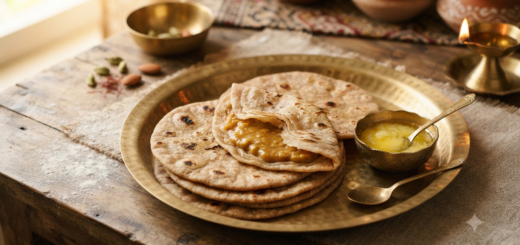
Poli Recipe With Wheat Flour: Soft Whole Wheat Puran Poli
Poli recipe with wheat flour works best when the atta dough stays softer than chapati dough and the chana dal filling is cooked completely dry. This refreshed method uses 100% whole wheat flour, jaggery, cardamom and ghee. It also shows how to stop the two problems that spoil most batches: cracked dough and wet puran.
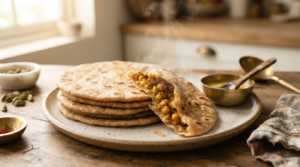
Soft whole-wheat poli filled with smooth chana dal and jaggery puran, served warm with a light touch of ghee.
This is a whole-wheat version of the sweet flatbread also known as puran poli, bobbatlu, holige, obbattu or paruppu poli in different regions. The names and fillings vary, but the basic idea stays the same: a thin dough covering around a smooth sweet lentil centre.
Poli Recipe With Wheat Flour at a Glance
This poli recipe with wheat flour makes about 8 to 10 medium polis. Allow about 30 minutes for preparation, 30 to 40 minutes for resting and cooling, and about 30 minutes for shaping and cooking. The total time is roughly 1 hour 30 minutes, although pressure-cooker and cooling times vary.
| Detail | Guide |
|---|---|
| Outer covering | 100% whole wheat flour (atta) |
| Sweet filling | Chana dal, jaggery and cardamom |
| Yield | 8 to 10 medium polis |
| Difficulty | Medium |
| Best texture | Soft, thin and flexible with a smooth filling |
| Best cooking heat | Medium, adjusted as the tawa gets hotter |
The key difference from a maida-based boli is the dough. Whole wheat flour contains bran, so it does not stretch as effortlessly as refined flour. Therefore, a soft knead, enough resting time and gentle rolling matter more here.
Ingredients for Poli Recipe With Wheat Flour
The ingredient list stays close to the original post, but the method below gives each ingredient a clearer job. Measure first, because shaping becomes easier when the filling and dough are ready at the same time.
For the whole wheat dough
- 2 cups whole wheat flour or atta, about 240 g
- 1/2 teaspoon salt
- 1/4 teaspoon turmeric powder, optional
- 3 tablespoons oil or melted ghee
- About 3/4 cup water, added gradually as needed
- Extra atta or rice flour for light dusting
For the chana dal and jaggery filling
- 1 cup chana dal, rinsed well
- 1 cup grated or powdered jaggery
- 1/2 teaspoon cardamom powder
- 1/4 teaspoon nutmeg powder, optional
- 2 teaspoons ghee
- Water for cooking the dal
For cooking and serving
- Ghee or oil, as needed for the tawa
- A small spoon of ghee for serving, optional
Jaggery strength and moisture vary by brand, so taste the cooled filling before shaping. If you prefer a less sweet poli, reduce the jaggery slightly rather than adding more flour to the filling.
How to Make Poli Recipe With Wheat Flour Step by Step
The easiest workflow is to start with the dal, then make the dough while the filling cooks. That way the dough rests while the puran cools. Do not rush the cooling stage, because warm filling softens the dough and makes rolling messy.
Step 1: Cook the chana dal until soft
Rinse the chana dal until the water runs mostly clear. You can soak it for 30 minutes if convenient, although soaking is not essential. Add enough fresh water for pressure cooking, then cook until the dal crushes easily between two fingers.
Pressure cookers vary, so use softness rather than a fixed whistle count as the test. The dal should be tender inside but not swimming in broken-down starch. Once the pressure settles, drain it very well through a sieve.
Step 2: Make a smooth, dry puran
Mash the drained dal while it is still warm. A potato masher works, while a puran yantra or food mill gives an even smoother texture. Avoid adding water because excess moisture becomes the main cause of leaking poli.
Transfer the mashed dal to a heavy pan, then add jaggery. The mixture will loosen as the jaggery melts, so keep cooking over medium-low heat. Stir often until the puran becomes thick enough to hold a soft ball.
Add cardamom, optional nutmeg and 2 teaspoons ghee. Then cook for another minute and remove the pan from the heat. Cool the filling fully before dividing it into 8 to 10 balls.
Step 3: Knead a softer-than-chapati atta dough
Mix the wheat flour, salt and optional turmeric. Add the oil or ghee, then rub it through the flour with your fingertips. Pour in water little by little and knead until the dough feels soft, smooth and slightly tacky.
Do not make a stiff roti dough because it will crack around the sweet filling. Cover the dough and rest it for at least 30 minutes. If your atta feels coarse or highly absorbent, a 45-minute rest gives the bran more time to hydrate.
Step 4: Fill without trapping thick seams
Divide the rested dough into 8 to 10 balls. For the first two polis, use a filling ball roughly the same size as the dough ball. Once you know how stretchy your dough is, you can use a little more filling for a thinner covering.
Flatten one dough ball into a small cup with your fingers. Place the puran in the centre, then bring the edges upward and pinch them closed. Press the sealed top flat so there is no thick knot in the middle.
Step 5: Roll gently from the centre outward
Dust the stuffed ball lightly with atta or rice flour. Roll with short, gentle strokes from the centre toward the edge. Rotate often, because repeated pressure in one direction pushes filling toward one side.
A 6 to 7 inch circle is a practical starting size for whole-wheat poli. Stop if you see the filling close to breaking through. A slightly smaller soft poli is better than an oversized one with torn edges.
Step 6: Cook on a steady medium tawa
Heat a heavy tawa over medium heat. Lay the rolled poli on the dry surface and wait until small bubbles or pale spots appear. Flip it, then brush or drizzle a little ghee around the surface.
Flip again when the second side develops golden spots. Cook only until both sides show even brown patches and the dough no longer looks raw. As the pan gets hotter, lower the flame slightly so the jaggery does not scorch.
Why Poli Recipe With Wheat Flour Tears and How to Fix It
Most failures come from the moisture balance between the dough and the filling. A dry dough cannot stretch, while a wet filling pushes through the surface. Fix those two textures first and the rolling becomes much easier.
| Problem | Likely cause | Best fix |
|---|---|---|
| Dough cracks | Too stiff or under-rested | Knead in a teaspoon of water, cover and rest again |
| Filling leaks | Puran is too wet | Return it to the pan and cook until it holds shape |
| Poli feels thick | Too much dough around the filling | Use smaller dough balls or slightly more filling |
| Centre stays doughy | Tawa too hot | Lower heat and cook a little longer |
| Poli turns hard | Dough too dry or cooked too long | Keep dough soft and remove once brown spots appear |
| Filling is grainy | Dal was not mashed smooth | Mash or pass through a food mill before adding jaggery |
If one poli tears, do not keep adding dry flour to the whole batch. First check whether the tear came from wet puran or stiff dough. That small diagnosis prevents the remaining pieces from becoming dry and floury.
Whole Wheat Poli vs Maida Bobbatlu
This poli recipe with wheat flour has a fuller wheat flavour and a slightly firmer bite. Maida stretches more easily, so it can produce a thinner, softer outer layer with less effort. Neither method is automatically better; the right one depends on the texture you want.
| Version | Texture | Best for |
|---|---|---|
| 100% atta | Soft but slightly hearty | Whole-wheat preference and everyday batches |
| Atta + maida | Softer and more elastic | Beginners who want easier rolling |
| Mostly maida | Very thin and tender | Classic soft hotel or function-style texture |
If you want the maida method, use the separate bobbatlu recipe with maida. For a broader Andhra-style version, see the soft chana dal bobbatlu recipe. Keeping those methods separate avoids mixing dough ratios that behave differently.
What Makes This Poli Recipe With Wheat Flour Softer?
Three things matter most in this poli recipe with wheat flour: soft dough, dry puran and patient resting. Whole wheat flour needs enough water to stay flexible, but the surface should not feel pasty. Meanwhile, the filling must be cool and firm enough to roll without squeezing out.
- Rest the dough: 30 to 45 minutes helps the flour hydrate and relax.
- Drain the dal: extra cooking water makes the puran loose after jaggery melts.
- Cool the filling: warm puran softens the dough and encourages tearing.
- Roll gradually: short strokes keep the filling centred.
- Use medium heat: the dough cooks through before the jaggery darkens.
Do not chase a paper-thin result on the first piece. Whole-wheat dough varies between flour brands, so the first poli is your test. Adjust water, dusting flour or filling size only after seeing how that first one rolls.
Can You Make the Filling or Dough Ahead?
Yes, but keep the components separate until you are ready to shape. The cooked puran can be prepared ahead, cooled quickly and refrigerated in a covered container. Bring it back toward room temperature before shaping so it is firm but not fridge-cold and hard.
You can also knead the dough a few hours ahead and refrigerate it covered. Before rolling, let it soften at room temperature and knead it briefly. If the surface has dried, work in a few drops of water rather than extra oil.
For food safety, cool and refrigerate cooked leftovers promptly. The Food Safety and Standards Authority of India advises keeping leftover cooked food cold and covered, with refrigeration below 5°C. The safest home habit is to refrigerate rather than leave filled poli at room temperature for long periods.
Storage for Poli Recipe With Wheat Flour
This poli recipe with wheat flour tastes best on the day it is cooked. Once fully cool, place the pieces in a covered container with parchment or clean paper between layers. Refrigerate leftovers, especially in warm weather or humid kitchens.
Reheat on a tawa over low to medium heat until warm. A few drops of ghee restore aroma and flexibility. Avoid long reheating because whole wheat poli dries faster than a maida version.
If you freeze cooked poli, separate the pieces so you can remove only what you need. Thaw in the refrigerator, then reheat on the tawa. General food-safety guidance from the USDA Food Safety and Inspection Service recommends refrigerating cooked leftovers promptly and using most refrigerated leftovers within three to four days.
Serving Ideas and Regional Variations
Serve this poli recipe with wheat flour warm with a little ghee. Some families pair it with warm milk, while others serve it as part of a festival meal. The chana dal and jaggery version also works well beside a mildly spiced meal because the sweet filling becomes the final contrast.
Regional versions change the flour, lentil or filling. Karnataka holige may use different lentils or coconut, while Maharashtrian puran poli often follows its own family ratios. If you want a different style, the site also has a Gujarati-style puran poli recipe and a separate semolina poli method.
Nutrition Notes for Whole Wheat Poli
This is an energy-dense festive sweet because each piece combines cereal, lentils, jaggery and added fat. Exact calories change with the size of each poli and the amount of ghee used on the tawa. Therefore, a single fixed calorie number can be misleading.
Whole wheat flour and chana dal contribute carbohydrate, protein and fibre, while jaggery contributes mostly sugar. For ingredient-level Indian food composition data, use the ICMR-National Institute of Nutrition Indian Food Composition Tables. If you track intake for diabetes or another medical condition, use your actual ingredient weights and follow advice from a qualified dietitian or doctor.
Poli Recipe With Wheat Flour: Final Checks Before Cooking
Before you heat the tawa, check three textures. The dough should feel soft and pliable, the puran should hold a ball, and both should be cool enough to handle. If any one of those is wrong, fix it before shaping the full batch.
This poli recipe with wheat flour is not an “instant” sweet in the true sense, because resting and cooling are part of the method. However, the active work is straightforward once those stages happen in the right order. Make one test poli first, adjust, and then finish the batch.
Frequently Asked Questions
Can I make poli with only wheat flour and no maida?
Yes. A poli recipe with wheat flour can use 100% whole wheat flour, so no maida is required. The dough needs to stay softer than chapati dough because atta does not stretch as freely as refined flour.
Why does my wheat flour poli crack while rolling?
Cracking usually means the dough is too stiff, too dry or not rested enough. Add a small amount of water, knead again and rest it covered. Also make sure the filling is smooth because coarse dal can push through the surface.
Why does the jaggery filling become watery?
Jaggery releases moisture as it melts, so the mixture often looks loose at first. Keep cooking it over medium-low heat until it thickens again. If the dal carried excess cooking water, the filling will take longer to dry.
Can I use sugar instead of jaggery?
Yes, but the flavour will change. Jaggery gives a deeper caramel note, while sugar tastes cleaner and sweeter. If you substitute, add it gradually because sweetness and moisture can differ.
Can I use toor dal instead of chana dal?
Yes, some regional puran poli versions use toor dal. However, the cooking time and filling texture will differ. Keep the same rule: cook until soft, drain well, mash smooth and cook with the sweetener until the filling holds shape.
Should I use atta or rice flour for dusting?
Either works, but use very little. Atta blends naturally into the dough, while rice flour can reduce surface sticking with less gluten development. Too much dusting flour makes the finished poli dry.
Can I prepare poli a day ahead?
Yes, although the texture is best fresh. Cool cooked poli promptly, cover and refrigerate it, then reheat on a tawa before serving. For the softest result, prepare the puran ahead and shape the polis closer to serving time.
Is this the same as bobbatlu, holige or puran poli?
They belong to the same family of stuffed sweet flatbreads, but regional recipes differ. Flour choice, lentil choice, coconut, jaggery and shaping style can all change. This page specifically focuses on a 100% whole-wheat chana dal and jaggery version.
How do I know the puran is dry enough?
Let a spoonful cool for a minute, then try to roll it gently between your fingers. It should hold a soft ball without leaving watery syrup on your hand. If it spreads quickly, cook it a little longer and test again.