Sweet Pongal Without Moong Dal – Easy Jaggery Rice Recipe
Sweet pongal without moong dal is a soft rice-and-jaggery dessert finished with coconut, cardamom and ghee. This home-style version keeps the original recipe’s grated coconut and rich ghee finish. The main trick is simple: cook the rice until it mashes easily before stirring in the jaggery syrup.
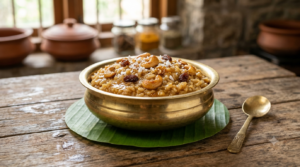
Delicious sweet pongal without moong dal, prepared with soft rice, jaggery, fresh coconut, aromatic cardamom, ghee, cashews and raisins.
You do not need lentils to make this sweet, but you do need enough cooking liquid. Below, the water for the rice and the water for the jaggery have separate measurements. The times and portion count are planning estimates, not results from a documented kitchen test.
Sweet Pongal Without Moong Dal at a Glance
- Base: one cup raw Ponni or Sona Masoori rice, with no moong dal.
- Flavour: grated jaggery, fresh coconut, cardamom, ghee, cashews and raisins.
- Preparation: about 10–15 minutes, estimated and not kitchen-tested.
- Cooking: allow roughly 30–45 minutes, possibly longer on the stovetop. This is an untested planning range, not a guaranteed finish time.
- Yield: approximately four small dessert bowls. The finished weight and serving size have not been measured.
- Goal: soft, spoonable pongal that stays moist after the jaggery goes in.
Ingredients for Sweet Pongal Without Moong Dal
- 1 cup raw rice, preferably Ponni or Sona Masoori.
- 3 cups water to start cooking the rice, plus extra hot water only if needed.
- 1 cup grated jaggery.
- ¼ cup water, measured separately, to dissolve the jaggery.
- ½ cup freshly grated coconut.
- ½ cup ghee, as in the original rich version; use less for a lighter finish if you prefer.
- 1 tablespoon cashews.
- 1 tablespoon raisins.
- ½ teaspoon cardamom powder.
- A small pinch of salt.
The water quantities above are practical starting measurements, not a kitchen-tested formula. Rice age, grain variety, cooking pot and flame can all affect the amount needed. Keep some hot water nearby so you can correct the texture without adding cold water to a hot pot.
How Much Water Does Sweet Pongal Without Moong Dal Need?
Sweet pongal without moong dal needs water for two different jobs. The rice must become softer than everyday steamed rice, while the jaggery needs only enough liquid to dissolve. Keeping those amounts separate prevents the vague instruction to add “a little water” from changing the result each time.
| Use | Starting amount | When to adjust |
|---|---|---|
| Cook the rice | 3 cups water for 1 cup raw rice | Add hot water if the rice stays firm or the pot dries out. |
| Dissolve the jaggery | ¼ cup water for 1 cup grated jaggery | Add a small splash only if it will not melt smoothly. |
| Loosen the finished pongal | 1–2 tablespoons hot water at a time | Use when the mixture becomes too thick to stir or serve. |
These are separate quantities. Therefore, the starting liquid is three cups for rice plus a quarter cup for jaggery, before any texture adjustments. A stovetop pot may need more rice-cooking water because steam escapes during simmering.
How to Make Sweet Pongal Without Moong Dal
Prepare the rice and jaggery in separate stages, then combine them gently. This order matters because jaggery adds sweetness but will not fix rice that is still hard in the middle. Let the texture guide you rather than relying on a fixed whistle count or stopwatch.
1. Rinse and soften the rice
Rinse the raw rice two or three times and drain it. Add the rice and three cups of water to a suitable pressure cooker or a heavy-bottomed pot. Then cook until the grains break easily when pressed with a spoon.
For a pressure cooker, follow its fill and pressure-release instructions. Some stovetop cookers may need several whistles, but whistle counts vary by model and flame. If you use an open pot, keep it at a gentle simmer and add hot water when needed. Open a pressure cooker only after the pressure has released safely.
2. Make the jaggery syrup
While the rice cooks, place one cup of grated jaggery in a small pan. Add the separate quarter cup of water and warm it over low heat. Stir until the jaggery dissolves, then strain the liquid if it contains visible grit.
There is no need to boil the jaggery into a thick string syrup. In fact, a heavy syrup can make the finished pongal harder to blend. Set the strained syrup aside until the rice becomes soft.
3. Mash the rice before adding sweetness
Gently mash the cooked rice with a spoon or ladle. Aim for mostly broken grains with a little body left, rather than dry, separate grains. If the rice looks stiff, mix in a tablespoon or two of hot water before adding jaggery.
4. Add jaggery, coconut and cardamom
Pour the jaggery syrup into the soft rice and mix over low heat. Stir in the grated coconut, cardamom powder and pinch of salt. Continue stirring until the mixture looks evenly coated and spoonable.
If the bottom begins to catch, reduce the heat immediately. You can also add a little hot water and loosen the mixture. Avoid cooking until it looks dry, since sweet pongal thickens as it cools.
5. Fry the nuts and finish with ghee
Warm the ghee in a small pan over gentle heat, then fry the cashews until lightly golden. Add the raisins and stir until they puff. Pour the ghee, nuts and raisins into the pongal and mix well.
The original version uses half a cup of ghee for the batch, so the result will taste rich. You may reduce it to suit your preference, but that changes the original recipe. Serve warm once the mixture looks glossy and easy to spoon.
Why Sweet Pongal Without Moong Dal Turns Dry
Sweet pongal without moong dal can become firm because it lacks the soft dal that helps other versions feel creamy. It also absorbs liquid as it rests. For that reason, judge the recipe by the rice texture before adding jaggery and by the spoonable finish just before serving.
- Rice is firm: add a little hot water and continue cooking before you add the jaggery.
- Pongal is watery: stir over low heat briefly, then let it stand before deciding whether it needs more cooking.
- Jaggery has grit: dissolve and strain it separately, rather than mixing dry jaggery into the rice.
- Mixture sticks: turn down the flame, use a heavy pan and loosen it with hot water.
- Leftovers become solid: reheat once with a splash of hot water until steaming throughout.
Coconut and Ghee in Sweet Pongal Without Moong Dal
The grated coconut is what sets sweet pongal without moong dal apart from a plain jaggery-rice sweet. It adds texture and a mild coconut taste, so keep it if you want to preserve the character of the original recipe. Fresh or properly stored frozen grated coconut works, although the texture may differ.
Brown sugar can replace jaggery when needed, but the flavour will change. Coconut oil can replace ghee for a dairy-free version. However, the familiar buttery aroma will be different, and the dish will no longer match the original ingredient list.
This recipe leaves out camphor entirely. Cardamom already provides aroma, so no additional flavouring is needed.
Nutrition and Safe Storage
This recipe does not have reliable per-serving nutrition figures. The old table listed low fat and zero cholesterol despite the significant amount of ghee. Those values have been removed rather than replaced with another unsupported calorie estimate.
Jaggery contributes sugar, while ghee and coconut add fat. A credible nutrition calculation would need ingredient weights, the actual quantity of ghee used, the finished batch weight and measured serving portions. The USDA FoodData Central provides ingredient data for that process, but it does not validate this exact untested batch.
Serve the rice-based sweet soon after cooking. If you plan to keep leftovers, cool them quickly and refrigerate within one hour. Eat refrigerated leftovers within 24 hours, and reheat only once until steaming hot. These precautions follow the UK Food Standards Agency’s cooked-rice guidance.
Before You Serve
Sweet pongal without moong dal works best when the rice is soft before the jaggery enters the pan. Measure the syrup water separately and adjust the final texture with small splashes of hot water. Since the recipe has not undergone documented kitchen testing, treat the time and yield as guides rather than promises.
For a classic rice-and-dal version, compare Bhimas Cook’s sweet pongal with jaggery. For another rice-only method, see Bhimas Cook’s sakkarai pongal without dal recipe. That page uses a different quantity of jaggery and ghee, so do not mix the two ingredient lists mid-recipe.
Sweet Pongal Without Moong Dal FAQs
Can I make sweet pongal without any dal?
Yes. Rice provides the main body of this version, while jaggery and coconut bring sweetness and flavour. However, the rice needs to become very soft because there is no dal to help give the dish a creamy finish.
Is two cups of water enough for one cup of rice?
Two cups may cook regular table rice, but it may not produce the soft texture needed here. Start with three cups for the rice in this version, then adjust according to your cooker and the grain. Keep jaggery-syrup water separate.
Can I make it without a pressure cooker?
Yes. Use a heavy-bottomed pot, simmer the rice gently and add hot water when it starts to dry. Stovetop cooking may take longer, so check whether the grains mash easily rather than following a fixed time.
Can I use brown sugar instead of jaggery?
Yes, brown sugar is a possible substitute, but its flavour is not identical to jaggery. Add it only after the rice has softened. Also, taste the result before deciding whether the sweetness needs adjustment.
Is edible camphor necessary?
No. This recipe does not include camphor, and no tested food-use amount is provided. Cardamom, coconut and ghee already give it plenty of aroma.
Can I make a vegan version?
Yes. Replace the ghee with a plant-based fat such as coconut oil. This changes the taste and richness, but the rice and jaggery method remains the same. Check other packaged ingredients as well if you need a fully vegan preparation.
How many people does this recipe serve?
About four small dessert bowls is a reasonable planning estimate, not a tested yield. The actual number depends on how much water remains and the bowl size. Measure the cooked batch and your serving spoon if precise portions matter.
Can I prepare the pongal ahead of time?
Yes, but cooked rice needs careful storage. Cool it quickly, refrigerate within one hour and use it within 24 hours. When serving, reheat once until steaming hot and loosen with a small amount of water if needed.