Rava Upma Recipe With Milk: Creamy South Indian Upma
Rava upma recipe with milk is a simple way to make ordinary sooji upma softer, creamier and more forgiving without turning it into a sweet dish. The most reliable starting point is 1 cup rava with 3 cups total liquid: 2½ cups water plus ½ cup milk. Roast the rava first, bring the seasoned liquid to a full boil, then add the rava slowly while stirring.
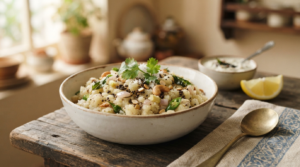
Soft rava upma cooked with a small amount of milk, South Indian tempering, curry leaves and a fresh coriander finish.
This version keeps the familiar South Indian tempering of mustard seeds, dals, ginger, green chilli and curry leaves. Milk stays in the background, so the upma still tastes savoury rather than heavy or dessert-like.
Rava Upma Recipe With Milk at a Glance
- Rava: 1 cup Bombay rava or regular sooji.
- Total liquid: 3 cups for a soft texture.
- Milk: ½ cup, with 2½ cups water.
- Prep time: about 10 minutes.
- Cooking time: about 15 minutes.
- Yield: about 3 medium breakfast servings.
- Texture: soft and creamy, but still spoonable.
- Best served: hot with chutney, pickle, podi or a squeeze of lemon.
The 1:3 rava-to-liquid ratio is the key choice in this recipe. This rava upma recipe with milk keeps only one-sixth of the liquid as milk, which prevents the dish from tasting overly rich. If you prefer a firmer upma, reduce the total liquid slightly. For a softer hotel-style finish, keep the full 3 cups and allow the cooked upma to rest covered before serving.
Ingredients for Rava Upma Recipe With Milk
| Ingredient | Quantity | Purpose |
|---|---|---|
| Rava / sooji / semolina | 1 cup | Main grain |
| Water | 2½ cups | Main cooking liquid |
| Milk | ½ cup | Softness and mild richness |
| Oil or ghee | 2 tablespoons | Tempering and flavour |
| Mustard seeds | 1 teaspoon | Tempering |
| Urad dal | ½ teaspoon | Nutty bite |
| Chana dal | ½ teaspoon | Texture |
| Asafoetida | 1 small pinch | Optional aroma |
| Fresh ginger | 1 inch, chopped | Warmth and aroma |
| Green chillies | 1 to 2, chopped | Heat |
| Curry leaves | 10 to 12 | South Indian aroma |
| Onion | 1 medium, finely chopped | Sweetness and body |
| Salt | About ¾ to 1 teaspoon | Seasoning; adjust to taste |
| Coriander leaves | 1 tablespoon, chopped | Fresh finish |
| Lemon juice | 1 to 2 teaspoons | Optional bright finish |
Use plain, unsweetened milk. Full-fat milk gives the richest result, while toned milk also works. Avoid flavoured or sweetened milk because it changes the savoury balance.
Regular Bombay rava works well here because the grains hydrate quickly and evenly. If your packet says pre-roasted rava, you can shorten the roasting step, although a brief pan roast still improves aroma.
How to Make Rava Upma Recipe With Milk
- Roast the rava. Heat a heavy kadai on medium-low. Add 1 cup rava and stir for 4 to 5 minutes until it smells nutty and feels dry. Do not wait for a deep brown colour. Transfer it to a plate.
- Make the tempering. Add oil or ghee to the same pan. When hot, add mustard seeds. After they splutter, add urad dal and chana dal. Stir until the dals turn light golden.
- Add the aromatics. Add asafoetida, ginger, green chillies and curry leaves. Stir briefly, then add the onion. Cook until the onion turns soft and translucent.
- Add the liquids. Pour in 2½ cups water and ½ cup milk. Add salt and stir. Keep the pan on medium heat until the mixture reaches a steady boil.
- Add the roasted rava slowly. Lower the heat slightly. Sprinkle the rava into the boiling liquid in a thin stream while stirring continuously with the other hand.
- Cook on low heat. Stir for about a minute, then cover the pan. Cook on low for 4 to 5 minutes, or until the liquid has been absorbed and the rava is tender.
- Rest before serving. Turn off the heat and leave the lid on for 2 minutes. Fluff gently, then add coriander and lemon juice if you like.
The two moments that matter most are the boil and the pour. The liquid should already be hot before the rava goes in, and the rava should enter slowly. That combination gives you time to break up small clumps before they set.
Why Milk Changes the Texture of Upma
Milk makes this upma feel softer because it adds water, milk solids and a small amount of fat to the cooking liquid. However, it should not replace all the water. Too much milk can make the flavour heavy and increases the chance of scorching at the bottom of the pan.
Using ½ cup milk in 3 cups total liquid keeps the balance savoury. The milk rounds the sharp edges of chilli and ginger, while the tempering still tastes clearly South Indian.
If your family prefers very rich upma, finish with a teaspoon of ghee after cooking rather than increasing the milk sharply. That gives more aroma without making the rava pasty.
The Best Liquid Ratio for Milk Upma
For this recipe, use 3 cups total liquid for every 1 cup rava. The formula is 2½ cups water plus ½ cup milk. It gives a soft breakfast-style upma that holds its shape on a spoon but does not feel dry.
| Total liquid per 1 cup rava | Likely texture | When to use it |
|---|---|---|
| 2¼ to 2½ cups | Firmer and drier | If you prefer separated grains |
| 3 cups | Soft and creamy | Best starting point for milk upma |
| More than 3 cups | Very soft | Use only if your rava absorbs more liquid |
Rava brands and grain size vary, so treat the ratio as a starting point rather than a law. If the upma tightens too much after resting, stir in a few tablespoons of hot water. If it looks loose, keep it uncovered on low heat for another minute.
For a deeper look at plain-water ratios, see the Bhimas Cook rava upma water-ratio guide.
How to Keep Rava Upma Recipe With Milk Lump-Free
Lumps usually come from adding rava too fast or adding it before the liquid boils. Roast the rava, keep the liquid bubbling, and pour in a narrow stream while stirring. A wide kadai also makes the job easier because you can move the spoon through the mixture quickly.
- Keep the roasted rava ready beside the stove before the liquid boils.
- Use one hand to pour and the other to stir.
- Do not dump the full cup of rava into one spot.
- Lower the flame after the rava is incorporated, not before.
- Break any small lump immediately with the back of the spoon.
If the pan becomes too thick while you are still pouring, add 2 or 3 tablespoons of hot water. Cold water can suddenly drop the pan temperature, so hot water is the better rescue.
Common Mistakes and How to Fix Them
The upma tastes raw
The rava probably needed more roasting or more time on low heat. Dry roast until the grain smells nutty, then cook the finished mixture until no chalky taste remains. Resting under the lid for 2 minutes also helps the centre of each grain hydrate.
The milk catches at the bottom
A thin pan or high heat can scorch milk quickly. In this rava upma recipe with milk, a heavy kadai gives you more control as the liquid heats. Stir once or twice while the milk-water mixture comes up to temperature, then keep the flame low after the rava goes in.
The upma turns too thick after resting
Rava keeps absorbing moisture after the flame goes off, so a perfect pan can tighten within minutes. Stir in a splash of hot water or warm milk before serving. Add only a little at a time because the texture loosens quickly.
The upma tastes bland
Milk softens the perception of spice, so the tempering needs enough ginger, chilli and salt. Lemon juice at the end also sharpens the flavour. Add it after switching off the heat so the taste stays fresh.
Easy Variations Without Losing the Base Recipe
The basic rava upma recipe with milk is useful because you can change the add-ins without changing the method. Keep the 1 cup rava and 3 cups total liquid, then adjust only the vegetables and tempering.
- Vegetable milk upma: add up to ¾ cup finely chopped carrot, peas or beans. Sauté them before adding the liquid. For a more vegetable-heavy version, use the vegetable rava upma recipe.
- Cashew upma: fry 8 to 10 cashews in the oil or ghee before the mustard seeds, then remove and add them back at the end.
- No-onion version: skip onion and increase ginger, curry leaves and coriander. The upma without onion or garlic gives another variation.
- Vegan version: use oil and an unsweetened plant drink. Coconut milk gives a stronger flavour, so dilute it with water rather than replacing all the liquid.
If you add vegetables, keep the pieces small so they cook before the rava goes in. Large carrot or bean pieces can stay hard while the semolina is already ready.
Is Rava Upma With Milk Gluten-Free?
No. Rava, sooji and semolina are wheat products, so this recipe is not gluten-free. The Food Safety and Standards Authority of India defines semolina as a product obtained from wheat, and current FDA allergen guidance also includes semolina within wheat. Milk is another declared major allergen in FDA guidance.
If you cook for someone with a diagnosed wheat or milk allergy, do not rely on a simple ingredient swap without checking every packaged ingredient. Read labels for cross-contact warnings, especially on rava, plant drinks, spice mixes and asafoetida blends.
For official references, see FSSAI and the FDA food-allergy guidance.
How to Store and Reheat Milk Upma Safely
Fresh upma has the best texture, but leftovers can be chilled. Transfer them to a shallow covered container and refrigerate promptly instead of leaving the pan on the counter for hours. FSSAI home-safety guidance recommends keeping prepared food cold below 5°C when it is stored.
For quality, this milk upma is best eaten within 2 days. As a general safety ceiling, the U.S. Department of Agriculture says most cooked leftovers can stay refrigerated for 3 to 4 days when chilled promptly and kept cold. Reheat only the portion you need until it is steaming hot throughout.
For the official safety guidance, see FSSAI Food Safety at Home and the USDA leftovers guidance.
What to Serve With Rava Upma Recipe With Milk
This upma is mild and creamy, so it pairs best with something sharp, fresh or spicy. Coconut chutney is the classic option, while tomato chutney gives more acidity. A spoon of pickle works when you need the quickest breakfast.
- Coconut chutney for a cooling side.
- Peanut chutney or podi for a stronger roasted flavour.
- Tomato or onion chutney for acidity.
- Lemon pickle for a fast no-cook side.
- Pesarattu for a fuller Andhra-style breakfast plate.
If you serve milk upma to children or anyone who prefers mild food, reduce the green chilli before cooking rather than trying to neutralise the heat later. You can always add pickle or podi at the table for adults.
Before You Cook
The best rava upma recipe with milk depends on three simple controls: roast the rava, keep the water-and-milk mixture boiling, and add the grain slowly. Start with 2½ cups water plus ½ cup milk for every cup of rava. Then adjust only after you know how your rava brand behaves.
Do not chase a perfectly dry pan. Milk upma should look slightly softer when the flame goes off because it thickens while resting. Serve it hot after a short covered rest for the smoothest texture.
Rava Upma Recipe With Milk FAQs
Can I make rava upma with only milk and no water?
You can, but it is not the best starting point for savoury upma. A high milk ratio can taste heavy and may scorch more easily. Using mostly water with a smaller amount of milk gives softness without losing the familiar upma flavour.
What is the best milk-to-water ratio for rava upma?
For 1 cup rava, use ½ cup milk and 2½ cups water in this recipe. That keeps milk at one-sixth of the total liquid. The result is soft and creamy without becoming overly rich.
Do I need to roast rava before making milk upma?
Roasting is recommended because it improves aroma and helps the grains stay separate. Roast on medium-low until the rava smells nutty, but do not brown it deeply. If you use pre-roasted rava, a shorter roast is enough.
Why did my milk upma become sticky?
Sticky upma usually comes from unroasted rava, too much liquid or over-stirring after the grain has absorbed the liquid. Roast first and use the 1:3 ratio as your baseline. Once the upma thickens, cover it and let low heat finish the cooking.
Can I add vegetables to rava upma with milk?
Yes. Carrot, peas and finely chopped beans all work. Sauté the vegetables before adding the water and milk, and keep the total vegetable quantity moderate so the base recipe still cooks evenly.
Can I make this rava upma recipe with milk without onion?
Yes. Skip the onion and rely on ginger, curry leaves, green chilli and coriander for flavour. You can also add cashews or peanuts for more texture.
Can I use cold milk directly from the fridge?
Yes, although it will take longer for the liquid to return to a boil. The important point is to wait until the water-and-milk mixture boils steadily before adding the rava. Do not add rava while the liquid is still lukewarm.
How do I reheat leftover milk upma?
Add a small splash of water or milk, then reheat on low heat while stirring. Covering the pan for a minute helps the steam soften the rava again. Refrigerate leftovers promptly and use safe cold-storage practices.