Rasam With MTR Rasam Powder: Easy South Indian Recipe
A steaming bowl of rasam with MTR rasam powder takes about 40 minutes from start to finish, and it tastes like the tangy-peppery version served in South Indian homes. This shortcut skips the tricky roasting-and-grinding of a fresh spice blend. Instead, a ready masala does the heavy lifting, so you get consistent flavour on a busy weeknight. Below you get exact measurements, the one quantity mistake most people make with the packet, troubleshooting tips, storage advice, and answers to the questions cooks actually ask.
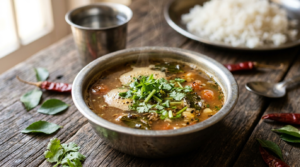
A hot bowl of rasam made with MTR rasam powder, garnished with fresh coriander.
Bhimas Cook is an independent food blog. We are not affiliated with, endorsed by, or the official channel of MTR Foods; MTR and MTR Rasam Powder are trademarks of their owner. We share our own home-kitchen method here and route you to the official product page for pack details.
Quick Facts: Rasam With MTR Rasam Powder
- Total time: about 40 minutes (15 prep, 25 cook)
- Serves: 4 as a soup or over rice
- Difficulty: easy, beginner-friendly
- Key shortcut: one ready spice blend replaces a dozen roasted spices
- Best served with: hot steamed rice, a dollop of ghee, and papad
- Diet notes: vegetarian; easily made vegan by swapping ghee for oil
Because the masala is pre-balanced, you skip the guesswork of pepper-to-cumin ratios. That is exactly why a busy cook reaches for it. Still, a few small moves lift rasam with MTR rasam powder from watery to restaurant-good, and we cover each one below.
What Is Rasam, and What Makes MTR Powder Handy?
Rasam is a thin, tangy South Indian soup built on tamarind, tomato, and spices, usually eaten with rice or sipped on its own. It aids digestion and comforts you when you feel under the weather. The tang comes from tamarind, while the warmth comes from black pepper and cumin.
MTR Foods (Mavalli Tiffin Rooms) sells a finely ground rasam blend so you do not roast and grind spices yourself. According to the brand, the mix carries coriander, red chilli, cumin, fenugreek, and asafoetida. Therefore the flavour stays consistent batch after batch. That reliability is the whole appeal of making rasam with MTR rasam powder, especially if fresh podi feels like too much effort on a weekday.
Ingredients for Rasam With MTR Rasam Powder
These quantities make four servings. Measure the powder carefully, since it drives the whole flavour. Keep everything ready before you start, because the cooking moves quickly once the pan is hot.
- 4 tbsp toor dal (split pigeon peas)
- 1.2 litres water (about 5 cups), divided
- 1 medium tomato, chopped (about 120 g)
- 1 tsp tamarind paste (or the juice of a small lemon)
- 1.5–2 tbsp MTR Rasam Powder (see the quantity note below)
- 2 tsp jaggery or sugar
- 1.5 tsp salt (adjust to taste)
- 1 tbsp ghee or oil
- ½ tsp mustard seeds
- ½ tsp cumin seeds
- 1 dry red chilli, broken
- A pinch of asafoetida (hing)
- 10–12 curry leaves
- Fresh coriander leaves, for garnish
How Much MTR Rasam Powder Should You Actually Use?
Use 1.5 to 2 tablespoons of MTR Rasam Powder for this 4-serving pot. This is the single point most people get wrong, so read on. The pack’s own direction — roughly 2 tablespoons per 10 litres of water — is meant for a very thin drinking soup, not a rice-side rasam.
If you follow the 10-litre ratio for a small pot, the rasam turns out pale and bland. That is the top complaint behind “my MTR rasam tasted watery.” So scale the powder to the water in front of you, not to the packet’s soup measure. A safe home rule is about 1 teaspoon of rasam powder per cup of water, then adjust after tasting.
Step-by-Step: How to Make Rasam With MTR Rasam Powder
Follow these five stages in order. Each one is short, and the timings are approximate. Taste as you go, because tamarind sourness varies a lot between brands.
1. Cook the Dal (10 minutes)
Rinse the toor dal well under running water. Add it to a pressure cooker with 3 cups (about 700 ml) water and a pinch of turmeric. Cook on medium flame for 2 whistles, roughly 10 minutes, until the dal turns soft. Mash it lightly and set it aside.
2. Prepare the Tamarind Base (5 minutes)
Dilute the tamarind paste in ½ cup warm water. If you use fresh tamarind, soak a lemon-size ball in warm water for 10 minutes, then squeeze out the pulp. Strain the extract so no fibres slip in. A splash of tamarind is what gives rasam its signature sourness.
3. Boil the Rasam Base (8 minutes)
Heat 1 tbsp ghee or oil in a deep pan on medium flame. Add the mustard seeds and wait until they splutter, about 30 seconds. Next, add cumin seeds, the dry red chilli, and hing, and sauté until aromatic. Toss in the chopped tomato and curry leaves, then cook until the tomato softens, roughly 4 to 5 minutes.
Now stir in the tamarind water, mashed dal, jaggery, and salt. Mix in the MTR Rasam Powder so no lumps remain. Pour in the remaining water to reach a light, pourable consistency. Bring everything to a gentle boil for 3 to 4 minutes, then lower the heat.
4. Simmer to Marry the Flavours (10 minutes)
Let the rasam simmer gently for 8 to 10 minutes so the aroma deepens. Do not let it boil hard, since a rolling boil dulls the fresh spice notes. Stir occasionally to stop the dal settling at the bottom. When the surface turns frothy and the kitchen smells peppery, it is ready.
5. Garnish and Serve
Turn off the heat and scatter fresh coriander over the top. A final drizzle of ghee here lifts the aroma beautifully. Serve the rasam hot with plain rice and a spoon of ghee, or pour it into cups as a warming soup. It also pairs well with a peppery rasam variation if you cook for a crowd.
Common Mistakes and How to Fix Them
Even an easy recipe has a few trip-ups. Because the masala is concentrated, small errors show up fast in rasam with MTR rasam powder. Here is how to rescue each one before it reaches the table.
- Too watery or bland: you under-dosed the powder. Stir in another ½ teaspoon, simmer 2 minutes, and taste again.
- Too sour: the tamarind was strong. Add ¼ teaspoon jaggery at a time until the sharpness softens.
- Bitter edge: you boiled it too hard after adding the powder. Next time, keep it at a gentle simmer only.
- No aroma: the tempering was skipped or rushed. Always finish with fresh ghee-fried mustard, hing, and curry leaves.
What to Serve With Rasam
Rasam rarely stands alone at a South Indian meal. Traditionally it follows sambar in the sit-down order, then gets mixed with hot rice. A crisp papad and a simple vegetable stir-fry round out the plate.
For a fuller spread, pair it with a Kerala-style sambar or a one-pot rice dish like bisi bele bath. Curd rice at the end cools the palate after the pepper. A bowl of rasam with MTR rasam powder also works as a light starter soup before a heavier main.
Pro Tips for the Best Rasam With MTR Rasam Powder
- In many Chennai homes, cooks add a little jaggery even to rasam, since it balances tamarind’s acidity.
- Fresh curry leaves and a last drizzle of ghee boost the aroma every single time.
- If your tamarind runs very sour, start with ¾ tsp jaggery and adjust at the simmer stage.
- Never boil rasam hard once the powder goes in, because that kills the top notes.
- Rasam thickens as it cools, so loosen leftovers with a splash of water when you reheat.
Substitutions, Storage, and Variations
This recipe bends easily around what you have. A few swaps keep it flexible without losing the classic taste.
- No toor dal: use masoor dal instead, allowing slightly longer cooking.
- No tamarind: stir in 1 to 1.5 tbsp lemon juice at the end to keep the tang sharp.
- Vegan option: temper in oil rather than ghee, and the flavour stays close.
- Storage: refrigerate in an airtight container for up to 3 days, then reheat gently.
- Freezing: freeze for up to 1 month, thaw overnight in the fridge, and reheat on the stovetop.
You can also skip the dal for a lighter, clear rasam. In that case, add a little more tamarind water so the body still feels satisfying. For a garlic-free version, try this no-garlic rasam method instead.
Nutrition Information Per Serving (Approximate)
These figures are estimates and vary with your exact quantities. Treat them as a rough guide rather than lab values.
| Nutrient | Per serving (approx.) |
|---|---|
| Calories | 120–140 kcal |
| Carbohydrates | 18–22 g |
| Protein | 6–8 g |
| Fat | 4–6 g |
| Fibre | 3–4 g |
| Sodium | Medium (from added salt plus the spice mix) |
The spice blend itself is light on calories. A ready masala plus added salt does raise sodium, though. So if you watch your salt for blood pressure, go easy on the added salt and taste before adding more. Anyone on a restricted diet should treat these numbers as indicative and check with a doctor where it matters.
Why This Method Works
A quality blend like this one gives steady heat and balanced spice without the fuss of roasting whole spices. That consistency is hard to match on a rushed evening. Fresh homemade podi still wins on aroma, but the packet wins on speed and reliability. For most weeknights, that trade is worth it, and this is why rasam with MTR rasam powder has become a pantry staple in so many kitchens.
Frequently Asked Questions
How much MTR rasam powder do I need for four servings?
Use about 1.5 to 2 tablespoons for a 4-serving pot with roughly 1.2 litres of water. The pack’s 10-litre direction is for a thin drinking soup, so it makes a small pot taste bland. Start at 1.5 tablespoons, then add more after tasting.
Can I make this rasam without dal?
Yes, a thin dal-free rasam is common and quick. Skip the dal, add a little extra tamarind water, and lean on the powder and tomato for body. It cooks faster and suits a light meal or a soup course.
Why does rasam taste better the next day?
Resting lets the tamarind, spices, and dal blend more fully. The sharp acidity mellows overnight, so the flavour reads rounder. Reheat it gently and add a splash of water, since it thickens in the fridge.
Is rasam healthy?
Traditional rasam is light, hydrating, and relatively low in calories. People often sip it when they have a cold, because the pepper and cumin feel soothing. Paired with rice and a vegetable, it fits into a balanced meal.
Can I use MTR rasam powder for rasam rice or as a seasoning?
Yes, you can mix a spoon of the powder straight into hot rice with ghee for a quick rasam rice. Some cooks also dust a little into vegetable stir-fries for warmth. Use it sparingly at first, since it is concentrated.
What can I use if I run out of tamarind?
Lemon juice is the easiest swap, using about 1 to 1.5 tablespoons added at the end. Tomato alone gives some tang but not enough on its own. Add the lemon off the heat so the flavour stays bright.
How long does MTR rasam powder stay fresh once opened?
Transfer it to an airtight jar and keep it in a cool, dry place away from steam. Used this way, it holds its aroma for several months, though the pack’s printed date is the real guide. Always dip a dry spoon in to avoid clumping.
Can I make rasam with MTR rasam powder spicier?
Yes, simply add a little more powder, or crack in extra black pepper near the end. A second dry red chilli in the tempering also lifts the heat. Adjust gradually and taste, because the blend is already fairly peppery.
Before You Cook
Rasam with MTR rasam powder is one of the easiest ways to get an authentic South Indian bowl on the table fast. Nail the powder quantity, keep the heat at a gentle simmer, and finish with a fresh ghee tempering. Do that, and even a beginner turns out rasam that tastes home-made. For pack details and the full ingredient list, check the official MTR Foods masala powders page, and for the dish’s background, see the overview of rasam on Wikipedia.