Rava Kesari Coconut Milk: Easy Creamy Recipe & Tips
Rava Kesari Coconut Milk is a South Indian semolina sweet that swaps plain water or dairy for creamy coconut milk, and that one change makes it richer, softer, and gently tropical. If you have made the usual kesari before, this version tastes familiar yet fuller, because the coconut fat coats every grain of roasted rava.
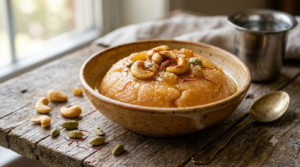
Creamy Rava Kesari Coconut Milk topped with golden fried cashews, served warm.
This guide walks you through the exact ingredients, the ratio that keeps it silky, and the small mistakes that turn kesari lumpy or sticky. Everything below is the way my mother makes it at home in Andhra Pradesh, so the timings and measurements are tested, not guessed.
Rava Kesari Coconut Milk at a Glance
Here are the quick facts before you start cooking, so you know exactly what you are getting into.
- Type: a warm, spoonable South Indian dessert, also called kesari bath or kesari bhaat.
- Total time: about 40 minutes from start to serving.
- Key swap: coconut milk instead of water gives a creamier, milder-sweet result.
- Serves: 6 small bowls, ideal for a festival or a weekend treat.
- Skill level: easy, though the stirring needs attention so lumps never form.
Ingredients for Rava Kesari Coconut Milk
You need pantry staples plus one can or carton of good coconut milk. Use thick coconut milk for the richest texture, since thin varieties dilute the flavour. Measure everything before you turn on the stove, because this dish cooks fast once it starts.
| Ingredient | Quantity | Notes |
|---|---|---|
| Semolina (rava/sooji) | 1 cup | Fine rava gives the smoothest kesari |
| Coconut milk (thick) | 3 cups | Canned or fresh, well shaken |
| Water | 1 cup | Loosens the mix so rava cooks evenly |
| Sugar | 3/4 cup | Adjust to taste at the end |
| Ghee | 4 tbsp | Split between roasting and frying nuts |
| Saffron | 10-12 strands | Soaked in 2 tbsp warm coconut milk |
| Cardamom powder | 1/2 tsp | Freshly ground is best |
| Cashews | 15 nuts | Whole or halved |
| Raisins | 2 tbsp | Golden or black |
A pinch of grated nutmeg or a few slivered almonds are optional, yet they add a lovely aroma. Skip the raisins if you dislike them, because the sweetness holds up fine without them.
How to Make Rava Kesari Coconut Milk
The whole method fits into six short steps. Read them once before you begin, so the pace never catches you off guard. Keep the flame medium-low throughout, since coconut milk scorches faster than dairy.
Step 1: Prep everything first (0-5 mins)
Measure the semolina, sugar, and coconut milk into separate bowls. Soak the saffron strands in 2 tablespoons of warm coconut milk, so they release their colour and floral scent. Keep your cashews and raisins within reach.
Step 2: Roast the semolina (5-10 mins)
Heat a heavy-bottomed pot on medium flame and add 2 tablespoons of ghee. Once it melts, tip in the semolina and stir constantly. Roast for 4-5 minutes until it smells nutty and turns pale gold. This step removes the raw edge and stops lumps later, so do not rush it.
Step 3: Fry the nuts (10-12 mins)
Push the roasted rava to the sides and add the remaining 2 tablespoons of ghee in the centre. Fry the cashews until golden, then add raisins and cook until they puff up. Scoop the nuts into a small bowl and set them aside for the garnish.
Step 4: Warm the coconut milk (12-15 mins)
In a separate pan, combine 3 cups of coconut milk with 1 cup of water. Warm it gently until it steams, but never let it boil hard. Because coconut milk is denser and fattier than dairy, warming it first helps the semolina drink it up evenly.
Step 5: Combine and cook (15-25 mins)
Pour the warm coconut milk into the roasted semolina slowly, stirring the whole time. Keep the flame low so no lumps form. The rava will soak up the liquid and thicken over about 8-10 minutes. Now stir in the sugar, which loosens the mix again, then keep stirring until it comes together softly.
Step 6: Finish and serve (25 mins)
Add the soaked saffron with its liquid, the cardamom powder, and most of the fried nuts. Stir for 2 minutes until everything smells fragrant. Turn off the heat while the kesari is still soft enough to slide off a spoon. Spoon it into bowls and scatter the reserved cashews on top.
Which Coconut Milk Works Best
Thick canned coconut milk gives the creamiest result, so reach for that first. The thin, drinkable cartons sold as a dairy alternative are far more watery, which leaves the kesari loose. Fresh coconut milk works beautifully if you have it, though you should strain it well. Shake any can hard before opening, because the cream separates and sits at the top.
One honest warning: coconut milk brands vary a lot in thickness. If your can is very thick, you may need a splash more water; if it is thin, hold back some of the water. Judge the pour and adjust, rather than following the cup measure blindly.
Getting the Ratio and Texture Right
The safe ratio is roughly four parts liquid to one part rava by volume, counting the coconut milk and water together. That balance cooks the semolina fully while keeping it soft. Too little liquid leaves a dry, grainy kesari; too much keeps it runny even after long cooking. When in doubt, start on the wetter side, because you can always cook off extra moisture.
Good kesari should fall gently from a spoon and hold a soft mound, not a stiff block. It firms up as it cools, so pull it off the heat while it still looks slightly loose.
Tips That Make Rava Kesari Coconut Milk Foolproof
- Stir without stopping when the warm coconut milk hits the rava, since that single habit prevents almost every lump.
- Fry the nuts early in ghee, because the golden, toasty aroma seeps into the whole dessert.
- Loosen a stiff batch by stirring in 2-3 tablespoons of warm coconut milk over low heat for a minute.
- Taste before finishing and adjust the sugar, as coconut milk already carries a mild natural sweetness.
- Use saffron, not colour for that natural orange-yellow hue and a real floral note.
Fixing Common Rava Kesari Coconut Milk Problems
Most kesari troubles come down to heat and stirring. Here is how to rescue the usual ones.
Lumps formed: the liquid probably went in too fast or the flame was too high. Mash the lumps against the pan with your spoon and keep stirring; a little extra warm coconut milk helps loosen them.
Turned sticky or gummy: the rava was under-roasted, or the heat stayed high. Next time, roast until clearly aromatic and hold the flame at medium-low.
Too dry after cooling: stir in warm coconut milk, a spoon at a time, until it softens. Because semolina keeps absorbing liquid, this is normal and easy to fix.
Tasty Variations of Rava Kesari Coconut Milk
This dessert takes happily to small twists. Each one keeps the coconut base while changing the character.
- Jaggery version: swap sugar for grated jaggery for an earthier, caramel note; add it off high heat so it does not curdle the mix.
- Pineapple kesari: stir in a few spoons of cooked pineapple for a tangy South Indian favourite.
- Vegan bowl: use a neutral oil or vegan butter instead of ghee, and the coconut milk already keeps it dairy-free.
- Extra coconut: fold in a spoon of toasted coconut flakes for more texture and aroma.
Substitutions and Storage
No coconut milk on hand? Whole dairy milk, or a mix of milk and coconut milk, gives a lighter version. For a nut-free bowl, skip the cashews and almonds and lean on raisins and cardamom for flavour. Fine rice semolina (idli rava) can stand in if you want a change, though the cooking time shifts a little.
Store leftover Rava Kesari Coconut Milk in an airtight container in the fridge for up to 2 days. Reheat gently in a pan with a splash of coconut milk to bring back the creamy texture. Avoid freezing, since the semolina turns grainy once thawed.
Nutrition and a Quick Health Note
The numbers below are estimates for one serving, so treat them as a guide rather than exact values. They shift with your brand of coconut milk and how much sugar and ghee you use.
| Nutrient | Per serving (approx.) |
|---|---|
| Calories | ~330 kcal |
| Total fat | 18-22 g |
| Carbohydrates | 38-45 g |
| Protein | 4-6 g |
| Saturated fat | 10-12 g |
| Fibre | 1-2 g |
Coconut milk is rich and high in saturated fat. According to USDA FoodData Central, canned coconut milk carries roughly 445 calories and close to 48 grams of fat per cup, most of it saturated. It also brings lauric acid, a fatty acid many cooks prize, and it contains no cholesterol because it is plant-based.
Enjoy this sweet as an occasional treat. If you watch saturated fat for medical reasons, keep the portion small or check with your doctor. You can read more background at the coconut milk overview.
One more caution: this recipe uses cashews, almonds, and coconut. Skip or swap those if anyone at the table has a nut or coconut allergy.
The Story Behind the Dish
Rava kesari, also known as kesari bath or kesari bhaat, is a classic South Indian dessert served at festivals, weddings, and temple offerings. The name comes from “kesar,” the word for saffron, which lends the sweet its warm orange-gold colour. In Karnataka, cooks often pair it with savoury upma on one plate, a beloved combo called chow chow bath.
The coconut milk version is a coastal twist that leans into the region’s love of coconut. When I first tried it at a friend’s home in Chennai during Ugadi, the creaminess surprised me, and it has been my favourite kesari since. It stays true to tradition while giving you room to play with jaggery, fruit, or extra coconut.
Before You Serve
Rava Kesari Coconut Milk rewards a little patience more than any fancy technique. Roast the rava properly, warm the coconut milk, stir without stopping, and you will land a silky, fragrant dessert every time. Serve it warm for the fullest aroma, or at room temperature for a firmer scoop. If you enjoy this style, try the classic rava kesari recipe and the milk-based rava kesari next to see how each liquid changes the flavour.
Frequently Asked Questions
Can I use instant semolina instead of regular rava?
Yes, fine semolina gives the smoothest, creamiest kesari, so it is a great choice. Coarser rava also works but leaves a slightly grainy bite. Always roast it before adding any liquid.
Why did my kesari become sticky?
Sticky kesari usually means the semolina was under-roasted or the heat ran too high. Roast until it smells clearly nutty, and keep the flame medium-low. Stir constantly while adding the warm coconut milk, since steady stirring keeps the texture smooth.
Does it taste strongly of coconut?
The coconut flavour is gentle, not overpowering, because the saffron, cardamom, and ghee balance it. You get a creamy, mildly tropical sweetness rather than a heavy coconut punch. Use thick coconut milk if you want the richness turned up.
Can I make Rava Kesari Coconut Milk vegan?
Yes, simply replace the ghee with a neutral oil or vegan butter. The coconut milk already keeps the dish dairy-free. Everything else in the recipe stays the same.
Can I use jaggery instead of sugar?
Jaggery works well and adds a deeper, caramel-like flavour. Grate it fine and add it after you lower the heat, so it blends smoothly. Melt it separately first if your jaggery has grit or impurities.
Can I make this gluten-free?
Regular semolina is wheat-based, so it is not gluten-free. For a gluten-free bowl, try fine rice semolina (idli rava) instead and adjust the cooking time. The coconut milk, ghee, and nuts are all naturally gluten-free.
How long does Rava Kesari Coconut Milk keep?
It stays fresh in an airtight container in the fridge for up to 2 days. Reheat it gently with a splash of coconut milk to restore the creamy texture. Freezing is best avoided, because semolina turns grainy after thawing.