Rava Laddu With Jaggery: Easy Homemade Sweet Recipe
Rava laddu with jaggery swaps the usual refined sugar for melted jaggery, and that single change gives these festive sweets a deep, caramel-like warmth that plain sugar never reaches. If you have tasted the sugar version and found it a little flat, this is the recipe that will win you over. You need one pan, about 35 minutes, and a handful of pantry staples. The method below comes straight from my mother’s Andhra kitchen, tested batch after batch, so your very first tray holds its shape instead of crumbling.
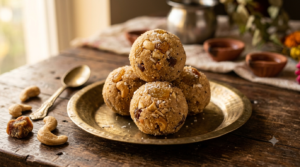
Freshly rolled rava laddu with jaggery, dotted with cashews and coconut.
Like other Indian laddus, these are round festive sweets, though here jaggery does the sweetening.
Rava Laddu With Jaggery At A Glance
- Time: 15 minutes prep, 20 minutes cook, 35 minutes total.
- Yield: about 12 medium laddus.
- Sweetener: grated jaggery, melted into a light syrup, not sugar.
- Texture secret: shape while warm, because the jaggery firms up as it cools.
- Best for: Diwali, Ganesh Chaturthi, Janmashtami, and everyday sweet cravings.
Why Make Rava Laddu With Jaggery Instead Of Sugar?
Rava laddu with jaggery tastes richer than the sugar version because jaggery carries molasses, minerals, and a natural caramel note that refined sugar loses during processing. So the same roasted semolina suddenly has more depth. Jaggery also binds slightly differently, which is exactly why the first attempt trips people up.
Sugar syrup sets hard and glassy, while jaggery stays sticky and elastic for longer. That stickiness is a gift once you understand it, since it helps the laddus hold together even without milk. Below, every step is written around this one difference. If you want to compare sweeteners, the background on jaggery explains why unrefined cane and palm sugar keep their minerals and colour.
Ingredients For Rava Laddu With Jaggery
These are the exact quantities my mother uses for a batch of twelve. Because rava and jaggery brands vary, treat the binding liquid as flexible and add it only if the mix stays dry.
- 1 cup fine rava / semolina (sooji) — about 160 g
- ¾ cup grated jaggery — about 150 g
- ½ cup freshly grated coconut (optional but recommended) — about 40 g
- ⅓ cup ghee (clarified butter) — about 75 ml
- ½ teaspoon cardamom powder (elaichi)
- 2 tablespoons chopped cashews (kaju)
- 2 tablespoons raisins (kishmish)
- 2–3 tablespoons warm milk or water, only to bind if needed
Fine rava gives a smooth, quick-binding laddu, so it is my default here. Coconut adds moisture and flavour, yet you can skip it for a longer shelf life. Use a soft, clean jaggery block or good jaggery powder, because grit and impurities show up in the final sweet.
How To Make Rava Laddu With Jaggery: Step By Step
Read all five steps once before you start, since the shaping window is short. Keep your nuts, coconut, and jaggery measured and ready, so nothing burns while you scramble. The whole active cooking runs about twenty minutes.
Step 1: Roast The Rava (6 minutes)
Heat a heavy-bottomed pan on medium flame and add the rava dry, without ghee first. Stir constantly for five to six minutes until it turns fragrant and just barely golden. You must keep stirring, because rava scorches the moment you look away. When it smells nutty, tip it onto a plate to cool.
Do not brown it hard, since over-roasted rava tastes bitter and dulls the jaggery. Low and slow always beats fast and dark here.
Step 2: Roast The Nuts And Coconut (3 minutes)
In the same pan, warm one tablespoon of ghee and add the cashews and raisins. Roast for a minute or two, until the cashews turn light golden and the raisins plump up. If you are using fresh coconut, add it now and roast for about two minutes to drive off moisture. Set everything aside, because trapped moisture shortens shelf life.
Step 3: Melt The Jaggery (4 minutes)
In a small saucepan, combine the grated jaggery with two to three tablespoons of water. Melt it on low flame for three to four minutes, stirring gently, until it becomes a smooth syrup. Do not chase a thread consistency, since you only want the jaggery fully dissolved. Strain the syrup if your jaggery had grit, then turn off the heat.
Watch the flame closely, because a hard boil overcooks the syrup and later makes the laddus rock-hard. As soon as the last lump dissolves, you are done.
Step 4: Combine Everything (3 minutes)
Add the cooled rava, roasted nuts, raisins, coconut, and cardamom powder into one large bowl. Pour the warm jaggery syrup over the top while it is still pourable. Mix briskly with a spatula, so every grain of rava gets coated. If the mixture feels dry and refuses to clump, add a tablespoon of warm milk or water and mix again.
Step 5: Shape The Laddus (4 minutes)
Work while the mixture is warm but cool enough to touch, because jaggery stiffens fast as it drops in temperature. Take small portions, press firmly between your palms, and roll into rounds. If the mix hardens before you finish, warm it for thirty seconds and carry on. Rest the finished laddus for an hour, since they firm up beautifully as they sit.
Getting The Jaggery Syrup Right For Rava Laddu
The jaggery syrup is where most first batches go wrong, so it deserves its own note. You want the jaggery just melted into a loose, pourable syrup, not cooked to a caramel. A quick test: dip a spoon and let the syrup fall back; it should ribbon off, not form a hard ball in water.
If you overcook it, the laddus set stony and dry. If you undercook it and leave undissolved grains, the mix will not bind. When in doubt, pull the syrup off the heat early, because residual warmth keeps it fluid long enough to mix.
Fine Rava Or Coarse Rava?
Both work, though they give different results, so pick by preference. Fine rava (chiroti rava) binds quickly and gives a soft, smooth laddu that melts in the mouth. Coarse rava (Bombay rava) gives a pleasant grainy bite, but it needs a longer roast and a little extra syrup to hold.
For beginners, fine rava is far more forgiving. Whichever you use, roast until aromatic and never rush the flame.
Why Are My Laddus Crumbling? Troubleshooting
Crumbly laddus are the number-one complaint, and the fix is almost always moisture or warmth. If the mixture will not come together, your syrup was too little or the mix cooled down before shaping. Both are easy to rescue.
- Too dry / crumbly: drizzle in a tablespoon of warm milk or melted ghee, then knead gently and reshape.
- Too loose / sticky: the syrup was too hot or too much; let the mix rest a few minutes, so it firms before rolling.
- Hard as a rock: the jaggery was overcooked; next time stop the syrup the instant it dissolves.
- Grainy or gritty: strain the jaggery syrup before mixing to remove sediment.
Because jaggery stays elastic, you usually get a second chance. Warm, knead, and reshape, and most “failed” batches turn perfect.
With Coconut, Without Coconut, And Vegan Options
Fresh coconut adds moisture and a festive aroma, so I keep it in most batches. For a longer-lasting, travel-friendly laddu, skip fresh coconut and use a spoon of desiccated coconut instead, since dry coconut resists spoilage. A fully coconut-free version works too; if that is what you want, follow my rava laddu without coconut recipe, or add a few extra raisins for texture.
Prefer a coconut-forward batch instead? The coconut rava laddu leans right into it.
To make rava laddu with jaggery vegan, swap the ghee for coconut oil and bind with water rather than milk. Coconut oil firms up as it cools, which actually helps the laddus hold. The flavour shifts slightly, yet it stays delicious.
Storing Rava Laddu With Jaggery For Festivals
Store the laddus in an airtight container at room temperature for five to seven days. If you used fresh coconut or milk, refrigerate them and finish within two weeks, because fresh add-ins shorten shelf life. Warm a chilled laddu for a few seconds before serving, so the ghee softens and the aroma returns.
For festival cooking, you can roast the rava and nuts a day ahead and store them dry. Then melt the jaggery and shape the laddus fresh on the day, since freshly bound laddus taste best. This split-batch trick saves real time when you are cooking several sweets at once.
Is Jaggery Rava Laddu Healthier Than Sugar Laddu?
Jaggery does carry small amounts of iron and minerals that refined sugar lacks, so it is often called the better choice. Still, jaggery is sugar, and these laddus are a treat, not a health food. Enjoy them in sensible portions, and if you manage diabetes or watch your blood sugar, treat a jaggery laddu the same way you would a sugar one.
The honest win is flavour and tradition, not a free pass on calories. That earthy, caramel taste is reason enough to reach for jaggery.
Pro Tips For Rava Laddu With Jaggery
- Grease your palms with a drop of ghee before shaping, so the warm mix does not stick.
- Roast the rava on medium-low; a gentle roast builds aroma without bitterness.
- Add the jaggery syrup warm, never boiling hot, because scorching syrup makes the mix loose.
- Rest the shaped laddus for an hour, since they set firmer than they first feel.
- Powder any hard jaggery before melting, so it dissolves evenly and quickly.
Serving Rava Laddu With Jaggery
Rava laddu with jaggery belongs on any festive plate, from Diwali and Ganesh Chaturthi to Janmashtami and Sankranti. Because they travel well, they make lovely edible gifts in small boxes. Offer them warm with filter coffee, or pack a couple in a lunchbox for an afternoon treat. They also work as a simple naivedyam sweet for home pujas.
For a full festive spread, pair them with my other Diwali sweets, and if you love jaggery desserts, the soft palathalikalu with jaggery is a natural next bake. Prefer a no-syrup method? Try the soft sooji laddu without sugar syrup.
Final Thoughts Before You Roll Your Batch
Rava laddu with jaggery rewards patience over speed, so give the rava a gentle roast and pull the jaggery syrup off the heat early. Shape while warm, keep a little warm milk on standby, and you will rarely see a crumbly laddu again. Once you taste that caramel warmth, the plain sugar version starts to feel like a compromise. Start with a small batch, get a feel for the syrup, then scale up for the festival crowd.
FAQs About Rava Laddu With Jaggery
Can I use coarse rava instead of fine rava?
Yes, coarse rava works well and gives a grainier bite. Roast it a little longer until fragrant, and add a touch more jaggery syrup because coarse grains need extra binding.
Why are my rava laddus crumbly?
Crumbly laddus usually mean too little jaggery syrup or a mixture that cooled before shaping. Warm a tablespoon of milk or ghee, knead the mix gently, and reshape while it is warm.
Can I make rava laddu with jaggery vegan?
Yes. Replace the ghee with coconut oil and bind with water instead of milk. Coconut oil solidifies as it cools, so it actually helps the laddus firm up nicely.
Do I need to make a thread-consistency jaggery syrup?
No, you only need the jaggery fully melted into a loose, pourable syrup. Chasing a thread consistency overcooks it and makes the laddus hard, so stop the heat as soon as it dissolves.
Can I skip coconut in this recipe?
Absolutely. Coconut adds moisture and aroma, but the laddus bind fine without it. Add a few extra raisins or a spoon of milk for moisture if the mix feels dry.
How long do jaggery rava laddus stay fresh?
They keep for five to seven days at room temperature in an airtight jar. With fresh coconut or milk, refrigerate and finish within two weeks for the best taste.
Why did my laddus turn hard?
Hard laddus come from overcooked jaggery syrup. Melt the jaggery only until it dissolves, and never let it boil hard, because a heavy boil sets the sweet like stone.
Can I use jaggery powder instead of a block?
Yes, good-quality jaggery powder melts faster and needs less straining. Use the same weight as grated block jaggery, and melt it the same way with a little water.