Sakkarai Pongal With Sugar: Easy Pressure Cooker Recipe
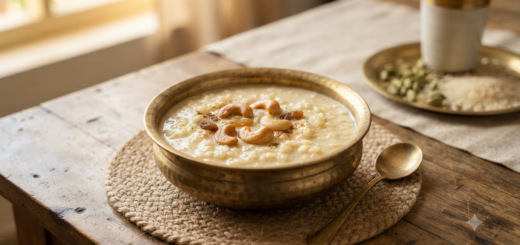
Sakkarai pongal with sugar is a quick white-sugar version of the South Indian sweet rice-and-dal dish, made soft with rice, moong dal, ghee and cardamom. This method uses a pressure cooker and keeps the sugar step simple, so the pongal stays creamy instead of turning grainy or overly sticky.
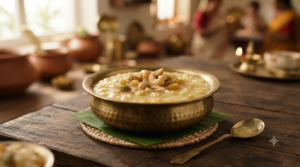
Soft and creamy sakkarai pongal with sugar, finished with ghee, cashews, raisins and cardamom.
Traditional sakkarai pongal is more often made with jaggery, which gives a deeper caramel flavour and darker colour. This page is specifically for cooks who want to use regular white sugar. If you want the jaggery version instead, use this sweet pongal with jaggery recipe.
Sakkarai Pongal With Sugar at a Glance
| Detail | Recommended | Why it matters |
|---|---|---|
| Rice | 1 cup short-grain raw rice | Breaks down into a soft, creamy base |
| Moong dal | 1/4 cup yellow moong dal | Adds body and a mild nutty taste |
| Water | 4 cups | Creates the soft texture needed before sugar goes in |
| Sugar | 3/4 cup | Moderately sweet; increase to 1 cup for a sweeter festival-style batch |
| Ghee | 3 tablespoons | Adds aroma, gloss and richness |
| Cook time | About 30 minutes | Includes pressure cooking and finishing |
| Yield | 4 to 6 servings | Depends on serving size |
The key is to cook the rice and dal until very soft before adding sugar. Once sugar enters the pot, the mixture will loosen first and then thicken as it simmers. Therefore, do not judge the final consistency the moment the sugar dissolves.
Ingredients for Sakkarai Pongal With Sugar
- 1 cup short-grain raw rice, such as Sona Masuri or Ponni
- 1/4 cup yellow split moong dal
- 4 cups water
- 3/4 cup white granulated sugar
- 3 tablespoons ghee, divided
- 10 to 12 cashew nuts
- 1 tablespoon raisins
- 1/2 teaspoon cardamom powder
- 1 small pinch salt
- 2 to 4 tablespoons hot water, only if needed while finishing
Use 3/4 cup sugar for a balanced home-style result. If your family prefers a sweeter dessert, increase it to 1 cup. However, avoid increasing the sugar before tasting the finished pongal because sweetness becomes more pronounced as it cools.
Which rice gives the best texture?
Short-grain raw rice works best because it softens and mashes easily. Sona Masuri and Ponni are practical choices in most Indian kitchens. Basmati can be used, but its separate grains and aroma create a different texture from classic sweet pongal.
Do you need to roast the moong dal?
Light roasting is optional, but it gives the dal a gentle nutty aroma. Roast only until fragrant and pale golden, since dark roasting can make the finished dish taste bitter. You can also skip roasting when you want the fastest possible version.
How to Make Sakkarai Pongal With Sugar
For the most reliable texture, cook the rice and dal first, then add sugar only after both are completely soft. Sugar does not need a one-string syrup for this recipe. In fact, a thick sugar syrup can make the finished pongal sticky and more likely to crystallise as it cools.
1. Rinse and lightly roast the dal
Rinse the rice two or three times and drain it. Heat the dry pressure cooker pot, add the moong dal and roast for 2 to 3 minutes on low heat. Stir often, and stop as soon as the dal smells nutty.
Add the rinsed rice after roasting. Stir for about 20 seconds, then switch off the heat while you measure the water.
2. Pressure-cook until very soft
Add 4 cups water and a small pinch of salt. Close the cooker and cook on medium heat for about 4 whistles. Then let the pressure release naturally, because the resting time helps the grains soften further.
Open the cooker and check the texture. The rice and dal should look softer than normal cooked rice and should mash easily with a ladle. If the grains still feel firm, add 1/2 cup hot water and cook again briefly before adding sugar.
3. Add sugar directly to the cooked base
Place the cooked rice and dal over low heat and add 3/4 cup sugar. Stir slowly as the sugar melts. The mixture may become noticeably looser at first, which is normal because dissolved sugar releases moisture into the cooked base.
Keep the heat low and cook for 4 to 6 minutes while stirring. Do not wait for a thick syrup stage, and do not cook until the pongal looks dry. Sakkarai pongal with sugar thickens as it stands, so switch off while it still looks slightly loose and glossy.
4. Fry cashews and raisins in ghee
Heat 2 tablespoons ghee in a small pan. Fry the cashews until pale golden, then add the raisins. As soon as the raisins puff, take the pan off the heat so the nuts do not darken.
Pour the ghee, cashews and raisins into the pongal. Add cardamom powder and the remaining tablespoon of ghee, then mix gently. The final texture should be spoonable, creamy and soft rather than stiff.
5. Rest briefly before serving
Rest the pongal for 5 minutes before serving because the rice will absorb some of the free moisture. If it becomes too thick, stir in 2 tablespoons hot water at a time. Add only enough to bring back a soft porridge-like consistency.
Why Sakkarai Pongal With Sugar Can Turn Grainy or Thick
The most common problem is undercooked rice and dal. Sugar cannot fix a firm base, so the grains must already be very soft before sweetening. Another problem is cooking the sugar too long, which concentrates it and can create a stiff or grainy finish.
| Problem | Likely cause | Fix |
|---|---|---|
| Grainy texture | Rice or dal was not soft enough | Add hot water and cook the base softer before sweetening |
| Too thick after cooling | Pongal was reduced too much | Reheat with hot water, 1 to 2 tablespoons at a time |
| Sticky or candy-like | Sugar syrup was overcooked | Dissolve sugar only; do not cook to string consistency |
| Flat flavour | Too little ghee or cardamom | Add a small spoon of hot ghee and fresh cardamom |
| Cashews taste bitter | They were fried too dark | Stop at pale golden and add raisins last |
This troubleshooting is especially useful when scaling the recipe. A wider pan loses water faster, while a smaller pressure cooker can retain more moisture. Therefore, use the visual texture of the cooked rice as your main guide rather than relying only on minutes.
Sugar vs Jaggery: What Changes?
White sugar gives a cleaner sweetness and a pale cream colour. Jaggery adds caramel, mineral and molasses notes, so the taste is deeper and the pongal looks brown or golden. The two versions are related, but they are not identical in flavour.
Traditional Tamil descriptions of Pongal commonly refer to sweet rice prepared for the harvest celebration, and government cultural sources also describe sweet Pongal as part of the festival. The Ministry of Tourism’s Utsav portal describes Pongal as a harvest celebration, while Incredible India lists sakkara pongal among familiar Tamil Nadu temple foods.
This sugar version is best treated as a practical home variation. If you are making naivedyam or following a family ritual, use the sweetener your household tradition requires rather than assuming white sugar and jaggery are interchangeable for every observance.
Can You Add Milk?
Yes, but milk changes both flavour and storage. Replace 1/2 cup of the water with milk if you want a richer, softer result. Since milk can catch at the bottom of a pressure cooker, keep the heat moderate and use a clean, heavy cooker.
If you specifically want a milk-forward version, follow the dedicated sakkarai pongal with milk recipe. That keeps this page focused on the simpler water-and-sugar method and avoids mixing two different techniques.
Sakkarai Pongal With Sugar: Pressure Cooker or Stovetop?
A pressure cooker is faster because it softens the rice and dal with very little attention. The stovetop method gives more control, but it needs extra water, more stirring and a longer cooking time. Both methods work when the base becomes fully mashable before sugar is added.
If you do not use a cooker, see the separate sakkarai pongal without pressure cooker method. That version explains the slower pot-cooking process without forcing cooker timings onto a stovetop recipe.
How to Adjust Sweetness in Sakkarai Pongal With Sugar
Start with 3/4 cup sugar for 1 cup rice and 1/4 cup moong dal. After the sugar melts and the pongal simmers for a few minutes, taste a small cooled spoonful. Add 1 to 2 tablespoons more sugar only if you want it sweeter.
Avoid adding a large extra amount at the end because every addition makes the mixture temporarily looser. If you add more sugar, simmer briefly and stop while the pongal still flows from the spoon. It will continue to firm up as it cools.
Serving and Storing Sakkarai Pongal With Sugar
Sakkarai pongal with sugar tastes best warm, when the ghee is aromatic and the texture is soft. Serve it in small bowls after a festive meal or as a home sweet. If you prepared it as a religious offering, follow your family practice for offering and serving.
For leftovers, cool and refrigerate the pongal promptly in a clean covered container. The Food Safety and Standards Authority of India advises prompt refrigeration of cooked foods and careful reheating. Reheat only the portion you need, adding a little hot water if the pongal has tightened in the fridge.
If you add milk, be more conservative with storage time and keep it chilled. Discard the dish if it has been left out for an extended period in warm conditions or shows any sign of spoilage.
Small Details That Make This Recipe Better
- Cook the rice softer than you would for a normal meal because pongal should be mashable.
- Use fresh cardamom powder when possible, since old powder loses aroma quickly.
- Fry raisins only after the cashews are nearly ready because raisins puff fast.
- Keep the finished pongal slightly loose while hot, since it thickens as it rests.
- Add ghee in two stages so some flavours the nuts and some stays aromatic in the final dish.
- Do not use puja camphor in food. If a family recipe calls for camphor, use only a food product specifically sold and labelled for culinary use, and use it sparingly.
These small choices matter more than complicated syrup stages. This ratio keeps sakkarai pongal with sugar easy to control. Sakkarai pongal with sugar is at its best when the base is soft, the sweetness is clean and the ghee and cardamom remain fragrant.
Before You Serve
Use this recipe when you want the familiar rice-and-dal texture of sweet pongal without jaggery. The pressure cooker keeps the method short, while direct sugar addition removes an unnecessary syrup step. Most importantly, stop cooking before the mixture looks fully thick because it will set further on the table.
For a deeper caramel taste, choose the jaggery version instead. For a richer dairy finish, choose the milk version. Keeping those variations separate makes each recipe easier to follow and gives more predictable results.
Frequently Asked Questions
Can I make sakkarai pongal with sugar instead of jaggery?
Yes. Sakkarai pongal with sugar works well as a home-style variation, although the flavour and colour differ from jaggery pongal. White sugar gives a cleaner sweetness and lighter colour, while jaggery gives deeper caramel notes.
How much sugar should I use for 1 cup of rice?
Use 3/4 cup white sugar for a moderately sweet batch with 1 cup rice and 1/4 cup moong dal. Increase it to 1 cup if you prefer a sweeter festive dessert. Taste after the sugar has fully dissolved before adding more.
Why does my sakkarai pongal become hard after cooling?
It usually becomes hard because too much water evaporated during the final simmer. Keep the pongal slightly loose while hot, since it naturally thickens as it cools. Reheat with small splashes of hot water to restore the texture.
Do I need to make sugar syrup separately?
No. For white sugar, you can add the sugar directly to the fully cooked rice-and-dal base and stir on low heat. If you prefer dissolving it first, use only enough water to dissolve the sugar and do not cook it to string consistency.
Can I use brown sugar in this recipe?
Yes, but brown sugar will change the flavour and colour. It gives a light caramel note but still does not taste exactly like jaggery. Use the same starting quantity, then adjust after tasting.
Can I make this recipe without moong dal?
Yes, but the texture becomes more like sweet rice because moong dal adds body and creaminess. If you omit it, use a little less water at first and cook the rice until very soft before adding sugar.
Can I double sakkarai pongal with sugar?
Yes, but do not fill a pressure cooker beyond its safe capacity. Double the ingredients proportionally, then allow extra time for the cooker to reach pressure. Use texture, not whistle count alone, to confirm the rice and dal are fully soft.
Can I make it vegan?
Yes. Replace ghee with coconut oil or another cooking fat you enjoy, and use water instead of milk. The flavour will differ from the ghee-based version, but the rice-and-dal method stays the same.