Sakkarai Pongal With Karupatti: Easy Pressure Cooker Recipe
Sakkarai pongal with karupatti is sweet pongal made with palm jaggery instead of the usual cane jaggery, giving the rice-and-moong-dal base a darker colour and deeper caramel flavour. This version uses a pressure cooker, so the grains turn soft before the karupatti syrup goes in. The crucial rule is simple: cook the rice and dal fully first, then add the strained sweetener.
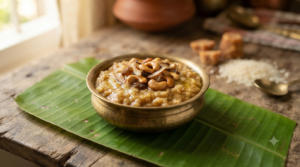
Creamy sakkarai pongal with karupatti finished with ghee-roasted cashews and raisins.
Karupatti can contain fine sediment, so melting and straining it is worth the extra few minutes. It also varies in sweetness and colour from batch to batch. Therefore, treat the final texture and sweetness as your guide rather than chasing an exact shade.
Sakkarai Pongal With Karupatti at a Glance
- Style: Tamil-style sweet pongal with palm jaggery.
- Prep time: about 10 minutes.
- Cook time: about 30 to 35 minutes.
- Yield: about 4 generous servings.
- Best texture: soft, spoonable and glossy rather than dry or grainy.
- Key technique: cook the rice and dal until mushy before adding karupatti syrup.
This is a quick pressure-cooker method, not an instant-mix powder recipe. If you prefer a slow stovetop version, Bhimas Cook also has a sakkarai pongal without a pressure cooker.
Ingredients for Sakkarai Pongal With Karupatti
| Ingredient | Quantity | What it does |
|---|---|---|
| Raw rice | 1 cup | Creates the soft, starchy base |
| Yellow moong dal | 1/2 cup | Adds body and a gentle nutty taste |
| Water | 4 cups, plus a little hot water if needed | Cooks the rice and dal until mashable |
| Karupatti, grated | 1 cup | Sweetens and adds a dark caramel note |
| Water for syrup | 1/4 cup | Helps dissolve the karupatti |
| Ghee | 1/4 cup | Adds richness, gloss and aroma |
| Cashews | 10, broken | Adds crunch |
| Raisins | 2 tablespoons | Adds soft bursts of sweetness |
| Cardamom powder | 1/2 teaspoon | Balances the deep jaggery flavour |
| Salt | 1 small pinch | Sharpens the sweetness |
| Food-grade edible camphor | Tiny pinch, optional | Adds a traditional aroma |
Use palm jaggery that smells clean and tastes pleasantly caramel-like, not burnt or sour. Because karupatti is an unrefined product, colour can range from medium brown to very dark brown. That natural variation does not mean your pongal has gone wrong.
How to Make Sakkarai Pongal With Karupatti
Cook the rice and dal first
- Roast the dal lightly. Place the moong dal in a dry pan over low heat for two to three minutes. Stop when it smells nutty; do not brown it deeply.
- Rinse the grains. Rinse the rice and roasted dal two or three times, then drain. Add both to a pressure cooker with 4 cups water and a small pinch of salt.
- Cook until very soft. Pressure cook on medium heat for about three to four whistles. Let the pressure fall naturally, then open and check. The grains should mash easily with the back of a spoon.
- Make the karupatti syrup. While the cooker rests, combine grated karupatti with 1/4 cup water in a small saucepan. Warm it just until dissolved, then strain through a fine metal sieve.
Finish the pongal gently
- Combine on low heat. Mash the cooked rice and dal lightly. Pour in the strained syrup and stir over low heat for five to eight minutes, until the mixture looks glossy and slightly loose.
- Fry the garnish. Heat two tablespoons of the ghee in a small pan. Fry cashews until golden, then add raisins and remove the pan once they puff.
- Finish the pongal. Stir cardamom into the rice mixture. Add the fried nuts, raisins and remaining ghee, then cook for another minute.
- Rest before serving. Switch off the heat and let the pongal stand for five minutes. It thickens as it cools, so serve it slightly looser than your final target.
If the cooked rice and dal still look separate after pressure cooking, add a splash of hot water and simmer before adding the syrup. Do not rush this stage, because sweetener added too early makes it harder to get the soft, creamy texture that defines good sweet pongal.
Why the Karupatti Syrup Goes in After the Rice
The rice and dal need plain water first so their starches can soften fully. Once a concentrated sweetener enters the pot, the mixture becomes thicker and the grains can take longer to collapse. That is why reliable karupatti pongal methods cook the grain base first and add strained syrup only after it turns soft.
Straining also matters because palm jaggery may carry tiny bits of fibre or sediment. Melt only until dissolved; you do not need a one-string syrup. A hard syrup can make the finished pongal sticky and overly dense.
Choosing Karupatti for Sweet Pongal
For sakkarai pongal with karupatti, buy palm jaggery that has a clean, warm aroma and no stale or chemical smell. Blocks and granules both work, although grated or powdered karupatti dissolves faster. Check the pack label when you can, because the ingredient should clearly identify palm jaggery rather than leaving the sweetener vague.
Do not judge quality by darkness alone. Some good batches are medium brown, while others are almost black. Taste a tiny piece before cooking; if it is intensely bitter, burnt or sour, the same note will dominate the finished pongal. Since sweetness also varies, it is smarter to adjust at the end with a little separately dissolved and strained syrup than to overload the pot at the start.
Karupatti vs Regular Jaggery in Sweet Pongal
| Point | Karupatti | Regular jaggery |
|---|---|---|
| Source | Palm sap | Usually sugarcane juice |
| Flavour | Deeper, earthy, caramel-like | Cleaner, familiar jaggery sweetness |
| Colour | Usually darker brown | Golden to medium brown |
| Sweetness | Can vary by batch | Usually more predictable |
| Best choice | When you want the palm-jaggery flavour to lead | When you want classic sakkarai pongal |
If you want the standard cane-jaggery version, use the sweet pongal pressure-cooker recipe instead. The cooking logic is similar, but the flavour is noticeably different.
Is Palm Jaggery Healthier Than Regular Jaggery?
Karupatti may retain small amounts of minerals, but it is still a concentrated sweetener and should not be treated as a diabetes-friendly or low-sugar substitute. The World Health Organization sugar guideline advises limiting free sugars, while the ICMR-National Institute of Nutrition dietary guidelines also recommend keeping added sugar modest.
So choose karupatti for its flavour, tradition and recipe character rather than as a licence to eat more sweet food. If you need to control blood glucose or sugar intake, use a smaller serving and follow advice from your clinician or dietitian.
How to Get the Right Sakkarai Pongal With Karupatti Texture
Good sakkarai pongal with karupatti should fall from the spoon slowly, with no dry rice grains visible. It should look a little loose while hot because rice and dal continue absorbing moisture as the dish rests. Therefore, a pongal that looks perfect in the pan can become too thick ten minutes later.
- Too thick: stir in hot water, one tablespoon at a time.
- Too loose: simmer uncovered on low heat for two to four minutes.
- Grainy rice: the base was undercooked; add hot water and cook it softer before more syrup goes in.
- Flat sweetness: dissolve a little extra karupatti separately, strain it, then mix it in.
- Bitter edge: the karupatti may be heavily caramelised or low quality; more ghee will not fully hide that taste.
Common Mistakes That Ruin Karupatti Pongal
Adding the palm jaggery too early
Cook the rice and moong dal until they are already soft. If you add the sweetener while the grains are still firm, the final texture can stay coarse and take much longer to fix.
Skipping the straining step
Even good palm jaggery can contain fine sediment. Dissolve it with a small amount of water and strain it before use, because a gritty syrup will stay gritty after cooking.
Using too much edible camphor
Edible camphor is optional and should be barely perceptible. Use only a product clearly sold for food use, never puja or medicinal camphor. If you are unsure what you have, leave it out.
Cooking the final mixture on high heat
Karupatti syrup can catch quickly once it mixes with the starchy rice. Keep the flame low and stir from the bottom, especially during the final five minutes.
Can You Make It Without Ghee or With Milk?
You can make a dairy-free version with coconut oil, although the taste moves away from classic sweet pongal. Use a mild coconut oil and add it in stages, just as you would ghee. The texture will still be soft, but the aroma changes.
Milk is optional and not needed for this karupatti version. If you add milk for extra creaminess, do it only after the rice is fully cooked and use the pongal sooner. For a recipe built around that variation, see Bhimas Cook’s sakkarai pongal with milk.
Serving Ideas for Sakkarai Pongal With Karupatti
Serve sakkarai pongal with karupatti warm, when the ghee is fragrant and the texture is still soft. It works as a festival sweet, a home pooja offering where it fits your family’s custom, or a simple dessert after a South Indian meal.
For a Pongal or Sankranti menu, pair it with savoury ven pongal, sambar, vadai and a simple vegetable curry. Bhimas Cook’s Sankranti special recipes page gives more ideas for building a full festive spread.
Storage and Reheating
Cool leftovers promptly and refrigerate them in a covered container. USDA food-safety guidance advises refrigerating cooked leftovers within two hours, or within one hour when the temperature is above about 32°C, and using most cooked leftovers within three to four days.
For best quality, eat this pongal within about three days. Reheat only the portion you need over low heat with a spoonful of hot water. Stir until soft and steaming, then add a few drops of ghee if you want the fresh-made aroma back.
Before You Serve
Sakkarai pongal with karupatti is at its best when the palm jaggery flavour stays clear rather than being buried under extra spices. Cook the grain base softer than ordinary rice, strain the karupatti, and keep the final simmer gentle. Those three choices matter more than any garnish.
If the dish thickens while it waits, loosen it with hot water instead of adding more ghee. That restores the spoonable texture without making the pongal heavy.
Frequently Asked Questions
Can I use regular jaggery instead of karupatti?
Yes. The recipe will still work, but the flavour will shift toward classic sakkarai pongal. Use the same general method: dissolve, strain and add the jaggery only after the rice and dal are soft.
Can I make sakkarai pongal with karupatti without moong dal?
Yes, although the result will taste more like sweetened soft rice and will lose some body. If you skip the dal, reduce the cooking water slightly and watch the texture rather than following the same ratio blindly.
Why should I strain palm jaggery?
Straining removes sediment, fibres and other small particles that may be present in unrefined karupatti. It also lets you check the syrup before it reaches the rice, so you avoid a gritty final dish.
Do I need to roast the moong dal?
No, but light roasting gives a nuttier aroma and keeps the dal flavour distinct. Stop as soon as it smells toasted because dark roasting can make the pongal taste more savoury than sweet.
Is karupatti pongal suitable for people with diabetes?
Do not assume it is diabetes-friendly just because it uses palm jaggery. Karupatti is still a concentrated sweetener, so portion size and total carbohydrate intake matter. If you manage diabetes, follow your clinician’s or dietitian’s advice.
Can I skip edible camphor?
Yes. Cardamom alone gives plenty of aroma. If you do use camphor, choose only food-grade edible camphor and add an extremely small amount.
Why did my pongal become hard after cooling?
Rice and dal keep absorbing moisture after cooking, so the mixture naturally thickens. Reheat it with a spoonful or two of hot water and stir gently until it loosens again.
Can I make this a day ahead?
Yes. Refrigerate it promptly, then reheat gently with a little hot water. Add fresh ghee-roasted cashews at serving time if you want the garnish to stay crisp.