Sakkarai Pongal Coconut Milk Recipe: Creamy & Easy
Sakkarai Pongal Coconut Milk is at its best when the rice and moong dal cook until almost creamy before jaggery and coconut milk go in. This version fixes the two problems that most often spoil the dish: undercooked grains and coconut milk that separates under high heat. The result is soft, glossy, fragrant and rich without becoming heavy.
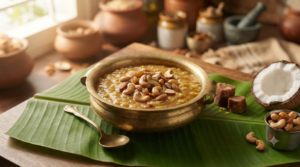
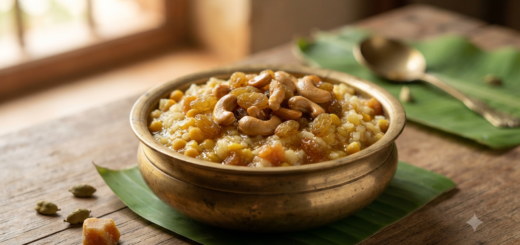
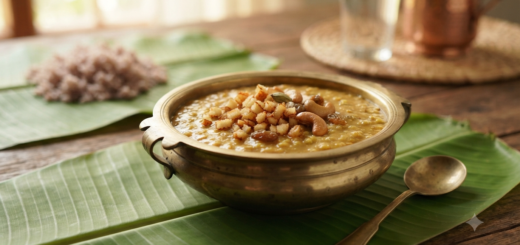
Creamy Sakkarai Pongal made with jaggery, moong dal and coconut milk, finished with ghee-fried cashews and raisins.
Coconut milk is not part of every traditional sakkarai pongal, but it works beautifully as a festive variation because it brings gentle sweetness and a rounded coconut aroma. The key is to use enough cooking water first, then add coconut milk in stages instead of asking it to soften raw rice and dal.
Sakkarai Pongal Coconut Milk at a Glance
- Prep time: about 10 minutes, plus optional 10-minute soaking.
- Cook time: about 35 to 40 minutes, depending on the cooker and jaggery.
- Serves: 6 small dessert portions.
- Texture: soft and spoonable while hot, then thicker as it cools.
- Best rice: raw short-grain rice such as Sona Masuri or Ponni.
- Sweetener: jaggery, dissolved and strained before mixing.
- Coconut milk: use thinner milk for body and thick milk near the end for aroma.
The most important ratio is simple: one cup of rice needs generous liquid because sweet pongal should be much softer than plain steamed rice. Since jaggery can tighten the starch once it enters the pot, cook the rice and dal fully before you sweeten them.
Ingredients for a Creamy Coconut Milk Sweet Pongal
| Ingredient | Quantity | Why it matters |
|---|---|---|
| Raw short-grain rice | 1 cup | Creates the soft, creamy base. |
| Yellow moong dal | 1/4 cup | Adds body and a gentle nutty flavour. |
| Water | 3 cups | Softens the rice and dal before sweetening. |
| Thin coconut milk | 1 cup | Loosens the cooked base and adds coconut flavour. |
| Thick coconut milk | 1/2 cup | Finishes the pongal without prolonged boiling. |
| Grated jaggery | 1 1/4 cups | Gives caramel-like sweetness and colour. |
| Water for jaggery | 1/2 cup | Helps dissolve and strain the jaggery. |
| Ghee | 4 tablespoons | Adds aroma, gloss and richness. |
| Cashews | 12 to 15 | Give crunch after frying in ghee. |
| Raisins | 1 tablespoon | Add small bursts of sweetness. |
| Cardamom powder | 1/2 teaspoon | Balances jaggery and coconut. |
| Salt | 1 small pinch | Makes the sweetness taste fuller. |
For Sakkarai Pongal Coconut Milk, canned coconut milk works well if you stir it first because the cream often separates in the tin. Then dilute part of it with warm water to make the thinner portion. Fresh first and second coconut extracts work even better, although they are not essential.
You can also dry-roast the moong dal for two or three minutes before rinsing. This step is optional, but it gives a warmer aroma and keeps the dal flavour clear beneath the jaggery.
How to Make Sakkarai Pongal Coconut Milk
Sakkarai Pongal Coconut Milk comes together most reliably in four stages: cook the rice and dal very soft, make a strained jaggery syrup, add the coconut milk gently, then finish with ghee-fried nuts. Do not add jaggery to firm rice because the grains will take longer to soften once sugar enters the pot.
1. Rinse and prepare the rice and moong dal
Rinse the rice and moong dal two or three times until the water looks mostly clear. If you have time, soak them for 10 minutes because a short soak helps the grains soften evenly.
For a nuttier taste, dry-roast only the moong dal before rinsing it. Keep the colour pale gold, since dark roasting can make the final sweet taste slightly bitter.
2. Cook until the grains lose their shape
Add the rice, dal, three cups of water and a pinch of salt to a pressure cooker. Cook on medium heat for about four whistles, then let the pressure fall naturally. Cooker size and heat vary, so judge doneness by texture rather than whistle count.
The rice and dal should mash with almost no pressure from a ladle. If they still look separate or firm, add half a cup of hot water and cook a little longer before moving on.
3. Make and strain the jaggery syrup
While the rice cooks, place the jaggery and half a cup of water in a small pan. Warm it on low heat until the jaggery dissolves, then strain it through a fine sieve because unrefined jaggery can contain grit.
You do not need a one-string or soft-ball syrup for this recipe. In fact, a thick syrup can make the finished pongal tighten too quickly, so stop once the jaggery has fully dissolved.
4. Add thin coconut milk first
Mash the hot rice and dal lightly, then stir in one cup of thin coconut milk. Keep the flame low and cook for three to four minutes, so the coconut flavour blends into the rice without a hard boil.
This is the stage to correct consistency. If the mixture already looks stiff, add a little hot water because jaggery will make it thicker again.
5. Add jaggery and simmer gently
Pour in the strained jaggery syrup and stir well. The mixture may loosen at first, but it will thicken as it simmers. Cook on low heat for five to seven minutes while stirring often, especially near the base of the pan.
Do not chase a very thick finish on the stove. Sweet pongal firms as it cools, so switch off while it still falls slowly from the ladle.
6. Finish with thick coconut milk, cardamom and ghee
Lower the heat to the minimum and stir in the thick coconut milk plus cardamom. Warm for two minutes without vigorous boiling, then switch off. Coconut milk can release oil and look split when boiled hard, so the gentler finish keeps the texture smoother.
Meanwhile, heat the ghee in a small pan. Fry the cashews until golden, then add raisins and cook just until they puff. Pour the whole tempering over the pongal and fold it through.
Why This Method Works Better
Sakkarai Pongal Coconut Milk needs a porridge-soft base, so the old shortcut of one cup rice and half a cup dal in only two cups water is too tight. A lower dal ratio and more water produce a cleaner rice-led texture while still keeping the familiar moong dal flavour.
Recent coconut-milk sweet pongal recipes also tend to cook the grain base with water first, then add coconut milk later. That sequence matters because coconut milk adds flavour, but water does the heavy work of softening starch efficiently.
There is another small advantage. By splitting the coconut milk into thin and thick portions, you can simmer the thinner milk briefly while protecting the aroma of the richer portion. As a result, the finished dish tastes more distinctly of coconut instead of only jaggery and ghee.
Sakkarai Pongal Coconut Milk: Texture Troubleshooting
| Problem | Likely cause | Fix |
|---|---|---|
| Too thick | Cooked too long after jaggery. | Stir in hot water or warm thin coconut milk. |
| Rice feels firm | Jaggery was added before grains softened. | Cook rice and dal fully before sweetening next time. |
| Coconut milk looks oily | It boiled hard for too long. | Add thick coconut milk at the end over low heat. |
| Pongal tastes flat | Needs balance, not more jaggery. | Add a tiny pinch of salt and fresh cardamom. |
| Jaggery feels gritty | Syrup was not strained. | Dissolve and sieve the jaggery before adding it. |
If the pongal thickens before serving, do not add cold coconut milk straight from the fridge. Warm the liquid first because a sudden temperature drop can make the mixture lumpy and dull the aroma.
Pressure Cooker, Pot or Instant Pot?
For Sakkarai Pongal Coconut Milk, a stovetop pressure cooker is the easiest choice because the rice and dal need to become very soft. Four whistles followed by natural pressure release usually gives the right texture, although cooker size and flame strength can change the timing.
A heavy pot also works, but use about four cups of water and simmer slowly. Stir every few minutes because the starch settles on the bottom as the grains break down.
If you prefer electric pressure cooking, cook the rice, dal and water first, then add jaggery and coconut milk only after pressure cooking. For a dedicated method, see the site’s sweet pongal pressure cooker recipe.
Festival Serving and Prasadam Notes
Sakkarai Pongal Coconut Milk is a modern festive variation of a sweet closely tied to the Pongal harvest festival in Tamil Nadu, when new rice and sugarcane mark the season. Government of India tourism material describes Pongal as a harvest celebration in which sweet rice is part of the main festival day.
If you prepare this version as naivedyam or prasadam, follow your household custom first because coconut milk is a variation rather than a universal rule. Some families prefer a simpler rice, dal, jaggery and ghee version for offering, while others welcome coconut in festive sweets.
For a larger festival menu, pair it with savoury Ven Pongal or use the site’s Sankranti special recipes guide to plan other sweets and snacks. You can also read the Government of India’s Ministry of Tourism material for broader festival context.
Can You Make It Vegan?
Yes. The rice, dal, jaggery and coconut milk are already plant-based, so only the ghee needs changing. Replace it with a neutral coconut oil or vegan butter, then fry the nuts exactly the same way.
The flavour will differ because ghee contributes a toasted dairy aroma. If you use coconut oil, choose a mild one when you want the jaggery and cardamom to remain dominant.
Storage and Reheating
Cool Sakkarai Pongal Coconut Milk leftovers promptly, then refrigerate them in a shallow covered container. The U.S. Department of Agriculture advises refrigerating cooked leftovers within two hours and using most cooked leftovers within three to four days. For best texture, this coconut-milk pongal is nicest within two to three days.
When reheating, add a splash of water or thin coconut milk because the rice starch firms in the fridge. Warm only the portion you need, while stirring often so the jaggery does not catch on the bottom.
For general leftover safety, see the USDA leftovers guidance and FoodSafety.gov food storage advice. These sources also stress quick chilling for cooked rice and other perishable leftovers.
Small Details That Make a Big Difference
- Use a wide, heavy pan after pressure cooking because jaggery can scorch quickly on thin metal.
- Add jaggery only after the rice and dal are fully soft, since sugar can slow further softening.
- Keep thick coconut milk for the final minutes because long boiling weakens its fresh aroma.
- Stop cooking while the pongal still looks slightly loose, since it thickens as it stands.
- Fry raisins only after the cashews are almost golden because raisins puff much faster.
- Use freshly ground cardamom when possible, since pre-ground spice loses aroma quickly.
One more point matters for sweetness. Jaggery varies from mild to intensely sweet, so 1 1/4 cups is a starting point rather than a rigid rule. If you are cooking for a family that prefers a lighter dessert, begin with one cup and add more syrup only if needed.
Sakkarai Pongal Coconut Milk: Final Check Before Serving
Sakkarai Pongal Coconut Milk should look glossy, flow from the ladle and still show a soft grainy body rather than becoming completely smooth. Taste should move from jaggery first to coconut, then cardamom and ghee in the finish.
If it looks thick, loosen it before serving. If it tastes overly sweet, a pinch of salt and a little warm coconut milk can restore balance better than adding more rice at the last minute.
Serve it warm for the best aroma. The dish is rich enough on its own, so a small bowl makes a satisfying dessert or festive prasadam portion.
Frequently Asked Questions
Can I use canned coconut milk for sakkarai pongal?
Yes, canned coconut milk works well when you stir it until smooth first. Dilute part of it with warm water for the thinner portion, then keep the richest part for the end. This gives good coconut flavour without prolonged boiling.
Why did my coconut milk sweet pongal split?
High heat is the usual cause because coconut milk can release oil when it boils hard for too long. Keep the flame low after adding coconut milk, and add the thick portion near the end. The pongal can still taste good even if slight separation appears.
Can I add coconut milk before pressure cooking?
You can, but it is not the most reliable method. Water softens the rice and dal efficiently, while coconut milk is better used for flavour after the grains are fully cooked. Adding it later also gives you more control over thickness.
How much jaggery should I use for one cup of rice?
Start with about 1 to 1 1/4 cups of grated jaggery for one cup of rice. Jaggery strength varies, so taste the syrup before adding more. Festival versions can be sweeter, while everyday versions often use less.
Why is my sakkarai pongal too thick after cooling?
Rice starch sets as it cools, so sweet pongal naturally becomes thicker after resting. Stir in warm water or thin coconut milk while reheating. Add a little at a time because the mixture loosens quickly once it gets hot.
Can I make this recipe without ghee?
Yes, use coconut oil or vegan butter if you need a dairy-free version. The texture will remain rich because coconut milk already contributes fat. However, the final aroma will be more coconut-forward and less like classic ghee-finished pongal.
Do I need to roast the moong dal first?
No, roasting is optional. A brief dry roast gives the dal a nuttier fragrance, while unroasted dal tastes softer and milder. Both methods work, so choose the one that matches your family style.
How long can coconut milk sakkarai pongal stay in the fridge?
For best quality, eat it within two to three days. Food-safety guidance allows most promptly chilled cooked leftovers for three to four days, but coconut milk pongal loses its smooth texture over time. Reheat only what you plan to eat.