Rasam Powder Recipe Brahmin Style: Authentic Homemade Podi
The Rasam Powder Recipe Brahmin style leans hard on two spices: black pepper and cumin. Everything else sits behind them in a supporting role. That single balance is the real secret, so it is exactly the part a store-bought packet tends to get wrong. Grind it fresh at home, and one spoonful stirred into hot tamarind water becomes rasam that clears the head and warms the chest.
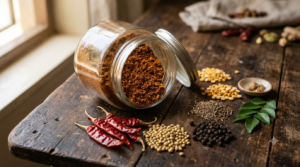
Freshly ground rasam powder, Brahmin style, in a glass jar with roasted spices alongside.
This Rasam Powder Recipe Brahmin guide gives you the exact quantities, the roasting order that stops spices from scorching, and the small choices that decide flavour. You also get the one distinction most recipes skip: why a rasam podi is not just a thinner sambar powder. Because the blend is roasted and ground dry, a single batch keeps for months when you store it right.
Rasam Powder Recipe Brahmin Style at a Glance
If you are short on time, here is the whole Rasam Powder Recipe Brahmin method in a few lines. The detail follows below, but these points cover the essentials.
- Pepper and cumin lead; coriander gives volume; a little dal adds body.
- Roast each ingredient separately on low heat, since they cook at different speeds.
- Cool everything fully before grinding, because warm spices trap moisture and spoil faster.
- A slightly coarse grind suits rasam, while sambar powder wants a very fine one.
- Stored dry in glass, the powder stays fresh for 6 to 12 months.
What Makes the Rasam Powder Recipe Brahmin Style Distinct
A true Rasam Powder Recipe Brahmin blend is defined by proportion, not by a long ingredient list. Black pepper and cumin carry the flavour, so they appear in a higher ratio here than in almost any other South Indian spice mix. Coriander seeds add bulk and a mild citrus note, while a small measure of toor dal and chana dal lends body without weighing the broth down.
Because rasam is a thin, tangy soup, the powder is often ground a touch coarser than sambar powder. This lets the spices release their essence into the liquid without clouding it. Fenugreek stays minimal or optional too, since there is little thick dal in rasam to balance its bitterness.
There is also a small piece of food science worth knowing. When black pepper meets cumin, it lifts a compound in the cumin called pinene, which is what gives roasted rasam podi that woody, smoky warmth. That warmth is the reason a bowl of rasam has long been offered as home comfort during a cough or cold. Framed honestly, that is tradition and lived experience, not a medical claim.
Ingredients for the Rasam Powder Recipe Brahmin Blend
These quantities yield about one cup of finished powder. They are calibrated so no single spice overwhelms the rest, though you can adjust heat later.
- ¾ cup coriander seeds (dhania)
- ¼ cup toor dal (split pigeon peas)
- ¼ cup chana dal (split Bengal gram)
- 2 tbsp cumin seeds (jeera)
- 1–2 tsp black peppercorns, adjusted to taste
- 10–12 dry red chillies
- ½ tbsp fenugreek seeds (methi), optional but traditional
- ½ tsp asafoetida (hing)
- A handful of curry leaves, fresh or dried, optional
Choosing Your Chillies
Chilli choice changes both colour and heat, so pick with intent. Byadgi chillies give a deep red colour with gentle heat, while Guntur chillies bring far more punch. If you want a rich colour without fire, lean on Byadgi or Kashmiri chillies and use fewer hot ones. When in doubt, start with 10, since you can always sharpen the next batch.
A Note on Asafoetida and Gluten
Most powdered hing sold in shops is not pure resin. To make it easy to measure, manufacturers compound it with a carrier, and that carrier is very often wheat flour. As a result, a spice that looks harmless can carry gluten, sometimes at 20 to 80 percent by weight.
If you or your guests are gluten-sensitive, read the label and choose a resin-based or rice-flour hing instead. This is one detail most rasam powder guides never mention.
Step-by-Step Rasam Powder Recipe Brahmin Method
The method is simple, yet the order matters. Roast in stages so that delicate spices do not burn while tougher lentils are still cooking. Keep the flame low throughout.
Preparation Before Roasting
First, clean all the dry ingredients to remove any grit or small stones. If your curry leaves are fresh, wash and dry them fully, because even a little moisture causes spitting in a hot pan. Spread everything on a cloth for 5 to 10 minutes before you begin.
Roasting Order and Timings
- Toor dal and chana dal (about 8 minutes): Heat a heavy pan on low-medium. Add both dals and stir constantly until they turn light golden and smell nutty. Then move them to a plate.
- Coriander seeds (about 5 minutes): In the same pan, roast the coriander until crisp and fragrant. Transfer to the plate.
- Cumin and peppercorns (about 4 minutes): Roast these together only until a warm aroma rises. They scorch quickly, so watch them closely.
- Dry red chillies (about 4 minutes): Turn the chillies often until they crisp slightly. Do not let them darken, since burnt chilli tastes acrid.
- Fenugreek seeds (about 2 minutes): Roast very briefly until fragrant, because fenugreek turns bitter the moment it browns.
- Curry leaves (about 2 minutes): Add them last and roast until crisp. This step deepens the aroma of the finished podi.
Cooling and Grinding
After roasting, let every ingredient cool completely for about 10 minutes. Warm spices give off steam, and that trapped moisture is what turns fresh powder clumpy within weeks.
Once cool, grind the mix to your preferred texture. A slightly coarse grind is traditional for rasam, though many families grind fine and sieve; either works, so choose the one you prefer. Store the powder in a clean, dry glass jar.
Recipe Card
| Detail | Value |
|---|---|
| Prep time | 15 minutes |
| Roasting time | 25 minutes |
| Cooling and grinding | 10 minutes |
| Yield | About 1 cup |
| Shelf life | 6–12 months |
Rasam Powder Recipe Brahmin vs Sambar Powder: What Actually Changes
People often treat these two podis as interchangeable, yet they are built for different jobs. Sambar powder seasons a thick lentil-and-vegetable stew, so it can afford more fenugreek and a very fine grind. Rasam powder flavours a thin, tangy broth, so pepper and cumin dominate and the grind stays coarser. Swap one for the other and the dish loses its intended character.
| Feature | Rasam Powder | Sambar Powder |
|---|---|---|
| Pepper and cumin | High, front and centre | Low or none |
| Fenugreek | Little or optional | More |
| Grind texture | Slightly coarse | Very fine |
| Main job | Flavour a thin broth | Season a thick stew |
If you keep only one on hand, you can fake the other in a pinch. Add extra cumin and pepper to sambar powder, and it stands in for rasam podi reasonably well. Still, a dedicated blend always tastes cleaner. For a full comparison, our Kannada Brahmin-style sambar powder recipe walks through that mix in the same detail.
Rasam Powder Recipe Brahmin: What Home Cooks Get Wrong
Most disappointing batches come down to a few avoidable mistakes. Fix these, and your podi improves immediately.
- Bitterness: This almost always comes from over-roasted fenugreek or burnt curry leaves. Roast both on the lowest heat, and only until fragrant.
- Dull, flat flavour: Usually the pepper and cumin were too shy. Because they are the stars, do not cut them to reduce heat; drop a chilli instead.
- Clumping in storage: Moisture is the culprit. Cool the spices fully, use a dry spoon, and never store the jar near the stove.
- Uneven roast: When you make more than two cups, roast each ingredient separately so nothing burns while the rest catches up.
Storing Your Rasam Powder Recipe Brahmin Blend
Good storage decides how long the aroma lasts. Keep the powder in an airtight glass jar in a cool, dark cupboard, and always use a dry spoon. Kept this way, a homemade Rasam Powder Recipe Brahmin batch stays vibrant for 6 to 12 months.
For longer life, split the powder into small freezer-safe packs and freeze them. Open one pack at a time, since repeated exposure to warm kitchen air dulls the spices. Above all, guard against moisture at every stage, because a single drop of water invites clumping and spoilage.
How to Use the Rasam Powder Recipe Brahmin Blend Beyond Rasam
For rasam itself, use about 1 teaspoon of the Rasam Powder Recipe Brahmin blend per cup of water. A classic Brahmin rasam combines tamarind extract, tomatoes, cooked dal water, this podi, turmeric, hing, and curry leaves, finished with a mustard-seed tempering. That ratio is your reliable starting point.
The blend earns its keep elsewhere too. Sprinkle a pinch over steamed rice with ghee for an instant meal, or stir it into vegetable curries and lentils for depth. It also lifts a simple pepper rasam or a soothing garlic rasam. Once you have a jar ready, try it in our Andhra-style rasam or the traditional Tamil Nadu rasam for two clearly different results from the same powder.
Substitutions and Variations
The recipe bends easily to what you have. These swaps keep the balance intact while letting you adjust for taste or diet.
- No fenugreek? Skip it, or add a pinch of turmeric for colour and a subtle earthiness.
- Prefer milder heat? Use Kashmiri chillies instead of Guntur; the colour stays rich while the heat drops.
- No curry leaves? Leave them out. The powder still tastes great, though the aroma shifts slightly.
- Want an Iyengar twist? Our Iyengar-style rasam podi uses a slightly different balance worth trying.
Nutrition Note
Rasam powder is a seasoning, so a serving is small. As a rough guide, one tablespoon of the dry blend carries around 40 kcal, mostly from the seeds and lentils, along with useful fibre. These figures are approximate and describe the powder itself, not a finished bowl of rasam.
For precise values, cross-check ingredients against a database like the USDA FoodData Central, since brands and quantities vary. You can also read more about the dish on Wikipedia’s rasam page.
Before You Grind Your First Batch
The Rasam Powder Recipe Brahmin style rewards a little care. Keep the pepper and cumin generous, roast low and slow, and cool fully before grinding. Do that, and every bowl of rasam you make will taste brighter and more honest than anything from a packet. Start with one modest batch, taste your rasam, and tune the chilli next time until it is exactly yours.
FAQs About the Rasam Powder Recipe Brahmin
Can I make rasam powder without lentils?
Yes. Some households make a simpler version with only coriander, chilli, cumin, and pepper, especially for immediate use. However, the toor dal and chana dal add body and a rounder, more traditional taste, so they are worth including when you can.
How long does homemade rasam powder last?
Stored airtight in a cool, dry place, homemade rasam powder stays fresh for 6 to 12 months. Freezing small batches extends that further. Since moisture is the main enemy, always use a dry spoon and keep the jar sealed.
Is homemade powder better than store-bought?
Yes, in most cases. A fresh homemade blend has a brighter aroma, balanced spice, and no preservatives or fillers. If you cook rasam regularly, grinding your own is well worth the 40 minutes it takes.
What is the difference between rasam powder and sambar powder?
Rasam powder carries much more black pepper and cumin, and it is ground slightly coarser. Sambar powder uses more fenugreek and a very fine grind because it seasons a thick stew. They taste related but are not interchangeable without adjustment.
Why is my rasam powder bitter?
Bitterness usually means the fenugreek or the curry leaves over-roasted. Both need only a brief turn on low heat until fragrant. Burnt chillies can add a harsh edge too, so keep the flame gentle throughout.
Should rasam powder be coarse or fine?
A slightly coarse grind is traditional, since it lets the spices release their essence without clouding the thin broth. That said, many families grind it fine and sieve it. Either texture works, so use whichever you prefer.
Can I use sambar powder instead of rasam powder?
In a pinch, yes. Add extra cumin and black pepper to your sambar powder to push it toward a rasam profile. The result is decent, though a dedicated rasam blend always tastes cleaner and sharper.
Is rasam powder gluten-free?
The spices and lentils are naturally gluten-free, but the asafoetida may not be. Many compounded hing brands use wheat flour as a carrier. So if you need a gluten-free blend, choose a resin-based or rice-flour hing and check the label carefully.