Sambar Recipe Rice Kerala Traditional Nadan Method
Sambar Recipe Rice Kerala is the thick, coconut-scented nadan sambar that Kerala homes ladle over hot rice at lunch. It is not the same dish as the thinner Tamil Nadu version, although most recipe pages treat the two as identical. Kerala cooks build the flavour differently, so the oil, the vegetables and often the whole masala change.
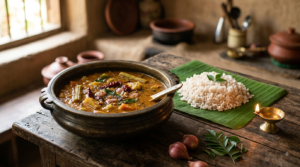
Thick Kerala-style sambar finished with a coconut oil tempering, ready to be ladled over hot steamed rice.
This Sambar Recipe Rice Kerala guide covers both versions that matter in a Kerala kitchen. First comes the everyday pressure-cooker method, and then the varutharacha sambar ground with roasted coconut for Onam sadya. You also get the vegetable list Kerala Tourism itself publishes, plus fixes for the four mistakes that spoil most home batches.
Sambar Recipe Rice Kerala at a Glance
Sambar Recipe Rice Kerala is a toor dal stew simmered with mixed vegetables and tamarind, then finished with a coconut oil tempering. Because the dal is mashed and the gravy stays thick, it coats rice instead of running off it. One family batch takes about 45 minutes and serves four to five people.
- Base: toor dal, or tuvara parippu, cooked soft and then lightly mashed
- Sour note: tamarind extract, since lemon or tomato alone will not give the same depth
- Signature fat: coconut oil, because it carries the whole aroma of the dish
- Festive upgrade: roasted coconut masala ground fresh for Onam and Vishu sadya
- Texture: thick enough to cling to rice, so it never turns watery like rasam
Recipe Card
| Prep time | 20 minutes |
| Cook time | 45 minutes |
| Total time | 1 hour 5 minutes |
| Servings | 4 to 5 |
| Difficulty | Medium, though the steps overlap easily |
What Makes Sambar Recipe Rice Kerala Different
Kerala sambar differs from the Tamil Nadu style in four ways: coconut oil replaces gingelly oil, the gravy runs thicker, roasted coconut often replaces dry sambar powder, and the vegetable mix leans on yam, ash gourd and raw plantain. Those choices give it a rounder, nuttier taste.
| Element | Kerala style | Tamil Nadu style |
|---|---|---|
| Cooking fat | Coconut oil, always | Gingelly oil, or refined oil |
| Masala | Roasted coconut ground fresh | Dry sambar powder, usually |
| Core vegetables | Yam, ash gourd, drumstick, raw plantain | Drumstick, shallot, tomato, brinjal |
| Consistency | Thick, so it clings to rice | Thinner and more pourable |
| Sweet balance | A pinch of jaggery is common | Rarely sweetened |
| Dominant aroma | Roasted coconut and coconut oil | Fenugreek and asafoetida |
If you want the other side of that comparison, our Tamil Nadu style sambar for rice follows the thinner, tomato-forward method. Cooking both once will teach you more than reading about either.
Ingredients for Sambar Recipe Rice Kerala
For the sambar base
- Toor dal (tuvara parippu) – 1 cup, rinsed until the water runs clear
- Mixed vegetables – 3 cups, chopped into thick 1 inch pieces
- Tamarind – one gooseberry sized ball, soaked in half a cup of warm water
- Water – 4 cups in total, though thick sambar needs a little less
- Turmeric powder – 1 tsp
- Sambar powder – 2 tbsp, if you are skipping the roasted coconut masala
- Shallots – 6 to 8, halved
- Green chilli – 1, slit lengthwise
- Jaggery – a small pinch, because it rounds off the tamarind
- Salt – about 1 and a half tsp, adjusted at the end
For the coconut oil tempering
- Coconut oil – 2 tbsp, split between cooking and tempering
- Mustard seeds – 1 tsp
- Dry red chillies – 2, broken
- Asafoetida (kayam) – a quarter tsp
- Curry leaves – 1 sprig, added last so the leaves stay green
The vegetables Kerala actually uses
Carrot and beans appear in most online Kerala sambar recipes, yet older Kerala kitchens rarely used them. The sadya version published by Kerala Tourism lists yam, snake gourd, ladies finger, broad beans, brinjal, drumstick, cucumber and shallots instead. Pick three or four of those and the sambar tastes noticeably more traditional.
Yam and raw plantain matter most because they thicken the gravy while they cook. Ash gourd and Malabar cucumber add sweetness, so they balance the tamarind. Drumstick is almost compulsory, since its pods perfume the whole pot.
How to Make Sambar Recipe Rice Kerala Step by Step
The Sambar Recipe Rice Kerala method runs in five stages across about 45 minutes. Cook the dal first, squeeze the tamarind while it cooks, then simmer the vegetables before everything comes together. The coconut oil tempering goes in last, because it should hit a hot pot.
Step 1: Cook the dal (0 to 15 minutes)
Rinse 1 cup toor dal two or three times until the water runs clear. Add it to a pressure cooker with 2 cups water and half a teaspoon of turmeric. Cook for 3 to 4 whistles on medium flame, then wait for the pressure to drop naturally. Mash the dal lightly with the back of a ladle.
Step 2: Squeeze the tamarind while the dal cooks
Soak the gooseberry sized tamarind ball in half a cup of warm water for 10 minutes. Squeeze it thoroughly with your fingers, then strain out the fibre and seeds. You should end up with roughly a quarter to half a cup of thick extract. Taste it, because tamarind strength varies a lot between batches.
Step 3: Cook the vegetables (15 to 30 minutes)
Heat 1 tbsp coconut oil in a deep pan and add the shallots and green chilli. Once they soften, add the chopped vegetables and toss them for 3 to 4 minutes. Pour in about 2 cups of water along with the turmeric and salt. Cover and simmer for 10 to 12 minutes until a fork slides through the yam.
Step 4: Combine and simmer (30 to 40 minutes)
Add the tamarind extract to the vegetables first and let it boil for 3 to 4 minutes. That step matters, since the raw sourness needs heat to mellow. Now stir in the mashed dal and the sambar powder, then simmer on low for 8 to 10 minutes. Add the pinch of jaggery, taste, and correct the salt or tamarind.
Step 5: Temper in coconut oil (40 to 45 minutes)
Heat the remaining tbsp of coconut oil in a small pan until it shimmers. Add mustard seeds and wait for them to crackle properly. Drop in the broken red chillies, asafoetida and curry leaves, then pour the whole tempering over the sambar. Cover the pot for 5 minutes before serving so the aroma settles in.
Varutharacha Sambar: The Onam Version of Sambar Recipe Rice Kerala
Varutharacha simply means roasted and ground. Instead of dry sambar powder, you roast coconut with whole spices and grind the mix into a paste. This is the sambar Kerala families serve at Onam and Vishu sadya, and it tastes far deeper than the weekday Sambar Recipe Rice Kerala.
What to roast and grind
- Grated coconut – half a cup, roasted until it turns deep golden brown
- Coriander seeds – 2 tbsp, roasted before the coconut goes in
- Dry red chillies – 4 to 5, adjusted to your heat tolerance
- Chana dal – 1 tbsp, and urad dal – 2 tsp, for body
- Fenugreek seeds (uluva) – a quarter tsp, because more turns it bitter
- Shallots – 4, and a few curry leaves tossed in at the end
How to add the ground masala
Roast everything in a teaspoon of coconut oil on low flame, stirring constantly. Cool the mix, then grind it with a little water into a smooth paste. Add this paste after the vegetables and tamarind have boiled together, and simmer for 6 to 8 minutes. Skip the dry sambar powder entirely when you use it.
Reading the colour of the masala
Experienced Kerala cooks judge the sambar by colour before they taste it. A pale yellow pot usually means the coconut never browned properly, while a dark, almost muddy brown signals over-roasting and a bitter edge. Aim for a warm reddish brown. Pull the pan off the heat the moment the coconut smells nutty rather than toasted.
Common Mistakes That Spoil Sambar Recipe Rice Kerala
Four problems account for most disappointing pots: too much water, undercooked tamarind, collapsed vegetables and a burnt masala. Each one has a simple fix, so none of them should put you off the recipe.
The sambar turns watery
Watery sambar almost always comes from too much water added early. Cook the vegetables in just enough liquid to cover them, because the dal will loosen the pot later. If it still runs thin, simmer uncovered for a few minutes or mash a piece of cooked yam into the gravy.
A raw tamarind taste lingers
This happens when the tamarind goes in at the very end. Boil the extract with the vegetables for at least 3 minutes before the dal joins them. The sourness rounds off once it cooks, so never add tamarind after the final tempering.
The vegetables collapse
Different vegetables need different timings, yet most recipes dump them in together. Start yam, raw plantain and drumstick first, since they take longest. Add brinjal, ash gourd and ladies finger only in the last five minutes.
The masala tastes bitter
Bitterness usually traces back to burnt fenugreek or scorched coconut. Use no more than a quarter teaspoon of fenugreek seeds, and keep the flame low throughout the roasting. If the coconut catches even slightly, start again rather than grinding it.
Pro Tips for a Better Sambar Recipe Rice Kerala
- They temper in fresh coconut oil, never refined oil, because the aroma is the point
- They add curry leaves at the very end so the leaves keep their fragrance
- They cook vegetables in tamarind water, since the sourness then seasons the pieces themselves
- They keep the vegetable count to three or four rather than emptying the fridge
- They rest the finished pot for 10 minutes, as the flavours settle noticeably in that time
Substitutions and Storage for Sambar Recipe Rice Kerala
- Moong dal works if toor dal runs out, although the texture turns softer and less nutty
- Store-bought sambar powder is fine for weekdays, while festival cooking deserves the roasted masala
- Refrigerate leftovers in an airtight container for up to 3 days
- Freeze for up to a month, then reheat gently with a splash of water
- Sambar thickens as it cools, so loosen it before serving the next day
Sambar Recipe Rice Kerala Nutrition Per Serving (Approximate)
Published calorie figures for sambar range widely, from roughly 60 kcal to over 200 kcal per cup, because oil, coconut and vegetable choice change the total. A home portion of about 200 ml made to this recipe lands near the middle of that range. Treat the numbers below as an estimate rather than a lab measurement.
| Calories | 120 to 170 kcal |
| Protein | 6 to 8 g |
| Carbohydrates | 16 to 22 g |
| Fat | 4 to 7 g |
| Fibre | 4 to 6 g |
The varutharacha version sits at the higher end, since roasted coconut adds fat. If you watch sodium, hold back on salt while cooking and adjust only at the table. Anyone managing a medical condition should check portion sizes with a qualified dietitian rather than relying on blog estimates.
A note for gluten-sensitive cooks
Sambar itself is naturally gluten free, yet compounded asafoetida usually contains wheat flour as a bulking agent. Read the label, or simply leave the asafoetida out if you cook for someone with coeliac disease. The dish still works without it.
Serving Suggestions for Sambar Recipe Rice Kerala
Serve Sambar Recipe Rice Kerala over hot steamed rice with a spoon of ghee and a papad on the side. A dry thoran of cabbage or beans completes the plate, while pickle and buttermilk finish a proper sadya-style lunch. Leftovers pair surprisingly well with idli or dosa the next morning.
For a lighter second course, a thin rasam without onion and garlic follows the sambar course in most South Indian meals. If breakfast is the target instead, our idli sambar recipe is thinner and quicker.
Before You Cook Sambar Recipe Rice Kerala
Sambar Recipe Rice Kerala rewards restraint more than effort. Choose three or four vegetables instead of eight, use real coconut oil, and give the tamarind time to lose its raw edge. Those three habits separate a good pot from a flat one.
Make the weekday version first and get the consistency right. Then attempt the varutharacha masala when you have half an hour to spare, ideally before a festival meal. The roasted coconut is what most people remember afterwards. For more Kerala festival dishes, the Kerala Tourism Onam recipe collection is a reliable starting point.
Frequently Asked Questions
Is Sambar Recipe Rice Kerala different from Tamil Nadu sambar?
Yes, and the differences are real rather than cosmetic. Kerala sambar uses coconut oil, runs thicker, and often relies on freshly ground roasted coconut instead of dry powder. Tamil Nadu sambar leans on gingelly oil, tomato and a thinner consistency.
What is varutharacha sambar?
Varutharacha sambar is the Kerala festival version made with a roasted coconut and spice paste. The word combines varuthu, meaning roasted, and arachu, meaning ground. Because the masala is fresh, the sambar tastes richer and darker than the everyday kind.
Which vegetables suit Sambar Recipe Rice Kerala best?
Yam, raw plantain, drumstick, ash gourd, brinjal and snake gourd suit Sambar Recipe Rice Kerala best. Yam and plantain also thicken the gravy naturally. Carrot and beans work, though older Kerala kitchens treated them as outside additions.
Can I make Sambar Recipe Rice Kerala without coconut?
Yes, the everyday version needs no coconut at all. Use 2 tbsp of good sambar powder and temper in coconut oil, which still delivers the Kerala aroma. Save the roasted coconut masala for sadya and festival days.
Why is my sambar watery?
Too much water added while cooking the vegetables is the usual cause. Simmer the pot uncovered for a few extra minutes to reduce it. Mashing a piece of cooked yam or plantain into the gravy also thickens it quickly.
Do Kerala cooks add onion and garlic?
Shallots are common in home-style Kerala sambar, while garlic almost never appears. Strictly sattvic sadya versions leave out shallots too. The dish still tastes complete without either, since the coconut and tamarind carry it.
How long does Kerala sambar keep?
Refrigerated in an airtight container, it keeps well for about 3 days. Freeze it for up to a month if you cook in bulk. Reheat gently and add a little hot water, because it thickens considerably when cold.
Can I use store-bought sambar powder?
Store-bought powder works fine for a weekday pot of sambar. Choose a Kerala brand if you can, as those blends carry more coriander and less chilli. Fresh roasted spices still taste better, so keep them for special occasions.
Is this recipe suitable for a pressure cooker only?
No, an open pot works equally well, although it takes longer. Cook the dal in a pressure cooker for speed, then finish everything in a wide pan. Many Kerala households still simmer the whole sambar in a clay or bronze uruli.