Sambar Recipe for Rice — Tamil Nadu Style, Easy Home Method
A good sambar recipe for rice is thicker than the sambar you ladle over idli. That single difference decides whether your lunch tastes right or watery. Tamil Nadu kitchens treat the two as separate dishes, because steamed rice needs a stew that clings to it.
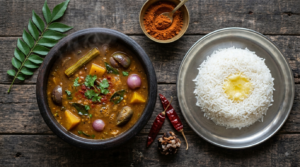
Thick Tamil Nadu sambar with drumstick, brinjal and shallots, served alongside steamed rice.
This sambar recipe for rice gives the dal-to-water ratio that actually holds, the order vegetables go in, and a homemade sambar podi blend. It also covers the part most recipes skip entirely. When your pot turns bitter, thin, or raw-tasting, there is a fix for each one.
Tamil Nadu Sambar Recipe for Rice at a Glance
- Prep time: 20 minutes, plus 15 minutes if you soak the dal
- Cook time: 35 to 40 minutes
- Serves: 4 people alongside steamed rice
- Target consistency: pourable but coating, similar to a thin dosa batter
- Dal: 1 cup toor dal to roughly 2.5 cups water, pressure cooked
- Signature Tamil Nadu markers: drumstick, brinjal, shallots, and a curry-leaf tempering finished last
The quantities in this sambar recipe for rice produce a medium-thick pot. If you want a hotel-style pour for idli instead, our Tamil Nadu sambar for idli uses a looser ratio and a different dal mix.
What Makes a Sambar Recipe for Rice Different From Idli Sambar
A sambar for rice carries more dal and less water, so it sits on the rice instead of running off the plate. Idli sambar runs thinner, tastes slightly sweeter, and often uses moong dal for a lighter body. Same spice family, two different jobs at the table.
| Feature | Sambar for rice | Sambar for idli or dosa |
|---|---|---|
| Consistency | Medium to thick, coats a spoon | Thin to medium, pours freely |
| Dal used | Toor dal only, cooked soft | Toor dal with moong dal, less overall |
| Sweetness | Minimal, only to balance tamarind | Noticeable, from jaggery and pumpkin |
| Vegetables | Chunky mixed vegetables, several kinds | Fewer pieces, often shallots and pumpkin |
| Tamarind | Firm sour backbone | Lighter, softened by jaggery |
Because of that thickness, never water this sambar recipe for rice down to stretch it. Add more cooked dal instead, since dal keeps the body while water only dilutes the spice.
Ingredients for This Sambar Recipe for Rice
For the sambar base
- 1 cup toor dal (split pigeon peas), rinsed until the water runs clear
- 2.5 cups water for cooking the dal
- 1 lemon-sized ball of tamarind, soaked in half a cup of warm water
- 1 large tomato, chopped
- 8 to 10 shallots (sambar onions), peeled and left whole
- 1 small carrot, sliced thick
- 2 drumstick pieces, cut into finger lengths
- Half a cup brinjal, quartered
- Half a cup pumpkin, cubed
- Half a teaspoon turmeric powder
- 1.5 to 2 tablespoons sambar powder
- Salt, roughly 1.25 teaspoons, adjusted at the end
- A small piece of jaggery, optional
- 2 tablespoons chopped coriander leaves
For the tempering
- 2 tablespoons sesame oil or ghee
- Half a teaspoon mustard seeds
- 1 teaspoon urad dal
- Quarter teaspoon fenugreek seeds
- 2 dry red chillies, broken
- A generous pinch of asafoetida
- 1 sprig curry leaves
Sesame oil, called nallennai in Tamil, suits this sambar recipe for rice because it carries the tamarind sourness better than refined oil. Ghee works too, though it softens the tang noticeably.
Step-by-Step Sambar Recipe for Rice Method
1. Cook the dal until it collapses
Add the rinsed toor dal, 2.5 cups water, turmeric, and a few drops of oil to a pressure cooker. Cook for four to five whistles on medium heat. Let the pressure drop on its own, then whisk the dal smooth. Half-cooked dal is the most common reason a sambar for rice ends up thin.
2. Extract the tamarind
Soak the tamarind in warm water for 10 minutes while the dal cooks. Squeeze it hard with your fingers, then strain out the fibre. You want a cloudy extract, not a pale rinse, so squeeze the pulp twice.
3. Simmer vegetables in the tamarind water
Pour the tamarind extract into a heavy pan with a cup of water. Add salt, turmeric, and the drumstick first, since drumstick takes the longest. After five minutes, add carrot, shallots, and pumpkin. Brinjal goes in last because it turns to mush quickly.
4. Add the sambar powder and cook out the raw smell
Stir in the sambar powder once the vegetables are almost tender. Let it simmer for eight to ten minutes, uncovered. This step matters more than any other, because undercooked spice powder leaves a dusty, raw taste that no amount of tempering hides.
5. Combine and adjust
Pour the mashed dal into the pan and stir well. Simmer for another five minutes so the flavours settle together. Check the consistency now, while you can still fix it. Add jaggery only if the tamarind has taken over.
6. Temper last, never first
Heat the sesame oil in a small pan until it shimmers. Add mustard seeds and wait for them to pop. Then add urad dal, fenugreek, red chillies, curry leaves, and asafoetida. Pour the whole thing over the sambar, cover it, and rest for five minutes off the heat.
Homemade Sambar Podi: The Blend That Decides the Taste
Packet powder is fine on a weeknight, though a fresh blend changes the pot completely. Roast each item separately on low heat, cool everything, then grind to a fine powder. Stored in an airtight jar away from the stove, it keeps its punch for about two months.
- 1 cup coriander seeds, the base of the blend
- 12 to 15 dry red chillies, mixing byadgi for colour with a hotter variety for heat
- 2 tablespoons toor dal and 2 tablespoons chana dal, for body
- 1 teaspoon fenugreek seeds, no more, because excess turns the sambar bitter
- 1 teaspoon each of black pepper and cumin
- 1 sprig curry leaves, dried until crisp
- A small piece of dried turmeric, or 1 teaspoon turmeric powder
Grind the dals only after they cool fully, since warm dal turns oily in the mixer. Also grind in short bursts, so the motor heat does not scorch the coriander.
Arachuvitta Sambar: The Freshly Ground Variation
Arachuvitta sambar skips dry powder and uses a wet masala ground fresh for that pot. Roast two tablespoons of coriander seeds, a tablespoon of chana dal, four red chillies, and a quarter teaspoon of fenugreek in a teaspoon of oil. Add three tablespoons of grated coconut at the end, then grind everything with a little water into a smooth paste.
Stir this paste in at step four instead of the powder. The coconut thickens the sambar naturally, which suits rice well. Tamil households usually reserve this version for Sundays and festival meals, because the grinding adds real time.
Sambar Recipe for Rice Troubleshooting: Bitter, Thin or Raw
Most failures with a sambar recipe for rice trace back to four causes: burnt fenugreek, under-simmered spice powder, undercooked dal, or vegetables added all at once. Each has a fix that works mid-cook, so you rarely need to start over. Use the table below while the pot is still on the stove.
| What went wrong | Likely cause | What to do |
|---|---|---|
| Bitter aftertaste | Too much fenugreek, or it browned too far | Add a small piece of jaggery and a spoon of extra dal |
| Raw, dusty flavour | Sambar powder simmered under five minutes | Keep it bubbling uncovered for another eight minutes |
| Too thin | Dal not cooked soft, or too much water added | Simmer uncovered, then mash in more cooked dal |
| Too sour | Heavy tamarind extract | Add jaggery, dal, or a cubed potato to absorb the tang |
| Vegetables turned to mush | Everything went into the pan together | Add by cooking time, brinjal and okra last |
| Smells flat | Stale curry leaves, or tempering added too early | Make a fresh tempering and pour it over just before serving |
If the sambar has already gone cold and thickened, do not simply add water. Warm it first, then loosen it gradually, because cold water dulls the spice.
Best Vegetables for a Sambar Recipe for Rice
Drumstick, brinjal, and shallots give a Tamil Nadu sambar recipe for rice its signature. Beyond that, seasonal choices work better than a fixed list, so use what the market has. The timings below assume medium heat in an open pan.
- Drumstick: 12 to 15 minutes, add first
- Carrot and potato: 8 to 10 minutes
- Shallots and pumpkin: 6 to 8 minutes
- Brinjal: 5 to 6 minutes
- Ladies finger: fry separately, then add in the last 4 minutes
- Tomato: 4 to 5 minutes, or with the tamarind
Avoid mixing more than four vegetables in one pot. Too many competing flavours flatten the sambar rather than deepening it, which is why hotel kitchens keep the list short.
Sambar Recipe for Rice: Nutrition Per Serving
One cup of this mixed-vegetable sambar, without rice, works out to roughly 150 to 190 kcal. Toor dal supplies most of the protein, while the vegetables contribute fibre and micronutrients. Treat every figure below as an estimate, since oil quantity and vegetable mix shift the totals.
| Nutrient | Approximate amount per cup |
|---|---|
| Energy | 150 to 190 kcal |
| Protein | 7 to 9 g |
| Carbohydrates | 24 to 30 g |
| Fat | 4 to 7 g |
| Fibre | 5 to 8 g |
For per-ingredient values, the reference Indian dataset is the Indian Food Composition Tables 2017 from ICMR-National Institute of Nutrition. Sambar also runs high in sodium once you add salt and asafoetida, so anyone managing blood pressure, diabetes, or kidney disease should check quantities with a doctor or dietitian rather than relying on a recipe estimate. One more label point: many commercial asafoetida blends contain wheat flour, which matters if you avoid gluten.
Storing and Reheating Sambar Without Losing It
Cool the sambar quickly, then refrigerate it in a shallow covered container. The United States Department of Agriculture Food Safety and Inspection Service advises moving cooked food to the fridge within two hours, and within one hour when the room is above 32°C, which covers most Indian summers.
Refrigerated sambar stays safe for three to four days by that same USDA leftovers guidance, though the taste peaks on day one and day two. Reheat it to a rolling boil rather than a gentle warm-through. Freezing works for about two months, but skip freezing coconut-ground versions because they split on thawing.
A sambar recipe for rice thickens hard in the fridge, since the dal keeps absorbing liquid. Loosen it with hot water while reheating, then correct the salt, because chilling dulls seasoning.
Where Sambar Actually Came From
Plenty of recipe pages state flatly that the Maratha prince Sambhaji invented sambar at Thanjavur. That story is a legend rather than documented history, and no primary record supports it.
The food historian K.T. Achaya traced the earliest surviving reference instead to a tamarind-and-toor-dal curry called huli. A Kannada text from 1648, Kanthirava Narasaraja Vijaya, describes it.
So the honest answer is that sambar evolved across the Deccan and the Tamil country over centuries. Tamil Nadu, Karnataka, Kerala, and Andhra each shaped a version. Our Kerala-style sambar for rice shows how much a roasted coconut base changes the same dish.
What to Serve With This Sambar Recipe for Rice
Hot rice with a spoon of ghee is the whole point, though the plate improves with contrast. Add a dry poriyal for texture, appalam for crunch, and a small bowl of curd to cool the heat. Potato roast is the classic Sunday partner in most Tamil homes.
Leftover sambar has a second life too. Mix it into rice the next day, temper it again, and you get something close to hotel-style sambar sadam, which is a different dish from this one despite the shared name.
Mistakes Home Cooks Repeat With a Sambar Recipe for Rice
- Adding sambar powder at the very end, which leaves a raw, powdery finish
- Boiling tamarind and dal together from the start, so the dal never softens properly
- Using more than a quarter teaspoon of fenugreek, then wondering where the bitterness came from
- Tempering into the pot early, which kills the aroma long before serving
- Cutting vegetables small, so they disintegrate before the spices come together
- Salting once at the start, though tamarind and dal both shift the balance later
One more habit worth breaking in any sambar recipe for rice: stirring constantly. Sambar needs to sit and bubble, because agitation breaks the vegetables while doing nothing for the flavour.
Before You Start This Sambar Recipe for Rice
Get three things right and the rest follows. Cook the dal until it collapses, simmer the spice powder for a full eight minutes, and pour the tempering over at the very end. Keep this sambar recipe for rice thick enough to coat the grains, since that is the whole difference between it and a tiffin sambar.
Start with packet powder if you must, then try the homemade podi once, because that single change is the one most people notice immediately. For a lighter breakfast version, our hotel sambar for pongal follows a different route.
Frequently Asked Questions
Can I use this sambar recipe for rice with idli as well?
Yes, but thin it with half a cup of hot water and add a small piece of jaggery first. Idli sambar wants a looser, slightly sweeter profile. Straight from the pot, this version will feel heavy on soft idlis.
Can I make sambar without tamarind?
You can substitute lemon juice, added off the heat at the very end, or use extra tomato for tang. Neither gives the deep, rounded sourness tamarind provides. Kokum works as a closer match if you have it.
Why does my sambar taste bitter?
Fenugreek is almost always the culprit, either too much of it or browned too far in the tempering. Keep it to a quarter teaspoon and pull the pan off heat when the seeds turn light gold. A small piece of jaggery softens bitterness that has already set in.
Can I make this sambar recipe for rice without a pressure cooker?
Yes, though soak the toor dal for at least an hour first. Simmer it in an open pot with plenty of water for 45 to 55 minutes until it collapses. A heavy-bottomed pan with a lid speeds this up considerably.
How much sambar powder should I use per cup of dal?
Between 1.5 and 2 tablespoons for one cup of toor dal serving four people. Fresh homemade podi is stronger, so start at 1.5 tablespoons and taste. Old packet powder often needs the higher end.
Is sambar good for weight management?
Sambar is lentil-based, high in fibre, and low in fat when you keep the tempering modest. That combination suits most balanced eating patterns. It is not a weight-loss treatment though, and anyone with a specific medical condition should speak to a dietitian.
Can I make it vegan?
Yes, and most Tamil households already do. Use sesame oil instead of ghee for the tempering and the dish becomes fully plant-based. Nothing else in the recipe needs changing.
Which dal is correct for a sambar recipe for rice?
Toor dal is the standard across Tamil Nadu. Some cooks blend in a spoon of masoor dal for faster cooking, while moong dal belongs mainly in tiffin sambar. Chana dal alone will not break down enough for this consistency.
How do I make sambar thicker for rice?
Mash in more cooked toor dal, or simmer the pot uncovered for a few extra minutes. Avoid flour or cornstarch entirely, since neither belongs in sambar and both dull the flavour. A cubed potato cooked in also thickens it naturally.