Sakkarai Pongal Recipe with Milk: Creamy Sweet Pongal
Sakkarai pongal recipe with milk gives the familiar jaggery-sweetened Pongal a richer, creamier texture without losing the soft rice-and-dal body that makes the dish comforting. The key is simple: cook the grains until completely mushy, strain the jaggery syrup, then combine it on low heat so the milk stays smooth instead of splitting.
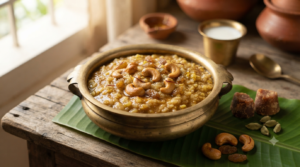
Creamy sakkarai pongal made with milk, jaggery, moong dal, ghee, cashews and raisins.
This version keeps the milk-forward character of the original Bhimas Cook recipe, but tightens the method and fixes the common trouble spots. You will also find pressure-cooker and stovetop guidance, sweetness adjustments, storage advice, and a quick rescue chart for thick, loose, grainy, or curdled pongal.
Sakkarai Pongal Recipe with Milk at a Glance
- Prep time: 15 minutes
- Cook time: about 40 to 45 minutes
- Total time: about 55 to 60 minutes
- Serves: 4 generous portions
- Main ingredients: raw rice, moong dal, whole milk, jaggery, ghee and cardamom
- Texture: soft, spoonable and creamy rather than grainy
- Best served: warm, especially for Pongal, Sankranti, pooja or a festive dessert
Sakkarai Pongal, also called sweet pongal or chakkara pongali in different South Indian homes, does not always contain milk. Milk is an optional enrichment in many versions, while rice, moong dal, jaggery and ghee remain the core. India’s tourism portal describes Pongal as a Tamil harvest festival built around the symbolic boiling-over of rice and notes the use of jaggery and boiled milk during Surya Pongal celebrations. See the Incredible India Tamil Nadu guide for broader cultural context.
Ingredients for Sakkarai Pongal Recipe with Milk
These quantities make a milk-rich pongal with moderate sweetness. If your jaggery is mild, increase it slightly after tasting the syrup rather than starting with a very large amount.
| Ingredient | Quantity | Why it matters |
|---|---|---|
| Raw rice (pacharisi or Sona Masuri) | 1 cup | Forms the soft, starchy base |
| Yellow moong dal (pasi paruppu) | 1/2 cup | Adds body and a gentle nutty taste |
| Whole milk | 3 cups | Creates the creamy milk-forward texture |
| Water | 2 cups, plus 1/2 cup for jaggery | Helps the rice and dal soften fully |
| Grated jaggery | 1 cup | Gives the classic caramel sweetness |
| Ghee | 3 tablespoons | Adds gloss, aroma and richness |
| Cashews | 10 to 12 | Add crunch |
| Raisins | 2 tablespoons | Add soft bursts of sweetness |
| Cardamom powder | 1 teaspoon | Balances the jaggery aroma |
| Salt | 1 small pinch | Sharpens the sweet flavour |
| Food-grade edible camphor | 1 tiny pinch, optional | Adds a traditional aroma |
Important: edible camphor is optional. Use only a product clearly sold and labelled for food use, and add only a tiny pinch. Never use camphor sold for lamps, pooja or household fragrance in food.
Which rice and jaggery work best?
Short- or medium-grain raw rice works better than basmati because it softens and releases enough starch to make pongal cohesive. Sona Masuri or ordinary pacharisi are easy choices. You do not need an expensive speciality rice for this recipe.
Dark jaggery usually gives a deeper colour and stronger caramel note, while lighter jaggery makes a paler pongal. Because jaggery can contain grit or cane fibre, melt it separately and strain it before it meets the cooked rice. That small step makes a noticeable difference to the final texture.
How to Make Sakkarai Pongal Recipe with Milk
This method uses a pressure cooker because it makes the rice and dal collapse quickly. The same sequence works on the stovetop; only the grain-cooking time changes.
- Roast the moong dal. Put the dry dal in a pan over medium-low heat for 2 to 3 minutes. Stir until it smells nutty and turns only a shade darker. Do not brown it deeply.
- Rinse and combine. Rinse the rice and roasted dal two or three times. Drain, then add them to a roomy pressure cooker with 3 cups milk, 2 cups water and a pinch of salt.
- Cook until very soft. Pressure cook on low-medium heat for about 4 to 5 whistles, or until the grains mash easily. Let the pressure fall naturally before opening the cooker.
- Make the jaggery syrup. While the rice cooks, combine 1 cup grated jaggery with 1/2 cup water. Warm on low heat just until dissolved, then strain the syrup through a fine sieve.
- Mash the cooked grains. Open the cooker and mash the rice-dal mixture with a ladle. The texture should resemble loose porridge, with no firm rice grains left.
- Add jaggery on low heat. Keep the cooker on the lowest flame. When the rice mixture is no longer boiling hard, pour in the warm jaggery syrup slowly while stirring. Simmer for 5 to 7 minutes.
Finish the Pongal Without Overcooking It
- Add ghee in stages. Stir in about 2 tablespoons ghee and let it disappear into the pongal. Add cardamom, then switch off when the mixture looks glossy and slightly looser than your final serving texture.
- Fry the garnish. Heat the remaining ghee in a small pan. Fry cashews until golden, add raisins, and cook only until they puff. Fold the nuts, raisins and ghee into the pongal.
- Finish carefully. If you use edible camphor, add a tiny pinch after switching off the heat. Mix well and serve warm.
The sakkarai pongal recipe with milk will continue to thicken as it stands, so do not cook it until stiff in the pan. If you prefer an open-pot method, use our sakkarai pongal without pressure cooker guide for the slower stovetop approach.
Why Sakkarai Pongal Recipe with Milk Can Turn Grainy
Jaggery and milk can turn grainy when they meet under aggressive heat. The safest texture-first approach is to cook the rice and dal first, lower the heat, then add strained jaggery syrup gradually into the thick rice mixture rather than pouring jaggery into vigorously boiling milk.
This is also why the order matters more than a precise minute count. If the pot is bubbling hard, give it a short rest before adding the syrup. Once combined, keep the flame low and stir often so the bottom does not catch.
Milk version versus water-only sweet pongal
| Point | With milk | Without milk |
|---|---|---|
| Taste | Richer and rounder | Jaggery and ghee taste stronger |
| Texture | Creamier and softer | More classic rice-dal texture |
| Curdling risk | Needs low heat when jaggery is added | Very low |
| Storage | Refrigerate promptly | Still best refrigerated after serving |
| Best for | Home dessert and rich festive serving | Simple traditional-style preparation |
If you want a dairy-free variation, replace the milk with water and use coconut oil instead of ghee. For a coconut-forward version, see the sweet pongal with coconut milk recipe.
Three Details That Make This Sakkarai Pongal Recipe with Milk Work
First, the grains must be softer than ordinary cooked rice. Sakkarai pongal should not show separate rice grains, so pressure-cook until both rice and dal mash with little effort. A slightly loose base is better than a dry one because jaggery thickens the mixture.
Second, melt and strain the jaggery. You do not need a one-string or two-string syrup stage here; you only need clean, fully dissolved jaggery. Overcooking the syrup can make the final pongal tighter and less creamy.
Third, add ghee in more than one step. Mixing most of it into the pongal gives a glossy finish, while the final spoonful fries the cashews and raisins. That division spreads the aroma through the dish instead of leaving a greasy layer on top.
Sakkarai Pongal Recipe with Milk: Common Problems and Fixes
| Problem | Likely cause | What to do |
|---|---|---|
| Pongal is too thick | It cooled or cooked too long | Add hot milk or hot water 2 tablespoons at a time |
| Pongal is too loose | Too much liquid | Simmer on low for 3 to 5 minutes while stirring |
| Milk looks grainy | Jaggery met very hot milk | Use lower heat next time and add syrup gradually |
| Bottom is catching | Heat is too high after jaggery | Shift to a heavy pan and keep the flame low |
| Sweetness is too strong | Jaggery was sweeter than expected | Fold in a little plain cooked rice-dal mixture |
| Flavour tastes flat | Dal was not roasted or salt was omitted | Add a tiny pinch of salt and fresh cardamom |
If the milk smells sour before cooking, discard it rather than trying to rescue the dish. Likewise, if you are unsure whether a curdled result came from spoiled milk rather than the jaggery reaction, it is safer not to serve it.
What to Serve with Sweet Pongal
This sakkarai pongal recipe with milk is rich enough to stand on its own, so it rarely needs a heavy accompaniment. On a festival plate, pair a small warm serving with savoury ven pongal, vada, fruit or another simple prasadam. The contrast between sweet and peppery dishes keeps the meal balanced.
For a larger harvest-festival menu, the Sankranti special recipes guide brings together sweet pongal, ven pongal, sesame-jaggery sweets, ariselu and other festive options. Keep portion sizes modest because this dish combines rice, jaggery, milk and ghee in one bowl.
Storage and Reheating
Because this sakkarai pongal recipe with milk contains cooked milk and rice, refrigerate leftovers promptly rather than leaving the pot on the counter for hours. The Food Safety and Standards Authority of India advises refrigerating perishable cooked food promptly and not leaving cooked food at room temperature beyond two hours. See the FSSAI safe-food guidance.
For best flavour and texture, use refrigerated milk pongal within about two days. Reheat only the portion you plan to eat, adding a spoonful or two of milk or water before warming. Stir over low heat until it loosens and becomes hot throughout.
Easy Variations
Less-sweet sakkarai pongal
Use 3/4 cup jaggery instead of 1 cup. Because jaggery sweetness varies by batch, taste the melted syrup before adding all of it. You can always add a little more, but you cannot remove sweetness after it is mixed through the rice.
Rice-forward version
If you prefer less dal flavour, reduce moong dal from 1/2 cup to 1/4 cup and keep the rice at 1 cup. Add a little less water at first, then adjust after pressure cooking. This produces a softer, more rice-led pongal closer to many festival versions.
Extra-rich festival version
Add one extra tablespoon of ghee and a few more cashews, but keep the milk-jaggery mixing method unchanged. The dish should look glossy, not oily. If ghee pools on top, stop adding it and stir the pongal for another minute on low heat.
Before You Serve
A good sakkarai pongal recipe with milk is less about complicated technique and more about controlling texture. Cook the grains until they collapse, strain the jaggery, and lower the heat before combining the two. Those three habits prevent most failures.
Serve the pongal warm and slightly loose, because it firms as it cools. Keep edible camphor optional and minimal, and store leftovers promptly. With those details handled, the dish stays creamy, fragrant and reliable from the first spoon to the last.
Sakkarai Pongal Recipe with Milk FAQs
Can I add jaggery directly to boiling milk?
It is better not to add jaggery straight into vigorously boiling milk. Instead, cook the rice and dal first, lower the heat, then add strained jaggery syrup gradually while stirring. This reduces the chance of a grainy or split texture.
Is milk necessary for sakkarai pongal?
No. Many traditional sweet pongal recipes use water for cooking and rely on jaggery and ghee for richness. Milk is an optional home-style addition that gives a creamier taste and softer mouthfeel.
Should I roast moong dal before making sweet pongal?
Light roasting is recommended because it removes the raw dal smell and adds a gentle nutty aroma. Keep the heat moderate and stop once the dal smells fragrant; deep browning can make the flavour too strong.
Which rice is best for sakkarai pongal?
Short- or medium-grain raw rice such as Sona Masuri works very well because it softens easily. Basmati is less suitable when you want the traditional soft, cohesive texture because its grains are designed to stay separate.
How much edible camphor should I add?
Use only a tiny pinch of food-grade edible camphor, or skip it entirely. It should never dominate the cardamom and jaggery. Do not use camphor sold for pooja, lamps or household fragrance in food.
Why does sweet pongal become thick after cooling?
Rice and dal continue absorbing liquid as they cool, so the pongal naturally firms up. Switch off the heat while it is still slightly loose. To reheat, stir in a little hot milk or water until the desired consistency returns.
Can I make sakkarai pongal without a pressure cooker?
Yes. Use a heavy-bottomed pot and cook the rice and dal gently until both become completely soft. Stir more often as the mixture thickens, because milk and starch can catch at the base during longer stovetop cooking.
Can I make this sakkarai pongal recipe with milk in an Instant Pot?
Yes, but use a large enough pot and avoid overfilling because milk can foam. Cook the rice and dal under pressure until very soft, allow a natural pressure release, then use sauté on low only for the jaggery and finishing steps.