Sambar Recipe for Idli: Tamilnadu Style Tiffin Sambar
This sambar recipe for idli gives you the thin, tangy tiffin sambar that South Indian breakfast shops ladle over hot idlis. It is not the thick rice sambar most home cooks reach for by mistake. The difference sits in three places: the dal, the water and the tamarind.
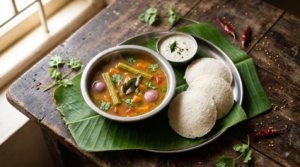
Thin, pourable Tamilnadu tiffin sambar with drumstick and shallots, served alongside hot steamed idlis.
Tiffin shops blend toor dal with a little moong dal, so the sambar turns silky and stays pourable. They also go light on tamarind, because idli is mild and sourness swamps it. Once you fix those two things, your idlis soak up the sambar instead of floating in a puddle of it.
Tiffin Sambar at a Glance
Here is the shape of this sambar recipe for idli before you switch on the stove.
- Prep time: 20 minutes, plus 10 minutes of tamarind soaking
- Cook time: 35 minutes
- Yield: 4 servings, roughly 4 cups of sambar
- Dal blend: ¾ cup toor dal with ¼ cup moong dal
- Consistency: pourable and soup-like, never thick
- Signature vegetables: drumstick, carrot, shallots and tomato
- Difficulty: easy, with one pressure-cooker step
The one-line answer: tiffin sambar is thinner, milder and built on a toor-plus-moong dal blend, while rice sambar is thicker, tangier and made with toor dal alone.
Sambar Recipe for Idli vs Rice Sambar: The Real Difference
Idli sambar, known across Tamil Nadu as tiffin sambar, is a lighter and thinner cousin of the sambar you eat with rice. Rice sambar has to coat every grain, so it stays thick and assertive. Tiffin sambar has to soak into a spongy idli, so it runs looser and tastes gentler.
Plenty of recipes online blur that line. They give you a standard Tamil Nadu rice sambar, then file it under a sambar recipe for idli because both dishes share a name. The result tastes fine with rice, yet it sits heavily on an idli and refuses to soak in.
| Feature | Tiffin sambar (for idli) | Rice sambar |
|---|---|---|
| Dal | Toor plus moong dal | Toor dal alone |
| Consistency | Thin, pourable | Thick, coating |
| Tamarind | Light, gently tangy | Generous, sharply sour |
| Vegetables | Drumstick, carrot, shallots | Often one or two only |
| Sweet note | Jaggery or pumpkin, usually present | Optional |
The three swaps that make a sambar recipe for idli work
First, swap a quarter of the toor dal for moong dal. Moong breaks down faster, so it lends body without heaviness. Second, add roughly a cup more water than you would for rice sambar.
Third, cut the tamarind down to a small gooseberry-sized ball rather than a lemon-sized one. Idli already carries a faint fermented tang, so a lighter sour note keeps the plate balanced. These three swaps are the whole secret behind a good sambar recipe for idli, and they cost you nothing extra.
Ingredients for This Sambar Recipe for Idli
For the dal
- ¾ cup (150 g) toor dal, also called split pigeon peas
- ¼ cup (50 g) yellow moong dal
- ½ tsp turmeric powder
- 1 tsp sesame oil, which stops the dal frothing over
- 3 cups water for cooking the dal
For the vegetables
- 1 drumstick (moringa pod), cut into 2-inch pieces
- 1 medium carrot, diced, about 80 g
- 8 to 10 shallots (small onions), peeled and left whole
- 1 medium tomato, chopped
- ¼ cup diced pumpkin or brinjal, optional but recommended
- 2 green chillies, slit lengthways
For the tamarind and spice base
- 1 gooseberry-sized ball of tamarind, soaked in ½ cup hot water for 10 minutes
- 2 tbsp sambar powder, ideally a tiffin-sambar blend
- 1 tsp grated jaggery, which rounds off the tang
- 1¼ tsp salt, or to taste
- 2 cups extra water for thinning
For the tempering
- 2 tbsp sesame oil, since gingelly oil is the Tamil Nadu default
- ½ tsp mustard seeds
- ½ tsp urad dal
- 2 dried red chillies, torn
- A generous pinch of asafoetida (hing)
- 10 to 12 curry leaves
- 2 tbsp chopped coriander leaves for finishing
How to Make This Sambar Recipe for Idli
Step 1: Cook the two dals together (0 to 15 minutes)
Rinse the toor dal and moong dal together until the water runs clear. Tip them into a pressure cooker with turmeric, sesame oil and 3 cups of water. Cook for 4 to 5 whistles on medium heat, then let the pressure drop naturally.
Open the cooker and whisk the dal until it turns smooth and creamy. It should pour off the whisk in a ribbon. If it looks grainy, cook it for two more whistles, because undercooked dal never gives that hotel texture.
Step 2: Extract the tamarind (0 to 10 minutes)
While the dal cooks, soak the tamarind in half a cup of hot water. After ten minutes, squeeze it hard with your fingers and strain the liquid. Throw away the fibre and pips, then set the extract aside.
Step 3: Simmer the vegetables (15 to 25 minutes)
Bring 2 cups of water to a boil in a wide pan. Add the shallots and drumstick first, since both take longest to soften. After 4 minutes, add carrot, pumpkin, tomato and green chillies along with ¼ tsp salt.
Cook uncovered until the vegetables turn tender but still hold their shape, roughly 8 minutes. Drumstick is ready when the flesh scoops out easily. Do not let anything collapse, because mushy vegetables cloud the sambar.
Step 4: Add tamarind and sambar powder (25 to 32 minutes)
Pour the tamarind extract into the vegetables and stir. Sprinkle in the sambar powder and the remaining salt, then simmer for 5 minutes. This step matters more than any other, because raw tamarind and raw spice powder both taste harsh.
Wait until the sharp, raw smell fades and the surface looks glossy. Only then move on. Rushing here is the single most common reason homemade sambar tastes flat.
Step 5: Bring in the dal and thin it out (32 to 38 minutes)
Add the whisked dal and the jaggery, then stir well. Now judge the consistency honestly. It should look like a thin soup that runs off the ladle in a steady stream, not a thick stew.
Add up to a cup of hot water if needed, and simmer gently for 4 minutes. Never boil hard after the dal goes in, since a rolling boil splits the dal and dulls the aroma.
Step 6: Temper and rest (38 to 40 minutes)
Heat sesame oil in a small pan until it shimmers. Add mustard seeds and wait for them to pop. Follow with urad dal, red chillies, asafoetida and curry leaves, and let them sizzle for 20 seconds.
Pour the tempering over the sambar, scatter the coriander on top, and turn off the heat. Cover the pan and leave it alone for at least 10 minutes. That rest lets the flavours settle, and it genuinely improves the taste.
Which Powder Suits a Sambar Recipe for Idli?
A tiffin-sambar blend leans on coriander seeds and chana dal, with fewer red chillies than a rice-sambar podi. That gives aroma without heat. Most Tamil Nadu brands label the two separately, so check the packet before you buy. The powder decides how close your sambar recipe for idli lands to the shop version.
If you only have regular sambar powder, use 1½ tbsp instead of 2 and add ½ tsp of ground coriander. The result comes close. For a fresher version, dry-roast 2 tbsp coriander seeds, 1 tbsp chana dal, 3 red chillies and ¼ tsp fenugreek, then grind them fine.
Pro Tips Tamil Kitchens Swear By
These small habits separate a memorable sambar recipe for idli from a forgettable one. None of them adds time.
- Whisk the cooked dal instead of mashing it, because a whisk breaks it down evenly and gives that smooth hotel body.
- Keep the shallots whole so they turn sweet and jammy rather than dissolving into the base.
- Add curry leaves in the tempering at the very end, since their aroma fades badly with long cooking.
- Sambar thickens as it cools, so make it slightly thinner than you think you need.
- A teaspoon of jaggery rounds out the tang without making anything sweet, and most tiffin shops use it.
- Use sesame oil for the tempering when you can, because groundnut and refined oils give a noticeably flatter finish.
Sambar Recipe for Idli Troubleshooting
A sambar recipe for idli fails in predictable ways, and every fault has a fix. Work through the table below before you decide the recipe is wrong. Most problems trace back to consistency or to an under-simmered tamarind stage.
| Problem | Likely cause | Fix |
|---|---|---|
| Too sour | Too much tamarind | Add ½ tsp jaggery and ½ cup hot water |
| Too thick | Rice-sambar ratios used | Thin with hot water, then simmer 2 minutes |
| Raw, harsh taste | Tamarind stage cut short | Simmer 5 more minutes before adding dal |
| Watery, no body | Dal undercooked or too little | Whisk in ¼ cup cooked dal |
| Bland finish | Weak or stale spice powder | Add 1 tsp fresh powder, simmer 3 minutes |
| Bitter aftertaste | Burnt fenugreek or asafoetida | Discard the tempering and redo it |
If you have no drumstick
Drumstick carries much of the aroma, yet it is seasonal and often unavailable outside South India. Frozen drumstick works well, and it needs the same cooking time. Otherwise use extra shallots plus a chunk of pumpkin, which together mimic the sweet-savoury depth.
Sambar Recipe for Idli: Swaps and Storage
This sambar recipe for idli adapts easily, so cook with whatever your kitchen actually holds.
Ingredient swaps
- Dal: replace moong dal with masoor dal for a similar silky texture and a slightly faster cook.
- Tamarind: use 1 tbsp of tamarind paste, or ½ cup kokum extract if tamarind is unavailable.
- Vegetables: ash gourd, okra, chayote or beans all suit tiffin sambar.
- Onions: regular onion works, though shallots give a distinctly sweeter result.
Storing and reheating
- Refrigerate in an airtight container for up to 3 days, since tamarind-based dishes turn sour after that.
- Reheat gently with a splash of water, because sambar tightens considerably overnight.
- Freeze for up to 1 month, although the vegetables soften noticeably after thawing.
- Cool it fully before refrigerating, as trapped steam speeds up spoilage.
Scaling the batch
Double every ingredient except the tamarind and the salt when you cook for eight. Increase those by roughly one and a half times, then taste and adjust. Larger batches also concentrate faster, so keep extra hot water beside the stove.
Nutrition in This Sambar Recipe for Idli
One cup of this sambar supplies roughly 150 to 180 kcal, with about 7 g of plant protein and 5 g of fibre. Lentils and vegetables carry most of that value, while the tempering oil accounts for much of the fat. The figures below are estimates, and they shift with your vegetable mix and oil quantity.
| Nutrient | Per serving (about 1 cup) |
|---|---|
| Calories | 150 to 180 kcal |
| Protein | 6 to 8 g |
| Carbohydrates | 20 to 28 g |
| Fat | 3 to 5 g |
| Fibre | 4 to 6 g |
For verified values on individual ingredients, the USDA FoodData Central database lists lentils and vegetables in detail. General Indian dietary guidance comes from the National Institute of Nutrition. Anyone managing diabetes, kidney disease or a sodium-restricted diet should check portions with a qualified dietitian rather than relying on recipe averages.
Before You Start Cooking
A sambar recipe for idli succeeds on texture as much as on spice. Keep the goal in mind: thin, gently tangy, fragrant with curry leaves and shallots. If you remember only three things, make them the moong dal, the extra water and the lighter tamarind. Everything else is flexible.
Cook the dal first, since it takes the longest and waits happily. Serve the sambar hot with fresh idlis, and pair it with coconut chutney for the full tiffin plate. The same sambar also suits dosa, ven pongal and medu vada.
Sambar Recipe for Idli: Common Questions
What makes idli sambar different from regular sambar?
Idli sambar is thinner, milder and made with a blend of toor and moong dal, while regular rice sambar uses toor dal alone and stays thick. Tiffin versions also carry less tamarind and more vegetables, especially drumstick and shallots. The looser texture lets idlis absorb the sambar properly.
Can I make this sambar recipe for idli without a pressure cooker?
Yes, though it takes longer. Soak both dals for 45 minutes, then simmer them in 4 cups of water with turmeric for about 40 minutes until soft. An Instant Pot handles the same job on high pressure for 9 minutes with natural release.
Which dal is best for a sambar recipe for idli?
A three-to-one mix of toor dal and moong dal gives the best balance of body and silkiness. Some Tamil Nadu households use moong dal alone for an even lighter sambar, especially for children. Masoor dal also works, but it breaks down faster, so reduce the cooking time slightly.
Can I make sambar without tamarind?
Yes. Substitute 1 tbsp of tamarind paste, or use ½ cup of kokum extract for a comparable tang. A generous amount of chopped tomato provides a milder sourness if you have neither, although the flavour shifts noticeably away from the classic tiffin profile.
Why does my sambar taste raw or harsh?
Almost always because the tamarind and spice powder did not simmer long enough. Both need at least 5 minutes of gentle cooking before the dal joins them. Adding dal too early traps that raw edge, and no amount of later simmering fully removes it.
How thin should a sambar recipe for idli be?
It should pour off a ladle in a steady stream, closer to a thin soup than a stew. Remember that sambar thickens as it cools and thickens again overnight. Cooking a sambar recipe for idli slightly looser than your target keeps it right at serving time.
Is sambar a healthy breakfast option?
Sambar is largely lentils and vegetables, so it supplies useful plant protein and fibre for a modest calorie count. Oil quantity, salt and portion size decide much of the rest. It fits most balanced diets, though anyone on a medically restricted diet should confirm details with a dietitian.
How long does homemade sambar keep?
Refrigerated in an airtight container, it stays good for about 3 days. Freezing extends that to a month, although drumstick and pumpkin soften after thawing. Reheat only the portion you need, since repeated reheating dulls the flavour and thickens this sambar recipe for idli further.
What else can I serve this sambar with?
This sambar recipe for idli also pairs beautifully with dosa, medu vada, upma and ven pongal. Poured over rice it works too, though it will taste lighter than a dedicated sambar sadam. For background on the dish and its regional variations, the Sambar entry on Wikipedia gives a useful overview.