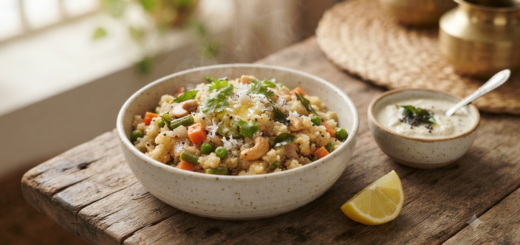
Easy Wheat Rava Upma: Soft, Fluffy Home-Style Breakfast
Easy wheat rava upma is a simple South Indian breakfast made by cooking coarse wheat rava with tempering, vegetables, and hot water until soft but not pasty. The method is quick, but grain size still matters. Roasting, water level, and resting time decide whether the final upma feels fluffy, soft, or sticky.
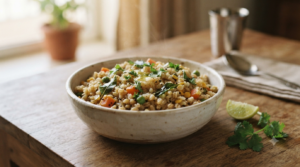
Easy wheat rava upma with soft wheat grains, vegetables, curry leaves, mustard seeds, and simple South Indian tempering.
This easy wheat rava upma keeps the familiar mustard, dal, curry leaf, onion, ginger, and green chilli base. It uses 1 cup wheat rava with up to 3 cups water as the starting point. Since wheat rava varies by brand and grind, you can hold back a little water and add more only if the grains need it.
Easy Wheat Rava Upma at a Glance
| Detail | Amount | Notes |
|---|---|---|
| Wheat rava | 1 cup | Medium or coarse grind |
| Water | 2 1/2 to 3 cups | Use more for softer upma |
| Prep time | 10 minutes | Mostly chopping |
| Cook time | About 20 minutes | Varies with grain size |
| Servings | 3 to 4 | Breakfast portions |
| Best texture cue | Soft grains, no free water | Rest before serving |
Unlike fine sooji, wheat rava is usually coarser and takes longer to hydrate. Therefore, treat the water ratio as a working range rather than a rigid rule. A finer wheat rava may finish closer to 2 1/2 cups, while a coarser batch may need the full 3 cups.
Ingredients You Need
- 1 cup wheat rava, also sold as godhuma rava or broken wheat rava
- 2 1/2 to 3 cups water
- 2 tablespoons oil, or 1 tablespoon oil plus 1 tablespoon ghee
- 1 teaspoon mustard seeds
- 1 teaspoon chana dal
- 1 teaspoon urad dal
- 1/2 teaspoon cumin seeds, optional
- 1 small onion, finely chopped
- 2 green chillies, slit
- 1 inch ginger, finely chopped or grated
- 8 to 10 curry leaves
- 1/4 cup carrot, finely diced
- 1/4 cup green peas
- Salt to taste
- 2 tablespoons chopped coriander leaves
- 1 to 2 teaspoons lemon juice, optional
- 6 to 8 cashews or 2 tablespoons peanuts, optional
The vegetables are intentionally modest, because this easy wheat rava upma is the broad home-style version. If you want a vegetable-heavy version with beans and larger quantities of carrot and peas, see the wheat rava upma with vegetables recipe.
How to Make Easy Wheat Rava Upma Step by Step
- Roast the wheat rava. Heat a wide, heavy pan over medium-low heat. Add the wheat rava and roast for 3 to 5 minutes, stirring often. Stop when it smells lightly nutty. Do not wait for deep browning.
- Prepare the tempering. Transfer the rava to a bowl. Add oil or ghee to the same pan. Once hot, add mustard seeds, then chana dal, urad dal, and cumin if using.
- Add aromatics. When the dals turn light golden, add curry leaves, green chillies, ginger, and onion. Cook until the onion softens.
- Cook the vegetables. Add carrot and peas. Stir for 2 to 3 minutes, so the vegetables begin to soften without turning mushy.
How to Avoid Lumps
At this stage, easy wheat rava upma moves quickly, so keep the roasted grain and hot-water adjustment ready beside the stove.
- Add water and salt. Start with 2 1/2 cups water and add salt. Bring it to a full boil before adding the roasted wheat rava.
- Add the rava slowly. Reduce the heat slightly. Sprinkle in the roasted wheat rava with one hand while stirring steadily with the other. This prevents dry pockets and large lumps.
- Cover and cook. Lower the heat. Cover the pan and cook for 8 to 12 minutes. Stir once midway, then check the grain. Add a small splash of hot water only if the rava is still firm and the pan looks dry.
- Rest before serving. Turn off the heat once the grains are soft and no loose water remains. Cover for 5 minutes. Then fluff gently and finish with coriander and lemon juice.
The old version used a fixed 1:3 ratio and a fixed 10-minute covered cook. This refresh keeps 1:3 as the soft-texture ceiling but adds a grain-size check. That small change makes the recipe more reliable across brands.
Why the Water Ratio Changes With Wheat Rava
Wheat rava is not sold in one universal particle size. Some packs contain smaller, more even grains, while others are much coarser. Because larger grains hydrate more slowly, they may need more water or extra covered cooking time.
For this easy wheat rava upma, begin with 2 1/2 cups water for firmer, separated grains. For a softer breakfast-style upma, use closer to 3 cups. If you are unsure, starting lower is easier because you can add hot water later.
| Texture wanted | Starting water | What to expect |
|---|---|---|
| Firm and grainy | 2 1/2 cups | More separate grains |
| Soft home style | 2 3/4 cups | Balanced and moist |
| Very soft | 3 cups | More tender, less dry |
If you cook regular sooji upma often, do not assume the same timing applies here. Wheat rava generally needs a little more patience because its grains are coarser. The pan, flame, and exact grind also change the final cooking time.
How to Keep Wheat Rava Upma Soft Without Making It Sticky
Three things matter most: roast lightly, add rava only after the water boils, and stop vigorous stirring once the mixture thickens. Too much stirring can break soft grains and make the texture pasty.
Also, let the cooked upma rest covered before serving. During that rest, steam finishes hydrating the centre of each grain. If the surface looks slightly wet when you switch off the heat, the resting period often corrects it.
Do not keep adding cold water to a nearly cooked pan. If extra liquid is needed, use hot water in small amounts. That keeps the cooking temperature steadier and reduces the chance of uneven grains.
Common Problems and Quick Fixes
Why is my wheat rava upma hard?
Hard grains in easy wheat rava upma usually mean the wheat rava was coarse, the water was too low, or the covered cooking time was too short. Add a few tablespoons of hot water, cover the pan, and cook on low until the grain softens. Then rest it before serving.
Why did my upma become mushy?
If easy wheat rava upma becomes mushy, it often comes from too much water or heavy stirring after the grain has softened. Next time, begin with 2 1/2 cups water and add more only if needed. Use a wide pan as well, because steam escapes more evenly.
Why are there lumps?
Lumps form when too much rava hits the boiling water at once. Lower the heat slightly, then add the rava in a thin stream while stirring continuously. Once the mixture is even, you can stop constant stirring and let the lid do the rest.
Why does it taste flat?
Upma depends on the tempering for much of its flavour. Let the mustard crackle and the dals turn light golden before adding onion. Ginger, curry leaves, green chilli, lemon, and a little ghee also make a noticeable difference.
Wheat Rava, Sooji and Broken Wheat: What Is the Difference?
The names can be confusing because Indian grocery labels are not always consistent. Wheat rava or godhuma rava usually refers to coarsely milled or broken wheat used for dishes such as upma. Sooji or Bombay rava is generally finer and behaves differently in the pan.
Check the pack rather than relying only on the name. If the grains look noticeably coarse, expect a longer cook. If they resemble fine semolina, reduce the initial water and watch the texture sooner.
Wheat products contain gluten, so this recipe is not gluten-free. If you need a gluten-free breakfast for a medical reason, use a suitable gluten-free grain recipe instead of simply swapping ingredients without adjusting the method.
Simple Variations Without Losing the Base Recipe
For a plain version, skip the carrot and peas and keep the onion, ginger, curry leaves, and tempering. For a no-curd version, this base recipe already works without curd; the separate wheat rava upma without curd page covers that narrow search intent.
You can add beans, capsicum, corn, peanuts, or cashews, but avoid crowding the pan with wet vegetables. Extra vegetables release moisture, so they can change the amount of water the grain needs.
For a richer finish, stir in a teaspoon of ghee after cooking instead of increasing fat during tempering. For more acidity, add lemon only after switching off the flame. Heating lemon juice for too long dulls its fresh taste.
What to Serve With Wheat Rava Upma
Wheat rava upma works well with coconut chutney, peanut chutney, tomato chutney, pickle, or plain curd if you use dairy. A spoon of podi also works when you want a dry side.
If breakfast needs more protein, pair the upma with curd, milk, eggs, or a pulse-based side according to your diet. The Andhra pesarattu recipe is another useful breakfast option when you want a green-gram based dish instead.
For balanced-meal guidance, the ICMR-National Institute of Nutrition Dietary Guidelines for Indians recommend variety across food groups rather than judging a meal by one ingredient alone.
Storage and Reheating Safety
Easy wheat rava upma has the best texture when served fresh, so cook only what you expect to use when practical. If you keep leftovers, cool and refrigerate them promptly in a clean covered container rather than leaving cooked food at room temperature.
The Food Safety and Standards Authority of India advises storing leftovers cold below 5°C and reheating cooked food thoroughly before eating. Its Food Safety at Home guidance also recommends preparing fresh food for one meal when possible.
When reheating wheat rava upma, sprinkle on a little water and warm it until steaming hot throughout. If the food smells unusual, has been left out too long, or you are unsure how it was stored, discard it rather than trying to rescue it.
Is Wheat Rava Upma a Healthy Breakfast?
It can fit into a balanced breakfast, but the answer depends on the full meal, portion size, added fat, vegetables, and your own nutrition needs. Wheat rava should not be promoted as a weight-loss food or a diabetes treatment on its own.
For more fibre and variety, add vegetables and pair the dish with a suitable protein source. If you manage diabetes, coeliac disease, wheat allergy, or another medical condition, follow advice from a qualified health professional rather than relying on a recipe label such as “healthy.”
This refresh intentionally removes the old unsourced calorie, carbohydrate, protein, fat, fibre, and vitamin figures. Without a recipe-specific laboratory analysis or verified nutrition calculation, precise numbers can mislead readers.
Easy Wheat Rava Upma: Final Texture Checklist
- Use a medium or coarse wheat rava rather than fine sooji.
- Roast only until lightly aromatic; do not brown heavily.
- Bring the water to a full boil before adding the grain.
- Add wheat rava gradually while stirring.
- Start with less water if your brand is fine, then adjust.
- Cook covered on low heat until the grain is soft.
- Rest for 5 minutes before fluffing.
- Add lemon and coriander after cooking.
Good easy wheat rava upma is less about one rigid number and more about reading the grain. Start with the tested range, watch how quickly your rava absorbs water, and adjust in small steps. Once you know your usual brand, the method becomes very repeatable.
Easy Wheat Rava Upma FAQs
What is wheat rava called in Telugu?
Wheat rava is commonly called godhuma rava in Telugu. Depending on the grind and local usage, you may also see names that refer to broken wheat or wheat granules. Always check the grain size on the pack because that affects water and cooking time.
Do I need to wash wheat rava before making upma?
Usually, packaged wheat rava used for upma is roasted directly rather than washed first. However, follow the instructions on your specific pack if the producer recommends rinsing. Washing can also make dry roasting more difficult unless the grain is drained and dried first.
Do I have to roast wheat rava?
No, but light roasting improves aroma and makes the cooking process easier to control. If your pack says the rava is pre-roasted, you can shorten or skip the step. Avoid dark roasting because that changes both flavour and cooking behaviour.
How much water should I use for 1 cup wheat rava?
Start with 2 1/2 cups for firmer grains and use up to 3 cups for softer upma. The exact amount varies because wheat rava comes in different grinds. Hold back some water the first time you use a new brand.
Can I make wheat rava upma without vegetables?
Yes. Keep the tempering, onion, ginger, curry leaves, green chilli, salt, water, and wheat rava. The result is simpler but still flavourful. You can also skip onion if your diet requires it and increase ginger or curry leaves instead.
Can I make wheat rava upma in a pressure cooker?
Yes, but pressure-cooker timing varies with cooker size, heat, and grain coarseness. For that reason, this recipe uses the open-pan method, where you can see the texture and adjust water safely. If you use a cooker, follow its manufacturer guidance and a tested cooker-specific recipe.
Can I use sooji instead of wheat rava?
You can make upma with sooji, but it is not a straight one-for-one method. Fine sooji cooks faster and usually needs different water and timing. Use a sooji upma recipe rather than forcing the wheat-rava method onto a finer grain.
Why does my wheat rava upma dry out after cooling?
The grains continue to absorb moisture as they sit, so cooled upma often becomes firmer. Reheat it with a small splash of water and cover briefly. Avoid adding too much at once because that can turn the reheated upma pasty.