Mangalore Style Sambar Recipe: Authentic Coconut Koddel at Home
A real Mangalore style sambar recipe never puts mustard seeds into the grinding jar. Yet dozens of versions online tell you to do exactly that. Ground mustard turns sharp and faintly bitter once it is blended with coconut, so that one step quietly flattens the whole pot.
In coastal Karnataka the roast-and-grind masala leans on coriander, cumin and a pinch of fenugreek. Mustard is saved for the tempering at the very end. This Mangalore style sambar recipe corrects that error, then goes further than a plain ingredient list.
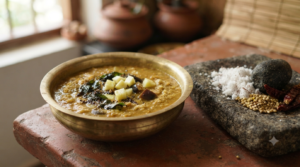
Mangalore style sambar recipe finished with a coconut-oil and curry-leaf tempering.
Below you will find the exact masala coastal households roast. There is also a substitution table with real simmer times, and a troubleshooting section for gravy that turns watery, bitter or flat. Because the coastal version is built on fresh ground masala rather than packet powder, it tastes noticeably rounder than the sambar most kitchens make on a weeknight.
Mangalore Style Sambar Recipe at a Glance
Cooks in Mangalore, Udupi and the Malnad belt call this dish koddel or huli rather than sambar. A Mangalore style sambar recipe is defined by one move above all others. The masala is roasted and ground fresh for each pot, with grated coconut carrying the spice.
- Signature masala: coriander seeds, cumin, fenugreek, urad dal and Byadagi chillies, ground with fresh coconut.
- Signature vegetable: southekayi, the yellow Mangalore cucumber, often with a little brinjal.
- No packet powder: the fresh paste replaces store-bought sambar powder rather than joining it.
- Temple version: cooked without onion or garlic in Udupi mutts and temple kitchens.
- Best with: steamed rice, though it also suits idli, dosa and Mangalore buns.
- Prep time: 20 minutes.
- Cook time: 30 minutes.
- Total time: 50 minutes.
- Servings: 4 people.
- Difficulty: easy.
What Makes This Mangalore Style Sambar Recipe Different
Most Indian sambar starts with a spice powder ground weeks earlier and stored in a jar. The coastal approach reverses that order. Here the spices are roasted minutes before cooking. They are then wet-ground with coconut into a paste that goes in near the end.
That difference is not cosmetic. Freshly roasted coriander and cumin still hold their volatile oils, so a Mangalore style sambar recipe smells sweeter and tastes less dusty. Coconut also softens the tamarind sourness in a way that dry powder cannot.
The local names tell the same story. In the Malnad region people say huli or huli-saaru, while Mangalore and Udupi households say koddel. Recipes labelled southekayi huli, thoute koddel or Mangalore cucumber sambar all describe this same family of dishes.
One more marker separates the temple version from the household one. Udupi mutt kitchens cook it without onion or garlic, because satvik cooking excludes both. Home cooks often slip a few garlic cloves into the tempering. That is a legitimate variation rather than an error.
Ingredients for the Mangalore Style Sambar Recipe
Dal and Vegetables
- Toor dal (split pigeon peas): 1/2 cup, about 100 g.
- Southekayi, the yellow Mangalore cucumber: 1 medium, about 200 g, deseeded and cubed.
- Brinjal: 1 small, cubed. Optional but traditional.
- Tamarind: a lemon-sized ball, soaked for pulp.
- Turmeric powder: 1/2 teaspoon.
- Jaggery: 1 teaspoon.
- Salt: about 1 teaspoon, adjusted to taste.
- Water: as needed.
Roast-and-Grind Masala
- Grated fresh coconut: 1/2 cup.
- Coriander seeds: 1 tablespoon.
- Cumin seeds: 1/2 teaspoon.
- Fenugreek seeds: 1/4 teaspoon, no more.
- Urad dal: 1 teaspoon.
- Dried Byadagi chillies: 4 to 6, adjusted to heat tolerance.
- Coconut oil: 1 teaspoon, for roasting.
Tempering
- Coconut oil: 1 tablespoon.
- Mustard seeds: 1 teaspoon.
- Dried red chillies: 2, broken.
- Curry leaves: 10 to 12.
- Asafoetida: a generous pinch.
- Coriander leaves: 2 tablespoons, chopped for garnish.
Notice that mustard and asafoetida sit only in the tempering list. Fenugreek stays at a quarter teaspoon too. Even half a teaspoon will push any Mangalore style sambar recipe towards bitterness.
Mangalore Style Sambar Recipe: Step-by-Step Method
1. Cook the dal (12 minutes)
Rinse the toor dal until the water runs clear. Pressure cook it with 1 1/4 cups water, the turmeric and a few drops of oil. Three to four whistles is enough. Let the pressure drop naturally, then mash the dal smooth and set it aside.
2. Extract the tamarind (5 minutes)
Soak the tamarind in 1/2 cup of warm water for about ten minutes. Squeeze it well, then strain the pulp and discard the fibre. Taste it before you commit. Southekayi carries its own mild sourness, so some households cut the tamarind by half.
3. Roast and grind the masala (10 minutes)
Heat a teaspoon of coconut oil in a small pan on medium-low heat. Add the urad dal first and let it turn light gold. Follow with the coriander seeds, Byadagi chillies, cumin and fenugreek. Roast until the aroma turns nutty, which takes two to three minutes.
Switch off the heat and stir the grated coconut through the residual warmth for a minute. Cool everything completely before grinding, because hot coconut releases oil and the paste turns grainy. Grind to a smooth paste with a little water.
4. Simmer the vegetables (10 minutes)
Put the cubed southekayi and brinjal into a deep pan. Add the tamarind pulp, salt, jaggery and roughly one cup of water. Bring it to a boil, then lower the heat and cook for seven to eight minutes. The cucumber should hold its shape while yielding easily to a spoon.
5. Add dal and masala (8 minutes)
Stir the mashed dal into the vegetables first. Add the ground coconut masala next, with enough water to reach a pourable consistency. Simmer gently for six to eight minutes, never at a rolling boil. Hard boiling splits the coconut and leaves a grainy film on top.
6. Temper and finish (3 minutes)
Heat the coconut oil in a small pan until it shimmers. Add mustard seeds and wait for them to pop. Then add the broken chillies, curry leaves and asafoetida. Pour the tempering over the sambar, cover the pan for two minutes, and garnish with coriander leaves.
The Mustard Mistake That Ruins a Mangalore Style Sambar Recipe
Plenty of published versions tell you to roast mustard seeds with the coconut and grind them together. That instruction is wrong, and it is worth understanding why.
Mustard seeds release their pungency through an enzyme reaction when they are crushed and wet. Grinding them into a wet coconut paste triggers exactly that. So a Mangalore style sambar recipe that grinds mustard develops a raw, acrid edge. Tempering works differently, because hot oil bursts the seed and mellows it into a nutty note.
Two other common errors travel with it. Some recipes call for a fresh coconut masala plus two tablespoons of packet sambar powder. That doubles the spice load and muddies the coastal character. Others omit coriander, cumin and fenugreek entirely, and those three are precisely what give koddel its backbone.
Southekayi Substitutes for a Mangalore Style Sambar Recipe
Southekayi is hard to find outside Karnataka, Kerala and coastal Maharashtra. Several vegetables stand in well, so the dish adapts easily. Each swap needs a different simmer time.
| Vegetable | Simmer time | Flavour note |
|---|---|---|
| Bottle gourd | 6 to 7 minutes | Closest texture match, milder. |
| Ash gourd | 6 to 8 minutes | Softer, absorbs masala quickly. |
| Drumstick | 12 to 14 minutes | Strong aroma, so add it early. |
| Pumpkin | 5 to 6 minutes | Sweeter, so reduce the jaggery. |
| Long beans | 8 to 10 minutes | Firm bite, very common locally. |
If you swap in pumpkin, drop the jaggery altogether. Drumstick needs a head start, so add it before the softer vegetables. Our pumpkin sambar method covers that sweeter balance in more detail.
Mangalore Style Sambar Recipe: Consistency and Sourness
A good Mangalore style sambar recipe sits between a dal and a thin curry. It should coat the back of a spoon while still pouring freely over rice. It will thicken as it rests, so loosen it with hot water rather than cold.
Sourness needs a lighter hand here than in Tamil-style sambar. The coconut mutes tartness on first taste, so cooks often over-correct with extra tamarind. They regret it once the pot cools. Add half the tamarind, simmer, then taste and adjust.
Jaggery is not there to sweeten. A single teaspoon rounds the tamarind edge without making the dish taste sweet. That is why coastal households add it even to a deliberately tangy pot.
Troubleshooting a Mangalore Style Sambar Recipe
| Problem | Likely cause | Fix |
|---|---|---|
| Bitter aftertaste | Too much fenugreek, or burnt spices | Keep methi at 1/4 tsp, roast medium-low. |
| Grainy, split surface | Coconut masala boiled hard | Simmer gently once the masala goes in. |
| Tastes flat | Masala added too early | Add it in the last eight minutes. |
| Too watery | Dal under-cooked or under-mashed | Mash thoroughly, then simmer uncovered. |
| Harsh, raw pungency | Mustard ground into the masala | Move mustard to the tempering only. |
| Sour and sharp | Full tamarind added at once | Add half, taste, then adjust. |
Most of these faults appear at the same moment. That moment is the point where the ground paste meets the simmering pot. Once you slow that stage down, the rest usually resolves itself.
What Coastal Kitchens Do Differently
- Coconut oil rather than sunflower oil for the tempering, because the aroma is part of the regional signature.
- Byadagi chillies instead of hotter varieties, since they give deep red colour with restrained heat.
- Cucumber skin left on when the southekayi is young, which adds body and a faint earthiness.
- A covered pan for two minutes after tempering, so the curry-leaf aroma settles in instead of escaping.
- Fresh coconut over frozen, though thawed frozen coconut works if you grind it slightly longer.
None of these steps costs extra time. Together though, they are most of the gap between a competent pot and one that tastes like Mangalore.
How a Mangalore Style Sambar Recipe Compares to Other Sambars
It helps to see how the coastal version differs from its inland and tiffin cousins.
| Style | Masala base | Typical vegetable | Served with |
|---|---|---|---|
| Mangalore koddel | Fresh roasted coconut paste | Southekayi, brinjal | Steamed rice. |
| Udupi tiffin sambar | Sambar powder, little coconut | Mixed vegetables | Idli, dosa. |
| Kannada Brahmin style | Dry-ground homemade powder | Tomato, carrot, drumstick | Rice, idli. |
The distinction matters when you choose which method to follow. For breakfast idlis, the Udupi idli sambar is the better fit. For an inland Karnataka lunch built on a dry blend, our Kannada Brahmin style sambar takes a different route. A Udupi style rasam alongside completes a coastal thali.
Storage, Reheating and Make-Ahead
A coconut-based Mangalore style sambar recipe keeps less well than a powder-based one. Refrigerate leftovers in an airtight container for up to three days. Treat three days as a ceiling rather than a suggestion, then reheat gently with a splash of water.
Freezing works, though the texture shifts because coconut separates when thawed. Freeze for up to one month and thaw overnight in the refrigerator. Whisk briskly while reheating to bring the gravy back together.
You can also roast and grind the masala a day ahead and refrigerate it. Beyond twenty-four hours the fresh aroma fades. At that point a packet powder would serve you just as well.
Nutrition Per Serving
| Nutrient | Approximate amount |
|---|---|
| Calories | 180 to 230 kcal. |
| Protein | 6 to 8 g. |
| Carbohydrates | 24 to 30 g. |
| Fat | 7 to 11 g. |
| Fibre | 5 to 7 g. |
These figures are estimates for one bowl of roughly 200 ml. They are calculated from typical values for toor dal, coconut and coconut oil, so treat them as indicative. The coconut pushes the fat and calorie figures above a powder-based sambar, which matters if you track intake.
For verified per-ingredient values, the USDA FoodData Central database is a reliable reference. Anyone managing a medical condition should confirm portions with a qualified dietitian.
A note on allergens: this dish is naturally vegan and gluten-free. However, many commercial asafoetida blends use wheat flour as a carrier, so check the label if you avoid gluten. Toor dal comes from the pigeon pea, a pulse used widely across South Indian cuisine.
Before You Cook
Three things decide whether a Mangalore style sambar recipe lands. Roast the masala on medium-low and grind it only after it cools. Keep mustard out of the grinder and in the tempering. Simmer rather than boil once the coconut paste goes in.
Everything else has room for adjustment. Start with half the tamarind if the style is new to you, since coconut disguises sourness until the pot cools. Serve it over rice with a papad, and the coastal character speaks for itself.
Frequently Asked Questions
Why is a Mangalore style sambar recipe called koddel?
Koddel is simply the local Tulu and Kannada name used in Mangalore and Udupi. The Malnad region says huli or huli-saaru instead. The word sambar is more common across the rest of Karnataka, so all three terms describe the same dish.
Can I use store-bought sambar powder instead?
You can, but it stops being a coastal sambar at that point. Use either the fresh ground coconut masala or two tablespoons of packet powder, never both. Combining them doubles the spice load and produces a muddy gravy.
Why does my coconut masala taste bitter?
Excess fenugreek is the usual culprit, since a quarter teaspoon is the limit for this quantity. Burnt coriander seeds cause it too. Ground mustard seeds are the third cause, which is why mustard belongs only in the tempering.
Do I need southekayi to make this?
No, though it does define the classic version. Bottle gourd is the closest substitute, while ash gourd, pumpkin, drumstick and long beans all work. Adjust the simmer time, because drumstick needs roughly twice as long as pumpkin.
Is this sambar made without onion and garlic?
The temple and mutt version is, because satvik cooking excludes both. Home kitchens frequently add a few crushed garlic cloves to the tempering. Both are authentic, so choose based on who is eating.
Can I make it without a pressure cooker?
Yes. Soak the toor dal for thirty minutes first. Then simmer it in a heavy pot with three cups of water for about forty minutes. Keep the lid partly on and top up with hot water when the level drops.
Why did my sambar turn grainy on top?
Hard boiling after the coconut paste goes in causes it to split. Keep the heat low once the masala is added, and stir occasionally. If it has already split, whisk it briskly off the heat and it will mostly recover.
What is the best accompaniment for this sambar?
Steamed rice with a spoon of ghee is the traditional pairing. It also works with idli, dosa and Mangalore buns, though the consistency should be slightly thicker for those. A no-vegetable Jain sambar suits a lighter meal instead.