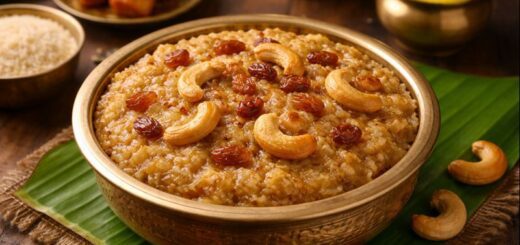
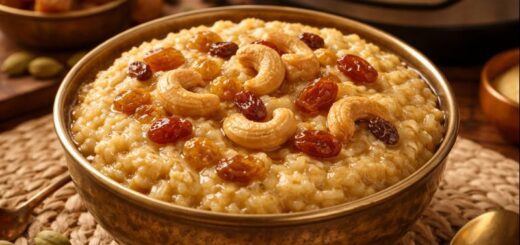
Tirupati Prasadam Laddu Recipe: Sugar Boondi at Home
A Tirupati prasadam laddu recipe for home should begin with one clear choice: sugar, not a confusing mixture of sugar and jaggery. This version uses small fried gram-flour boondi, a measured sugar syrup, ghee, cashews and cardamom. Follow the texture checks as closely as the quantities, because they determine whether the laddus hold together.
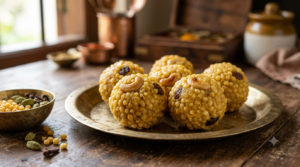
Homemade Tirupati-style boondi laddus prepared with sugar, besan, ghee, cashews, raisins and cardamom.
The result is a Tirupati-style homemade sweet, not official temple prasadam. The amounts below form a practical home formula based on published ingredient information and standard boondi technique. They have not been verified through a physical cooking trial.
Tirupati prasadam laddu recipe at a glance
- Sweetener: 400 g regular white sugar; no jaggery or powdered sugar.
- Base: 200 g besan (gram flour), made into fried boondi.
- Flavour: ghee, cardamom, cashews, raisins and optional sugar candy.
- Home-batch yield: roughly 12–14 medium laddus, depending on size and oil absorption.
- Working time: allow around 60–90 minutes on your first attempt, plus cooling.
- Main skill: stop the syrup at a light one-thread stage and shape while warm.
The ingredient ratio is deliberate. In a June 2026 update, Tirumala Tirupati Devasthanams (TTD) reported roughly 78 g sugar and 39 g gram-flour ingredient per regular laddu. This suggested a 2:1 sugar-to-besan starting ratio by weight. It does not establish an official household recipe or guarantee the same final texture.
Ingredients for the Tirupati prasadam laddu recipe
Use a kitchen scale for besan and sugar if possible. Cup measures change with packing, whereas the weight ratio remains clear. In this Tirupati prasadam laddu recipe, the batter water and syrup water have separate jobs, so measure both.
| Ingredient | Amount | Purpose |
|---|---|---|
| Besan (gram flour) | 200 g | Boondi base |
| Water for batter | 230 ml to start | Flowing batter; adjust sparingly |
| White granulated sugar | 400 g | Only sweetener and binder |
| Water for syrup | 200 ml | Dissolves sugar |
| Ghee for frying | 450 ml in a small deep pan | Frying medium; not all absorbed |
| Extra ghee | 1 tbsp (15 ml) | Roasting cashews and raisins |
| Cashews | 35 g, broken | Nutty bite |
| Raisins | 15 g | Soft, sweet pieces |
| Cardamom powder | 1/2 tsp | Aroma |
| Sugar candy (kalkand) | 10 g, optional | Occasional crunch |
Water absorption varies by flour. If your batter cannot pass through the boondi ladle, add water one teaspoon at a time. Conversely, avoid adding extra flour without measuring, since it changes the balance of the batch.
The 450 ml of frying ghee is an amount to heat in the pan, not an amount that goes into the sweets. Much of it should remain after frying. As a result, no honest nutrition calculation can treat all 450 ml as consumed.
Why this version uses sugar instead of jaggery
The previous Tirupati prasadam laddu recipe combined a modest amount of sugar with 2.5 kg jaggery. Its method then switched from a promised sugar syrup to jaggery syrup. That is not a consistent recipe, so this refresh removes the second sweetener entirely.
TTD’s historical account does mention jaggery syrup in an earlier form of the sweet. However, TTD’s newer published ingredient information lists sugar for Srivari Laddu. These facts describe different periods, not interchangeable steps for one home batch.
If you specifically prefer jaggery’s darker, earthy taste, that is a different cooking project. See the site’s separate jaggery laddu variation, but treat it as a home adaptation rather than the currently documented temple formulation. Do not swap jaggery into this sugar syrup without adjusting the recipe.
Equipment and safe setup
For this Tirupati prasadam laddu recipe, gather a mixing bowl, whisk, boondi ladle, small deep kadai, slotted spoon, saucepan and tray. A thermometer helps with frying, but visual cues also work. Keep a dry plate and clean spoon beside the stove before heating the ghee.
Ghee can splatter when water enters it. Therefore, dry every utensil before frying and keep children away from the hot pan. Never pour water into hot ghee, and never fill a deep pan more than halfway with hot fat.
Set aside a separate bowl for drained boondi. Keep your cardamom and roasted nuts ready, because the syrup-to-shaping stage moves quickly. A little preparation here prevents rushed handling of hot sugar.
Tirupati prasadam laddu recipe: prepare the boondi
- Sift and mix. Sift 200 g besan into a wide bowl. Add 230 ml water gradually and whisk until smooth. The batter should flow in a thick, continuous ribbon without dry lumps.
- Test the ladle. Hold your boondi ladle over the unheated bowl and pour a spoonful across its holes. Drops should fall easily. If they have long tails, thin the batter with a teaspoon of water and test again.
- Heat the ghee. Warm 450 ml ghee in a small deep kadai over medium heat. If using a thermometer, aim for roughly 165–175°C while frying. A small test drop should rise steadily without blackening.
- Fry in small batches. Hold the perforated ladle above the ghee and pour a small amount of batter onto it. Tap gently so separate droplets fall. Do not crowd the pan, since the temperature drops and the boondi clumps.
- Lift before dark brown. Stir gently and remove the boondi when the bubbles settle and the pieces look cooked and light golden. Drain well with a slotted spoon. Repeat until all batter is used.
The correct boondi is cooked through, not raw in the centre or deeply toasted. If the first batch looks flat, the batter may be too thin or the fat too cool. Adjust before frying the rest rather than guessing after everything is done.
Sugar syrup for the Tirupati prasadam laddu recipe
The sugar syrup binds this Tirupati prasadam laddu recipe together. Add 400 g sugar and 200 ml water to a clean, heavy saucepan. Warm gently until the grains dissolve, then let the syrup simmer. Stir early to dissolve the sugar, but avoid repeatedly scraping dry crystals from the pan’s sides into the syrup.
Check for a light one-thread consistency. Put a drop on a cool plate and let it become safe to touch. When pressed between thumb and finger, the cooled sample should form one fine thread as your fingers separate. Do not test boiling syrup directly on skin.
Remove the pan from the heat once it reaches that stage. If you cook it much longer, the mixture may set hard and lose its soft boondi texture. If the syrup is still watery, it may fail to bind, so give it a brief additional simmer and retest.
The endpoint matters more than a fixed boil time. Pan width, flame strength and sugar type all change the timing. Keep the drained boondi nearby so you can mix it before the syrup cools and thickens.
Tirupati prasadam laddu recipe: mix and shape
- Warm the add-ins. In a small pan, warm 1 tablespoon ghee. Lightly fry the cashews, then add the raisins just until they plump. Remove the pan from the heat.
- Combine the boondi. Transfer the drained boondi to a wide mixing bowl. For a less bead-like texture, briefly crush a small portion with a spoon. Keep most droplets intact.
- Add syrup while fluid. Pour the freshly finished sugar syrup over the boondi, stirring with a sturdy spoon. Add the cardamom, cashews, raisins and optional sugar candy.
- Allow a short soak. Rest the mixture for several minutes so the boondi absorbs the syrup. Stir again and check that a squeezed spoonful stays together rather than falling into separate grains.
- Shape safely. Wait until the mixture is warm but comfortable to handle. Lightly grease clean palms, press each portion firmly and roll into a ball. Never squeeze scalding syrup or boondi.
- Let the surface set. Place the laddus on a clean plate and leave them undisturbed until cool. Their texture will firm as the syrup settles.
This Tirupati prasadam laddu recipe aims for a sweet, slightly coarse texture with pockets of nuts and raisins. If the mix crumbles, do not immediately add cold water. First check whether the boondi needs more time to absorb the warm syrup.
Troubleshooting the Tirupati prasadam laddu recipe
The most useful check is to pause after the first small boondi batch and after the syrup test. Those two moments let you correct the process before the entire mixture becomes hard to handle. Use the table to identify the likely cause.
| Problem | Likely cause | What to try |
|---|---|---|
| Boondi forms tails | Batter too thick | Add water by the teaspoon; retest |
| Boondi spreads flat | Batter too thin or ghee too cool | Check heat; add a little measured besan if needed |
| Boondi burns outside | Ghee too hot | Reduce heat and fry a smaller test batch |
| Laddus crumble | Syrup too thin, insufficient soak, or cool mixture | Rest, then gently rewarm if necessary |
| Laddus become hard | Syrup cooked past the binding stage | Next batch: stop at a lighter thread |
| Mixture stays sticky | Excess moisture or syrup not yet settled | Rest briefly before shaping; avoid added water |
A hard batch cannot always be restored to a soft texture without altering the recipe. Rather than promising a rescue, make notes on the syrup stage and reduce the boil next time. A crumbly batch is more forgiving if it is still slightly warm.
How close is homemade laddu to the temple sweet?
The Tirupati prasadam laddu recipe here draws inspiration from a sweet with its own protected identity. The Geographical Indications Registry lists Tirumala Tirupati Devasthanam as the registered proprietor. A homemade sweet inspired by its ingredients is not TTD-produced or officially blessed prasadam.
TTD also uses dedicated facilities, large-scale processes and quality checks. A domestic frying pan, different besan and variations in ghee absorption can change colour, size and texture. As a result, even a similar ingredient ratio cannot ensure an identical laddu.
The practical aim is narrower and more useful: recognisable boondi texture, an unmistakable cardamom aroma, and a laddu that holds together. You can make that style at home without claiming to reproduce TTD’s production method.
Bhimas Cook is an independent recipe website. It is not affiliated with TTD and does not prepare, certify, sell or book official temple prasadam.
Tirupati prasadam laddu recipe: storage and food safety
For this Tirupati prasadam laddu recipe, let the sweets cool, then move them into a clean, dry, covered container. For a cautious home-kitchen approach, refrigerate them promptly rather than relying on a two-week room-temperature claim. Plan to consume this small batch within three to four days and discard any with suspicious changes.
This is conservative household advice, not a validated shelf-life study for this exact laddu. The USDA’s food-safety guidance stresses clean handling and prompt chilling of perishables. TTD’s own food lab uses checks that a home kitchen cannot reproduce.
Humidity, the amount of absorbed fat and added ingredients all affect keeping quality. Do not add milk or fresh coconut when preparing laddus for storage, since they introduce more moisture. If you see mould, discard the sweets rather than trimming the affected area.
Besan can trigger chickpea or legume sensitivities, while the recipe also contains dairy ghee and tree nuts. Explain these ingredients when sharing sweets with guests. Anyone managing blood glucose should count this as a sugar-rich dessert and follow individual dietary advice.
Small details that make the home batch easier
- Weigh sugar and besan. Changing cups can quietly change the syrup-to-boondi ratio.
- Keep syrup water separate. It serves a different job from the batter water.
- Use a narrow, deep pan. It gives enough frying depth without requiring an enormous volume of ghee.
- Test early. A teaspoon of batter tells you more than a long discussion of batter thickness.
- Do not rush shaping. The mixture must be warm enough to bind yet safe against burns.
- Keep this recipe distinct from jaggery sweets. For a different flavour and technique, try rava laddu with jaggery.
Frying consumes time because crowding the pan is tempting. A small batch is easier to monitor, especially when you are learning to make round boondi. Also, wait for stable frying heat between batches instead of constantly turning up the flame.
Before you make your first batch
Use the sugar formula exactly once before experimenting with sweetness or texture. Test boondi flow, stop the syrup at a light one-thread stage, and shape only when safe to touch. Keep in mind that a homemade Tirupati-style laddu is a food preparation inspired by a revered prasadam, not a substitute for the temple offering.
If you want to repeat the batch, record the grams used, your ladle size and the syrup endpoint. Those notes will tell you more than a claim that one recipe works identically in every kitchen.
Frequently asked questions
Can I replace sugar with jaggery in this recipe?
Not as a direct swap. Jaggery changes syrup behaviour, sweetness and taste, so the instructions need their own adjustments. This recipe uses 400 g sugar throughout, with no jaggery added midway.
Is this the official Tirumala laddu recipe?
No. It is a home interpretation based on published ingredient information and ordinary boondi-making methods. Only TTD’s own production and distribution qualify as its official Srivari Laddu prasadam.
Why do my boondi droplets look like tiny strings?
The batter is probably too thick, so it cannot break into round droplets. Add a teaspoon of water and test again. Also keep the ladle close enough to the ghee that drops do not stretch as they fall.
Can I fry the boondi in oil instead of ghee?
You can make a different home-style boondi laddu with a suitable frying oil. However, it will taste different because ghee contributes much of this version’s aroma. The formula here specifically uses ghee.
How do I know when sugar syrup is ready?
A cooled drop should form a fine single thread between your fingers. Always cool the test portion on a plate first, since boiling sugar causes severe burns. Remove the syrup from heat once you reach that light stage.
Why are my homemade laddus very hard?
Overcooked syrup is a common reason because concentrated sugar sets firmly as it cools. On the next attempt, stop cooking a little earlier and mix the syrup promptly. A hard finished batch may not regain its intended texture.
Can I make this laddu without a boondi ladle?
A perforated metal spoon with suitable round holes may work for small batches. Test a tiny amount first, since hole size affects the shape. Avoid unsafe improvisations over hot ghee.
How long can I keep the homemade laddus?
No scientifically tested shelf life is available for this particular home formula. Refrigerate in a clean container and aim to use the batch within three to four days. Avoid the old promise of two weeks on the kitchen shelf.
Are homemade Tirupati-style laddus suitable for everyone?
They contain substantial sugar, ghee, besan and cashews, so dietary needs matter. They are not a sugar-free food, and they contain dairy and tree nuts. Check with a qualified clinician or dietitian if a medical condition requires a controlled diet.