Ugadi Pachadi Recipe: The Authentic Six-Taste Method
The Ugadi Pachadi recipe is the very first thing Telugu and Kannada families taste on New Year morning, and it packs six flavours into a single spoon. Neem brings the bitter, jaggery brings the sweet, and together the mixture becomes a quiet lesson about the year ahead. Most guides hand you a list of six items and stop there. This one gives you the authentic no-cook method, the correct balance, the naivedyam version, and the regional twists that other pages skip.
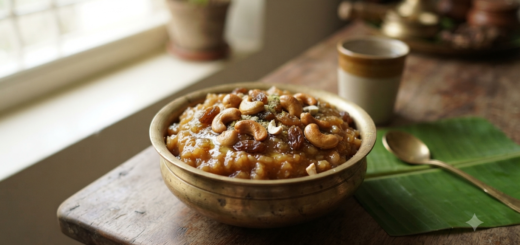
A traditional Ugadi Pachadi made with all six tastes, tasted first on New Year morning.
If you have ever tasted it and wondered why it swings from sweet to bitter to sour in one bite, that is the whole point. Because life does the same thing, the dish asks you to accept every taste with the same calm. So let us make it the traditional way, without cooking and without shortcuts.
Ugadi Pachadi at a Glance
- What it is: a raw, no-cook mixture of six tastes eaten first on Ugadi day.
- Region: Andhra Pradesh, Telangana and Karnataka, where it is also called Bevu Bella.
- Six ingredients: neem flowers, jaggery, tamarind, raw mango, salt and pepper.
- Time: about 10 minutes, since nothing is cooked.
- Served as: naivedyam after the Panchanga Sravanam, then shared by the family.
What Is Ugadi Pachadi?
Ugadi Pachadi is a sacred, uncooked mixture that blends six tastes to represent the six emotions of human life. Devotees taste it first on Ugadi, the Telugu and Kannada New Year, right after the new-year prayers. The word itself is simple: “Ugadi” means the start of an age, while “pachadi” means a chutney or mixture.
Because it carries sweet, bitter, sour, salty, spicy and tangy notes at once, the dish maps directly onto the Ayurvedic idea of Shadruchulu, or the six tastes. Each spoon is a reminder that the coming year will bring joy and sorrow together, so you learn to meet both with grace. That single idea is why this small mixture matters far more than its size suggests.
Ingredients for the Ugadi Pachadi Recipe
This Ugadi Pachadi recipe needs only six core ingredients, and each one stands for a specific taste and a matching feeling. Keep the quantities of neem and pepper small, because both are intense and can quickly take over. Jaggery and tamarind form the base, so they carry the mixture.
| Taste | Ingredient | Emotion it represents |
|---|---|---|
| Sweet | Jaggery (bellam) | Happiness and joy |
| Bitter | Neem flowers (vepa puvvu) | Sadness and hardship |
| Sour | Tamarind (chintapandu) | Unpleasant surprises |
| Salty | Salt (uppu) | Fear of the unknown |
| Spicy | Pepper or green chilli | Anger |
| Tangy | Raw mango (mamidikaya) | New surprises ahead |
For a standard family portion, use roughly two tablespoons of grated jaggery and one small raw mango, finely chopped. Add about one teaspoon of tamarind pulp, a pinch of salt, quarter teaspoon of pepper, and a teaspoon of fresh neem flowers. These are indicative amounts, so adjust them until no single taste shouts over the others.
Ingredient Notes and Easy Substitutes
Fresh neem flowers appear right around Ugadi, though they are hard to find abroad. If you cannot get them, lightly roast a quarter teaspoon of fenugreek (methi) seeds and use those for the bitter note instead. When raw mango is out of season, a small pinch of dry mango powder (amchur) works, although fresh mango tastes far brighter.
Jaggery gives the cleanest sweetness, yet cane sugar or jaggery syrup will do in a pinch. For the offering version, families traditionally use black pepper rather than green chilli, since onion, garlic and chilli are usually avoided in naivedyam. Tamarind can turn the mixture gritty, so strain the pulp well before you add it.
How to Make Ugadi Pachadi Recipe Step by Step
The traditional Ugadi Pachadi recipe is a no-cook dish, so the method is quick and forgiving. Make it fresh on Ugadi morning, because raw mango and neem do not keep well once mixed.
- Soak a small ball of tamarind in warm water for about ten minutes, then squeeze and strain to get a smooth extract.
- In a bowl, dissolve the grated jaggery in a little water, and mix until it turns into a light syrup.
- Strain the jaggery water once, so grit and impurities are removed.
- Add the tamarind extract to the jaggery water and stir them together.
- Drop in the finely chopped raw mango, the neem flowers, a pinch of salt and the pepper.
- Give everything a gentle stir, then taste and adjust until all six flavours feel balanced.
- Let the mixture rest for ten minutes, since the flavours settle and blend as it sits.
That is the entire Ugadi Pachadi recipe, and it rarely takes more than ten minutes. If you want a thicker, chutney-like pachadi, add very little water. When you want a drinkable version, loosen it with more water until it pours.
Naivedyam Version Versus the Eating Version
The naivedyam Ugadi Pachadi recipe keeps things pure and simple. So it uses black pepper for heat and skips onion, garlic and green chilli entirely. After the deity is offered the pachadi, the same mixture becomes prasadam for everyone.
For the everyday eating version, you have more freedom. You can swap in green chilli, add a little grated coconut, or toss in a few banana pieces for body. Both versions still carry all six tastes, because that balance is the soul of the dish.
Pachadi or Drink? Getting the Consistency Right
Families argue about this every year, and both camps are correct. In many Andhra homes it stays thick, almost like a chutney you eat by the spoon. In others it becomes a thin, pourable drink that you sip after prayers.
The taste stays identical either way, so the only real difference is water. Add less water for a scoopable pachadi, and add more when you want a refreshing liquid. Since the mango and jaggery settle at the bottom, stir once more just before serving.
Regional Variations: Andhra Pachadi and Karnataka Bevu Bella
The six-taste mixture is the Andhra and Telangana style, and it is the most elaborate form. Karnataka celebrates the same New Year, yet the classic Kannada version, called Bevu Bella, is far simpler. It uses just two things: bevu, the neem, and bella, the jaggery.
That two-ingredient form still delivers the core message of bitter with sweet, hardship with joy. Since Bevu Bella is quicker, many Kannada families make it alongside a festive meal. So if you want the fullest experience, try the six-taste Ugadi Pachadi recipe, and if you want the oldest and simplest, make Bevu Bella.
The Six Tastes and Their Deeper Meaning
Every ingredient here is chosen for meaning, not just flavour. Jaggery stands for the sweetness of success, while neem holds the bitterness of grief and struggle. Tamarind marks the sour moments, and salt captures the quiet fear that the unknown brings.
Pepper or chilli carries the sharp sting of anger, and raw mango points to the surprises nobody plans for. When you taste all six together, you rehearse the whole emotional range of a year in one bite. That is why elders insist children take at least a small spoon, because the lesson lands better than any lecture.
What Most Recipes Get Wrong
The biggest error you will see online is cooking or boiling the mixture. An authentic Ugadi Pachadi recipe is never cooked, since heat destroys the fresh neem and raw mango that give it life. A few sites show it simmered in a pot, and that step simply does not belong.
Another common slip is drowning the neem in sweetness to make it palatable. The bitterness is meant to stay noticeable, because a year without hardship is not a real year. People also make it hours early, yet the mango browns and the neem turns harsh, so always mix it fresh.
Quick Tips for a Balanced Pachadi
- Start with less neem and pepper, then build up, because you cannot remove them later.
- Taste as you go, since jaggery brands vary a lot in sweetness.
- Strain both the jaggery water and tamarind, so the texture stays clean.
- Make it fresh on the morning itself, and serve within a few hours.
When Is Ugadi in 2026?
Ugadi 2026 falls on Thursday, 19 March 2026, and it opens the Vishwavasu Nama Samvatsara year. The date shifts every year, because Ugadi follows the lunar calendar rather than a fixed English date. That is why it usually lands in March or early April.
You can confirm the exact tithi for your region on a trusted panchangam before the festival. Since local timings vary slightly, families often check the almanac during the Panchanga Sravanam reading. The recipe itself never changes, so it stays the same whichever year you make it.
Is Ugadi Pachadi Good for You?
The dish carries a gentle health reputation in tradition, and it is easy to see why. Neem is valued in Ayurveda for its bitter, cleansing quality, while raw mango and jaggery add vitamins and quick energy. These are traditional beliefs, so treat them as culture rather than medical advice.
Because neem is strong, the pachadi only ever uses a tiny quantity, which is plenty for the ritual. If you are pregnant, or you manage a health condition, it is sensible to check with your doctor before eating neem in any amount. For everyone else, a festive spoonful is simply part of the celebration.
Before You Serve
The Ugadi Pachadi recipe is proof that the simplest food can hold the deepest idea. With six honest ingredients and no cooking at all, you create a dish that tastes like a whole year in miniature. Keep the balance gentle, make it fresh, and let the bitter sit beside the sweet.
Offer it first as naivedyam, share it as prasadam, and start your new year on the right note. If you enjoy festive prasadam cooking, you might also like the Sri Rama Navami Pankam recipe and the Vada Pappu prasadam. For a wider spread of festival dishes, the Sankranti special recipes guide is a good next stop.
Frequently Asked Questions
Is the Ugadi Pachadi Recipe Cooked or Raw?
The Ugadi Pachadi recipe is completely raw and uncooked. You simply mix the six ingredients with strained tamarind and jaggery water. Cooking or boiling is not traditional, because heat destroys the fresh neem and raw mango.
Can I make Ugadi Pachadi without neem flowers?
Yes, though the bitter note is essential to the meaning. If fresh neem flowers are unavailable, lightly roast a little fenugreek and use that instead. Dried neem flowers, soaked briefly, also work well.
What are the six tastes in Ugadi Pachadi?
The six tastes are sweet, bitter, sour, salty, spicy and tangy. They come from jaggery, neem, tamarind, salt, pepper and raw mango. Each one stands for an emotion, from joy to fear to surprise.
How long does Ugadi Pachadi last?
It is best eaten the same day it is made. The raw mango browns and the neem turns harsh, so the mixture does not store well. Always prepare it fresh on Ugadi morning for the best taste.
Why do we eat Ugadi Pachadi on New Year?
Tasting all six flavours together prepares you to accept every experience the year may bring. The sweet and the bitter arrive in the same spoon, just as joy and sorrow arrive in the same life. It is a small ritual with a big lesson.
Is Bevu Bella the same as Ugadi Pachadi?
They share the same spirit but differ in form. Bevu Bella is the Karnataka version and uses only neem and jaggery. The Andhra and Telangana pachadi adds four more ingredients for all six tastes.
Can children eat Ugadi Pachadi?
Yes, and elders encourage even a small spoon for them. The quantity of neem and pepper is tiny, so it stays gentle. The taste teaches a lesson about balance that words rarely manage.
What do I offer along with Ugadi Pachadi?
Many families pair it with a festive meal of bobbatlu, pulihora and payasam. The pachadi is tasted first, right after prayers, as the opening bite of the year. The rest of the feast follows once the naivedyam is complete.