Upma Recipe Without Onion: Easy No-Garlic Breakfast
Upma recipe without onion can still taste deeply savoury when the rava is roasted well and the tempering is built carefully. This version also skips garlic, so the flavour comes from mustard, dals, ginger, curry leaves, green chilli and optional hing. The method below uses 1 cup rava with 2½ cups water for a soft, fluffy texture that is easy to adjust.
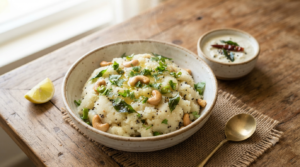
Soft and fluffy rava upma prepared without onion or garlic, with curry leaves, mustard seeds and simple South Indian tempering.
This is a home-cooking formula rather than a claim that one water ratio suits every brand of rava. Fine, medium and pre-roasted semolina can absorb liquid differently, so use the texture guide below when needed. The result should be moist and tender, not gluey or dry.
Upma Recipe Without Onion: Quick Recipe Card
| Detail | Amount |
|---|---|
| Prep time | 10 minutes |
| Cook time | 15 minutes |
| Total time | 25 minutes |
| Servings | 3 |
| Main ratio | 1 cup rava : 2½ cups water |
| Diet note | No onion, no garlic |
The key technique is simple: roast the rava first, bring the seasoned water to a full boil, then add the rava slowly while stirring. This order helps the grains hydrate evenly. It also gives you time to stop lumps before they form.
Ingredients for No-Onion, No-Garlic Rava Upma
| Ingredient | Quantity | Purpose |
|---|---|---|
| Fine or medium rava/sooji | 1 cup, about 180 g | Main grain |
| Water | 2½ cups | Soft, fluffy texture |
| Oil or ghee | 2 tablespoons | Tempering and richness |
| Mustard seeds | 1 teaspoon | Nutty tempering |
| Urad dal | 1 teaspoon | Light crunch |
| Chana dal | 1 teaspoon | Texture and roasted flavour |
| Cumin seeds | ½ teaspoon, optional | Warm spice note |
| Green chillies | 1 to 2, chopped | Heat |
| Fresh ginger | 1 inch, finely chopped or grated | Aromatic bite |
| Curry leaves | 8 to 10 | South Indian aroma |
| Asafoetida/hing | ¼ teaspoon, optional | Savoury depth |
| Cashews | 8 to 10, optional | Crunch |
| Salt | To taste | Seasoning |
| Lemon juice | 1 to 2 teaspoons | Fresh finish |
| Coriander leaves | 2 tablespoons, chopped | Fresh garnish |
Turmeric is optional rather than essential. If you like pale, classic upma, leave it out. If you prefer a warm yellow colour, add a small pinch to the tempering.
How to Make Upma Recipe Without Onion Step by Step
- Roast the rava. Place a heavy pan over medium-low heat. Add the dry rava and stir for 4 to 5 minutes, until it smells lightly nutty. The grains should look dry and loose rather than dark brown. Transfer the roasted rava to a plate.
- Start the tempering. Add the oil or ghee to the same pan. Once hot, add mustard seeds and let them crackle. Then add cumin, if using.
- Toast the dals. Add urad dal and chana dal. Stir until they turn lightly golden. Add cashews now if you want them in the upma.
- Add the aromatics. Add curry leaves, green chilli and ginger. Stir briefly until fragrant. Add hing at this stage if you use it.
- Boil the water. Pour in 2½ cups water and add salt. Increase the heat and bring the water to a steady boil.
- Add the roasted rava slowly. Reduce the heat to medium-low. Sprinkle the rava into the boiling water in a thin stream while stirring continuously with the other hand.
- Cook until soft. Keep stirring until the mixture thickens. Cover the pan and cook on low heat for about 3 minutes, or until the grains are tender and the excess water is absorbed.
- Rest before serving. Switch off the heat and keep the pan covered for 2 minutes. Fluff gently, then finish with lemon juice and coriander.
Do not rush the rava into the pan in one dump. Slow addition is the easiest way to avoid floury lumps. If a few small lumps appear, break them immediately with the back of the ladle while the mixture is still loose.
Why This Upma Recipe Without Onion Still Tastes Full-Flavoured
Onion and garlic usually add sweetness and savoury depth, but they are not the only route to flavour. In this recipe, mustard seeds, toasted dals and curry leaves create the base. Ginger and green chilli then add freshness and heat.
Hing can add another savoury note, although it is optional. Lemon juice works differently because it brightens the finished dish after cooking. Together, these layers keep the upma lively without needing onion or garlic.
The roasting step matters just as much as the tempering. Rava that is lightly roasted before hydration develops a nutty aroma and stays easier to separate. However, dark roasting can make the final upma taste dry or overly toasted.
Best Water Ratio for Soft or Firm Upma
For this upma recipe without onion, the 1:2½ ratio is a practical middle point for everyday rava upma. Still, rava brands and grain sizes vary. Use the table below as a texture guide rather than treating one ratio as a rigid rule.
| Rava | Water | Expected texture |
|---|---|---|
| 1 cup | 2¼ cups | Firmer and more separate |
| 1 cup | 2½ cups | Soft and fluffy |
| 1 cup | 2¾ to 3 cups | Softer and more spoonable |
If your rava is very fine, start at 2½ cups and judge the texture after it cooks. If it still feels tight, stir in a little hot water and cover for another minute. For a deeper explanation, see BhimasCook’s rava upma water-ratio guide.
Common Upma Problems and How to Fix Them
Why did my upma turn lumpy?
Lumps usually form when the rava enters the water too quickly or the stirring stops. Keep the water boiling, lower the heat, then add rava in a steady stream. If lumps start forming, break them at once while the mixture is still wet.
Why is my upma sticky?
Sticky upma can come from under-roasted rava, too much water or aggressive stirring after the grains swell. Roast until the rava smells nutty, then stir only as much as needed once it thickens. Resting the pan covered also helps the texture settle.
Why did the upma become dry?
Dry upma usually needs a little more liquid or a shorter final cook. Add a small splash of hot water, mix gently and cover for a minute. Next time, use 2¾ cups water if your rava absorbs more than expected.
Variations Without Onion or Garlic
This upma recipe without onion also lets you keep the same basic tempering while changing the body of the dish. Add ¼ to ½ cup peas, finely diced carrot or beans after the tempering, then cook them briefly before adding water. For a vegetable-heavy version, use the separate rava upma with vegetables recipe.
For a richer breakfast, use ghee instead of oil and add roasted cashews. If you want a vegan version, use a neutral oil or coconut oil. Milk-based upma is a different texture and ratio, so follow the rava upma with milk recipe instead of simply replacing all the water here.
A spoon of freshly grated coconut can also go in at the end. It adds softness and mild sweetness without changing the core method. For extra tang, serve lemon on the side rather than increasing chilli.
Is This Upma Gluten-Free or Suitable for Fasting?
Standard rava or semolina upma is not gluten-free because semolina comes from wheat. The U.S. Food and Drug Administration specifically includes semolina from durum wheat within its definition of wheat for allergen labelling. Anyone avoiding wheat for allergy or coeliac disease should use an appropriate gluten-free base and check every packaged ingredient label.
You can read the FDA’s current food-allergen guidance for more detail. Also check packaged hing, stock powders or seasoning mixes because formulations differ by brand.
No onion and no garlic does not automatically mean a dish fits every religious fast. Fasting rules differ by family, region and tradition, and some observances avoid wheat or regular grains. Therefore, confirm the rules you follow before serving rava upma for a vrat or festival fast.
Nutrition: A More Useful Way to Look at This Breakfast
Exact nutrition depends on the rava brand, fat used, portion size and optional ingredients. For that reason, this refresh does not repeat a fixed calorie figure as though every bowl were identical. A plain serving made with ghee will differ from one made with oil, vegetables or nuts.
The ICMR-National Institute of Nutrition Dietary Guidelines for Indians recommend variety across food groups instead of relying heavily on one cereal food. In practical terms, you can add vegetables, nuts or a suitable side to make breakfast more varied. That is more useful than treating upma alone as a complete meal.
How to Store and Reheat Upma Safely
Cool leftovers promptly and refrigerate them in a covered container. FoodSafety.gov advises refrigerating cooked leftovers within 2 hours, or within 1 hour when the surrounding temperature is above 32°C. Refrigerated leftovers should generally be used within 3 to 4 days.
When reheating, add a spoonful of water so the rava loosens. Heat until steaming hot throughout. FoodSafety.gov advises reheating leftovers to 74°C, and its current guidance is available on the leftover food-safety page.
Serving Ideas for Upma Recipe Without Onion
This upma recipe without onion works well with coconut chutney, plain curd or a squeeze of lemon. If you avoid dairy, choose a dairy-free chutney and use oil in the tempering. A little grated coconut or roasted cashew adds contrast without changing the basic flavour.
Serve it soon after cooking because the texture is best while warm and freshly steamed. If the upma sits for a while, loosen it with a few drops of hot water before serving. That small step restores softness without making another batch.
Upma Recipe Without Onion: Key Tips Before You Cook
- Roast the rava until aromatic, but do not brown it heavily.
- Bring the seasoned water to a boil before adding rava.
- Add rava slowly while stirring to prevent lumps.
- Use 2½ cups water for a soft starting texture, then adjust by rava type.
- Add lemon only after cooking so its flavour stays fresh.
- Use oil instead of ghee if you want the recipe to be vegan.
- Do not label standard semolina upma gluten-free because rava is wheat.
The best upma recipe without onion is the one that matches your preferred texture. Start with the middle water ratio, then note what your usual rava brand needs. Once that ratio is familiar, this becomes a reliable breakfast that needs only a few pantry ingredients.
Frequently Asked Questions
Can I make upma without onion and garlic?
Yes. Mustard seeds, toasted dals, curry leaves, ginger, green chilli and optional hing provide plenty of flavour without onion or garlic. Finish with lemon and coriander so the upma tastes fresh rather than flat.
Can I make this upma recipe without onion using oil instead of ghee?
Yes. Use the same quantity of neutral oil, groundnut oil or coconut oil. The taste changes slightly, but the cooking method stays the same. Oil also makes the recipe vegan when every other ingredient is plant-based.
What is the best rava-to-water ratio for upma?
Start with 1 cup rava to 2½ cups water for soft, fluffy upma. Use about 2¼ cups for a firmer texture or up to 3 cups for softer upma. Because rava grain size varies, treat these as working ratios and adjust your usual brand.
Do I need to roast rava before making upma?
Roasting is strongly recommended because it improves aroma and makes the grains easier to keep separate. If your packet says the rava is pre-roasted, you can shorten this step. A brief dry roast still refreshes the aroma.
Can I add vegetables without adding onion?
Yes. Peas, carrot and finely chopped beans work well. Add them after the tempering and cook briefly before you pour in the water. Keep the pieces small so they soften within the short upma cooking time.
Is no-onion, no-garlic upma the same as Jain upma?
Not necessarily. Jain dietary practice can involve restrictions beyond onion and garlic, including other root vegetables for many followers. If you are cooking for a Jain guest, ask which ingredients they avoid rather than assuming this recipe automatically fits their practice.
Is rava upma gluten-free?
No. Standard rava or semolina is made from wheat, so this recipe contains gluten. A gluten-free version needs a different grain such as rice rava, plus a water ratio suited to that grain rather than a blind one-for-one substitution.
How long can leftover upma stay in the fridge?
FoodSafety.gov advises using refrigerated leftovers within 3 to 4 days when they were chilled promptly. Refrigerate cooked upma within 2 hours, or within 1 hour in very hot conditions above 32°C. Reheat it thoroughly before eating.
Can I prepare anything in advance?
Yes. You can measure the tempering ingredients and roast the rava ahead of cooking. Keep the roasted rava dry and covered, then make the fresh tempering and add boiling water when you are ready to cook.