Atukula Prasadam Recipe Ingredients: Easy Sweet Poha
The Atukula Prasadam Recipe Ingredients are humble on paper, yet they turn flattened rice, jaggery, and warm milk into one of South India’s most loved temple offerings. This sweet poha prasadam takes about 25 minutes and needs no special skill. In my family’s Andhra kitchen, my mother makes it every Janmashtami. Below you get the exact quantities, the timed steps, the reason poha is offered to Krishna, and the fixes that keep it from turning grainy or mushy.
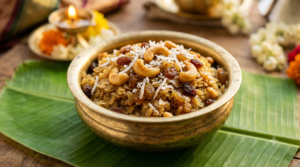
Sweet atukula prasadam made with flattened rice, jaggery, milk, and ghee-roasted cashews.
Atukula Prasadam at a Glance
- What it is: a no-cook-friendly sweet made from flattened rice (atukulu/poha), jaggery, milk, ghee, and nuts.
- Time: roughly 10 minutes prep and 15 minutes cooking, so about 25 minutes start to finish.
- Serves: 4 to 6 as prasadam portions.
- Best for: Janmashtami naivedyam, Navaratri offerings, and everyday sweet cravings.
- Key tip: warm the milk before adding jaggery, because that single step prevents a grainy texture.
Recipe Card
| Detail | Value |
|---|---|
| Prep Time | 10 minutes |
| Cook Time | 15 minutes |
| Servings | 4–6 |
| Difficulty | Easy |
| Cuisine | Andhra / South Indian |
Atukula Prasadam Recipe Ingredients: Full List With Quantities
Gather these before you start, since the cooking moves quickly once the milk is warm. The Atukula Prasadam Recipe Ingredients below make 4 to 6 offering-sized servings.
- 1 cup thick flattened rice (atukulu/poha) — thick variety only
- 1.25 cups jaggery, grated or powdered — adjust to taste
- 2 cups whole milk, full-fat
- ¼ cup fresh grated coconut — optional but traditional
- 2 tbsp ghee (clarified butter)
- 10–12 cashew nuts
- 10–12 raisins
- ¼ tsp cardamom powder
- A pinch of salt
- Optional: 1 tbsp poppy seeds (khus khus) for a light crunch
Thick poha matters more than any other choice here. Thin poha soaks up liquid fast and turns to paste, whereas the thick variety holds its shape and gives that gentle bite temple prasadam is known for.
How to Choose the Best Atukula Prasadam Recipe Ingredients
Quality decides the final taste, so a few minutes of care at the shop pays off. When you pick the Atukula Prasadam Recipe Ingredients, favour fresh stock over whatever has sat on the shelf longest.
Jaggery
Choose dark, soft jaggery that crumbles easily, because it melts cleanly and adds a deeper caramel note. Rock-hard, pale jaggery often hides grit, so grate it and check for stones before use.
Flattened rice
Buy thick white poha and give it a sniff. Fresh poha smells mild and clean, while stale poha turns slightly sour and refuses to soften evenly.
Ghee and nuts
Use real desi ghee if you can, since it carries the aroma that defines this sweet. Roast the cashews and raisins fresh rather than using pre-roasted nuts, as the just-roasted smell lifts the whole dish.
Step-By-Step Instructions With Timings
Step 1: Prepare the atukulu — 2 minutes
Lightly rinse 1 cup of thick flattened rice under cold water, then drain at once. Spread it on a plate so the excess water drips off. You want it soft but never soggy, so avoid soaking it.
Step 2: Warm the milk — 3 minutes
Pour 2 cups of whole milk into a heavy-bottomed pan and heat on medium. Bring it just to a gentle simmer, then lower the flame. Warm milk helps the next step dissolve smoothly.
Step 3: Add the jaggery — 4 minutes
Add 1.25 cups of grated jaggery to the warm milk. Stir continuously until it fully dissolves into a smooth syrup base. Keep the flame medium-low, because high heat can scorch jaggery and turn it bitter.
Step 4: Combine atukulu and coconut — 2 minutes
Turn off the heat first. Now add the drained flattened rice and ¼ cup of fresh grated coconut to the jaggery-milk mixture. Fold gently until the poha drinks up the liquid and softens.
Step 5: Temper with ghee, cashews, and raisins — 6 minutes
Heat 2 tablespoons of ghee in a small pan. Add the cashews and raisins, then roast until the cashews turn golden, about 3 to 4 minutes. If you like poppy seeds, add them now for extra crunch.
Step 6: Season and serve — 3 minutes
Pour the ghee, cashews, and raisins over the atukula mixture. Sprinkle ¼ teaspoon of cardamom powder and a pinch of salt. Mix gently, then serve it warm or at room temperature after offering it as naivedyam.
The Story Behind Atukula Prasadam
Poha reaches Krishna’s plate through one of the most loved friendship stories in the Bhagavatam. Krishna and his poor childhood friend Sudama (known as Kuchela in South India) studied together under Guru Sandipani. Years later Sudama, struggling to feed his family, walked to Krishna’s palace in Dwaraka with the only gift he could afford — a small bundle of flattened rice mixed with jaggery.
Sudama felt too embarrassed to offer such a humble gift. Krishna, though, spotted the bundle and ate the poha with pure delight, and in return quietly blessed Sudama with wealth he never asked for. Ever since, devotees offer atukulu to Krishna, which is why sweet poha appears in so many Janmashtami kitchens. The dish stands for devotion given without expectation, and that meaning is baked into every serving.
What Atukula Is Called Across India
Flattened rice travels under many names, so shopping lists differ by region. In Telugu it is atukulu, in Tamil aval, in Kannada avalakki, in Hindi and Marathi poha, in Konkani phovu, and in Odia and Bengali it is chira. The sweet jaggery version is often called bellam atukulu in Andhra and vella aval in Tamil homes. Knowing these names helps when you buy ingredients or follow a recipe written in another language.
Atukula Prasadam Recipe Ingredients: Variations to Try
This prasadam bends easily to what your family tradition or diet needs. Each version below keeps the spirit of the offering while changing one element.
| Version | Change | Best for |
|---|---|---|
| Classic jaggery + milk | Standard recipe above | Rich, festival-day naivedyam |
| Jaggery, no milk | Bind with a little water and coconut instead of milk | Fasting days and quick offerings |
| Vegan | Swap milk for coconut milk, keep ghee optional | Dairy-free households |
| Sugar-based | Replace jaggery with sugar syrup | A lighter colour and milder taste |
South Indian families usually prefer jaggery over sugar, because it adds an earthy sweetness and a natural amber colour. For a fully traditional Janmashtami offering, the no-milk jaggery version is the closest to Sudama’s original bundle. If you enjoy this sweet, our atukula prasadam with jaggery recipe walks through that pure jaggery method in detail.
Pro Tips From My Kitchen
A few habits separate a silky prasadam from a grainy one. My mother insists on warm milk, since jaggery dissolves evenly only when the milk is warm, not hot and not cold.
- Always turn off the heat before adding poha, because boiling the flattened rice makes it mushy.
- Roast cashews and raisins until just golden, as that aroma is half the appeal.
- Use fresh grated coconut rather than desiccated, since fresh coconut keeps the offering moist.
- Add the pinch of salt without skipping it, because a little salt quietly sharpens the sweetness.
If your jaggery starts to crystallise, add a tablespoon of water and warm it gently until it dissolves again. This small rescue saves a batch that would otherwise turn sandy.
Common Mistakes to Avoid
Even with the right Atukula Prasadam Recipe Ingredients, most failures trace back to three habits. Each one is easy to fix.
Soaking the poha too long
Soaking softens the flattened rice into paste, so rinse it quickly and drain instead. The poha will soften enough once it meets the warm jaggery-milk.
Boiling the jaggery hard
High heat scorches jaggery and leaves a bitter edge. Keep the flame low, and stop stirring the moment it dissolves into syrup.
Using thin poha
Thin poha collapses and loses all texture. Thick poha holds its bite, which is exactly what a good prasadam needs.
Substitutions and Storage for Atukula Prasadam Recipe Ingredients
Substitutions
- If coconut is unavailable, simply omit it, and the prasadam stays traditional.
- Coconut milk replaces dairy milk for a vegan variation that still tastes rich.
- Brown sugar can stand in for jaggery in a pinch, though the flavour shifts slightly.
Storage tips
This sweet is best enjoyed fresh, ideally within a few hours of making it. You can refrigerate leftovers in an airtight container for up to 2 days. Reheat gently on the stovetop with a tablespoon of milk to revive the texture. Do not freeze it, because flattened rice loses its structure once thawed.
Nutrition Information Per Serving
| Nutrient | Approx. amount |
|---|---|
| Calories | ~260 kcal |
| Carbohydrates | 40 g |
| Fat | 8 g |
| Protein | 6 g |
| Fiber | 2 g |
| Calcium | ~80 mg |
These figures are estimates based on typical values for flattened rice, jaggery, and milk, so your actual numbers will vary with brands and portion size. Flattened rice is naturally light and easy to digest, which is why it suits fasting days. Because jaggery still raises blood sugar, anyone managing diabetes should treat this as an occasional sweet and check with a doctor about portion size.
Why These Atukula Prasadam Recipe Ingredients Are Special
The Atukula Prasadam Recipe Ingredients carry meaning far beyond their simplicity. Jaggery, flattened rice, and milk together signify nourishment, humility, and purity in temple tradition. Devotees choose these pure, everyday foods precisely because the offering is about sincerity, not grandeur.
Many families guard their own version, passed down through generations with a small tweak in each home. You can read more about South Indian temple offerings on the TTD official website, and about the grain itself on the flattened rice reference page. That blend of everyday ingredient and deep symbolism is what keeps this prasadam alive across festivals.
Serving Suggestions and Pairings
Once the Atukula Prasadam Recipe Ingredients come together, a few simple pairings make the offering feel complete.
- Serve the prasadam with a small glass of warm milk for a light festival breakfast.
- Pair it with South Indian filter coffee when it follows a feast.
- Offer it alongside other naivedyam dishes like pulihora or curd rice during temple meals.
For a fuller festival spread, our Diwali special sweets recipes and the classic Tirupati laddu recipe pair naturally with this sweet poha.
Frequently Asked Questions About Atukula Prasadam
What are the main Atukula Prasadam Recipe Ingredients?
The core ingredients are thick flattened rice, jaggery, whole milk, ghee, cashews, raisins, and cardamom. Fresh grated coconut and a pinch of salt are traditional additions. Everything is easy to find in an Indian pantry.
Can I make atukula prasadam without milk?
Yes, and this version is closer to the original offering. Mix jaggery, flattened rice, and grated coconut with a little water, then skip the milk entirely. Milk simply adds richness that many devotees enjoy.
Is atukula prasadam served hot or cold?
It is usually served warm or at room temperature. Temple kitchens often serve it at room temperature after the offering. At home, warm prasadam tends to taste richer than chilled.
Which poha is best for this recipe?
Thick poha is best, because it holds its texture and does not turn mushy. Thin poha softens too fast and loses all bite. Always rinse quickly rather than soaking.
Why is poha offered to Lord Krishna?
Poha is tied to the story of Krishna and his friend Sudama, who gifted a humble bundle of flattened rice. Krishna relished it, so devotees now offer atukulu on Janmashtami as a symbol of devotion.
Is atukula prasadam healthy?
Flattened rice and jaggery are light and easy to digest, which suits fasting days. The dish gives quick energy from natural sugars. Since it is still a sweet, enjoy it in moderation if you watch your sugar intake.
Can I use sugar instead of jaggery?
Yes, sugar works if jaggery is unavailable. Make a light sugar syrup and follow the same steps. The colour will be paler and the taste milder, though the texture stays the same.
How long does atukula prasadam stay fresh?
It is best within a few hours of making. Refrigerated in an airtight container, it keeps for up to 2 days. Reheat gently with a splash of milk, and avoid freezing it.
Before You Offer It
Atukula prasadam proves that the simplest offerings often carry the most meaning. With the right Atukula Prasadam Recipe Ingredients — thick poha, good jaggery, and a careful warm-milk step — you can make a sweet that honours both tradition and taste. Prepare it once for Janmashtami or a family pooja, and the aroma alone will earn it a permanent place in your festival kitchen. Keep the ingredients fresh, respect the low flame, and this humble sweet will turn out right every single time.