Rava Laddu Condensed Milk: Soft, Melt-in-Mouth Recipe
Rava Laddu Condensed Milk is the shortcut every home cook wishes they had learned sooner, because it turns roasted semolina into soft, melt-in-the-mouth sweets without the fuss of sugar syrup. I first tasted this version in my aunt’s kitchen during Diwali in Andhra Pradesh, and what stayed with me was the texture.
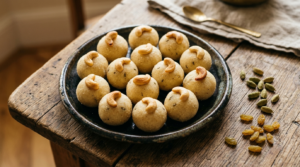
Soft, melt-in-mouth Rava Laddu Condensed Milk topped with roasted cashews, ready in 30 minutes.
A handful of pantry basics gave laddus richer than the syrup-based ones I grew up with. All it took was rava, ghee, and one tin of sweetened condensed milk. Since the milk does the sweetening and the binding at once, even a first-timer can shape a perfect batch in under 30 minutes.
Rava Laddu Condensed Milk at a Glance
- Time: ready in about 30 minutes, start to finish.
- Yield: 12 to 14 lemon-sized laddus.
- Skill level: easy, and beginner-friendly because there is no sugar syrup to judge.
- Key win: condensed milk binds the mixture, so the balls hold their shape without cracking.
- Best for: Diwali, Raksha Bandhan, Ganesh Chaturthi, or a quick sweet craving.
Why Rava Laddu Condensed Milk Works So Well
Traditional sooji laddus lean on a sugar syrup cooked to a precise thread stage, and that step is exactly where beginners struggle. Condensed milk skips it entirely. Because the milk is already sweet and thick, it sweetens the rava and glues it together in one move.
The result is a slightly moist, fudge-like crumb rather than the drier, powdery bite of syrup laddus. This is also why the flavour deepens overnight, so a batch made today often tastes better tomorrow. If you have ever had laddus fall apart in your palm, this method quietly fixes that problem.
Another reason Rava Laddu Condensed Milk stays popular is speed. There is no candy thermometer, no syrup to test, and no window where a wrong second ruins the batch. That reliability is exactly why it has become the go-to festival sweet in so many home kitchens.
Ingredients for Rava Laddu Condensed Milk
Everything here is a common Indian pantry item, and the quantities below make 12 to 14 laddus. Use fine rava if you want a smooth laddu, since coarse rava gives a grainier bite.
- 1 ½ cups semolina (rava / sooji), preferably fine
- ¾ cup desiccated coconut, or freshly grated coconut for a moister laddu
- 1 ¼ cups sweetened condensed milk (one standard 14 oz / 400 g tin)
- 4 tablespoons ghee (clarified butter)
- 8 to 10 cashews, roughly broken
- 8 to 10 raisins (optional)
- ½ teaspoon cardamom powder
- 1 tablespoon warm milk, only if the mixture needs help binding
A quick note on the coconut: desiccated keeps the laddus firmer and extends shelf life, while fresh coconut tastes richer but shortens it. Choose based on how soon you plan to finish the batch.
The ghee matters more than people expect. Because it carries so much of the aroma, good cow ghee gives a noticeably better laddu than a bland substitute. If you can, warm the ghee gently rather than smoking it, since overheated ghee can taste burnt and dull the final flavour.
How to Make Rava Laddu Condensed Milk Step by Step
Step 1: Fry the nuts, then roast the rava (5 to 8 minutes)
Heat 2 tablespoons of ghee in a heavy-bottomed pan on medium heat. Fry the cashews until light golden, add the raisins for a few seconds until they plump, then scoop both out and set them aside. In the same ghee, add the semolina and roast it on low-medium heat, stirring constantly.
Go by feel, not just the clock. The rava starts out heavy under the spoon, then turns light and free-flowing as it toasts, and a warm nutty aroma rises. That aroma is your signal it is done, usually after 5 to 8 minutes depending on your pan. Under-roasted rava leaves a raw, pasty taste, so do not rush this.
Step 2: Add coconut and cardamom (2 minutes)
Stir the desiccated coconut into the roasted rava and toast them together for about two minutes. Lower the flame, add the cardamom powder, and mix so the aroma blooms. Return the fried cashews and raisins to the pan now.
Step 3: Bind the Rava Laddu Condensed Milk mixture (3 to 5 minutes)
Keep the flame low and pour in the sweetened condensed milk. Mix thoroughly so it coats every grain of the rava-coconut blend. Heat gently for 3 to 5 minutes until the mixture thickens and pulls away from the sides of the pan. Switch off the heat before it dries out, because it firms up more as it cools.
Step 4: Cool slightly and shape (5 to 8 minutes)
Let the mixture cool until it is warm enough to handle but still pliable. If it feels too dry to bind, sprinkle in the tablespoon of warm milk.
Grease your palms with a little ghee and roll firm, lemon-sized balls. Shape while warm, since the mixture cracks once it goes cold. Press a cashew on top of each laddu for a festive finish.
Rava Laddu Condensed Milk vs Sugar Syrup Laddu
Both are loved, yet they behave differently in the kitchen and on the plate. If you are deciding which route to take, this quick comparison makes the call easier.
| Feature | Condensed Milk Version | Sugar Syrup Version |
|---|---|---|
| Difficulty | Very easy, no syrup stage | Trickier, needs thread consistency |
| Texture | Soft, creamy, fudge-like | Drier, more granular |
| Binding | Milk holds it together | Depends on correct syrup |
| Shelf life | Shorter (has dairy) | Longer |
| Best for | Beginners, quick batches | Long storage, gifting |
In plain terms, a condensed milk laddu keeps well for up to a week in the fridge. A good sugar laddu can sit longer at room temperature. Choose condensed milk when you want speed and softness.
Pro Tips From My Own Kitchen
- Roast slow, never dark: aromatic and pale gold is the goal, because browned rava turns bitter.
- Adjust the sweetness: if you like it sweeter, add 2 to 3 extra tablespoons of condensed milk while the pan is still warm.
- Add a crunch: slivered almonds or chopped pistachios make the laddus feel more festive, and the green flecks look lovely against the pale crumb.
- Shape warm: the mixture binds best while warm, so keep a bowl of warm milk nearby if it stiffens before you finish rolling.
Troubleshooting: Fixing Common Laddu Problems
Most Rava Laddu Condensed Milk failures come down to moisture, and each one has a simple fix. Once you know the two usual culprits, you can rescue almost any batch on the spot.
Why are my laddus crumbly?
Crumbly laddus mean the mixture is too dry to bind. Add a tablespoon of condensed milk or warm milk, mix, and try shaping again while the blend is still warm. Cold mixture almost always cracks, so gently rewarm it if needed.
Why is my mixture too loose or sticky?
If the blend feels wet and refuses to hold a ball, you added a touch too much liquid. Dry-roast a spoonful or two of extra rava in a separate pan and stir it in. It absorbs the excess and firms everything up without changing the taste.
Substitutions and Variations
This recipe bends easily to what you have. Swap desiccated coconut for fresh coconut when you want a moister laddu, though eat those sooner. Replace raisins with chopped dates for extra chew, or skip nuts entirely for a nut-free batch and stir in sunflower seeds instead.
Prefer a different sweetener? Our rava laddu with jaggery gives an earthier, less creamy result, while the classic rava laddu with coconut keeps things traditional. A pinch of saffron soaked in the warm milk also lifts the whole batch.
Storage and Make-Ahead Notes
Store the laddus in an airtight container at room temperature for 2 to 3 days. Because condensed milk contains dairy, they last longer in the fridge, up to about a week. Always bring chilled laddus to room temperature for 15 to 20 minutes before serving, since that softens the crumb again.
Rava Laddu Condensed Milk is also a smart make-ahead option. The flavour and texture settle overnight, so a batch rolled the evening before a festival often tastes better than a fresh one. That makes them ideal when your Diwali sweets list is long and your time is short.
Serving Ideas and Festival Notes
Rava laddu, known in some regions as Ravè unde, is a cherished festival sweet across South India. It appears during Diwali, Ganesh Chaturthi, Raksha Bandhan, and Krishna Jayanti, and it doubles as a simple prasadam offering. Semolina’s fine, nutty crumb is exactly what makes these laddus feel both celebratory and comforting.
Serve Rava Laddu Condensed Milk alongside a cup of filter coffee or Sulaimani tea for an everyday treat. For a festive platter, pair them with a contrasting sweet like a soft ukadiche modak so guests get variety in one plate. A small tray of these laddus also travels well, which makes them a thoughtful, homemade gift for neighbours during festival season.
A Quick Note on Nuts and Sugar
These laddus contain dairy from condensed milk and ghee, plus tree nuts like cashews. Flag them clearly if you are serving guests with allergies. They are also naturally rich in sugar, so enjoy them in small portions if you are watching your intake. For background on the grain itself, this reference on semolina and the regional sweet Ravè unde is worth a look.
Nutrition Information Per Serving
| Nutrient | Approx. per laddu |
|---|---|
| Calories | 150 to 180 kcal |
| Carbohydrates | 22 to 26 g |
| Protein | 3 to 4 g |
| Total Fat | 7 to 9 g |
| Saturated Fat | 5 to 6 g |
| Sugar | 15 to 18 g |
These figures are estimates and shift with the brands and quantities you use.
Final Thoughts
Once you make Rava Laddu Condensed Milk a few times, it becomes a reliable habit. It is the recipe you reach for when guests arrive unannounced or a festival sneaks up. It is forgiving, fast, and hard to mess up, because the condensed milk carries both the sweetness and the binding.
Roast the rava with patience, shape while warm, and let the batch rest overnight for the best texture. Keep a tin of condensed milk in the cupboard, and you are always one pan away from a plate of soft, golden laddus.
Frequently Asked Questions
Can I use coarse rava for this recipe?
Yes, coarse rava works, but it gives a grainier laddu. Fine rava binds more smoothly with condensed milk and produces that melt-in-the-mouth texture. If you only have coarse rava, pulse it a few times in a dry grinder for a finer crumb.
Can I add sugar instead of condensed milk?
You can, though it changes the recipe entirely. Sugar versions usually need a syrup cooked to thread consistency, which is harder to judge. Condensed milk is the shortcut that keeps this version soft and beginner-friendly.
How long does Rava Laddu Condensed Milk last?
They keep 2 to 3 days at room temperature and up to a week in the fridge. Because they contain dairy, refrigeration matters in warm weather. Bring them back to room temperature before serving so the crumb softens.
Why do my laddus not hold their shape?
Shape usually fails for two reasons: the mixture is too dry, or it has gone cold. Add a little warm milk or condensed milk for dryness, and rewarm the blend gently if it stiffened. Always roll while the mixture is warm.
Can I make Rava Laddu Condensed Milk without coconut?
Absolutely. Simply leave out the coconut and increase the rava slightly to keep the volume. The laddus turn out a touch smoother, and the condensed milk still binds them well.
Can I make Rava Laddu Condensed Milk ahead of a festival?
Yes, and they are actually better made ahead. The texture and flavour deepen overnight, so rolling them a day early is ideal. Store them airtight and refrigerate if your kitchen is warm.
What nuts work best in rava laddu?
Cashews are the classic choice for their soft crunch. Slivered almonds and chopped pistachios also work well and add colour. Roast them lightly in ghee first so they stay crisp inside the laddu.