Sweet Pongal With Milk: Easy Creamy Cow Milk Recipe
Sweet pongal with milk is a rich South Indian sweet made with rice, moong dal, jaggery, cow milk, ghee and cardamom. This version keeps the rice soft and creamy while reducing the chance that jaggery will split the milk. The key is simple: cook the grains first, warm the milk gently, and add strained jaggery syrup away from a hard boil.
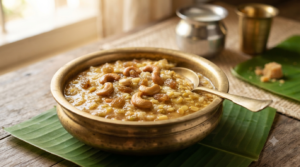
Creamy sweet pongal made with cow milk, jaggery, rice, moong dal, ghee, cashews and raisins.
Use pasteurized whole cow milk for the easiest result. If you use unpasteurized milk, boil it before cooking; the Food Safety and Standards Authority of India specifically advises boiling unpasteurized milk before use.
Sweet Pongal With Milk at a Glance
This sweet pongal with milk recipe gives a soft, spoonable texture rather than a dry rice pudding. Rice and moong dal form the base, while whole milk adds body. Jaggery gives the deep caramel sweetness, and ghee-roasted cashews and raisins finish the dish.
- Prep time: 10 minutes
- Cook time: about 35 to 40 minutes
- Total time: about 50 minutes
- Servings: 6 small dessert servings
- Best texture: soft, creamy and slightly loose while hot
- Main sweetener: jaggery
- Main dairy: whole cow milk
Sweet pongal thickens as it cools, so stop cooking while it still looks a little looser than your final target. If it becomes thick before serving, a small splash of hot milk will bring back the creamy consistency.
Ingredients for a Creamy Cow Milk Pongal
The ingredient balance matters because too little liquid can make the rice pasty, while too much milk can hide the roasted dal flavour. Start with the quantities below, then adjust only at the end.
| Ingredient | Quantity | Purpose |
|---|---|---|
| Short-grain raw rice | 1 cup | Creates the soft, creamy body |
| Yellow moong dal | 1/4 cup | Adds nutty flavour and body |
| Water | 2 1/2 cups | Cooks the rice and dal fully |
| Whole cow milk | 2 cups | Adds richness and creaminess |
| Grated jaggery | 1 to 1 1/4 cups | Sweetens and adds caramel notes |
| Water for jaggery | 1/3 cup | Helps dissolve and strain jaggery |
| Ghee | 3 tablespoons | Adds aroma and a glossy finish |
| Cashews | 10 to 12 | Adds crunch |
| Raisins | 1 tablespoon | Adds soft sweetness |
| Cardamom powder | 1/2 teaspoon | Adds fragrance |
| Salt | 1 small pinch | Balances sweetness |
Sona Masoori, Ponni or another everyday short-grain rice works well. Avoid basmati if you want the classic soft texture, because its long grains stay more separate.
Do you need edible camphor?
No. Edible camphor is optional and the recipe tastes complete without it. If your family traditionally uses it, choose only food-grade edible camphor and use a tiny pinch. Never use camphor sold for lamps or pooja, because those products are not intended for eating.
How to Make Sweet Pongal With Milk Without Curdling
The safest method is to keep jaggery and milk apart until the rice and dal are fully cooked. Warm the milk gently, then remove the mixture from a strong boil before adding strained jaggery syrup. This method also makes sweetness easier to control.
Cook the rice and dal base first
For sweet pongal with milk, the rice and dal should be fully soft before dairy or jaggery goes in. This keeps the final texture creamy and makes the later steps faster and more predictable.
- Roast the moong dal. Place the dal in a dry heavy pan over low to medium heat. Stir for 2 to 3 minutes until it smells nutty but has not turned dark.
- Rinse the rice. Wash the rice two or three times, then drain it. Add the rice to the roasted dal.
- Cook until very soft. Add 2 1/2 cups water and a pinch of salt. In a pressure cooker, cook until the grains are completely soft, then allow the pressure to release naturally. In a pot, simmer with extra hot water as needed until the rice and dal mash easily.
- Mash lightly. Use the back of a ladle to break down some of the grains. Do not blend it smooth; a little texture makes the pongal more pleasant.
Add milk, jaggery and the ghee finish
Once the grains are soft, the sweet pongal with milk comes together quickly. Keep the heat gentle from this point, because milk and jaggery need less heat than the rice and dal.
- Add the cow milk. Pour in 2 cups warm whole milk. Simmer on low heat for 5 to 7 minutes while stirring often so the bottom does not scorch.
- Make the jaggery syrup. Heat jaggery with 1/3 cup water in a small pan until dissolved. Strain it through a fine sieve, then let the syrup stand for 2 to 3 minutes.
- Combine gently. Turn the milk-rice mixture to its lowest heat, or remove it from the burner briefly. Stir in the warm jaggery syrup gradually. Do not bring the mixture back to a vigorous boil.
- Finish with ghee and nuts. Heat ghee in a small pan. Fry cashews until golden, add raisins until they puff, then pour everything into the pongal. Stir in cardamom and serve warm.
Milk proteins can coagulate when acidity rises, and heat makes that change happen faster. A Mississippi State University Extension food science experiment demonstrates this clearly with warmed milk and acid. Jaggery varies from batch to batch, so gentle heat at the combining stage is a useful kitchen safeguard.
Why This Cow Milk Method Works Better
Cooking the rice and dal in water first gives you more control than pressure-cooking a large amount of milk. Milk can foam, catch at the base of the cooker, or make cleanup difficult. Adding it after the grains soften keeps the dairy flavour while reducing those problems.
Separating the jaggery step also helps. Unrefined jaggery may carry fine particles, so dissolving and straining it gives a smoother final dish. More importantly, you can add the syrup slowly and stop when the sweetness suits your family.
For a pressure-cooker-first variation, see Bhimas Cook’s sweet pongal pressure cooker recipe. The core principle stays the same: get the grains fully soft before you focus on sweetness and finishing texture.
Cow Milk, Water or Coconut Milk: Which Is Best?
Each liquid gives a different result, so the best option depends on the flavour and richness you want. Cow milk makes the pongal mellow and creamy. Water gives a cleaner jaggery flavour, while coconut milk adds its own distinct aroma.
| Liquid | Texture | Flavour | Best for |
|---|---|---|---|
| Cow milk | Rich and creamy | Mild dairy sweetness | Family dessert or festive serving |
| Water | Lighter | Jaggery and dal stand out | Classic simple preparation |
| Coconut milk | Rich and silky | Clear coconut aroma | Dairy-free variation |
If you want a dairy-free version, use the separate sweet pongal with coconut milk method rather than swapping liquids blindly. Coconut milk behaves differently under heat, so a dedicated method gives more reliable results.
Sweet Pongal With Milk Troubleshooting Guide
Most problems come from heat, timing or liquid balance rather than the ingredients themselves. The fixes below focus on the point where the recipe usually goes wrong. In particular, avoid trying to cook firm rice after adding jaggery.
| Problem | Likely cause | What to do |
|---|---|---|
| Milk looks split | Jaggery added during a hard boil | Use lower heat next time and add syrup gradually |
| Pongal is too thick | Too much evaporation | Stir in hot milk, 2 tablespoons at a time |
| Pongal is too thin | Too much liquid | Simmer gently before the jaggery stage |
| Rice feels firm | Grains were not cooked enough | Cook grains fully soft before adding jaggery |
| Texture feels gritty | Jaggery was not strained | Dissolve and strain the next batch |
| Bottom tastes scorched | Milk cooked over high heat | Use a heavy pan, low heat and frequent stirring |
Can you fix pongal after the milk has split?
A slight split is usually a texture problem rather than a reason to discard the dish, provided the ingredients were fresh and safely handled. Stir gently and avoid more boiling. However, badly separated milk will not become perfectly smooth again, so prevention gives a better result than repair.
Sweetness and Consistency: The Two Adjustments That Matter
Jaggery sweetness varies, so start with 1 cup and taste after combining. Add more only if needed. This is better than starting with an aggressive amount that can overpower the milk and cardamom.
Consistency also changes quickly after the heat is off. Serve the pongal while it is soft and spoonable, because rice starch continues to thicken as it rests. If you plan to serve it later, keep a little warm milk ready for loosening.
If you prefer a stronger jaggery-forward version with less dairy emphasis, compare the site’s sweet pongal with jaggery recipe. That version makes the sweetener the main flavour rather than the milk.
Common Mistakes to Avoid
The first mistake is adding jaggery before the rice and dal are fully soft. Sweetener should come after the grains have reached the texture you want. Otherwise, you may end up with a sweet mixture that still has firm rice.
- Do not let milk sit unstirred over high heat, because the base can scorch quickly.
- Do not pour cold milk into a very hot thick rice mixture; warm milk blends more smoothly.
- Do not skip straining jaggery if it contains visible particles.
- Do not cook until the pongal looks dry in the pan, because it thickens further while cooling.
- Do not assume more ghee always improves the dish; add enough for aroma without making the surface greasy.
Another common mistake is chasing a dark colour. Jaggery colour changes by type and batch, so pale pongal is not automatically weak in flavour. Judge the dish by aroma, sweetness and texture instead.
Serving Sweet Pongal With Milk
Serve sweet pongal with milk warm, ideally soon after the ghee-roasted nuts go in. Small bowls work well because this is a rich sweet. A final spoon of warm milk can loosen each serving without adding more sweetness.
Sweet pongal is strongly associated with harvest celebrations in South India. The Government of India’s Incredible India festival guide describes Pongal as a thanksgiving for the harvest and highlights the tradition of rice boiling over. Its Tamil Nadu food guide also lists Sakkara Pongal among traditional temple foods.
If you prepare the dish as naivedyam, follow your family’s customary ingredient rules and serving practice. Those traditions can differ by household and temple, so there is no single universal ritual formula for every kitchen.
Storage and Reheating
Because this version contains milk, cool leftovers promptly and refrigerate them in a covered container. FSSAI advises keeping prepared leftovers cold below 5°C and reheating cooked food thoroughly before eating. For best texture, this recipe is easiest to finish within about two days.
Reheat only the amount you need. Warm it over low heat with a splash of milk or water, stirring often. If the pongal smells sour, shows mould, or was left at room temperature for an unsafe period, discard it rather than tasting it to check.
Final Notes Before You Cook
The best sweet pongal with milk comes from controlling heat rather than adding extra ingredients. Cook the rice and dal until fully soft, warm the milk gently, and combine jaggery only after the mixture leaves a hard boil. That sequence gives you the creamy cow-milk texture this variation is meant to deliver.
Keep the pongal a little loose in the pan, because it thickens after resting. Then finish with cardamom, ghee-roasted cashews and raisins just before serving.
Sweet Pongal With Milk FAQs
Can I make sweet pongal with only cow milk and no water?
You can, but it needs more attention because milk can foam and scorch as the rice cooks. A mix of water for cooking and milk for finishing is easier to control. It also keeps the rice soft while still giving a clear dairy flavour.
Why does jaggery sometimes curdle milk?
Milk proteins can coagulate when acidity increases, especially under strong heat. Jaggery batches vary, so some combinations split more easily than others. Reduce the risk by dissolving and straining jaggery separately, then adding it when the milk mixture is no longer at a vigorous boil.
Can I use toned milk instead of whole cow milk?
Yes. Toned milk works, although the pongal will taste a little lighter and may feel less creamy. If you use it, do not compensate with extra jaggery. Instead, add a small spoon of ghee at the end if you want a richer finish.
What rice is best for milk sweet pongal?
Short-grain everyday rice such as Sona Masoori or Ponni is a reliable choice because it softens well and gives a creamy texture. Basmati is less suitable when you want the classic soft body, since its grains are designed to remain more separate.
Can I make this without a pressure cooker?
Yes. Use a heavy-bottomed pot and simmer the rice and dal until they mash easily. Add hot water as needed during cooking, since stovetop evaporation is higher. Once the grains are soft, continue with the milk, jaggery syrup and ghee finishing steps.
Can I replace jaggery with sugar?
Yes, but the flavour will change. Sugar gives a cleaner sweetness, while jaggery adds deeper caramel and molasses notes. If you want the sugar version, use a recipe designed for it rather than assuming the same quantity will taste identical.
How do I keep sweet pongal creamy after it cools?
Stop cooking while the pongal is still slightly loose, because it thickens as it rests. When reheating, add warm milk or water a little at a time. Stir over low heat until the texture becomes spoonable again.
Is sweet pongal with milk the same as Akkaravadisal?
They are related but not always identical. Akkaravadisal is generally a richer Tamil milk-rice sweet with generous dairy and ghee, while sweet pongal commonly includes rice, moong dal and jaggery in varying ratios. Family and temple traditions can differ, so names and methods sometimes overlap.