Vadacurry Recipe Ingredients List: Tamil Nadu Hotel Style
The Vadacurry Recipe Ingredients List is the first thing home cooks hunt for when they want that soft, spicy Tamil Nadu hotel-style curry on their own table. Vadacurry is a South Indian gravy where crisp chana dal vadai are crumbled into a spiced onion-tomato-coconut base. Get the quantities right and it tastes exactly like the breakfast counter at a Chennai mess. This guide gives you every measurement, the timings, and the small hotel tricks that most home versions miss, so your first attempt lands soft vadai in a rich, fragrant gravy.
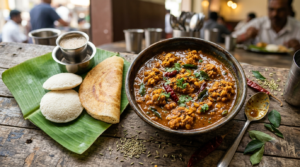
Tamil Nadu hotel-style vadacurry — crumbled chana dal vadai in a spiced onion-tomato-coconut gravy.
Vadacurry Recipe Ingredients List at a Glance
- What it is: masala vadai (Bengal gram fritters) simmered in onion-tomato-coconut gravy.
- Best paired with: idli, dosa, poori, chapati, or steamed rice.
- Signature flavour: fennel seeds (sombu) in the vadai, plus a coconut-poppy paste.
- Time: about 2 hours soaking, then roughly 45-50 minutes of active cooking.
- Makes: 4 servings.
The Vadacurry Recipe Ingredients List Origin Story
Vadacurry started as a thrift dish, not a planned recipe. The story most Tamil cooks repeat is simple. A small hotel chef had leftover masala vadai from the night before, so he crumbled them into a fresh onion-tomato masala the next morning. Customers loved it, and it became a fixed breakfast item.
Because of that origin, the dish is still strongest in and around Chennai, and the steamed street version from Saidapet is especially famous. This history matters when you cook it. Vadacurry is meant to soak up gravy, so the vadai should stay slightly coarse rather than smooth, which is exactly why the measurements below tell you to grind the dal only to a rough texture.
Vadacurry Recipe Ingredients List With Exact Quantities
This Vadacurry Recipe Ingredients List is split into three groups: the vadai, the curry base, and a few optional enhancers. Measure everything before you start, because the cooking moves quickly once the tempering begins.
Ingredients List for the Vadai (Lentil Dumplings)
- ½ cup chana dal (split Bengal gram), about 100 g, soaked
- 2 dried red chilies, adjusted to your spice level
- 1 tsp fennel seeds (sombu / saunf)
- ¼ tsp turmeric powder
- ½ tsp salt
- 2 tbsp finely chopped onion
- 1 tsp rice flour (optional, for extra crispness)
- 1.5 cups oil for deep frying, more as needed
Ingredients List for the Curry Base
- 2 tbsp vegetable oil or groundnut oil
- 1 tsp mustard seeds
- 10-12 curry leaves
- 1.5 cups finely chopped onion
- 2 tsp ginger-garlic paste
- 2 cups finely chopped tomatoes, about 240 g
- ½ tsp turmeric powder
- 1.5 tbsp sambar powder, or to taste
- 1.5 tsp salt, adjusted to taste
- ½ cup grated fresh coconut, for the masala paste
- ½ tsp poppy seeds (optional, for a richer body)
- 1¼ to 1½ cups water, for the gravy
- 2 tbsp chopped coriander leaves, to garnish
Optional Enhancers
- 2 green chilies, slit, for extra heat
- ¼ cup coconut milk, for a creamier finish
- 1 tbsp lemon juice, for brightness
- ¼ tsp kalpasi (stone flower), for that hotel aroma
Vadacurry Recipe Ingredients List: Quick Card
Here is the timing behind this Vadacurry Recipe Ingredients List at a glance, so you can plan the soak and the cooking around your morning.
| Detail | Value |
|---|---|
| Prep time | 30 mins (plus 2 hours soaking) |
| Cook time | 50 mins |
| Servings | 4 people |
| Difficulty | Medium |
Vadacurry Recipe Ingredients List: Cooking Method
The method splits neatly into two stages. First you fry the vadai, then you build the gravy and bring the two together. Keep both stages close in time, because the vadai taste best when they go into the gravy warm and freshly fried.
Frying the Vadai
- Wash the chana dal well, then soak it in 2 cups of water for at least 2 hours. This softens the lentils so they grind evenly.
- Drain the dal fully, then pulse it with the red chilies and fennel seeds into a coarse batter without water. Now stir in the turmeric, chopped onion, rice flour, and salt, and rest it for 5 minutes.
- Heat oil over medium heat while the batter rests. Wet your palms, shape small balls, and flatten them slightly.
- Fry the vadai in batches until golden on both sides, about 3-4 minutes each. Drain them on paper and set aside.
Making the Curry Gravy
- Heat 2 tbsp oil and crackle the mustard seeds. Then add the curry leaves and onions, and cook until soft, about 3 minutes.
- Stir in the ginger-garlic paste until the raw smell fades. After that, add the tomatoes, turmeric, salt, and sambar powder, and cook until soft, about 5-6 minutes.
- While that cooks, grind the coconut and poppy seeds with ¼ cup water to a smooth paste. Stir this paste into the tomato mixture for 2 minutes.
- Pour in 1¼ to 1½ cups water and bring it to a boil. Add the chopped fried vadai, then simmer on low for 10 minutes so they soak up the flavours. Garnish with coriander and serve hot.
Fried vs Steamed: Which Vadai to Use?
Both versions are authentic, so the choice comes down to taste and health. Hotels traditionally use deep-fried vadai because the crisp edges soak gravy beautifully. Home cooks who want fewer calories often steam the same batter instead.
| Method | Texture | Best for |
|---|---|---|
| Deep-fried | Crisp, gravy-soaked | Authentic hotel taste |
| Steamed | Soft, lighter | Lower-oil, breakfast |
| Pan-fried (paniyaram pan) | Medium, browned | A middle path |
To steam, spoon the same batter into greased idli moulds and steam for 10-15 minutes. Once cool, crumble the cakes and follow the gravy steps as usual. The steamed route saves oil while keeping the fennel-forward flavour intact.
If you are cooking for children or elders, steamed vadai sit gentler on the stomach while carrying the same spice. Either way, the gravy stays the real star of the plate.
What Makes This Vadacurry Recipe Ingredients List Hotel Style
The difference between a flat home curry and a hotel-grade one comes from timing and a few extras. These are the details cooks at busy Chennai messes rely on, and they are easy to copy at home.
- Add vadai last: drop them in only for the final 10-12 minutes so they stay moist, never mushy.
- Use kalpasi: a pinch of stone flower in the tempering gives that unmistakable hotel aroma.
- Keep the grind coarse: a slight bite in the vadai beats a smooth paste every time.
- Mix your onions: many restaurants use both sliced and chopped onion for depth.
- Finish with coconut milk: a splash at the end adds gentle sweetness and body.
Substitutions and Storage
Smart Swaps in the Vadacurry Recipe Ingredients List
You can adapt this Vadacurry Recipe Ingredients List without losing its character. For a lighter dish, steam the vadai batter rather than frying it. Swap the coconut paste for ½ cup coconut milk when you want a creamier gravy. Use gluten-free asafoetida if you need to, since regular asafoetida usually contains wheat flour.
Storage Tips
Store leftover gravy separately in the fridge for up to 2 days, and reheat it gently before adding vadai. The gravy thickens as it cools, so loosen it with a little water. If you fried the vadai fresh, the finished dish keeps for 2 days; if you used leftover vadai, eat it within 1 day for the best texture.
How to Scale This Vadacurry Recipe Ingredients List
Doubling this Vadacurry Recipe Ingredients List is easy, though one part needs care. Multiply the vadai and gravy items evenly when you cook for eight instead of four. The spice, however, does not always scale in a straight line, so add the sambar powder and chilies gradually and taste as you go.
Tomatoes are the other variable to watch. A larger batch holds more moisture, so cook the gravy a few minutes longer before you add water. When you scale up for a crowd, fry the vadai in several small batches rather than one crowded panful, since crowding drops the oil temperature and leaves them greasy.
Vadacurry Recipe Ingredients List Nutrition (Approximate)
These figures are estimates for the deep-fried version and will shift with the oil each vadai absorbs and your portion size. The steamed version runs noticeably lower in fat and calories.
| Nutrient | Approx. per serving |
|---|---|
| Calories | 220-300 kcal |
| Fat | 10-14 g |
| Carbohydrates | 24-28 g |
| Protein | 7-9 g |
| Fiber | 3-5 g |
Chana dal drives most of the protein and fibre in this Vadacurry Recipe Ingredients List, which is why the dish feels filling despite its modest size. Treat these numbers as a guide, not a lab reading.
Common Vadacurry Recipe Ingredients List Mistakes
Most vadacurry failures trace back to a handful of slips. Fix these and the dish rarely goes wrong.
- Grinding too smooth: the vadai turn dense and will not soak gravy well.
- Adding vadai too early: long simmering makes them fall apart and go mushy.
- Skipping fennel: without sombu, the curry loses its signature aroma.
- Thin, watery gravy: let the tomatoes cook down fully before you add water.
Frying safely matters too. Keep the oil at a steady medium heat, and never overcrowd the pan, since a rush of cold batter can make hot oil splutter.
Before You Cook: Key Takeaways
Vadacurry rewards preparation more than skill. Soak the dal ahead, grind it coarse, and hold the vadai until the final few minutes. Choose fried vadai for a true hotel taste or steamed for a lighter plate. Stick to the Vadacurry Recipe Ingredients List above and you will have a fragrant, restaurant-style gravy that pairs perfectly with soft idli or a crisp dosa.
Vadacurry Recipe Ingredients List: FAQ
Can I make Vadacurry without deep frying?
Yes. Steam the vadai batter in greased idli moulds for 10-15 minutes, then crumble the cakes into the curry. This cuts the oil sharply while keeping the taste close to the fried version. Many Tamil homes prefer this lighter route, especially for a weekday breakfast.
What is best served with Vadacurry?
Vadacurry pairs best with idli, dosa, poori, chapati, or steamed rice. The spicy, coconut-rich gravy suits soft idli particularly well, which is why it is such a common hotel breakfast. It also works as a side for set dosa and parotta.
Why is fennel used in vadai batter?
Fennel seeds (sombu) give vadacurry its subtle sweet-anise aroma, and they also aid digestion. This is a defining flavour, not an optional one, so most South Indian vadai recipes include it. Skip it and the curry tastes noticeably flatter.
Can I use leftover masala vada for vadacurry?
Absolutely, and that is how the dish was invented. Simply crumble day-old masala vadai into the fresh gravy during the final simmer. Because leftover vadai are drier, eat the finished curry within one day for the best texture.
How do I stop the vadai from getting mushy?
Add the vadai only in the last 10-12 minutes and keep the flame low. A gentle simmer lets them absorb gravy while holding their shape. Long, rolling boils are what break them apart.
What is kalpasi and do I need it?
Kalpasi, or stone flower, is a dried lichen that adds a deep, earthy aroma common in Tamil hotel cooking. It is optional, yet a small pinch pushes the curry toward that authentic restaurant flavour. You can find it in most South Indian spice shops.
Is vadacurry spicy, and can I make it milder?
The traditional version carries moderate heat from red chilies and sambar powder. To soften it, cut back the dried chilies, drop the slit green chilies, and stir in a little extra coconut milk. The dish stays flavourful even at a gentler spice level.
Can I prepare vadacurry ahead for guests?
Yes. Make the gravy in advance and fry or steam the vadai closer to serving time. Keep them separate, then combine and simmer briefly just before the meal. This keeps the vadai soft rather than soggy.
For more background on the dishes vadacurry sits alongside, you can read about South Indian cuisine and the versatile chana dal that forms its base. If you enjoy this, try the leftover-vada version of vadacurry, the Saravana Bhavan style vada curry, or a warm bowl of foxtail millet pongal to serve alongside.