Saravana Bhavan Vada Curry Recipe: Fried & Steamed
Saravana Bhavan vada curry recipe here means a home-kitchen interpretation with two separate ways to cook the chana dal vadas: deep-fried or steamed. The useful target is not an “exact restaurant copy.” It is a coarse, fully cooked vada that absorbs a fennel-scented onion-tomato gravy without turning into paste.
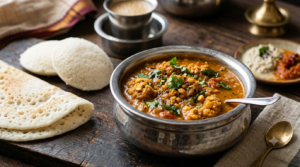
South Indian vada curry served with soft tiffin, with both fried and steamed vada methods explained in the recipe.
Recipe note: Bhimas Cook is not affiliated with Saravanaa Bhavan. This page is an independent home recipe inspired by the style associated with South Indian vegetarian restaurants; we link the official Saravanaa Bhavan website only for brand reference.
Saravana Bhavan vada curry recipe at a glance
- Main dal: chana dal, also called split Bengal gram.
- Texture target: coarse vada pieces that soften in gravy but still keep some structure.
- Fried method: firmer edges and slower softening in the curry.
- Steamed method: softer pieces that absorb gravy faster and need gentler handling.
- Best pairings: set dosa, idli, plain dosa, appam, or idiyappam.
- Testing status: a controlled side-by-side kitchen trial is still pending for this refreshed version.
The biggest practical difference is when the vadas enter the gravy. Fried pieces can simmer a little longer because their surface is firmer. Steamed pieces should go in later, since they soften quickly and can break if stirred too much.
What this recipe does and does not claim
This version uses familiar Tamil Nadu vada-curry building blocks: chana dal, fennel, curry leaves, onion, tomato, ginger-garlic, whole spices, and fresh coriander. It aims for the mild, aromatic style many diners connect with Chennai vegetarian tiffin food.
This refresh does not use a published Saravanaa Bhavan kitchen formula. Therefore, do not describe coconut, poppy seeds, mint, kalpasi, or any other ingredient here as a verified restaurant “secret.” Home and hotel-style recipes vary, so the safest approach is to treat optional additions as variations rather than proof of authenticity.
Ingredients for Saravana Bhavan vada curry recipe
These quantities are a practical starting formula for about four servings. Since the refreshed recipe still needs a documented kitchen trial, follow the texture cues as closely as the measurements. Dal age, tomato moisture, pan width, and heat level can all change the final result.
For the chana dal vada mixture
- 1 cup chana dal
- 2 dried red chillies
- 1 teaspoon fennel seeds
- 8 to 10 curry leaves
- Salt to taste
- Water only if needed while grinding
- Oil for deep-frying, if using the fried method
- A little oil for greasing, if using the steamed method
For the curry gravy
- 2 tablespoons oil
- 1/2 teaspoon mustard seeds
- 1 teaspoon cumin seeds
- 1 small bay leaf
- 3 to 4 cloves
- 1 small piece cinnamon
- 1 large onion, finely chopped
- 1 or 2 green chillies, slit
- 1 tablespoon ginger-garlic paste
- 2 large tomatoes, finely chopped
- 1/2 teaspoon turmeric powder
- 1 teaspoon red chilli powder, or to taste
- 1 teaspoon coriander powder
- Salt to taste
- Hot water as needed for the gravy
- Fresh coriander leaves to finish
- A few mint leaves, optional
Optional coconut paste
For a fuller gravy, grind 2 tablespoons grated coconut with a little water into a smooth paste. This changes the body and sweetness of the curry, so add it only if you like that finish. It is an optional home-style variation, not a verified Saravanaa Bhavan requirement.
Prepare the dal correctly before either method
Wash the chana dal well, then soak it until the grains look plump and split easily when pressed. Two to three hours is a useful working range, although older dal may need longer. Drain it thoroughly because excess surface water can turn the mixture pasty.
First pulse the red chillies, fennel, curry leaves, and salt. Add the drained dal next, then use short pulses. Stop while small broken pieces of dal are still visible.
The correct mixture should feel grainy when pinched. It should hold together with gentle pressure, yet it should not smear like hummus. If it looks smooth and sticky, the grind has gone too far for the texture this curry needs.
Fried Saravana Bhavan vada curry recipe method
Use the fried method when you want vada pieces that keep their edges longer in the gravy. The outside should become crisp and evenly golden, while the centre stays coarse and fully cooked. A darker, harder crust is not better because it takes longer to soften.
- Heat the oil over medium heat. Drop in a tiny pinch of batter. It should rise with steady bubbles rather than darken immediately.
- Shape small rough patties. Keep them thinner than a thick snack-style masala vada so the centre cooks before the outside gets too dark.
- Fry in batches. Do not crowd the pan, because a sudden drop in oil heat can make the vadas greasy and uneven.
- Check one from the centre. The edge should feel firm. When broken open, the inside should look cooked and grainy rather than wet, glossy, or doughy.
- Cool briefly, then break. Tear each vada into two or three rough pieces. The uneven surfaces give the gravy more places to cling.
For this Saravana Bhavan vada curry recipe, do not chase a very dark, crunchy finish. You want enough crust to keep the pieces intact, but not so much that the centres stay dry after simmering. The finished fried vada should soften in gravy while retaining some shape.
Steamed Saravana Bhavan vada curry recipe method
Use the steamed method when you want a softer curry without deep-frying the vadas. The cooked mixture should feel firm enough to lift from the plate and break cleanly. It should not smear when pressed, because a sticky centre usually means it needs more steaming.
- Grease an idli plate or shallow steaming tray. Use only a thin film of oil so the dal mixture releases cleanly.
- Spoon in shallow mounds. Avoid thick lumps because steam reaches the centre more slowly.
- Steam until the portions firm up. Start checking around the 10-minute mark. The top should look dry, while a piece should lift without collapsing.
- Cool before breaking. Warm steamed vadas are delicate, so a short rest makes them easier to handle.
- Break into chunky pieces. Keep the pieces larger than crumbs because very small bits disappear into the gravy quickly.
If the middle feels sticky or pasty, return the batch to the steamer. If it feels dry and hard, the batch has gone too far. The useful target is firm, moist, grainy, and easy to break with your fingers.
For a version built entirely around this method, see the site’s vada curry without frying guide.
Fried vs steamed vadas for this curry
| Method | Before gravy | After gravy | Best handling |
|---|---|---|---|
| Deep-fried | Crisp edge, coarse centre | Soft centre with firmer pieces | Add earlier and simmer gently |
| Steamed | Firm-set, soft, no crust | Very tender and absorbent | Add later and fold gently |
Do not call either route “more authentic” here because this is not an official restaurant formula. The practical difference is texture. Choose fried vadas for more distinct pieces, or choose steamed vadas for a softer curry that blends into the gravy more quickly.
Build the gravy before adding the vadas
Heat 2 tablespoons oil in a wide pan, then add mustard seeds. When they begin to crackle, add cumin, bay leaf, cloves, and cinnamon. Let the spices become fragrant, but do not let them scorch.
Add the onion and green chillies, then cook until the onion softens and loses its raw bite. Stir in the ginger-garlic paste, and cook until its sharp smell fades. Next, add the tomatoes, turmeric, chilli powder, coriander powder, and salt.
Cook until the tomatoes soften into the masala and the mixture looks glossy rather than watery. Add hot water gradually, because the vada pieces will absorb liquid later. If you use the optional coconut paste, add it now and simmer until the raw coconut note softens.
When to add vadas to Saravana Bhavan vada curry recipe
In the fried Saravana Bhavan vada curry recipe method, add the pieces after the gravy is fully cooked but still a little looser than your serving consistency. Simmer gently until the centres soften and the sauce clings to the rough surfaces. Stop before the pieces lose all structure.
For steamed vadas, wait until the gravy is almost ready. Fold the pieces through with a flat spoon, then keep the simmer gentle. They are ready when the outside has absorbed gravy but you can still lift each piece without collapse.
This timing difference is the most useful upgrade in the refresh. Treating fried and steamed vadas identically can create opposite problems: fried pieces may stay hard, while steamed pieces can dissolve into a thick dal paste.
How to judge the final consistency
In this Saravana Bhavan vada curry recipe, the curry should be spoonable rather than dry or soup-thin. Drag a spoon across the bottom of the pan. The gravy should close back slowly, while soft vada pieces remain visible.
Keep it slightly looser if the curry will sit before serving, since the dal keeps absorbing liquid after the heat goes off. This effect is especially noticeable with steamed pieces. If the pan tightens too much, add a small splash of hot water and fold gently.
Common mistakes with Saravana Bhavan vada curry recipe
- Grinding the dal smooth: the vadas turn dense and lose the coarse bite that helps them absorb gravy.
- Leaving the soaked dal wet: excess water makes shaping harder and can create a soft, pasty centre.
- Frying on very high heat: the outside darkens before the middle cooks.
- Steaming thick portions: the surface sets while the centre can remain sticky.
- Adding steamed pieces too early: they can break down before the gravy is ready.
- Making the gravy too thick first: the dal then absorbs more liquid and leaves the pan stodgy.
- Calling one spice a restaurant secret: without a published formula, that claim goes beyond what we can verify.
Vada curry is not medu vada curry
This recipe uses chana dal. Medu vada uses urad dal, which creates a softer and airier fritter. That swap changes both the flavour and the speed at which the vada absorbs gravy.
If you already have urad-dal vadas, follow the separate medu vada curry recipe. Those vadas need gentler simmering because their spongy texture softens faster than coarse chana-dal pieces.
Can leftover masala vada be used?
Yes, leftover masala vada can be useful when it is still fresh and you stored and handled it safely. Break it into large pieces, then add it to a fully cooked gravy and watch the texture closely. Already-fried vadas may soften at a different rate from a fresh batch.
If that is the route you want, use the site’s leftover vada curry method. It keeps that shortcut separate from this page, which focuses on making the chana dal component from scratch.
Serving Saravana Bhavan vada curry
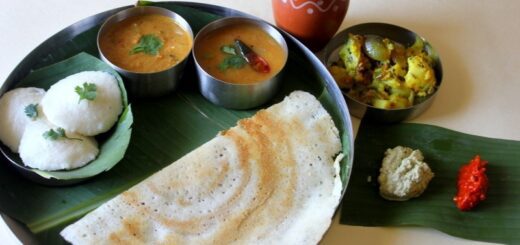
The Saravana Bhavan vada curry recipe works especially well with set dosa because soft dosa absorbs the gravy without competing with it. Idli behaves in much the same way. Plain dosa, appam, and idiyappam also work when the gravy remains loose enough to spoon.
Taste again only after the vadas have spent a little time in the pan, since the dal can mute salt and chilli as it absorbs sauce. Finish with fresh coriander. Mint is optional, so use it lightly if you want a fresher aroma without changing the base character too much.
Food-safety note for home cooking
Cook the chana-dal mixture thoroughly, especially when steaming because colour cannot show whether the centre has set. Serve the curry hot and use clean utensils. For general home-food handling guidance, refer to the Food Safety and Standards Authority of India.
This refresh does not publish fixed refrigerator or freezer life because the page does not have a tested storage protocol for this specific recipe. Cooling speed, fridge temperature, handling, and whether the vadas sit in the gravy all affect quality and safety.
Before you cook this version
The refreshed Saravana Bhavan vada curry recipe uses observable texture rather than an exact restaurant-copy claim. Keep the dal coarse, cook the vadas fully, then adjust when they enter the gravy depending on the method.
A documented side-by-side kitchen trial should be the next editorial step. Record soak time, batter feel, steaming time, frying behaviour, water added to the gravy, and the texture after five and ten minutes. Those notes can later replace the remaining broad ranges with tested Bhimas Cook guidance.
Frequently asked questions
Is this the official Saravana Bhavan vada curry recipe?
No. This is an independent home-kitchen interpretation inspired by the style associated with South Indian vegetarian restaurants. Bhimas Cook is not affiliated with Saravanaa Bhavan, and this page does not use a published restaurant formula.
Should I fry or steam the vadas?
Fry them if you want firmer pieces that hold shape longer in the gravy. Steam them if you prefer a softer result without deep-frying. The gravy can stay broadly the same, but the point at which you add the vadas should change.
How coarse should the chana dal be?
The mixture should show small broken pieces of dal instead of looking smooth. When pinched, it should hold together but still feel grainy. A smooth paste gives a denser vada and removes the texture contrast this curry needs.
Why did my steamed vadas break in the gravy?
They may have been under-steamed, broken too small, or added too early. Steam until each piece lifts cleanly, let it cool briefly, then break it into chunks. Add steamed pieces near the end and stir gently.
Why are my fried vadas still hard after simmering?
You may have fried them too dark or shaped them too thick. Aim for a golden crust with a cooked, coarse centre. Fried pieces need more simmering time than steamed ones, but very hard vadas may never soften evenly.
Do I need coconut in the gravy?
No. The basic onion-tomato gravy works without coconut. A small coconut paste can make the sauce fuller and smoother, but treat it as an optional variation rather than a verified restaurant ingredient.
Can I use urad dal instead of chana dal?
Not if you want this style of vada curry. Urad dal produces medu vada, which is softer, airier, and more absorbent. It can still make a good curry, but the result is a different preparation and needs gentler handling.
What should I serve with Saravana Bhavan vada curry?
Set dosa, idli, and plain dosa are the easiest matches. Appam and idiyappam also work well. Keep the gravy slightly looser for soft tiffin items because they absorb sauce quickly.
Has this refreshed recipe been kitchen-tested?
Not yet as a controlled fried-versus-steamed comparison. Therefore, the refresh uses visual texture cues and cautious time ranges instead of exact restaurant-taste claims. A documented kitchen trial is still needed before publishing tighter timing or texture statements.