Iyengar Bisibelebath Powder Recipe: Traditional Spice Blend
Iyengar bisibelebath powder is the roasted spice blend that gives Karnataka-style bisi bele bath its deep colour, warm aroma and layered heat. The best results come from roasting each group of ingredients gently, cooling them fully and grinding only after the steam and pan heat have disappeared.
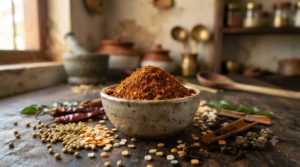
Freshly ground Iyengar-style bisibelebath powder with roasted dals, dried chillies and warm Karnataka spices.
This version keeps the masala focused on the spice powder itself. It uses coriander, roasted dals, two kinds of chilli, warm whole spices, marathi moggu and asafoetida. Family formulas vary, so treat optional poppy seeds and dry coconut as household-style choices rather than fixed rules.
Important recipe note: there is no single codified “Iyengar” powder used by every family. The reliable way to preserve the style is to keep the roasted-dal and spice backbone, avoid raw-tasting masala, and adjust chilli, coconut and poppy seeds to your household preference.
Iyengar Bisibelebath Powder at a Glance
- Prep time: about 10 minutes
- Roasting time: about 15 to 20 minutes
- Cooling time: about 20 minutes
- Texture: fine, dry and free-flowing
- Heat level: medium, with Byadagi chilli for colour and Guntur chilli for heat
- Best use: homemade bisi bele bath, especially no-onion, no-garlic versions
- Storage: airtight jar; keep moisture out and refrigerate for longer aroma retention
Karnataka Tourism describes bisi bele bath as a rice-and-lentil dish mixed with a dedicated masala powder, vegetables and seasoning. MTR Foods also lists Bisibele Bhath Masala as a distinct spice blend, which is why ordinary sambar powder does not give the same result. See the Karnataka Tourism overview and MTR Foods masala range for that broader context.
Ingredients for Iyengar Bisibelebath Powder
This batch makes enough masala for several pots of bisi bele bath. Measure before heating because the roasting stages move quickly once the pan is hot.
| Ingredient | Amount | Why it is here |
|---|---|---|
| Coriander seeds | 1/2 cup | Main body and citrusy aroma |
| Chana dal | 1/4 cup | Nutty depth and body |
| Urad dal | 2 tbsp | Roasted aroma and roundness |
| Byadagi dried red chillies | 12 to 15 | Deep colour with moderate heat |
| Guntur dried red chillies | 5 to 7 | Sharper chilli heat |
| Cumin seeds | 2 tsp | Earthy savoury note |
| Mustard seeds | 1/2 tsp | Subtle pungency |
| Fenugreek seeds | 1/2 tsp | Light bitterness that balances tamarind and jaggery |
| Cinnamon | 2 inches total | Warm sweetness |
| Cloves | 6 | Warm spice and depth |
| Marathi moggu | 2 | Distinct Karnataka-style aroma |
| Poppy seeds | 1 tbsp, optional | Nutty finish and body |
| Asafoetida | 1/2 tsp | Sharp savoury aroma |
| Neutral oil | 2 tsp | Helps the chillies roast evenly |
Why use two kinds of red chilli?
Byadagi and Guntur chillies solve two different jobs. Byadagi gives the powder a richer red colour and a gentler aroma, while Guntur brings stronger heat. Using only a hot chilli can make the blend harsh, while using only a mild chilli can leave the finished bath flat.
If Guntur chillies are too hot for your family, reduce them rather than removing the Byadagi chillies. If Byadagi is unavailable, use another mild, colour-rich dried chilli and adjust the hotter chillies to taste.
Do you need coconut in the powder?
No. Some Karnataka and Iyengar family recipes include dry coconut, while others leave it out of the stored masala. For a batch that keeps its aroma more predictably, add coconut while cooking the bisi bele bath instead of grinding it into the whole storage jar.
If your family version uses coconut in the powder, dry-roast 2 tablespoons separately until crisp. Cool it fully before grinding, then keep the finished masala refrigerated because coconut adds more fat and can lose freshness sooner.
How to Make Iyengar Bisibelebath Powder Step by Step
The key is controlled roasting, not high heat. A heavy kadai or frying pan gives you more time to develop aroma before the dals or chillies scorch.
- Prepare the ingredients. Wipe the chillies if dusty, then measure everything into separate bowls. Keep the asafoetida aside because it goes in during grinding.
- Roast the dals first. Heat the pan on low to medium-low. Add chana dal and urad dal, then roast until evenly golden and nutty. Stir often so the smaller urad dal does not darken too quickly.
- Add the seeds. Stir in coriander, cumin, mustard and fenugreek. Roast until the coriander smells fragrant and the mustard just begins to crackle. Do not take fenugreek to a dark brown colour because it can turn bitter.
- Roast the warm spices. Add cinnamon, cloves and marathi moggu. Stir for about a minute, just until the spices smell stronger.
- Roast the chillies separately. Move the first batch to a plate. Add the oil to the pan, then fry the Byadagi and Guntur chillies on low heat until crisp. They should deepen in colour without black spots.
Finish, cool and grind the masala
- Finish the optional poppy seeds. If using them, dry-roast for a few seconds until lightly aromatic. They can burn fast, so remove them early.
- Cool everything completely. Spread the roasted ingredients on a wide plate. Do not grind while warm because trapped heat can create condensation inside the jar.
- Grind to a fine powder. Add the cooled ingredients and asafoetida to a completely dry mixer jar. Grind in short bursts until fine. Pause if the jar becomes hot.
- Cool once more before storing. Tip the ground masala onto a plate for a few minutes, then transfer it to a dry airtight jar.
The roasting colour to aim for
Chana dal should turn golden rather than deep brown. Coriander should smell sweet and nutty, while the chillies should become crisp without charring. Once any component burns, grinding spreads that bitterness through the entire batch.
A pale blend also tastes unfinished because the dals and seeds have not developed enough roasted flavour. Low heat takes a little longer, but it gives you a much wider margin between raw and burnt.
How Iyengar Bisibelebath Powder Differs from Regular Sambar Powder
Iyengar bisibelebath powder is not simply sambar powder with extra chilli. The bisi bele bath blend usually carries a stronger roasted-dal character and warm spices such as cinnamon and cloves. Marathi moggu also appears in many Karnataka-style versions, while ordinary sambar powder often stays more focused on coriander, chilli, fenugreek and lentil notes.
That difference matters because bisi bele bath combines rice, dal, tamarind, jaggery and vegetables in one pot. The masala must remain noticeable after all those ingredients dilute it. A lighter sambar powder can disappear into the finished dish.
If you want a broader Karnataka-style powder rather than this Iyengar-focused variation, see Bhimas Cook’s Karnataka bisibelebath powder recipe. Keeping the two pages distinct helps each recipe answer a different search intent.
How Much Iyengar Bisibelebath Powder Should You Use?
Start with 2 1/2 tablespoons of Iyengar bisibelebath powder for a pot built around 1 cup rice and 1/2 cup toor dal. Simmer it with the tamarind base, then taste before adding more. Homemade powder can be stronger than packaged masala, so spoon-for-spoon substitution is not always accurate.
| Rice | Toor dal | Powder to start with |
|---|---|---|
| 1/2 cup | 1/4 cup | 1 to 1 1/2 tbsp |
| 1 cup | 1/2 cup | 2 1/2 tbsp |
| 1 1/2 cups | 3/4 cup | 3 1/2 to 4 tbsp |
These are starting points, not rigid rules. Tamarind strength, chilli heat, vegetable quantity and personal taste all change how much masala the pot needs.
When should the powder go into bisi bele bath?
Add the powder after the dal and vegetables are cooked or nearly cooked, then simmer it with tamarind and enough water to loosen the mixture. This gives the spice blend time to hydrate and lose any raw edge without forcing the dal to cook in a strongly acidic liquid.
For a no-onion, no-garlic version, use the powder with Bhimas Cook’s Brahmin-style bisi bele bath. The powder itself contains no onion or garlic, so the final dish can follow that household preference.
Common Mistakes That Flatten the Flavour
- Roasting everything at once: chillies, dals and poppy seeds brown at different speeds. Separate stages give better control.
- Grinding while warm: heat and trapped steam can make the powder clump and dull the aroma.
- Burning fenugreek: a small amount adds balance, but dark fenugreek can make the whole batch bitter.
- Using only one chilli type: you may get colour without heat or heat without colour.
- Adding too much marathi moggu: it is powerful. A small amount gives character without dominating.
- Using a damp spoon: moisture shortens the useful life of any homemade spice powder.
The same slow-roasting logic also applies to other Iyengar spice blends. Bhimas Cook’s Iyengar rasam podi recipe is useful if you want another small-batch powder with clear roasting stages.
Storage and Freshness
Store Iyengar bisibelebath powder in a clean, dry, airtight glass or food-safe container. Keep the jar away from the stove because heat and steam enter quickly when you open it during cooking.
For the best aroma, make a modest batch and use it within several weeks. Refrigeration helps preserve the roasted-spice fragrance longer, especially in warm or humid kitchens. Always use a dry spoon and discard the powder if you notice moisture, mould or an off smell.
If you add dry coconut to the powder, refrigeration becomes even more useful. Coconut contains more fat than the dry seeds and dals, so its flavour can turn stale sooner.
Gluten-free and allergy note
The whole spices and dals in this recipe are naturally gluten-free, but asafoetida can be a problem. Some compounded hing products use wheat flour or other carriers, so check the packet if you need a strict gluten-free masala.
Poppy seeds are optional and availability varies by country. Skip them if they are unavailable or unsuitable for your household; the powder will still work.
Why This Version Keeps the Iyengar Intent Separate
Bhimas Cook already has a broad Karnataka bisibelebath powder page, so this refresh should not compete with it for the same generic query. The useful distinction here is the Iyengar-style, no-onion-no-garlic-friendly spice blend, with marathi moggu, careful dal roasting and household-variation notes.
That separation also avoids a common recipe-site problem: publishing several nearly identical pages that only swap a few words in the title. A reader searching for a generic powder can use the Karnataka page, while someone looking for an Iyengar-style masala gets a focused answer here.
Before You Grind the Next Batch
The strongest Iyengar bisibelebath powder is aromatic, balanced and clean-tasting rather than aggressively hot. Keep the flame low, let the dals turn golden, and cool every ingredient fully before grinding.
Most importantly, do not treat one household formula as the only authentic version. Use this ratio as a dependable base, then adjust Guntur chilli, poppy seeds or dry coconut to match the flavour your family expects.
Iyengar Bisibelebath Powder FAQ
What makes Iyengar bisibelebath powder different?
Iyengar bisibelebath powder usually emphasises roasted dals, coriander, dried chillies, warm spices and asafoetida, with no onion or garlic in the blend. Family versions differ, so ingredients such as poppy seeds, mustard, marathi moggu and dry coconut may change from one home to another.
Can I use this powder for a no-onion, no-garlic bisi bele bath?
Yes. The powder itself contains no onion or garlic, so it suits a no-onion, no-garlic version. Keep the rest of the bisi bele bath recipe aligned with your household practice as well.
Can I replace Byadagi chilli with Kashmiri chilli?
Yes, if Byadagi chilli is unavailable. Use Kashmiri chilli mainly for colour, then adjust the hotter chilli separately because the heat level will differ.
Is marathi moggu compulsory?
No. Marathi moggu gives a distinctive Karnataka-style aroma, but the powder still works without it. Do not replace it with a large amount of another strong spice because that can distort the balance.
Can I use sambar powder instead of bisibelebath powder?
You can make a quick rice-and-dal dish with sambar powder, but the flavour will not be the same. Bisi bele bath masala usually has more roasted-dal depth and warmer spice notes that stand up to rice, dal, tamarind and jaggery.
Why did my homemade powder taste bitter?
Bitterness usually comes from burnt fenugreek, scorched chillies or overly dark dals. Roast on low heat, remove each batch once aromatic, and discard any ingredient that has visibly blackened before grinding.
Why is my powder clumping in the jar?
Clumping usually means the ingredients were still warm or moisture entered the container. Cool the roasted spices and the freshly ground powder completely, then store it with a dry spoon in an airtight jar.
How much powder should I add to one cup of rice?
Start with about 2 1/2 tablespoons for 1 cup rice and 1/2 cup toor dal. Simmer, taste and add more only if needed because homemade batches vary in chilli strength and spice intensity.