MTR Bisibelebath Powder Recipe: Homemade Spice Mix
MTR Bisibelebath Powder Recipe gives you a label-inspired spice blend you can make at home. However, it should not be presented as MTR’s exact formula. This refresh focuses only on the masala powder. Therefore, it no longer duplicates Bhimas Cook’s separate full-dish recipes.
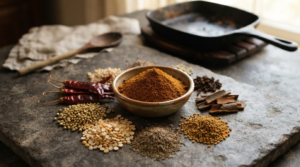
A homemade label-inspired bisibelebath masala made with roasted coriander, urad dal, red chillies and whole spices.
Bhimas Cook is an independent recipe website and is not affiliated with MTR Foods or Orkla India. The MTR name identifies the flavour target only. This homemade blend uses publicly listed pack ingredients as a guide, so it is not a proprietary brand recipe.
MTR Bisibelebath Powder Recipe: What This Copycat Is
The official MTR Foods masala range currently includes Bisibele Bhath Masala. Public retail listings for the 100 g pack reproduce a short ingredient list. It includes coriander, black gram, red chilli, cumin, cassia, fenugreek and clove.
That matters because the older page also used chana dal, cardamom, poppy seed, dry coconut and asafoetida. Those ingredients can make an excellent Karnataka-style powder. However, they do not appear in the current ingredient list reproduced for the MTR pack.
If you want the broader traditional spice profile, use our Karnataka-style homemade Bisibelebath powder. If you already own the commercial packet, use the separate recipe for cooking bisi bele bath with packaged masala. That guide covers the complete meal.
MTR Bisibelebath Powder Recipe at a Glance
- Recipe type: homemade, label-inspired copycat masala
- Batch size: about 100 g before normal roasting and grinding loss
- Active time: about 15 minutes
- Cooling time: 15 to 20 minutes before grinding
- Main flavour: coriander-led, red chilli warmth, roasted urad dal and cassia
- Not included: chana dal, cardamom, poppy seeds, dry coconut and hing
- Best tool: a digital kitchen scale for repeatable ratios
The standout point is simple: a closer MTR-style copycat should begin with the spice family actually listed for the product. Extra traditional spices are optional variations, not evidence of the brand’s undisclosed formula.
MTR Bisibelebath Powder Recipe Ingredients and Ratio
Current retail listings reproduce four percentages on the MTR pack. They show coriander at 34%, red chilli at 21%, cassia at 6% and clove at 1%. The sources reviewed do not disclose percentages for black gram, cumin or fenugreek.
The table below keeps those published percentages exactly in a 100 g home batch. The remaining 38 g is split into a practical Bhimas Cook home ratio for urad dal, cumin and fenugreek. That split is our cooking approximation, not an MTR disclosure.
| Ingredient | Home batch | Why it is here |
|---|---|---|
| Coriander seeds | 34 g | Primary warm, citrusy base |
| Split urad dal | 24 g | Roasted body and nutty depth |
| Dried red chillies | 21 g | Colour and heat |
| Cumin seeds | 12 g | Earthy savoury aroma |
| Cassia or sturdy cinnamon | 6 g | Sweet woody warmth |
| Fenugreek seeds | 2 g | Light bitterness and depth |
| Cloves | 1 g | Strong sweet-pungent finish |
Use whole spices that smell fresh before roasting because grinding cannot revive stale aromatics. For colour with moderate heat, Byadagi chilli is a good choice. The Spices Board of India describes it as a Karnataka variety valued for colour and relatively low pungency.
If your chillies are very hot, keep the 21 g total. Blend mild Byadagi chillies with a smaller share of a hotter variety. That keeps the powder red without making every spoonful aggressively spicy.
Why This Copycat Ratio Is Different From the Old Recipe
The old page called its mixture “authentic MTR-style” while using several spices not listed in the current commercial product description. That wording was too strong because no public source provides MTR’s proprietary manufacturing formula.
| Spice | Current MTR listing | Old Bhimas recipe |
|---|---|---|
| Coriander | Yes | Yes |
| Black gram / urad dal | Yes | Yes |
| Red chilli | Yes | Yes |
| Cumin | Yes | Yes |
| Cassia / cinnamon | Yes | Yes |
| Fenugreek | Yes | Yes |
| Clove | Yes | Yes |
| Chana dal | Not listed | Yes |
| Cardamom | Not listed | Yes |
| Poppy seed | Not listed | Yes |
| Dry coconut | Not listed | Yes |
| Asafoetida | Not listed | Yes |
This does not mean the older spice combination was bad. It belongs under a traditional homemade masala angle rather than an MTR copycat claim. Therefore, the two Bhimas Cook pages now serve different search intents.
How to Roast the MTR Bisibelebath Powder Recipe Without Bitterness
Roast the ingredients in groups because they brown at different speeds. Low heat takes a few minutes longer. However, it protects fenugreek, cloves and chillies from scorching and turning the finished masala harsh.
- Check and weigh everything. Remove chilli stems and any damaged spices. Keep the ingredients in separate bowls because you will add them in stages.
- Roast the urad dal first. Heat a heavy pan on low to medium-low heat. Add the urad dal and stir until it smells nutty and turns light golden.
- Add coriander and cumin. Roast them with the dal while stirring. Stop before the coriander becomes dark brown.
- Add cassia, fenugreek and cloves. These need less time, so keep the heat low and stir continuously for about a minute.
- Add the dried chillies last. Roast just until crisp and aromatic. Avoid smoke because smoked, blackened chilli will dominate the whole batch.
- Cool completely. Spread the roasted mixture on a wide steel plate. Wait until it reaches room temperature before grinding.
- Grind in short pulses. Let the mixer rest between pulses if the jar becomes hot. Heat from long grinding can flatten the aroma.
- Cool again before sealing. If the fresh powder feels warm, spread it for a few minutes. Then transfer it to a clean, completely dry airtight jar.
How dark should the roasted spices become?
Aim for fragrant and lightly deepened in colour, not dark roasted. Urad dal should turn pale gold, while coriander should smell strongly aromatic without looking brown at the edges.
Fenugreek is the warning ingredient because it becomes bitter quickly. If the seeds look very dark or smell burnt, discard that small batch instead of grinding it into the rest.
How Fine Should the Powder Be?
For a smooth bisi bele bath, grind this copycat masala fairly fine. A few tiny flecks of chilli skin are normal. However, large pieces of cassia or dal can feel gritty in the finished dish.
Sieve only if your grinder leaves obvious hard pieces. Regrind the coarse material separately, then mix it back into the fine powder. This way, you keep the stronger whole-spice flavours.
Do not grind warm spices in a sealed jar immediately after roasting. Trapped heat can create condensation later, while FSSAI guidance recommends keeping spices dry and protected from moisture during storage.
How Much of This MTR Bisibelebath Powder Recipe to Use
For this homemade copycat, start with about 2 tablespoons for a medium pot. A useful base is 1 cup rice, 1/2 cup toor dal and roughly 2 cups mixed vegetables. Simmer it with tamarind, then taste before adding more.
The amount is deliberately a starting point because dried chillies vary widely in heat and home grinding changes concentration. Add another 1/2 to 1 tablespoon only after the masala has simmered for a few minutes.
Do not use this spoon ratio as a replacement for the directions on a commercial MTR packet. The branded powder may be more concentrated, so follow your own pack when cooking with the purchased masala.
What if you meant a recipe using the packaged MTR powder?
Use the separate guide for making the complete dish with packaged masala. That page covers rice, dal, vegetables, tamarind, texture and final tempering, while this page is only for making a homemade copycat powder.
MTR Bisibelebath Powder Recipe Storage Guide
Store the finished homemade masala in a clean, dry, airtight jar away from heat and moisture. FSSAI advises dry storage because excess moisture can support mould growth and spoil aroma.
This recipe intentionally leaves out dry coconut, so there is less added fat to turn stale. Even so, home-ground spice aroma fades over time. Therefore, make a small batch you can finish within several weeks.
In a humid kitchen, refrigeration can help protect aroma, but the container must remain tightly closed. Always use a dry spoon, and discard the powder if it develops damp clumps, visible mould or a musty smell.
Adjusting the MTR Bisibelebath Powder Recipe Flavour
This ratio is a starting point, so small changes are reasonable when your chilli batch or spice quality differs. Adjust only one ingredient at a time because several strong spices can quickly blur the coriander-led profile.
- For more red colour: use more Byadagi chilli within the same 21 g chilli weight.
- For less heat: choose milder red chillies rather than reducing the chilli weight sharply.
- For deeper roast: toast urad dal slightly longer, but keep fenugreek and cloves light.
- For a traditional Karnataka profile: use the separate homemade powder recipe with optional coconut, cardamom and other regional additions.
- For a vegan dish later: the powder itself contains no ghee. Use oil instead when you cook the final bisi bele bath.
Common Mistakes With MTR-Style Homemade Powder
The powder tastes bitter
Burnt fenugreek, cloves or chillies are the usual causes. Roast on lower heat next time, and add the strongest whole spices near the end rather than from the beginning.
The powder tastes flat
Old coriander or cumin can smell dull even before roasting. Fresh whole spices should release a clear aroma as soon as they warm. Therefore, replace stale stock instead of simply roasting longer.
The powder is too hot
Keep the chilli weight steady but shift toward a mild, high-colour chilli such as Byadagi. The Spices Board notes its strong colour characteristics. Therefore, it works well when you want redness without extreme heat.
The powder feels gritty in the dish
Cool the spices fully and grind in smaller batches. A packed mixer jar leaves larger pieces, while pulsing a half-full jar usually gives a more even powder.
Before You Make a Batch
MTR Bisibelebath Powder Recipe is a homemade approximation inspired by a branded commercial masala. This page uses publicly listed ingredients as its starting point. That distinction avoids an exact-formula claim nobody outside the manufacturer can verify.
Use the gram ratio when repeatability matters, roast gently, cool before grinding and keep the jar dry. If you want a more ornate traditional Karnataka masala instead, the site’s dedicated homemade powder page is the better match.
Frequently Asked Questions
Is the MTR Bisibelebath Powder Recipe the exact brand formula?
No. MTR does not publish its proprietary manufacturing formula in the sources reviewed here. This is a label-inspired home copycat that uses the listed ingredient family and published percentages where available.
Why does this recipe not use chana dal?
The current MTR pack ingredient list reproduced by retailers names black gram, not chana dal. Chana dal is common in many homemade Karnataka powders, but this page stays closer to the current commercial ingredient list.
Why are cardamom and dry coconut missing?
They are not part of the current ingredient list reproduced for the MTR Bisibele Bhath Masala pack. Add them only if you want a broader homemade Karnataka flavour rather than a closer label-inspired copycat.
Can I use cinnamon instead of cassia?
Yes, although the current product listing specifically names cassia. Use a sturdy cinnamon stick if cassia is unavailable, but the aroma may be slightly softer and sweeter.
Can I make this powder without a kitchen scale?
Yes, but a scale gives much more repeatable results because whole chillies, cloves and broken cassia vary greatly by volume. If you use spoons, record your own successful batch so you can repeat it later.
Should I add asafoetida to the powder?
You can add hing when cooking the final dish, especially in the tempering. This copycat leaves it out because asafoetida does not appear in the current reproduced MTR ingredient list.
How long does homemade bisi bele bath powder stay fresh?
There is no single reliable home shelf-life because moisture, roasting and storage conditions differ. Keep it airtight and dry, make smaller batches, and use aroma plus visible condition as your quality check.
Is this powder the same as MTR Bisibele Bhath Paste?
No. Powder is a dry spice blend, while paste is a wet seasoned product and needs different quantities. If you have the paste format, use the separate guide for preparing the dish with the paste version instead.
Where can I check whether MTR still sells Bisibele Bhath Masala?
Check the official MTR Foods masala powder range or the current Orkla India store. Product availability and pack formulation can change. Therefore, your own pack label remains the best source for ingredients and cooking directions.
Why use Byadagi chilli for the copycat powder?
Byadagi chilli is associated with Karnataka and is valued for high colour with lower pungency than many hotter chilli types. See the Spices Board of India chilli guide for the variety description.
What is the safest way to store homemade ground spices?
Keep them in a clean, dry, covered container away from moisture and heat. The FSSAI spices guidance stresses dry storage because unsuitable humidity can support mould growth.