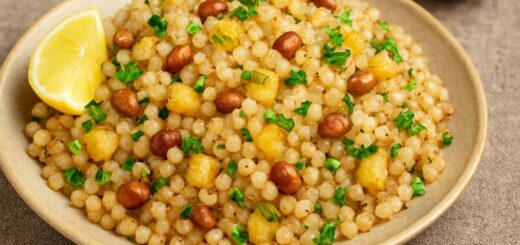
Rava Upma Without Curd: Wheat Rava Breakfast Recipe
Rava upma without curd is an easy South Indian breakfast you can make with coarse wheat rava, without soaking or fermentation. The key is to use the right wheat rava, bring the seasoned water to a full boil, and add the grain slowly. This method gives you soft, separate grains instead of a pasty or dry upma.
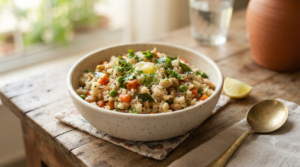
Soft rava upma without curd made with coarse wheat rava, vegetables and traditional South Indian tempering.
Curd is not required for upma because the dish gets its texture from water absorption, gentle cooking, and a short rest. This rava upma without curd keeps the familiar mustard, dal, curry leaf, onion, carrot, and pea tempering while giving you clear fixes for water ratio, lumps, and reheating.
Rava Upma Without Curd at a Glance
This rava upma without curd uses one cup of coarse wheat rava and three cups of water for a soft, home-style result. You can reduce the water slightly if your rava is fine or you prefer firmer grains. The full recipe takes about 30 minutes from chopping to serving.
- Prep time: 10 minutes
- Cook time: about 20 minutes
- Yield: 3 to 4 servings
- Best texture: soft, moist, and separate rather than dry
- Curd needed: no
- Diet: vegetarian; contains wheat and therefore gluten
If you want a different quick breakfast, Bhimas Cook also has an Andhra pesarattu recipe that uses green gram and needs no fermentation.
What Wheat Rava Should You Use?
For this dish, use coarse wheat rava sold as godhuma rava, broken wheat, cracked wheat, or dalia. Product names vary by region, so look at the grain rather than relying only on the front label. You want small, coarse wheat pieces, not fine Bombay rava or sooji.
That difference matters because fine semolina cooks much faster and needs less water. Coarser broken wheat absorbs more water and stays pleasantly chewy. If your packet says whole wheat, that also tells you more about the grain than the word “rava” alone.
When buying packaged rava, check the ingredient list and storage directions. FSSAI’s Eat Right India label guide also recommends checking ingredients, fibre, dates, and storage information on packaged foods.
Ingredients for Rava Upma Without Curd
The ingredient list stays simple because the flavour comes from the tempering. Carrot and peas add colour and texture, while lemon and coriander brighten the finished dish. You can leave the vegetables out if you want a plainer breakfast.
| Ingredient | Quantity | Purpose |
|---|---|---|
| Coarse wheat rava | 1 cup | Main grain |
| Water | 3 cups | Soft cooking ratio |
| Oil or ghee | 2 tbsp | Tempering and flavour |
| Mustard seeds | 1 tsp | Tempering |
| Cumin seeds | 1/2 tsp, optional | Warm aroma |
| Urad dal | 1/2 tsp | Light crunch |
| Chana dal | 1 tsp | Nutty bite |
| Onion | 1 small, finely chopped | Sweet savoury base |
| Green chillies | 1 to 2, slit | Heat |
| Ginger | 1 tsp, finely chopped | Fresh aroma |
| Carrot | 1/2 cup, small dice | Vegetable texture |
| Green peas | 1/2 cup | Vegetable texture |
| Curry leaves | 8 to 10 | Tempering aroma |
| Salt | to taste | Seasoning |
| Coriander leaves | 2 tbsp, chopped | Fresh finish |
| Lemon | 1/2, optional | Acidic finish |
For a nuttier version, add two tablespoons of peanuts with the dals and fry them until crisp. If you want an oil-free variation instead, use the separate wheat rava upma without oil method rather than simply removing oil from this tempering.
How to Make Rava Upma Without Curd
The most reliable order is roast, temper, cook the vegetables, boil the water, then add the rava. Do not add the wheat rava before the water boils because the grains can settle and clump. Keep a spatula ready before you start pouring.
1. Dry-Roast the Wheat Rava
Heat a heavy pan over medium-low heat and add the wheat rava. Roast for 3 to 4 minutes, stirring often, until it smells lightly nutty. Do not wait for a deep colour change because over-roasting can make the finished upma taste dry.
Transfer the roasted rava to a plate. If your brand is already sold as roasted wheat rava, you can shorten this step to one minute just to warm it.
2. Make the Tempering
Add oil or ghee to the same pan and heat it over medium flame. Add mustard seeds, then wait until they begin to crackle. Next, add cumin, urad dal, chana dal, curry leaves, green chillies, and ginger.
Stir until the dals turn light golden, since they can burn quickly after that point. This short tempering gives the upma most of its savoury aroma.
3. Cook the Onion and Vegetables
Add the chopped onion and cook until it turns translucent. Then add carrot and peas, and sauté for 2 to 3 minutes. The vegetables do not need to become fully soft now because they will continue cooking in the water.
Frozen peas can go straight into the pan. If you use harder vegetables such as beans, cut them small so they finish at the same time as the wheat rava.
4. Add Water and Season It
Pour in three cups of water and add salt. Increase the heat and bring the mixture to a strong boil. Taste a spoonful of the water carefully; it should be pleasantly seasoned because the rava will absorb that salt.
Once the water boils, reduce the flame slightly so it remains active without splashing. This is the point where the grain goes in.
5. Add Wheat Rava Slowly
Pour the roasted wheat rava in a thin stream while stirring the water continuously. This simple motion prevents most lumps because every small portion gets wet before the next one enters. Do not dump the full cup into the centre of the pan.
After all the rava is mixed in, lower the flame. Stir for about one minute, then stop constant stirring once the mixture begins to thicken.
6. Cover, Cook, and Rest
Cover the pan and cook on low heat for 6 to 8 minutes. Check once near the end and add a splash of hot water only if the grains still feel hard. Different brands and grind sizes absorb water at different speeds.
Turn off the heat and leave the pan covered for 3 to 5 minutes. Then fluff gently, add coriander, and squeeze in lemon if you like a brighter finish.
Water Ratio for Soft or Firm Wheat Rava Upma
There is no single water ratio that works for every packet because “wheat rava” can range from fairly fine semolina-like grains to coarse broken wheat. For rava upma without curd, three cups of water per cup of wheat rava gives a soft breakfast-style texture. Start lower only if you know your rava cooks quickly.
| Rava to water | Expected result | Best use |
|---|---|---|
| 1:2.5 | Firmer, drier grains | Fine-to-medium wheat rava |
| 1:3 | Soft, moist upma | Most medium/coarse wheat rava |
| More than 1:3 | Softer, porridge-like result | Very coarse grain or personal preference |
If your first batch turns firm after cooling, add another quarter cup of water next time. If it turns loose or sticky, reduce the water slightly rather than roasting the grain much longer.
Rava Upma Without Curd: Common Problems and Fixes
Good rava upma without curd depends more on heat and water control than on extra ingredients. Most failed batches come from adding the grain too fast, using the wrong product, or judging the texture before the resting time finishes.
- Lumpy upma: add rava slowly into actively boiling water while stirring.
- Hard grains: the rava needs more water or more covered cooking time. Add hot water, not cold water.
- Mushy texture: reduce water next time and avoid constant stirring after the mixture thickens.
- Raw wheat taste: roast the rava briefly before cooking and give coarse grains enough covered time.
- Burnt bottom: use low heat after adding rava and choose a heavy pan.
- Flat flavour: season the boiling water correctly and do not rush the mustard-dal-curry leaf tempering.
The useful test is the grain itself. If it is tender but the upma still looks slightly loose, rest it covered before changing anything. Wheat rava continues to absorb moisture for a few minutes off the heat.
Can You Make Wheat Rava Upma Without Vegetables?
Yes. Keep the same tempering, water, and cooking method, but leave out carrot and peas. A plain version with onion, ginger, chilli, curry leaves, and lemon still has enough flavour for breakfast.
You can also skip onion for a different style, although that changes the flavour more noticeably. If that is what you need, Bhimas Cook has a separate upma without onion and garlic guide for that dietary preference.
Serving Ideas That Balance the Meal
Serve the upma hot with coconut chutney, peanut chutney, tomato chutney, or a spoonful of podi. Lemon works well when you want something lighter. A side of plain curd is optional for serving, but curd is not needed to cook the upma itself.
If breakfast needs more protein, pair the upma with a modest portion of curd, milk, sprouts, roasted peanuts, or another protein food that suits your diet. FSSAI’s Eat Right guidance encourages balanced meals that combine cereals with protein foods, vegetables, and other food groups rather than treating one grain dish as a complete diet on its own.
For another broken-wheat meal with a different texture, the site’s masala daliya khichdi combines dalia with pulses and vegetables in a one-pot format.
Storage and Reheating
For best texture, cool leftover upma promptly and refrigerate it in a covered container. It usually tastes best within 1 to 2 days because the grains become firmer as they sit. Add one or two teaspoons of water before reheating so steam can loosen the texture.
For food safety, do not leave cooked leftovers at room temperature for long periods. USDA leftover guidance recommends refrigerating leftovers promptly and generally using refrigerated leftovers within 3 to 4 days. Reheat only the portion you plan to eat.
You can freeze cooked upma if needed, although the vegetables and grain may soften after thawing. For this reason, refrigeration is the better choice when you expect to finish the batch soon.
Nutrition and Health Notes
Wheat rava provides carbohydrate and, depending on the product, may contribute fibre and other nutrients. However, not every product labelled “wheat rava” is the same as whole-grain broken wheat. Check the ingredient list if whole-grain content matters to you.
This dish also contains gluten because it is made from wheat. People with coeliac disease or a medically diagnosed wheat allergy should not treat wheat rava upma as a gluten-free breakfast.
Avoid calling any upma automatically “diabetic-friendly” because blood glucose response depends on the grain, portion size, vegetables, added fat, and the rest of the meal. If you manage diabetes, use your clinician or dietitian’s advice for portions and meal composition.
Why This No-Curd Method Works
Curd is common in some instant batters, but upma does not need acidity or fermentation to set. Wheat rava softens because hot water moves into the grain during cooking. The covered rest then finishes hydration without extra stirring.
That is why the sequence matters more than adding dairy. Roast lightly for flavour, season the water, pour the rava slowly, cook covered, and rest before fluffing. Once you control those five points, rava upma without curd becomes very consistent.
Before You Serve
Fluff the upma only after its short rest, then taste for salt and lemon. If it feels slightly tight, fold in a tablespoon of hot water and cover for another minute. If it is already soft, serve it immediately rather than stirring it repeatedly.
With rava upma without curd, the most important takeaway is simple: use coarse wheat rava, keep the water boiling during addition, and adjust the ratio to your brand. Those small choices matter more than adding curd or extra ingredients.
Frequently Asked Questions
Does wheat rava upma need curd?
No. Wheat rava upma cooks with water, so curd is not required for texture or binding. You can serve curd on the side if you enjoy it, but the cooking method works without any dairy.
What is the best water ratio for wheat rava upma?
Start with about three cups of water for one cup of medium or coarse wheat rava when you want a soft result. If your rava is fine, begin closer to 2.5 cups because finer grains usually absorb water faster.
Should I wash wheat rava before making upma?
Usually, dry-roasted packaged wheat rava does not need washing, but follow the packet directions. If you rinse coarse broken wheat, drain it very well because the extra surface water changes the final ratio and roasting behaviour.
Why does my wheat rava upma become sticky?
Too much water, very fine rava, or constant stirring can make the upma sticky. Use the correct product, reduce the water slightly on the next batch, and stop frequent stirring once the rava starts thickening.
Can I make wheat rava upma without vegetables?
Yes. Keep the mustard, dals, chilli, curry leaves, onion, ginger, water, and salt, then leave out carrot and peas. The result is simpler but still flavourful and quick.
Is wheat rava the same as sooji?
Not always. In many shops, wheat rava means a coarser broken-wheat product, while sooji or Bombay rava is finer semolina. Because labels vary, compare the grain size and ingredient description before cooking.
Can I make rava upma without curd ahead of time?
Yes, although it tastes best fresh. Refrigerate leftovers promptly, then reheat with a small splash of water so steam softens the grains. For best texture, use the refrigerated batch within 1 to 2 days.
What can I serve with wheat rava upma?
Coconut chutney, peanut chutney, tomato chutney, podi, pickle, or lemon all work well. If you want a more balanced breakfast, add a protein-containing side that suits your diet and portion needs.