Millet Bisi Bele Bath Recipe: Easy Karnataka-Style Method
Millet Bisi Bele Bath is a soft, spicy Karnataka-style meal made with millet, toor dal, vegetables, tamarind and bisi bele bath masala instead of the usual rice. The easiest reliable method is to cook the millet and dal until very soft first, then combine them with the vegetable-masala base. This keeps the texture creamy while making the sourness and spice easier to control.

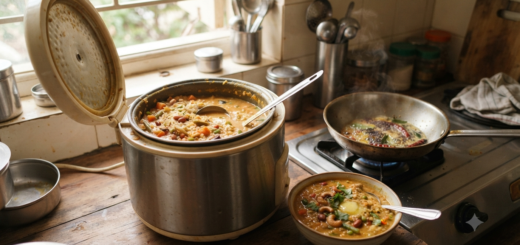
Creamy Millet Bisi Bele Bath made with foxtail millet, toor dal, vegetables, tamarind and Karnataka-style spices.
This refreshed version uses foxtail millet as the default grain, but little, barnyard and kodo millet also work. It also fixes a common recipe problem: tamarind goes in after the dal has softened, so the lentils cook more predictably.
Millet Bisi Bele Bath at a Glance
- Best millet: Foxtail millet, called navane in Kannada, gives a soft but slightly grainy texture.
- Dal: Use ¼ cup dry toor dal; it becomes roughly ¾ cup after cooking.
- Vegetables: About 2 cups of mixed vegetables works well for four servings.
- Texture: The finished dish should be softer and looser than pulao, closer to a thick porridge.
- Serving: Serve hot with a little ghee, roasted cashews, khara boondi or papad.
The Indian Council of Agricultural Research’s Indian Institute of Millets Research (ICAR-IIMR) publishes a foxtail millet bisi bele bath recipe using foxtail millet, red gram dal, vegetables, tamarind and seasoning. That official recipe is a useful baseline for the grain-to-dal structure used here. See the ICAR-IIMR millet recipe book.
Millet Bisi Bele Bath Recipe Card
| Detail | Amount |
|---|---|
| Prep time | 20 minutes |
| Cook time | 35 to 45 minutes |
| Total time | About 1 hour |
| Servings | 4 |
| Main millet | Foxtail millet |
| Cooking method | Pressure cooker plus kadai |
For the most consistent result, rinse the millet and dal well before cooking. A 20 to 30 minute soak is optional, but it can shorten cooking when the grain is older or especially firm.
Ingredients for Millet Bisi Bele Bath
Main ingredients
- ¾ cup foxtail millet.
- ¼ cup dry toor dal.
- 2 cups mixed vegetables, cut into small pieces.
- 1 medium onion, sliced.
- 1 medium tomato, chopped.
- 2 to 2½ tablespoons bisi bele bath powder.
- ¼ teaspoon turmeric powder.
- 1 to 1½ tablespoons tamarind pulp, diluted in ½ cup warm water.
- 1 teaspoon jaggery, optional.
- Salt to taste.
- About 4 cups water for pressure cooking, plus hot water for final adjustment.
For tempering
- 1½ tablespoons ghee, or use oil for a vegan version.
- ½ teaspoon mustard seeds.
- ½ teaspoon cumin seeds, optional.
- 8 to 10 curry leaves.
- 2 dried red chillies.
- A small pinch of asafoetida.
- 8 to 10 cashews, optional.
- 2 tablespoons chopped coriander leaves.
Carrot, French beans, peas, capsicum and drumstick are all good choices. Karnataka Tourism also lists vegetables such as drumstick, beans, capsicum and carrot as common additions to bisi bele bath. Karnataka Tourism’s South Karnataka food trail also identifies bisi bele bath as a notable regional dish.
How to Make Millet Bisi Bele Bath Step by Step
- Rinse the grain and dal. Wash the foxtail millet and toor dal separately until the water looks mostly clear. Soak for 20 to 30 minutes if you have time, then drain.
- Pressure-cook until soft. Add millet, dal, turmeric and about 4 cups water to a pressure cooker. Cook until both are very soft; the ICAR-IIMR recipe uses 5 to 6 whistles. Let the pressure release naturally before opening.
- Cook the vegetables. Heat 1 teaspoon of the ghee in a deep kadai. Add onion and cook until translucent, then add the mixed vegetables and tomato. Stir for several minutes, then add a splash of water and cook until the vegetables are tender.
- Build the masala base. Lower the heat and add bisi bele bath powder. Stir briefly, then pour in the tamarind water. Add jaggery if using and simmer for 4 to 5 minutes so the raw edge of the tamarind and spice blend mellows.
Finish Millet Bisi Bele Bath and Serve
- Combine everything. Add the soft millet-dal mixture to the kadai. Mix thoroughly, then add hot water a little at a time until the dish looks slightly looser than your preferred serving texture.
- Simmer and balance. Cook on low heat for 5 to 7 minutes, stirring often because millet thickens quickly. Taste now and adjust salt, tamarind or masala in small amounts.
- Finish with tempering. Heat the remaining ghee in a small pan. Add mustard seeds, cumin, dried chillies, curry leaves, asafoetida and cashews. Once aromatic, pour the tempering over the hot bath and mix gently.
- Rest and serve. Turn off the heat and rest the pot for 5 minutes. Add coriander, then serve hot with boondi or papad.
Why Millet Bisi Bele Bath Can Turn Too Thick
Millet Bisi Bele Bath thickens more as it rests because the cooked grain and dal continue absorbing liquid. Therefore, the pot should look slightly looser at the stove than it will on the plate. If you make it ahead, expect to add hot water during reheating.
The best correction is gradual. Add ¼ cup hot water, stir for a minute, then check again. Avoid pouring in a large amount at once because that can wash out the masala, tamarind and salt balance.
Millet Bisi Bele Bath Troubleshooting Guide
| Problem | Likely cause | Best fix |
|---|---|---|
| Too thick | Millet absorbed more water while resting | Add hot water in ¼-cup steps and simmer briefly |
| Too thin | Too much water added near the end | Simmer uncovered and stir until creamy |
| Too sour | Strong tamarind pulp | Add more cooked dal or millet and a small pinch of jaggery |
| Flat flavour | Masala or salt is too low | Mix 1 teaspoon masala with hot water, add it, then simmer |
| Raw spice taste | Masala did not simmer enough | Cook another 4 to 5 minutes on low heat |
| Millet still firm | Grain needed more cooking | Add hot water, cover and cook until fully soft |
One useful rule is to fix texture before fixing seasoning. Water changes the concentration of salt, tamarind and spice, so final seasoning makes more sense after the consistency is right.
Which Millet Works Best for Bisi Bele Bath?
Foxtail millet is the easiest starting point because it softens well without disappearing completely. However, barnyard, kodo and little millet can also make a good bath. Each grain absorbs water differently, so keep extra hot water ready instead of treating one water ratio as universal.
| Millet | Kannada name | Texture in the dish |
|---|---|---|
| Foxtail millet | Navane | Soft, slightly grainy and easy to balance |
| Barnyard millet | Oodalu | Soft and light; can thicken quickly |
| Kodo millet | Harka | More distinct grain texture |
| Little millet | Same or Save | Fine-grained and creamy when cooked soft |
ICAR-IIMR lists these English and Kannada names in its millet reference material. It also reports nutrient values for the raw grains, but the finished dish changes with the amount of dal, vegetables, ghee and serving size. See ICAR-IIMR millet information.
What Changes Nutritionally When Rice Is Replaced with Millet?
Millets contribute their own mix of protein, fibre and minerals, but the exact nutrition of a serving cannot be inferred from the grain alone. ICAR-IIMR lists foxtail millet at 12.3 g protein and 8 g fibre per 100 g of raw grain. Barnyard, kodo and little millet have different values.
That is why this refresh does not publish a precise calorie, vitamin C or iron figure for one bowl. The final numbers depend on the actual millet, the vegetable mix, how much ghee you use and the size of each serving. If you need nutrition for a medical or diet plan, calculate the finished recipe from weighed ingredients rather than relying on a generic recipe estimate.
Pressure Cooker or Stovetop: Which Method Is Better?
A pressure cooker is the most forgiving option because bisi bele bath needs very soft millet and dal. The ICAR-IIMR recipe also uses pressure cooking for the foxtail millet and red gram dal. Therefore, this method suits beginners and reduces the chance of a firm centre.
A stovetop version still works, but it needs more attention. Cook the millet and dal separately until both are fully soft, then combine them with the vegetable-tamarind base. Keep a kettle of hot water nearby because evaporation varies by pan size and heat level.
How to Make Millet Bisi Bele Bath with Readymade Powder
Millet Bisi Bele Bath works well with readymade powder, but packet blends vary in chilli, salt and sourness. Start with 2 tablespoons for this quantity, then taste after the final simmer. Add more in teaspoon amounts rather than adding a large extra spoon at once.
If you want a dedicated packet-masala method, see our bisi bele bath with readymade powder. For a homemade spice profile, the Iyengar bisi bele bath powder recipe gives a separate masala route.
Common Mistakes That Change the Final Texture
- Using too little water: Bisi bele bath should be soft, so a dry pulao-like texture means the grain needs more liquid.
- Adding tamarind too early: Cook the dal soft first, then add the souring agent in the masala stage.
- Stopping when it looks perfect in the pan: The mixture thickens while resting, so finish slightly loose.
- Adding too much packet powder at once: Brand strength varies, so build the spice level gradually.
- Skipping the final tempering: Mustard, curry leaves, chilli and ghee add aroma that the cooked masala alone does not provide.
If you regularly cook millets for breakfast or dinner, our millet upma recipe is another simple way to learn how different grains absorb water.
Serving Ideas for Millet Bisi Bele Bath
Serve the dish hot because its texture is at its best while fluid and creamy. A spoon of ghee adds richness, while khara boondi or papad gives a crisp contrast. Roasted cashews also work well if you want crunch without a fried side.
For a lighter plate, pair it with plain curd or a cucumber raita. If you are making a vegan version, use oil instead of ghee and check the ingredient label on the masala powder.
How to Store and Reheat Millet Bisi Bele Bath Safely
Cool leftovers promptly and refrigerate them within two hours rather than leaving the pot at room temperature for a long period. The Food Safety and Standards Authority of India (FSSAI) advises that cooked food should not remain at room temperature for more than two hours. See the FSSAI cooked-food safety guidance.
For home storage, keep leftovers in a clean, covered container and use them within a few days. Reheat only the portion you need, adding a splash of water because the millet will thicken in the refrigerator. Heat it thoroughly until steaming hot before serving.
Millet Bisi Bele Bath: Final Notes
The key to good Millet Bisi Bele Bath is not a rigid cooking time. It is getting three things right: very soft grain and dal, a balanced tamarind-masala base, and enough water for a creamy final texture. Once those are in place, the choice of vegetables and millet can change without losing the character of the dish.
Start with foxtail millet if this is your first attempt. Then try barnyard, kodo or little millet once you know the consistency you like.
Frequently Asked Questions
Can I make Millet Bisi Bele Bath in one pressure cooker?
Yes. You can cook the millet and dal together, then prepare the vegetable-masala base in the same cooker after transferring the cooked mixture. A true one-pot version is possible, but cooking the sour tamarind stage after the dal softens gives you more control over texture.
Do I have to soak foxtail millet before cooking?
No, soaking is not essential when you pressure-cook the millet until soft. However, a short 20 to 30 minute soak can help firm or older grains cook more evenly. Always rinse well first.
Can I use little millet instead of foxtail millet?
Yes. Little millet works well, although it may soften and thicken at a different rate. Keep hot water nearby and adjust the final consistency after the millet and dal are fully cooked.
Can I use barnyard millet for bisi bele bath?
Yes. Barnyard millet can produce a soft, creamy result, so it is a good substitute. ICAR-IIMR lists barnyard millet as oodalu in Kannada, which may help when shopping locally.
Why is my Millet Bisi Bele Bath dry after cooling?
The cooked millet and dal continue absorbing water as they stand, so the dish naturally thickens. Add a little hot water while reheating, then adjust salt and masala only after the texture is right.
Can I make this recipe without ghee?
Yes. Use a neutral cooking oil or coconut oil for the tempering, and skip the final ghee drizzle. The dish will still have strong flavour from tamarind, curry leaves, chilli and bisi bele bath powder.
Is Millet Bisi Bele Bath gluten-free?
The millet and dal themselves are naturally gluten-free. However, some asafoetida and packaged masala products can contain added cereal ingredients, so check the label if you need a strictly gluten-free meal.
How long does Millet Bisi Bele Bath keep in the fridge?
For best quality and food safety, cool it promptly, refrigerate it in a covered container and eat it within a few days. Reheat until thoroughly hot, and add water as needed because the dish becomes thicker after chilling.