Moong Dal Payasam with Milk: Creamy Jaggery Recipe
Moong dal payasam with milk is a creamy South Indian-style dessert made with soft yellow moong dal, full-fat cow milk, jaggery, cardamom and ghee-roasted nuts. The key to a smooth result is simple: cook the dal first, handle the jaggery separately, and never boil the dairy mixture after jaggery goes in.
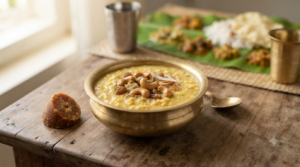
Creamy moong dal payasam with milk, jaggery, cardamom, cashews and raisins.
This version keeps the familiar ingredients from the original recipe but fixes the step most likely to cause curdling. It also gives pressure-cooker and stovetop options, texture fixes, safer storage guidance and clear substitutions.
Moong Dal Payasam with Milk at a Glance
- Prep time: 10 minutes
- Cook time: about 30 minutes
- Total time: about 40 minutes
- Serves: 6 small dessert portions
- Main ingredients: yellow moong dal, cow milk, jaggery, cardamom and ghee
- Best texture: soft dal with a pourable, creamy body rather than a thick paste
- Most important rule: add cooled or warm jaggery syrup only after the hot milk-dal base has come off the boil
Moong dal payasam, also called paruppu payasam in many South Indian homes, has several regional versions. Coconut milk is common in many jaggery-based recipes, while this page focuses on a dairy-milk variation.
Ingredients for Moong Dal Payasam with Milk
Measure everything before you start because the final steps move quickly. Full-fat milk gives the richest result, although toned milk also works with a lighter finish.
| Ingredient | Quantity | Purpose |
|---|---|---|
| Yellow moong dal | 1 cup | Body and nutty flavour |
| Water | 3 cups | For cooking the dal |
| Full-fat cow milk | 3 cups | Creaminess |
| Jaggery | 3/4 cup, grated | Sweetness and caramel notes |
| Water for jaggery | 1/4 cup | To make a strained syrup |
| Ghee | 2 tbsp | For roasting nuts |
| Cashews | 2 tbsp | Crunch |
| Raisins | 1 tbsp | Optional sweetness |
| Cardamom powder | 1/2 tsp | Aroma |
| Salt | Small pinch | Balances sweetness |
If your jaggery tastes mild, you can add a little more after tasting the finished payasam. However, avoid adding extra dry jaggery directly to a boiling milk mixture. This keeps moong dal payasam with milk smooth instead of grainy.
How to Make Moong Dal Payasam with Milk
The safest sequence is roast, cook, sweeten carefully, then finish with milk and garnish. Keep the flame low whenever milk is in the pan because dairy scorches easily on thin cookware.
1. Dry Roast the Moong Dal
Heat a heavy pan over medium-low heat. Add the dry moong dal and roast for 3 to 4 minutes, stirring often, until it smells lightly nutty.
Do not brown the dal deeply because burnt lentils make the whole dessert bitter. Once fragrant, transfer the dal to a bowl, rinse it well and drain.
2. Cook the Dal Until Soft
Add the rinsed dal and 3 cups water to a pressure cooker. Cook for about 2 to 3 whistles, then allow the pressure to release naturally.
The dal should be fully soft but not completely liquefied. Mash it lightly with a ladle so some grains remain visible and give the payasam a pleasant texture.
For a regular pot, simmer the dal with enough water until tender, usually about 25 to 35 minutes. Add hot water as needed if the pot dries before the dal softens.
3. Make and Cool the Jaggery Syrup
While the dal cooks, combine 3/4 cup jaggery with 1/4 cup water in a small saucepan. Heat on low just until the jaggery dissolves, then switch off the flame.
Strain the syrup through a fine metal strainer if the jaggery contains grit or residue. Let the syrup cool until it is warm rather than boiling hot.
4. Warm the Milk Separately
Heat 3 cups of cow milk in a clean heavy saucepan until steaming and fully hot. If you use raw or unpasteurised milk, boil it before cooking with it; the Food Safety and Standards Authority of India advises boiling unpasteurised milk before use.
Keep the milk warm on the lowest heat after boiling. Do not reduce it heavily because the dal will thicken the dessert on its own.
5. Combine Without Curdling
Return the cooked dal to low heat and stir in about 2 cups of the warm milk. Simmer gently for 3 to 4 minutes, then switch off the flame.
Let the milk-dal mixture settle for about 5 minutes so it is hot but no longer bubbling. Slowly stir in the warm jaggery syrup, then add the remaining milk until the consistency looks slightly looser than you want.
Do not bring the payasam back to a hard boil after adding jaggery. This single change is the best protection against a grainy or split dairy payasam.
6. Add Cardamom and Ghee-Roasted Nuts
Heat 2 tbsp ghee in a small pan. Fry the cashews until golden, then add the raisins and cook just until they puff.
Pour the ghee and nuts over the payasam. Add cardamom powder and a tiny pinch of salt, then stir gently and rest for 5 minutes before serving.
Why Moong Dal Payasam with Milk Can Curdle
Milk usually splits in this recipe when jaggery meets dairy at a very high temperature. The risk can also vary with the jaggery, because unrefined batches differ in moisture, acidity and impurities.
For that reason, dissolve and strain jaggery separately. Then let both the milk-dal base and syrup move away from a rolling boil before you combine them.
- Do not: drop grated jaggery straight into vigorously boiling milk.
- Do: make a light syrup, strain it and add it off the boil.
- Do not: keep boiling the payasam after jaggery is mixed in.
- Do: adjust final thickness with warm milk while the payasam is still hot.
If you prefer a version with less curdling risk, use regular sugar instead of jaggery. Sugar gives a lighter flavour, though, so it will not have the same caramel depth.
How to Get the Right Payasam Consistency
The finished payasam should pour from a ladle in a thick ribbon. It should not sit like halwa, because moong dal continues to absorb liquid while the dessert cools.
If the payasam looks thin when hot, wait 10 minutes before changing it. If it is still too loose, warm it gently before adding jaggery, or mash a few spoonfuls of dal into the base.
If it becomes too thick, stir in warm milk a little at a time. For reheating, use low heat and keep stirring so the bottom does not catch.
Cow Milk, Coconut Milk or Condensed Milk?
Each liquid creates a different dessert, so choose the version that matches the flavour you want. Cow milk tastes creamy and mild, while coconut milk gives a more pronounced South Indian payasam character.
| Version | Flavour | Best use |
|---|---|---|
| Cow milk | Mild, creamy, dairy-rich | Everyday milk-based payasam |
| Coconut milk | Nutty and aromatic | Dairy-free or more traditional jaggery style |
| Condensed milk | Very rich and sweet | Quick dessert with less added sweetener |
If you want a dairy-free option, try the dairy-free variation. For a richer sweet, see this condensed-milk variation.
Ingredient Notes and Practical Substitutions
Yellow split moong cooks faster than whole green gram, so it is the right choice here. Roasting is optional, but it adds a distinct nutty aroma that works well with ghee and cardamom.
ICMR-National Institute of Nutrition lists pulses such as green gram and milk among useful protein sources in Indian diets. Still, payasam is a sweet dessert, so treat it as a festive or occasional dish rather than a health food.
- Toned milk: works, but the payasam will taste lighter.
- Sugar: use it if you want a pale colour and a simpler milk-sweet flavour.
- Palm jaggery: gives a deeper taste, but its strength varies widely.
- Almonds or pistachios: can replace part of the cashews.
- Saffron: optional; use a small pinch if you enjoy its aroma.
For another dessert that uses a similar careful finishing method, see this jaggery-based milk dessert.
Nutrition Note Without False Precision
Moong dal and milk contribute protein, while jaggery, ghee and nuts raise the dessert’s energy content. However, a fixed calorie figure can be misleading because milk fat, jaggery weight, nut quantity and serving size vary widely.
If you track nutrition closely, weigh the ingredients you actually use and calculate from the package labels. That gives a more useful result than copying a generic payasam calorie table from another recipe.
Common Mistakes to Avoid
The most common mistake is trying to speed up the final stage. High heat can scorch milk and can also make jaggery-milk mixtures split, so the last few minutes should be gentle.
- Roasting too dark: stop when the dal smells nutty, not brown.
- Undercooking the dal: firm grains will not create a creamy body.
- Adding jaggery to boiling milk: cool the syrup and remove the dairy base from the boil first.
- Reducing too far: the dessert thickens after resting, so finish slightly loose.
- Walking away from the milk: stir often because milk can scorch quickly.
- Over-sweetening early: jaggery strength varies, so taste before adding more.
Serving Ideas for Moong Dal Payasam with Milk
Serve the payasam warm for the strongest cardamom and ghee aroma. It also tastes good chilled, although the texture becomes thicker after refrigeration.
For a festive meal, serve small portions after a South Indian lunch rather than filling large bowls. The dessert is rich, and the dal makes it more filling than a plain milk kheer.
If you make it for naivedyam or a family ritual, follow your household custom for ingredients and tasting. Traditions vary by family and region, so there is no need to force one version as the only authentic method.
Moong Dal Payasam with Milk Storage and Reheating
Because this recipe contains cooked dairy, cool leftovers promptly and refrigerate them in a clean covered container. FSSAI food-safety guidance advises keeping cooked food cold below about 5°C when it is not eaten immediately.
For best quality, eat refrigerated moong dal payasam with milk within 2 days. Broader food-safety guidance allows many cooked leftovers for 3 to 4 days under proper refrigeration, but fresh dairy desserts taste better sooner.
Reheat only the portion you need over low heat. Add a splash of milk, stir frequently and stop once it is hot; repeated boiling can make the texture grainy.
Before You Serve
This moong dal payasam with milk works best when the dal is fully soft, the milk stays on gentle heat and the jaggery enters only after the bubbling stops. Those three controls matter more than any special equipment.
Keep the finished payasam a little loose because it thickens as it rests. Taste once before serving, then adjust with warm milk or a small spoonful of cooled jaggery syrup if needed.
Frequently Asked Questions
Can I use cow milk for moong dal payasam?
Yes. Cow milk gives moong dal payasam a creamy, mild flavour and works well with yellow moong dal. Use full-fat milk for the richest texture, and keep the heat gentle once milk enters the pan.
Can I add jaggery directly to hot milk?
It is better not to add jaggery to vigorously boiling milk because the dairy may split. Dissolve the jaggery separately, strain it, cool it until warm and stir it into the milk-dal base off the boil.
Why did my moong dal payasam curdle?
The usual cause is heat at the moment jaggery meets milk. In moong dal payasam with milk, a strained syrup and an off-heat finish give you more control because jaggery batches can behave differently.
Should I roast moong dal before making payasam?
Roasting is not essential, but it improves aroma and adds a mild nutty flavour. Roast only until fragrant because dark dal can make the dessert taste bitter.
Can I make this recipe without a pressure cooker?
Yes. Simmer the rinsed dal in a heavy pot with water until completely soft, which usually takes about 25 to 35 minutes. Add more hot water if needed during cooking.
Can I use sugar instead of jaggery?
Yes. Sugar makes a lighter-coloured payasam and generally mixes more easily with dairy milk. Start with less sugar than you think you need, then taste and adjust near the end.
Why does moong dal payasam become thick after cooling?
Cooked moong dal keeps absorbing liquid as the dessert rests, so the payasam naturally thickens. Stir in warm milk before serving if you want a looser, more pourable consistency.
Is moong dal payasam a healthy dessert?
It contains protein-rich ingredients such as moong dal and milk, but it is still a sweet dessert with jaggery and ghee. Enjoy a modest portion and calculate nutrition from your actual ingredients if you need precise dietary tracking.
How long can I refrigerate moong dal payasam?
For best taste and texture, finish it within 2 days and keep it properly chilled. If you follow standard leftover-safety guidance, many cooked foods can remain refrigerated for 3 to 4 days, but discard the payasam if it smells sour or shows signs of spoilage.