Parippu Payasam Without Coconut: Creamy Milk Recipe
Parippu payasam without coconut can be rich and creamy with full-fat milk, soft moong dal, jaggery and ghee. The key is not extra cream or starch. The order matters most. Finish the milk-and-dal base first, cool the jaggery syrup slightly, then combine them off the heat.
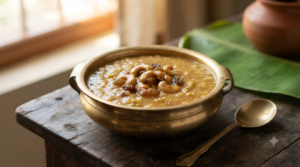
Creamy coconut-free parippu payasam made with moong dal, milk and jaggery, finished with ghee-roasted cashews and raisins.
This version keeps the original Bhimas Cook ingredient idea but fixes the most failure-prone step in the older method. It also explains the right dal texture and what “hotel style” means here. You will also get fixes for sweetness and over-thickening.
Parippu Payasam Without Coconut at a Glance
- Prep time: about 15 minutes.
- Cook time: about 40 minutes.
- Servings: 6.
- Main ingredients: yellow moong dal, full-fat milk, jaggery, cardamom and ghee.
- Coconut: none.
- Best texture: pourable when warm and slightly thicker after resting.
- Most important step: add cooled jaggery syrup only after taking the milk mixture off the heat.
Traditional Kerala sadya descriptions commonly pair parippu payasam or pradhaman with jaggery and coconut milk. Kerala Tourism lists parippu payasam among sadya desserts and describes the familiar coconut-milk version. This recipe is deliberately different because it is designed for cooks who want the lentil-and-jaggery flavour without coconut.
Ingredients for Parippu Payasam Without Coconut
The original page used one cup of moong dal and one litre of milk, so this refresh keeps that basic ratio. The payasam will be fairly substantial, almost spoon-coating when cool. If you prefer a looser dessert, keep a little extra warm milk ready for the final adjustment.
| Ingredient | Quantity | Why it is used |
|---|---|---|
| Yellow split moong dal | 1 cup | Creates the nutty lentil base |
| Full-fat milk | 1 litre, plus a little extra if needed | Replaces coconut milk and adds creaminess |
| Jaggery | 200 g | Adds sweetness and caramel notes |
| Water | 3 cups for dal, plus 1/4 cup for jaggery | Cooks the dal and dissolves jaggery |
| Cardamom powder | 1 tsp | Adds the classic payasam aroma |
| Ghee | 2 tbsp | Roasts the garnish and adds richness |
| Cashews | 10 to 12 | Optional garnish and crunch |
| Raisins | 10 | Optional sweet garnish |
| Salt | 1 small pinch | Balances sweetness |
Choose clean, good-quality jaggery because the flavour can vary from batch to batch. If you see grit or sediment, dissolve and strain it before use. The Food Safety and Standards Authority of India sets quality standards for cane jaggery. Those standards include limits for moisture and impurities.
How to Make Parippu Payasam Without Coconut
The safest sequence is simple. Cook the dal, simmer it with milk, and prepare jaggery syrup separately. Combine them after the pan leaves the heat.
This reduces the curdling risk that comes from adding jaggery to actively simmering milk. Keep the flame gentle throughout because milk can scorch quickly in a thin pan.
- Roast the dal. Put the dry moong dal in a heavy pan over low to medium heat. Stir for about 2 minutes, just until it smells nutty. Do not brown it deeply.
- Rinse and soak. Let the dal cool briefly, then rinse it until the water looks mostly clear. Soak for 10 minutes if you have time, then drain.
- Cook until soft. Add the dal and 3 cups water to a heavy-bottomed pot. Simmer until the grains are fully tender and can be crushed easily with a spoon. Add a small splash of hot water if the pot dries before the dal softens.
- Add the milk. Pour in the full-fat milk and stir well. Simmer on low heat for 8 to 10 minutes. Stir often so milk does not catch at the bottom.
Finish Parippu Payasam Without Coconut Without Curdling
The final stage is where most dairy-and-jaggery payasam fails. Keep both mixtures away from a hard boil, and add the sweetener slowly after the milk base comes off the flame.
- Prepare jaggery syrup separately. Warm 200 g jaggery with about 1/4 cup water only until dissolved. Strain if needed, then let the syrup cool until warm rather than piping hot.
- Take the payasam off the heat. Once the milk-and-dal base tastes cooked and looks slightly looser than your final target, switch off the flame. Let it settle for 5 to 10 minutes.
- Add jaggery slowly. Pour the warm syrup in a thin stream while stirring. Add cardamom and a pinch of salt. Do not return the finished payasam to a hard boil.
- Finish with the garnish. Heat ghee in a small pan, fry cashews until golden, then add raisins until they puff. Pour the ghee and garnish over the payasam.
At this point, taste before adding more jaggery. Sweetness feels stronger as the dessert cools, so a warm batch that seems only moderately sweet can taste richer later. If the consistency is already very thick, stir in a little warm milk instead of cooking it longer.
Why Milk and Jaggery Can Split
Milk proteins become less stable when strong heat meets acidic or impure ingredients. Jaggery varies in mineral content, processing and acidity, so one batch may mix smoothly while another causes visible curdling. That is why “low flame” alone is not a complete safeguard.
Two established Indian recipe sources give similar practical advice. Swasthi’s Recipes recommends cooling jaggery syrup before using regular milk. Dassana’s Veg Recipes also advises avoiding prolonged cooking once dairy meets jaggery.
The kitchen rule is simpler. Keep the jaggery separate, cool it slightly, switch off the milk base, then combine gradually.
If you are unsure about a new jaggery batch, test one spoonful first. Mix it into a small cup of the cooked milk base. If it stays smooth, add the rest.
If it splits, use sugar for that batch. Another option is to save the jaggery for a non-dairy version.
What “Hotel Style” Means in This Recipe
There is no single standard hotel formula for parippu payasam. In this recipe, “hotel style” describes a creamy, glossy texture with pronounced cardamom, gentle jaggery sweetness and a ghee-roasted garnish. The texture comes from properly cooked dal and reduced milk, not from flour or cornflour.
A common mistake is to mash the dal into a completely smooth paste. That makes the dessert heavy and removes the tiny lentil texture that gives parippu payasam its character. Instead, cook the dal until very soft, then mash only a small portion against the side of the pot.
Another useful detail is to stop cooking while the payasam still looks slightly loose. Moong dal continues absorbing liquid as it rests. Therefore, a pot that looks perfectly thick on the stove often becomes too dense 20 minutes later.
Texture Guide: Thin, Creamy or Thick
| If the payasam is… | Likely reason | Best fix |
|---|---|---|
| Too thin | Dal is not soft enough or milk base needs more reduction | Cook the dal-and-milk base longer before adding jaggery |
| Too thick | Dal absorbed liquid while cooling | Stir in warm milk a little at a time |
| Grainy after jaggery | Milk began to split | Stop heating immediately and whisk gently |
| Burnt at the bottom | Pan was thin or heat too high | Move the unburnt top portion to a clean pan |
| Gritty | Jaggery contained sediment | Dissolve and strain the syrup before adding |
| Too sweet | Jaggery was added all at once | Loosen with warm milk and adjust cardamom |
For parippu payasam without coconut, a clean dairy flavour matters, so do not scrape a scorched layer back into the dessert. Burnt milk has a strong flavour and can spoil the whole batch. Transfer only the clean upper portion to another pan, then continue on low heat.
Parippu Payasam Without Coconut: Substitutions That Work
This parippu payasam without coconut uses dairy milk, but coconut-free does not automatically mean dairy-free or nut-free. Check the substitution against the reason you are avoiding coconut. For a coconut allergy, also inspect packaged plant-milk labels because some products are made on shared equipment.
Can I use sugar instead of jaggery?
Yes. Sugar gives a cleaner milk-and-cardamom flavour. It is also easier to handle because some jaggery batches can curdle milk.
Start with less than you think you need. Then taste near the end because sweetness is easier to increase than reduce.
Can I make it dairy-free too?
Yes, but the texture will change. Unsweetened oat milk gives a relatively creamy body, while almond milk tastes lighter. Add plant milk after the dal is fully cooked, use gentle heat, and choose a product that fits any allergy needs.
Can I add dry ginger?
A small pinch of dry ginger works well with jaggery and cardamom. It adds a warmer Kerala-style spice note. Keep it subtle because too much will dominate the milk flavour.
How This Version Differs From Traditional Kerala Parippu Payasam
Traditional Kerala parippu payasam is commonly built around lentils, jaggery and coconut milk. Kerala Tourism’s sadya material describes parippu payasam with coconut milk. Therefore, this dairy recipe is a variation rather than the standard pradhaman method.
The flavour changes in a useful way. Coconut milk brings a rounded aroma and tropical richness. Cow milk, meanwhile, makes the dessert taste more like a lentil kheer. The jaggery and roasted moong dal still keep the recipe recognisably South Indian.
If you want the coconut-based version, compare Bhimas Cook’s parippu payasam with coconut milk. If you want a milk dessert without lentils, the rice payasam recipe gives a smoother, more classic kheer-like texture.
Storage, Reheating and Make-Ahead Tips
Cool parippu payasam without coconut promptly, then refrigerate it in a covered container. General guidance from FoodSafety.gov says to refrigerate perishable leftovers within two hours. It generally advises using refrigerated leftovers within three to four days. For best texture, this milk-based payasam is nicest within two to three days.
Reheat only the amount you plan to serve. Use low heat and stir often, since high heat can catch the milk at the base. If the dessert has thickened in the fridge, add a splash of milk before warming.
You can also make the dal-and-milk base a little ahead, then add jaggery closer to serving. However, cool and refrigerate the base promptly if there will be a long gap. Do not leave milk payasam sitting at room temperature for several hours.
Sweetness and Portion Notes
Jaggery gives this dessert minerals and a deep caramel flavour, but it still counts as added sugar. The National Institute of Nutrition includes jaggery among added sugars in its dietary guidance. Therefore, treat it as a sweetener even though it is less refined than white sugar.
That does not make payasam “bad”; it means portion size matters. Serve a small bowl after a meal, especially when the rest of the menu already contains sweets. You can also reduce the jaggery slightly if your family prefers a less sweet finish.
For another milk-based South Indian dessert with a different texture, Bhimas Cook’s semiya payasam recipe uses vermicelli instead of lentils.
Common Mistakes to Avoid
- Adding hot jaggery to boiling milk: this is the biggest curdling risk. Cool the syrup and take the milk base off the heat first.
- Overcooking the dal into paste: soft is good, but leave a little texture.
- Reducing until very thick: the payasam thickens further as it cools.
- Using high heat after milk goes in: milk can scorch before the top of the pot looks wrong.
- Skipping the jaggery strain when needed: grit is difficult to remove once it is mixed into the dessert.
- Assuming coconut-free means allergen-free: dairy, nuts and packaged plant milks can still be relevant allergens.
These small choices matter more than adding extra flavourings. Once the dal is soft, reduce the milk gently and handle jaggery off the heat. The recipe then becomes much easier to repeat.
Parippu Payasam Without Coconut: Final Notes
Parippu payasam without coconut works best when you treat the milk and jaggery as two separate components until the final stage. Cook the dal until tender, simmer it gently with milk, then add warm jaggery syrup after switching off the flame.
Keep the finished payasam slightly loose because it thickens as it rests. If you remember one rule, make it this: never hard-boil a jaggery-and-milk payasam after combining the two mixtures.
Frequently Asked Questions
Can I make parippu payasam without coconut milk?
Yes. Use full-fat dairy milk in place of coconut milk, but handle jaggery carefully because very hot milk can split. Cook the dal and milk first, then add cooled jaggery syrup after taking the pan off the heat.
Why does milk curdle when I add jaggery?
Some jaggery batches contain enough acidity or impurities to destabilise hot milk proteins. Strong heat makes the problem more likely. Therefore, dissolve and strain the jaggery separately. Let it cool slightly, then combine it with the milk base off the flame.
Is parippu payasam without coconut traditional?
It is a practical variation rather than the standard Kerala pradhaman formula. Kerala sadya versions commonly use coconut milk with lentils and jaggery. A dairy version keeps the lentil-and-jaggery character but produces a flavour closer to milk kheer.
Can I use sugar instead of jaggery?
Yes. Sugar gives a lighter colour and a cleaner milk flavour. It is also easier to simmer with dairy, although you should still use gentle heat so the milk does not scorch.
Can I make this recipe vegan without using coconut?
Yes. Use an unsweetened plant milk such as oat or almond milk, provided it suits your dietary needs. The final texture will be lighter than the full-fat dairy version, so cook the dal until very soft before adding the plant milk.
Why does parippu payasam become thick after cooling?
Cooked moong dal keeps absorbing liquid as the dessert rests. That is normal. Stop cooking while the payasam is slightly looser than your target. Later, add warm milk if you need a pouring consistency.
How long can I keep parippu payasam in the refrigerator?
For best quality, use it within two to three days in a covered container kept cold. General leftover guidance allows three to four days when food is chilled promptly. Dairy desserts are usually best earlier because texture changes quickly.
Can I make parippu payasam ahead for a festival or lunch?
Yes. Make it a few hours ahead, keep the texture slightly loose, cool it promptly and refrigerate. Before serving, warm gently and adjust with a little milk if the dal has absorbed too much liquid.