Puran Poli Gujarati Recipe: Soft Vedmi with Jaggery
Puran Poli Gujarati Recipe is the Gujarati-style vedmi made with soft whole wheat dough and a sweet toor dal-jaggery filling. The key difference is the dal: Gujarati versions commonly use toor dal, while many Maharashtrian puran poli recipes use chana dal. This method keeps the original Bhimas Cook recipe idea, but adds clearer texture cues, safer storage guidance, and fixes for the problems that usually cause tearing or leaking.
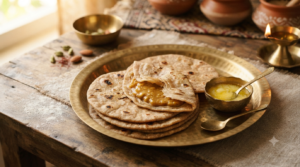
Soft Gujarati vedmi filled with smooth toor dal and jaggery puran and finished with a light smear of ghee.
“Hotel-style” here describes the finish, not one official restaurant formula. The goal is a thin, soft poli with evenly spread puran, light golden spots, and a glossy smear of ghee just before serving.
Puran Poli Gujarati Recipe at a Glance
- Gujarati name: Vedmi or puran poli.
- Filling: Toor dal, jaggery, cardamom, and optional nutmeg or saffron.
- Outer layer: Soft whole wheat dough.
- Yield: About 8 to 10 medium puran polis, depending on how thin you roll them.
- Prep: About 25 minutes, plus 20 minutes resting time.
- Cook: About 40 to 45 minutes.
- Difficulty: Medium. The filling consistency matters more than speed.
Several Gujarati recipe references describe vedmi with toor dal rather than chana dal, so that distinction is worth keeping. The flavour is softer and slightly earthier, while jaggery gives the puran its caramel-like sweetness.
Why This Puran Poli Gujarati Recipe Uses Toor Dal
The Gujarati version is often called vedmi and typically uses toor dal, also called tuvar or arhar dal. That makes it different from many Maharashtrian versions, which commonly use chana dal. The two styles share the same basic idea, yet the filling texture and flavour are not identical.
Toor dal becomes soft quickly, so avoid overcooking it into a watery paste. The dal should mash easily, but excess water should not remain before jaggery goes in. If the filling starts wet, rolling becomes much harder later.
This regional difference also helps separate this recipe from Bhimas Cook’s general puran poli with jaggery, which uses chana dal. Use this page when you specifically want Gujarati vedmi.
Ingredients for Soft Gujarati Vedmi
The ingredient list for this Puran Poli Gujarati Recipe is short, so consistency matters. Use fresh atta and clean jaggery, and keep the dough softer than ordinary roti dough. That extra softness lets the covering stretch around the filling without cracking.
| Part | Ingredient | Quantity |
|---|---|---|
| Dough | Whole wheat flour | 2 cups |
| Dough | Oil | 2 tbsp |
| Dough | Salt | 1 pinch |
| Dough | Water | About 3/4 to 1 cup |
| Puran | Toor dal | 1 cup |
| Puran | Jaggery, grated | 1 1/4 cups |
| Puran | Ghee | 2 tbsp |
| Puran | Cardamom powder | 1/4 tsp |
| Puran | Nutmeg powder | 1 pinch, optional |
| Puran | Saffron | Few strands, optional |
| Cooking | Whole wheat or rice flour | As needed for dusting |
| Cooking | Ghee | As needed for roasting and serving |
If your jaggery is very dark or strongly flavoured, start with 1 cup and taste the cooled puran. A sweeter batch can use the full 1 1/4 cups. This keeps the recipe flexible without changing the traditional jaggery base.
How to Make Puran Poli Gujarati Recipe Step by Step
For this Puran Poli Gujarati Recipe, make the filling first because it must cool before stuffing. Meanwhile, knead the dough and let it rest. When both parts reach a similar soft consistency, the poli rolls more evenly and the filling is less likely to burst through.
1. Rinse and cook the toor dal
Rinse 1 cup toor dal until the water looks mostly clear. Soak it for 20 to 30 minutes if you have time, since soaking helps the grains cook more evenly. Drain, then add the dal to a pressure cooker with about 1 1/2 cups water.
Cook on medium heat until the dal is completely tender. Three whistles are a useful starting point, but pressure cookers vary, so use texture as the real test. A cooked grain should mash easily between two fingers.
2. Remove excess water before adding jaggery
Open the cooker after the pressure drops naturally. If water is still pooling around the dal, drain it before making the puran. This is one of the most important changes from a basic recipe because extra water is the main reason the filling stays runny.
Mash the dal while warm until mostly smooth. A few tiny grains are fine, yet hard lumps can puncture the dough while rolling. For an extra-smooth filling, pass the cooked dal through a sturdy sieve or use a potato masher.
3. Make the jaggery puran
Heat 1 tablespoon ghee in a heavy pan over low to medium heat. Add the mashed dal and 1 1/4 cups grated jaggery, then stir continuously as the jaggery melts. The mixture will loosen first, so do not assume it needs more flour.
Keep cooking until the puran thickens and begins leaving the sides of the pan. Stir in cardamom, optional nutmeg, and optional saffron. Remove it from the heat when a spoon drawn through the centre leaves a clear track for a moment.
If your jaggery contains visible grit, melt it separately with 2 tablespoons water and strain it first. Then add the strained syrup to the dal and cook until thick. This extra step is useful for block jaggery of uncertain cleanliness.
4. Knead and rest the dough
Mix 2 cups whole wheat flour with 2 tablespoons oil and a pinch of salt. Add water gradually, then knead until the dough feels soft, smooth, and more relaxed than chapati dough. It should yield easily when pressed with a fingertip.
Cover and rest the dough for at least 20 minutes. Resting matters because the flour hydrates and the dough becomes easier to stretch. If it feels tight after resting, knead in 1 or 2 teaspoons water rather than forcing it with the rolling pin.
5. Divide filling and dough evenly
Cool the puran fully before shaping. Divide it into 8 to 10 smooth balls, then divide the dough into the same number of portions. The filling ball can be slightly larger than the dough ball, but beginners should avoid an extreme ratio until rolling feels comfortable.
Keep both portions covered while you work, since dry surfaces crack faster. If the filling sticks to your palms, cool it a little longer before shaping.
6. Stuff and roll without tearing
Flatten one dough portion into a small disc. Place a puran ball in the centre, bring the dough edges upward, and pinch them closed. Press the sealed ball gently so the filling spreads outward before you start rolling.
Dust lightly with atta or rice flour, then roll with gentle strokes into a 6-inch circle. Turn the disc often instead of pressing hard in one direction. If you see the filling through the dough, stop adding pressure and move to the tawa.
7. Roast on a medium-hot tawa
Heat a tawa on medium until a drop of water sizzles and disappears quickly. Place the rolled poli on it and cook until light bubbles and pale golden spots appear underneath. Flip, spread a little ghee, and cook the second side.
Flip once more if needed, then remove when both sides show scattered golden patches. Avoid very high heat because the surface can brown before the dough around the filling cooks. Serve warm with a light smear of ghee.
Puran Poli Gujarati Recipe Troubleshooting Guide
Most problems in a Puran Poli Gujarati Recipe come from the moisture balance between dough and filling. The dough must stay soft enough to stretch, while the puran must stay firm enough to hold a ball. Fix that balance first before changing flour or adding extra ingredients.
| Problem | Likely cause | Best fix |
|---|---|---|
| Puran leaks out | Filling is too wet | Cook it longer, then cool fully |
| Dough tears | Dough too stiff or filling lumpy | Soften dough and mash puran smoother |
| Poli turns hard | Too much dry flour or high heat | Dust lightly and roast on medium |
| Filling stays in centre | Uneven pressure while rolling | Flatten first, then roll from centre outward |
| Puran becomes crumbly | Cooked too long | Mix in 1 tsp warm water or ghee |
If the first poli tears, do not keep rolling the rest the same way. Correct either the dough or filling before continuing. One small adjustment can save the whole batch.
What Makes the Texture Feel “Hotel Style”?
In this Puran Poli Gujarati Recipe, a hotel-style result means an even filling, thin covering, soft centre, and glossy ghee finish. It does not require maida, condensed milk, or an unusual shortcut. The texture comes from correct hydration, well-cooked puran, and steady tawa heat.
Use only enough dusting flour to stop sticking because excess dry flour toughens the outer layer. Also, smear ghee after the first flip instead of soaking the raw surface. The finished poli should bend easily while warm rather than crack at the edge.
If you prefer a softer Andhra-style sweet flatbread with chana dal, compare this method with the bobbatlu recipe with jaggery. The technique is related, but the dal and dough traditions differ.
Gujarati Vedmi vs Maharashtrian Puran Poli
The biggest practical difference is usually the filling dal. Gujarati vedmi commonly uses toor dal, while many Maharashtrian puran poli recipes use chana dal. Both styles use a sweetened lentil filling and a wheat-based outer layer, so the method still looks familiar.
| Feature | Gujarati vedmi | Common Maharashtrian style |
|---|---|---|
| Main dal | Toor dal | Chana dal |
| Sweetener | Jaggery, sometimes sugar | Jaggery |
| Outer layer | Usually whole wheat | Wheat or wheat-maida mix |
| Aromatics | Cardamom, optional nutmeg/saffron | Cardamom, nutmeg |
| Common name | Vedmi | Puran poli |
Family recipes vary, so treat this as a regional pattern rather than a rigid rule. The toor-dal choice is the detail that makes this page genuinely Gujarati instead of another generic puran poli recipe.
Serving Ideas for Gujarati Puran Poli
Serve this Puran Poli Gujarati Recipe warm, with ghee added at the table so each person can control the richness. It can sit beside a festive Gujarati meal, or you can serve it alone as a sweet course. A simple bowl of warm milk also works well.
For a larger festival menu, pair it with savoury dishes rather than another very sweet dessert. Bhimas Cook’s Sankranti special recipes page gives ideas for building a mixed sweet-and-savoury spread.
If you do want a second dessert, keep portions smaller. The site’s rice payasam with jaggery is another festive option with a very different texture.
How to Store and Reheat Puran Poli Safely
Cool cooked puran poli before placing it in an airtight container. If you are not eating it soon, refrigerate it rather than leaving a large batch at room temperature. The Food Safety and Standards Authority of India advises keeping leftovers cold, below 5°C, and reheating cooked food thoroughly.
For best texture, use refrigerated puran poli within about two days. Reheat each piece on a dry or lightly greased tawa until warm and flexible. Avoid repeated reheating because it dries the dough and can reduce food quality.
You can also prepare the puran one day ahead and refrigerate it in a covered container. Bring it close to room temperature before shaping, since very cold filling is firmer and can make the dough split.
Is Jaggery Healthier Than Sugar in Puran Poli?
Jaggery adds a deeper flavour, but it is still a concentrated sweetener. FSSAI standards classify jaggery as a sugar-rich product, so this sweet should not be treated as sugar-free merely because it uses gur. Choose jaggery mainly for flavour and tradition.
The World Health Organization recommends limiting free sugars across the diet. Therefore, portion size matters more than claiming that one sweetener makes puran poli a health food.
The older article gave a single calorie figure borrowed from another recipe. That number has been removed here because calories change with poli size, jaggery quantity, and the amount of ghee used.
Mistakes to Avoid With Puran Poli Gujarati Recipe
- Leaving water in the cooked dal: this makes the puran loose and difficult to seal.
- Adding flour to rescue wet puran: cook out the moisture instead, because raw flour changes the taste.
- Rolling hot filling: warm puran softens the dough and encourages leaks.
- Using a stiff roti dough: the covering should be softer than everyday chapati dough.
- Dusting heavily: extra flour dries the surface and gives a tougher finish.
- Using high heat: medium heat cooks the dough more evenly around the filling.
- Forcing a perfect circle: even thickness matters more than a perfectly round shape.
The first poli is often the calibration piece. Check whether the filling spreads to the edge, then adjust pressure or moisture before rolling the rest.
Before You Serve
A good Puran Poli Gujarati Recipe should produce vedmi that feels soft, thin, and evenly filled from centre to edge. Toor dal gives this version its regional identity, while jaggery, cardamom, and ghee create the familiar festive flavour. Most problems disappear once the puran is dry enough to hold shape and the dough stays soft.
Make the filling first, cool it fully, and roll with a light hand. That sequence is more reliable than chasing a fixed number of pressure-cooker whistles or adding extra flour when something feels wrong.
Frequently Asked Questions About Puran Poli Gujarati Recipe
What is Gujarati puran poli called?
Gujarati puran poli is commonly called vedmi or vedhmi. It is a sweet stuffed flatbread made with a lentil-jaggery filling and wheat dough. Family methods vary, but toor dal is a common Gujarati choice.
Which dal is used in Gujarati puran poli?
Toor dal, also called tuvar or arhar dal, is commonly used for Gujarati vedmi. Many Maharashtrian puran poli recipes instead use chana dal. Both work, but they create a different filling texture and regional style.
Why does my puran poli tear while rolling?
Puran poli usually tears because the dough is too stiff, the filling is too wet, or the puran contains lumps. Soften the dough slightly, cook the filling longer, and mash it smooth before shaping. Also use very little dusting flour.
How do I know when the puran filling is ready?
The puran is ready when it thickens, leaves the sides of the pan, and holds a soft ball after cooling. A spoon drawn through the pan should leave a clear path briefly. If the mixture flows back immediately, cook it longer.
Can I make Gujarati puran poli without ghee?
Yes. Use a neutral cooking oil in the dough and roast the poli with oil if you want to avoid ghee. The texture can still be soft, although the flavour will be less rich.
Can I use chana dal instead of toor dal?
Yes, chana dal will work, but the result moves away from the Gujarati vedmi style described here. Chana dal gives a firmer, nuttier filling and may need a longer cooking time. Use the same moisture test before adding jaggery.
Can I make the puran filling ahead of time?
Yes. Make the puran a day ahead, cool it, then refrigerate it in a covered container. Let it lose its refrigerator chill before stuffing because very cold filling can make rolling harder.
Why is my puran poli hard after cooking?
Hard puran poli usually comes from stiff dough, heavy dusting, or excessive tawa heat. Keep the dough soft, dust sparingly, and cook over medium heat. Cover cooked polis with a clean cloth so they stay supple while you finish the batch.