Puran Poli Recipe Jaggery: Soft Maharashtrian Method
This Puran Poli Recipe Jaggery guide keeps the classic chana dal filling but fixes the details that usually cause tearing, dry edges, or a runny centre. The method uses a soft wheat-maida dough, equal-volume dal and jaggery, and a fully cooled filling so each poli rolls thin without splitting.
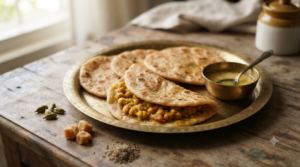
Soft golden puran poli filled with smooth chana dal and jaggery puran, served warm with ghee.
Puran poli is a Maharashtrian sweet flatbread filled with cooked chana dal and jaggery. It takes patience rather than difficult technique, so the biggest gains come from draining the dal well, judging the puran by texture, and resting the dough before rolling.
Puran Poli Recipe Jaggery at a Glance
- Style: Maharashtrian sweet stuffed flatbread
- Filling: chana dal, jaggery, cardamom, optional nutmeg
- Dough: whole wheat flour plus maida for softer rolling
- Prep: about 30 minutes, plus soaking and resting
- Cook time: about 45 minutes
- Total: roughly 2 hours to 2 hours 15 minutes
- Yield: 10 to 12 medium puran poli
- Difficulty: medium, mainly because rolling needs a light hand
The recipe is not truly “instant,” even though the older URL contains that word. The indexed slug should stay unchanged, but the refreshed recipe now sets a realistic expectation about soaking, resting, cooling, and rolling time.
Puran Poli Recipe Jaggery Ingredients
The Puran Poli Recipe Jaggery ingredient list is simple, but the order of work matters. Keep the filling and dough ingredients separate before you start. That simple setup helps because the dough can rest while the dal cooks and the puran cools.
For the puran filling
- 1½ cups chana dal, rinsed well
- 3 cups water for pressure cooking
- 1½ cups grated jaggery or jaggery powder
- ½ teaspoon cardamom powder
- ¼ teaspoon nutmeg powder, optional
- 1 tablespoon ghee
For the poli dough
- 2 cups whole wheat flour
- 1 cup all-purpose flour (maida)
- ½ teaspoon salt
- 2 tablespoons oil
- Water as needed for kneading
For cooking
- Ghee or neutral oil, as needed for the tawa
- Extra flour for very light dusting while rolling
Use soft, clean jaggery without a gritty texture. If your jaggery contains visible grit, melt it with a spoonful or two of water, strain it, and then cook it with the mashed dal.
Why This Puran Poli Recipe Jaggery Method Works
Three texture checks matter more than an exact clock time. First, the cooked dal must mash easily but should not sit in excess water. Next, the puran must become thick enough to hold a ball after cooling. Finally, the dough should feel softer than normal roti dough, since a stiff cover cracks around the filling.
The 1:1 volume ratio of chana dal to jaggery keeps the filling sweet without turning it into syrup. Meanwhile, the wheat-maida blend gives enough structure for beginners while staying more pliable than an all-wheat cover. That balance makes this Puran Poli Recipe Jaggery version easier to roll evenly.
Step-by-Step Puran Poli Recipe Jaggery Method
The Puran Poli Recipe Jaggery steps work best when you overlap resting and cooling time. Read the six stages once before starting, because several steps overlap. You can soak the dal while measuring the dough ingredients, then rest the dough while the filling cooks.
1. Rinse, soak, and cook the chana dal
Rinse the chana dal until the water looks mostly clear, then soak it for 30 to 60 minutes. Drain the soaking water and add the dal to a pressure cooker with 3 cups fresh water.
Cook on medium heat for about 3 to 4 whistles in a standard stovetop pressure cooker. Let the pressure fall naturally, then check a few grains. They should crush easily between your fingers; if they still feel firm, cook briefly again.
Drain the dal thoroughly through a sieve, because trapped water is the main cause of loose puran. Save the drained stock if you plan to make katachi amti or another dal-based dish.
2. Cook the jaggery and dal into puran
Transfer the drained dal to a wide, heavy pan and mash it well. Add the grated jaggery, then cook over low to medium heat while stirring often.
The jaggery first melts and loosens the mixture, so do not assume it has failed at that stage. Keep cooking until the puran thickens, leaves the sides more cleanly, and no watery syrup pools at the bottom.
Add cardamom, optional nutmeg, and 1 tablespoon ghee near the end. Then cool the mixture completely before shaping. A warm filling softens the dough and makes sealing harder.
3. Make a soft, rested dough
Mix the whole wheat flour, maida, and salt in a large bowl. Add the oil, then pour in water gradually until the dough comes together.
Knead for 6 to 8 minutes until smooth and soft. The dough should feel more relaxed than chapati dough but should not stick heavily to your hands. Cover it and rest for at least 30 minutes; a 45 to 60 minute rest is even easier for rolling.
4. Match the dough and filling portions
Divide the cooled puran into 10 to 12 smooth balls. Divide the dough into the same number of portions, making each dough piece slightly smaller than its filling ball.
This filling-forward ratio gives a thin cover instead of a bread-heavy poli. Keep both sets covered while you work, since exposed dough develops a dry skin that cracks.
5. Stuff and roll without tearing
Flatten one dough ball into a small disc, then place a puran ball in the centre. Bring the dough edges upward, pinch them together, and press the sealed top flat.
Dust the surface lightly and roll from the centre outward with gentle pressure. Turn the disc often so the thickness stays even. Aim for roughly 6 to 7 inches, but stop earlier if the filling begins to show through.
If the puran leaks, do not bury the spot under lots of dry flour. Pinch a tiny piece of dough over the tear, dust lightly, and continue with less pressure.
6. Cook on a medium-hot tawa
Heat a heavy tawa over medium heat, then place the rolled poli on it. When small bubbles appear and light brown spots form underneath, flip it.
Brush a small amount of ghee on the cooked side, then flip again and grease the second side. Cook only until both surfaces have golden-brown spots, since prolonged low heat dries the bread.
Stack finished puran poli under a clean kitchen towel for a short time. That keeps the surface soft while you finish the batch.
How to Know When the Puran Is Ready
The puran is ready when a cooled spoonful can be rolled into a soft ball without spreading. It should feel smooth, moist, and cohesive rather than wet or crumbly.
- Too wet: return it to low heat and stir until more moisture cooks off.
- Too dry: stop cooking and let it cool; overcooking can make the filling grainy and harder to roll.
- Lumpy: mash or pass it through a sturdy sieve while still warm enough to work.
- Gritty: check the jaggery quality; strain melted jaggery before mixing if needed.
A puran yantra makes the filling especially smooth, but it is not required. A potato masher, sturdy sieve, or food mill can do the same job if the dal is fully cooked.
Common Puran Poli Recipe Jaggery Problems and Fixes
| Problem | Likely cause | Fix |
|---|---|---|
| Filling leaks | Puran is wet or warm | Cool fully and cook it thicker |
| Dough cracks | Dough is stiff or dry | Knead softer and rest longer |
| Poli turns hard | Too much dry flour or long cooking | Dust lightly and cook on medium heat |
| Filling feels grainy | Dal is undercooked or poorly mashed | Cook until tender and mash smooth |
| Poli stays thick | Too much dough around the puran | Use a smaller dough ball than filling ball |
Most Puran Poli Recipe Jaggery failures are texture problems rather than ingredient problems. That is why a visual and touch test works better than blindly adding more flour or more water.
Puran Poli Recipe Jaggery Tips for a Softer Result
- Rest the dough while the puran cools, so both parts reach the right texture at the same time.
- Use only a light dusting of flour because excess flour dries the surface during roasting.
- Keep the tawa at medium heat, since high heat scorches the jaggery before the dough cooks evenly.
- Roll from the centre with short strokes instead of pressing hard at the edges.
- Cool the puran completely before stuffing, especially in warm kitchens.
- Stack cooked poli under a cloth briefly, then cool before packing for storage.
For a Telugu-style version with a softer, oil-rested dough, see our bobbatlu recipe with jaggery. If you want a different regional filling, compare it with our Gujarati puran poli recipe.
Puran Poli Recipe Jaggery vs Bobbatlu and Holige
Puran poli, bobbatlu, obbattu, and holige belong to the same broad family of stuffed sweet flatbreads. However, regional kitchens vary the outer flour, the dal, the amount of oil, and whether coconut appears in the filling.
This recipe stays closest to a Maharashtrian-style chana dal and jaggery puran inside a wheat-maida cover. Andhra-style bobbatlu often uses a softer, oil-rich cover that can be patted by hand, while some Karnataka holige versions use different fillings or flours.
If you specifically want a rava-based sweet flatbread, use the separate semolina poli recipe instead of changing this puran filling. Keeping those methods separate also prevents a useful regional recipe from becoming a confusing hybrid.
Serving Ideas That Suit the Filling
Serve this Puran Poli Recipe Jaggery warm with a small spoon of ghee so the cardamom and jaggery aromas open up. In Maharashtra, many families also pair it with katachi amti, a thin spiced preparation made from the drained chana dal stock.
Milk is another simple pairing, especially when the poli is slightly warm. For a festive plate, keep the rest of the meal less sweet so the puran remains the focus.
If you make the recipe for a festival, finish the savoury dishes first and cook the poli closer to serving. Freshly roasted puran poli stays softer than a batch held uncovered for a long time.
Puran Poli Recipe Jaggery Storage and Reheating
Cool cooked puran poli before sealing it in a container, since trapped steam makes the surface damp. The Food Safety and Standards Authority of India advises keeping prepared leftovers cold below 5°C when they are not eaten promptly.
For a conservative home rule, refrigerate cooled leftovers and use them within 3 to 4 days. The USDA Food Safety and Inspection Service also recommends 3 to 4 days for refrigerated leftovers.
Reheat each poli on a dry or lightly greased tawa until warm and flexible. You can freeze cooked poli between sheets of parchment for about one month for best quality, although the texture is best when made fresh.
Can You Make Puran Poli Recipe Jaggery Ahead?
Yes. The best make-ahead step is the puran filling because it can cool and firm before you roll. Prepare it a day ahead, refrigerate it in a covered container, and bring it closer to room temperature before shaping.
You can also mix the dough earlier the same day, then keep it covered so the surface does not dry. Avoid rolling all the stuffed poli too far ahead because stacked raw rounds can stick, sweat, or tear.
Before You Start Rolling
A reliable Puran Poli Recipe Jaggery comes down to three checks: soft dal, thick cooled puran, and a relaxed dough. If those are right, sealing and rolling become much easier.
Do not chase an exact whistle count or a rigid minute mark when the texture tells you more. Cook the dal until crushable, cook the filling until it holds shape, and stop roasting once the flatbread develops golden spots.
Frequently Asked Questions
What is puran poli made of?
This Puran Poli Recipe Jaggery uses a sweet lentil filling called puran inside a soft flour dough. This version combines chana dal, jaggery, cardamom, and optional nutmeg, then cooks each stuffed flatbread on a tawa with ghee or oil.
Should chana dal be soaked for puran poli?
Soaking is helpful but not compulsory. A 30 to 60 minute soak shortens cooking and helps the dal soften more evenly, so it is especially useful when you want a smooth filling without hard lentil pieces.
Why does my puran poli break while rolling?
Breaking usually means the filling is too wet, the dough is too stiff, or the rolling pressure is too heavy. Cool the puran fully, rest a softer dough, and use light strokes from the centre outward.
Can I use only whole wheat flour?
Yes. An all-wheat poli has a slightly firmer, more rustic bite, so roll it gently and keep the dough soft. The wheat-maida blend in this recipe is easier for beginners because it stretches with less cracking.
Can I use sugar instead of jaggery?
You can, but the flavour will change. Jaggery gives puran its deeper caramel-like taste and darker colour, while white sugar produces a cleaner, lighter sweetness. Adjust the cooking by texture rather than assuming both sweeteners behave identically.
How do I keep puran poli soft after cooking?
Do not overcook it or use too much dry flour while rolling. Stack freshly cooked poli under a clean cloth briefly, then cool and cover them. Reheat on a tawa rather than leaving them over low heat for long periods.
Can I freeze puran poli?
Yes. Cool the cooked poli completely, separate them with parchment, and freeze in a sealed container. For best texture, use them within about one month and reheat directly on a tawa after thawing in the refrigerator.
Is jaggery healthier than sugar in puran poli?
Jaggery is less refined and has a stronger flavour, but it is still a concentrated sweetener. Treat puran poli as a festive sweet rather than a health food, especially if you monitor blood sugar or overall added-sugar intake.