Rasam Powder and Sambar Powder: Difference + Recipe
The real difference between rasam powder and sambar powder comes down to three things: fenugreek, lentils, and how much black pepper each blend carries. Both sit on the same supermarket shelf, so shoppers naturally wonder if one can quietly stand in for the other. They cannot, at least not without changing the dish. This guide breaks down exactly what separates the two, gives you a tested homemade rasam powder recipe, and settles the “can I swap them?” question for good.
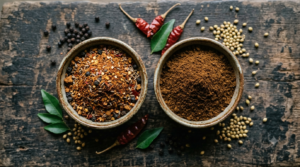
Rasam powder and sambar powder side by side, showing the coarser pepper-led blend against the finer coriander-and-lentil blend.
Rasam is a thin, peppery, tangy South Indian broth, sipped on its own or poured over rice. Sambar is its heartier cousin, a thick lentil-and-vegetable stew served with rice, idli, or dosa. Because the dishes differ, so do the spice blends that flavour them. Get the powder right and each dish tastes the way a Tamil, Andhra, Kerala, or Karnataka kitchen intends.
You can read more about rasam and sambar as dishes, but the powders are where the real cooking begins.
Rasam Powder and Sambar Powder at a Glance
- Rasam powder is pepper-and-cumin forward, coarsely ground, and low on lentils.
- Sambar powder is coriander-and-lentil heavy, finely ground, and almost always contains fenugreek.
- Fenugreek is the single clearest divider: sambar powder needs it, rasam powder mostly skips it.
- They are not true 1:1 substitutes, though either works in a pinch if you accept a different taste.
- Homemade beats store-bought for freshness, aroma, and adjustable heat.
Rasam Powder and Sambar Powder: What Actually Sets Them Apart
Rasam powder and sambar powder start from the same pantry, yet they end up tasting nothing alike because the proportions and grind change everything. Rasam powder leans on black pepper and cumin for a sharp, warming heat that hits the back of the throat. Sambar powder leans on coriander, lentils, and dried red chillies for a rounder, deeper, spicier flavour that can carry a thick stew.
The grind matters too. Cooks keep rasam powder coarse on purpose, since a fine powder would cloud the clear broth. Sambar powder, by contrast, is ground fine so it melts into the lentils. Here is the side-by-side comparison at a glance.
| Feature | Rasam Powder | Sambar Powder |
|---|---|---|
| Dominant spices | Black pepper, cumin | Coriander, red chilli, lentils |
| Fenugreek (methi) | Little or none | Characteristic, always present |
| Lentils | Small amount | Generous (toor, chana, urad dal) |
| Turmeric | Rarely added | Often added for colour |
| Grind texture | Coarse | Fine |
| Flavour | Sharp, peppery, tangy | Deep, robust, spicy |
| Used in | Thin rasam broth | Thick lentil-vegetable sambar |
Notice that pepper is the workhorse of rasam, while coriander and lentils anchor sambar. That one shift in balance is why the two dishes taste worlds apart, even though the spice racks behind them look almost identical.
Ingredients in Rasam Powder and Sambar Powder
Comparing the ingredient lists side by side makes the gap obvious, and the overlap explains why so many cooks mix them up. Both rasam powder and sambar powder share a coriander base, yet a few additions and omissions decide which blend you actually have in the jar. The lentils, the fenugreek, and the pepper ratio do most of the talking.
Typical rasam powder ingredients
A classic rasam powder keeps things lean and pepper-led. You will usually find coriander seeds, black peppercorns, cumin, a modest amount of dried red chillies, and a small quantity of lentils for body. Garlic, curry leaves, and a pinch of asafoetida often join the mix. Because there are no thick dals to soften bitterness, fenugreek stays minimal or absent.
Typical sambar powder ingredients
Sambar powder is a bigger, more complex blend. Coriander seeds lead, backed by a generous mix of toor dal, chana dal, and urad dal. Dried red chillies bring the heat, while fenugreek seeds add that signature nutty, slightly bitter note.
Many families also stir in turmeric for colour, plus cumin, mustard, curry leaves, and sometimes coconut, cinnamon, or cloves for extra depth. Regional versions vary widely, so no two households grind quite the same podi.
Why Fenugreek Is the Real Dividing Line
If you remember one thing, remember fenugreek. Sambar powder relies on it, because the blend carries enough lentils to balance its bitter edge and turn it into warmth. Rasam powder skips it for the opposite reason: without those thick dals, fenugreek would simply taste bitter in a clear broth. This single ingredient is the clearest line between rasam powder and sambar powder.
Pepper and cumin do the heavy lifting in rasam powder instead. Together they create the warming quality that makes rasam such a comforting drink during a cold or cough, which is why many South Indian homes treat a hot bowl as a natural remedy. This pairing also explains the coarse grind, since the goal is to extract flavour into a clean, sippable liquid rather than thicken it.
Can You Swap Rasam Powder and Sambar Powder?
You can swap rasam powder and sambar powder in an emergency, but the dish will not taste authentic. Use rasam powder in sambar and the stew turns thin and lacks backbone. Use sambar powder in rasam and the broth becomes heavy, muddy, and overly strong for such a delicate dish.
Plenty of websites claim the two are “basically interchangeable” at a 1:1 ratio. That advice is only half true. A straight swap works when the powder is a background flavour, yet it falls short whenever the spice blend is meant to be the star.
If you must substitute, start with less, taste as you go, and adjust the pepper or chilli to match. For a fuller walkthrough, see our step-by-step substitution guide.
Authentic Homemade Rasam Powder Recipe
Making rasam powder at home takes about 25 minutes and rewards you with far more aroma than any packet. This batch yields roughly one cup, enough for three to four pots of rasam. Adjust the pepper and chilli to set your own heat level.
Recipe card
| Detail | Value |
|---|---|
| Prep time | 10 minutes |
| Cook time | 15 minutes |
| Total time | 25 minutes |
| Yield | About 1 cup (3–4 pots of rasam) |
| Difficulty | Easy |
Ingredients
- ¾ cup coriander seeds (dhania)
- ¼ cup toor dal (split pigeon peas)
- ¼ cup chana dal (split Bengal gram)
- 2 tbsp cumin seeds (jeera)
- 1–2 tsp black peppercorns (adjust to taste)
- 8–10 dried red chillies (fewer for milder heat)
- Optional: ½ tbsp fenugreek seeds (methi)
- Optional: ½ tsp asafoetida (hing)
- Optional: a handful of dry curry leaves
Step-by-step instructions
- Prep the spices (3 min): Wash and dry the curry leaves if using, then break the dried red chillies. Lay everything on a clean plate so nothing gets missed while roasting.
- Dry-roast the lentils (5 min): Heat a heavy pan on low. Add the toor dal and chana dal, then roast until golden and nutty. Stir constantly so they do not burn.
- Roast the whole spices (4 min): Add coriander seeds and red chillies to the same pan, and roast until the chillies turn crisp. Next, roast the cumin, peppercorns, and fenugreek for two to three minutes until fragrant. Finally, crisp the curry leaves for about two minutes.
- Cool and grind (5 min): Let everything cool fully, since warm spices sweat and clump. Transfer to a spice grinder with the asafoetida, then grind to a coarse-to-medium powder. Sieve if you want a more uniform texture.
- Store: Pour the powder into an airtight glass or steel jar. Keep it cool, dry, and out of sunlight, where it stays fresh for three to six months.
Using Your Rasam Powder in a Classic Rasam
One tablespoon of this powder flavours four to five servings of rasam. For a simple tomato rasam, start by soaking a small lemon-sized ball of tamarind in warm water for ten minutes.
- Heat oil in a pot, then temper with mustard seeds and curry leaves.
- Add chopped tomatoes and sauté for two minutes.
- Pour in the tamarind water, salt, turmeric, and one tablespoon of rasam powder.
- Simmer for ten minutes, then finish with a ghee tadka of pepper and crushed cumin.
For more ideas, try our lemon rasam without dal or a warming pepper rasam for cold and cough.
Kitchen Tips Most Spice Guides Skip
- In many Andhra kitchens, cooks tune the pepper by season: more in winter for warmth, less in summer for a lighter cup.
- If your rasam tastes flat, a small pinch of jaggery balances the tang and heat beautifully.
- Always roast on low heat, because a high flame kills the aromatics and leaves a bitter edge.
- Keep rasam powder coarse and sambar powder fine, since grind size genuinely changes how each dish turns out.
Substitutions and Storage
No toor dal on hand? Use extra chana dal for a similar nutty base. If curry leaves are missing, a pinch of dried curry-leaf powder still lends aroma. Asafoetida aids digestion and adds authenticity, so include it when you can, though the recipe survives without it.
Store your powder in small batches to protect the aroma. Glass jars beat plastic, which slowly absorbs spice oils and odours. In humid weather, refrigerate the jar to stop clumping and keep the blend lively. For a matching stew, our Mangalore-style sambar pairs perfectly with a fresh batch of sambar powder.
Nutrition Snapshot
The figures below are approximate and based on a standard rasam powder mix. Per tablespoon (about 10 g), the powder is light, since you use only a small amount per pot.
| Nutrient | Amount |
|---|---|
| Calories | 32 kcal |
| Protein | 1.3 g |
| Fat | 1 g |
| Carbohydrates | 4.8 g |
| Fibre | 0.9 g |
These values come from the seeds and lentils in the blend and vary with your exact mix. Any digestive benefits from pepper and cumin reflect traditional wisdom rather than medical advice, so enjoy rasam as comfort food rather than a cure.
The Bottom Line
Rasam powder and sambar powder look like twins on the shelf, yet they behave like different cooks in the pot. Reach for pepper-forward rasam powder when you want a thin, tangy broth. Reach for coriander-and-lentil-rich sambar powder when you want a thick, hearty stew. Grinding either one fresh at home is the surest way to make every South Indian meal taste the way it should.
Frequently Asked Questions
What is the main difference between rasam powder and sambar powder?
Rasam powder is dominated by black pepper and cumin, ground coarse, and low on lentils and fenugreek. Sambar powder is coriander-and-lentil heavy, ground fine, and almost always contains fenugreek. Rasam powder flavours a thin broth, while sambar powder flavours a thick stew.
Can I use rasam powder instead of sambar powder?
Yes, in a pinch, but the result will taste thinner and less rich. Rasam powder lacks the lentils and fenugreek that give sambar its backbone. Add extra chilli and coriander to close the gap, and use it only when sambar powder is genuinely unavailable.
Does sambar powder contain coconut?
Some regional versions do, especially certain Karnataka and coastal blends, while many Tamil versions do not. Rasam powder almost never includes coconut. Because recipes vary by household, always check the label or your own family formula.
Why does rasam powder have no fenugreek?
Fenugreek turns bitter without enough lentils to balance it. Rasam powder carries only a little dal, so a heavy dose of fenugreek would spoil the clear broth. That is why sambar powder, rich in lentils, can use fenugreek freely while rasam powder skips it.
How long does homemade rasam powder last?
Stored in an airtight jar away from heat and sunlight, homemade rasam powder stays fresh for three to six months. For longer storage, freeze it for up to nine months without much loss of aroma. Keep it dry, since moisture causes clumping and fades the flavour.
Is homemade powder better than store-bought?
Homemade wins on freshness, aroma, and control over heat. Many packaged blends lose fragrance on the shelf and cannot be adjusted to your taste. Grinding your own also lets you fine-tune the pepper, chilli, and grind size for each dish.
Are rasam and sambar the same dish?
No. Rasam is a thin, peppery, tangy broth built on tamarind or tomato, usually without lentils and vegetables in bulk. Sambar is a thick stew of lentils and vegetables. They often share a plate, with sambar as the main and rasam as a lighter accompaniment.