Sambar Recipe Without Vegetables Easy Home Cooking Method
A sambar recipe without vegetables is what most South Indian kitchens fall back on when the fridge is empty and the idlis are already steaming. Skipping drumstick and pumpkin sounds like a simple shortcut. Yet it changes the dish more than most cooks expect, because vegetables quietly supply sweetness, body and slow-released moisture. Remove them and you leave a gap, so you have to fill that gap on purpose.
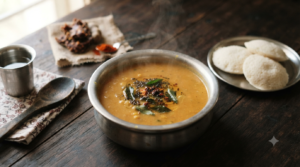
A smooth toor dal sambar made without any vegetables, ready to pour over hot idli.
This guide shows exactly how. A thin, flat no-veg sambar is almost always a fixable mistake rather than a limitation of the method.
Sambar Recipe Without Vegetables at a Glance
This sambar recipe without vegetables uses cooked toor dal, tamarind extract, tomato and a proper tempering to build flavour in about 35 minutes. Because there is nothing to chop or boil separately, the active work drops to roughly ten minutes. The result suits idli, dosa and plain rice equally well.
- Prep time: 10 minutes
- Cook time: 25 minutes
- Serves: 4 bowls
- Base: toor dal, tamarind, sambar powder, tomato
- Two versions: thinner tiffin style, thicker rice style
- Diet: vegan when you temper in oil instead of ghee
- Skill level: beginner, though the tempering needs attention
Why a Sambar Recipe Without Vegetables Still Tastes Complete
Vegetables do three specific jobs in sambar: they add natural sweetness, they thicken the stew as they break down, and they release water slowly so the flavour stays balanced. A sambar recipe without vegetables has to replace all three deliberately, otherwise the pot tastes sour and watery.
The sweetness comes back through tomato and a small piece of jaggery. Body comes from cooking the dal slightly thicker than usual, then mashing it properly. Depth comes from the tempering, which matters far more here because nothing else is contributing aroma.
That last point is the one most recipes skip. In a vegetable sambar, brinjal and drumstick soak up the spice and carry it. Without them, the fat-soluble flavours in your mustard, fenugreek and curry leaves have to do all the lifting, so tempering carelessly ruins the whole pot.
Ingredients for a Sambar Recipe Without Vegetables
Measurements below serve four people. Keep the tamarind moderate at first, since you can always add more sourness later but you cannot take it out.
- 1 cup toor dal (split pigeon peas), rinsed until the water runs clear
- 2½ cups water for cooking the dal
- 1 medium tomato, finely chopped
- 1 lemon-sized ball of tamarind, soaked in ½ cup warm water
- 2 tbsp sambar powder
- ½ tsp turmeric powder
- 1 tsp jaggery or sugar
- Salt, about 1 tsp, adjusted at the end
- 1 to 1½ cups hot water to adjust consistency
For the tempering, keep everything measured and within reach before the oil goes on:
- 2 tbsp gingelly oil, any neutral oil, or ghee
- ½ tsp mustard seeds
- ½ tsp cumin seeds
- ¼ tsp fenugreek seeds, no more
- 10 to 12 curry leaves
- 1 pinch asafoetida (hing)
- 2 dried red chillies, broken
- Fresh coriander leaves to finish
Which Dal Gives the Best Body
Toor dal is the traditional choice because it cooks into a creamy, slightly nutty base that holds tamarind well. Still, the other options work if your shelf is short, though each one changes the texture noticeably.
| Dal | Texture | Best for |
|---|---|---|
| Toor dal | Creamy, full-bodied | The standard choice for rice and tiffin |
| Moong dal | Lighter, cooks faster | Easy digestion, quick weeknight pots |
| Masoor dal | Very soft, breaks down fully | A thinner sambar for dosa |
| Toor and moong, half each | Creamy but lighter | A good compromise when serving children |
Whichever dal you pick, cook it until it collapses under a spoon. A sambar recipe without vegetables depends on that starch for its body. Undercooked dal is the single most common reason a no-vegetable sambar tastes thin, because the starch never releases into the liquid.
How to Make Sambar Recipe Without Vegetables Step by Step
Work through these five stages in order. The dal and the tamarind can happen at the same time, so the whole sambar recipe without vegetables comes together in roughly 35 minutes.
Step 1: Cook the dal until it collapses
Add the rinsed toor dal, 2½ cups water, turmeric and a pinch of salt to a pressure cooker. Cook on medium heat for three to four whistles, which usually takes 10 to 12 minutes. After the pressure drops naturally, mash the dal against the side of the vessel until smooth.
Step 2: Extract the tamarind
While the dal cooks, soak the tamarind in ½ cup warm water for five minutes. Squeeze it firmly with your fingers, then strain the liquid and discard the fibre. Warm water pulls out far more sourness than cold, so do not skip that detail.
Step 3: Build the tempering and base
Heat the oil in a heavy pan on medium. Add mustard seeds first and wait until they splutter completely, which takes about 30 seconds. Then add cumin, fenugreek, red chillies, curry leaves and hing together, and stir for 20 seconds until the leaves crackle.
Fenugreek burns quickly and turns bitter, so pull the pan off the heat if it darkens past golden. Next, add the chopped tomato and cook for two to three minutes until it softens. Sprinkle in the sambar powder and stir for a full minute on low heat.
Step 4: Simmer everything together
Pour in the tamarind extract and let it bubble for two minutes. This step cooks off the raw edge of the tamarind, which otherwise dominates the finished sambar. Then stir in the mashed dal, salt, jaggery and enough hot water to reach the consistency you want.
Bring the pot to a boil, then lower the flame and simmer gently for six to eight minutes. Do not rush this. The sambar powder needs those minutes to lose its raw, dusty taste and settle into the dal.
Step 5: Rest before serving
Switch off the heat and scatter the coriander leaves over the top. Cover the pot and leave it alone for at least five minutes. Sambar genuinely improves as it rests, because the spices continue to bloom in the residual heat.
Tiffin Style or Rice Style: Pick Your Consistency
Most recipes online give you one thickness and leave you to guess. In practice, South Indian homes cook two consistencies from the same base, so decide before you add the final water. A sambar recipe without vegetables works well either way.
| Feature | Tiffin style | Rice style |
|---|---|---|
| Serve with | Idli, dosa, pongal, vada | Steamed rice |
| Consistency | Pourable, slightly loose | Thick enough to coat rice |
| Extra water | About 1½ cups | About ¾ cup |
| Sourness | Milder tamarind | Sharper tamarind |
| Jaggery | 1 tsp, noticeable | ½ tsp, background only |
For tiffin style, add roughly 1½ cups of hot water and keep the tamarind gentle so it does not fight the fermented batter. For rice, use about ¾ cup and let the sourness come forward. If you prefer the milder version, our sambar recipe without tamarind uses lemon juice instead.
No Pressure Cooker? Three Ways Around It
A pressure cooker is convenient, though it is not essential. Each alternative below works, provided you give the dal enough time to break down completely.
- Open pot: soak the dal for 30 minutes first, then boil with 3½ cups water for 40 to 45 minutes, topping up as needed.
- Electric pressure cooker: cook on high pressure for 12 minutes, then let the pressure release naturally for 10 minutes.
- Microwave: use a deep bowl, 3 cups water, and cook in 5-minute bursts for 15 to 18 minutes, stirring between rounds.
Whichever route you take, keep the dal on the thicker side. You can always loosen it with hot water later, whereas a watery dal cannot be rescued without long reduction.
Fixing a Sambar Recipe Without Vegetables That Went Wrong
This dish has fewer ingredients hiding its faults, so problems show up clearly. Fortunately, almost every one of them is reversible while the pot is still on the stove.
| Problem | Cause | Fix |
|---|---|---|
| Tastes raw and dusty | Sambar powder was not cooked | Simmer another 5 minutes on low |
| Too sour | Excess tamarind | Add ½ tsp jaggery and a little dal or hot water |
| Bitter aftertaste | Burnt fenugreek or hing | Redo the tempering separately and pour it in |
| Watery and flat | Undercooked or unmashed dal | Mash harder, then simmer uncovered |
| Tastes of nothing | Salt added too early or too little | Adjust salt at the end, taste as you go |
| Separates on standing | Normal for a dal-heavy pot | Stir well and reheat gently |
If the sambar has genuinely gone too sour and jaggery cannot save it, cook a quick half cup of dal and stir that in. That dilutes the acidity without watering down the flavour, which plain water always does.
Kitchen Notes Most Recipes Skip
- Mash the dal while it is still hot, since it turns velvety far more easily than after it cools.
- Freshly ground sambar powder makes a bigger difference here than in a vegetable sambar, because there is less competing flavour.
- Add a handful of shallots to the tempering if you have them, as they bring back the sweetness vegetables normally provide.
- Gingelly oil gives the most authentic aroma, although any neutral oil works fine.
- A splash of lemon juice at the very end lifts the whole pot when the tamarind tastes dull.
- Never boil sambar hard after adding the dal, since aggressive boiling makes it froth and stick.
One more habit worth borrowing: taste the sambar twice, once before resting and once after. The salt and sourness read differently at each stage, and the second taste is the honest one.
Substitutions, Storage and Make-Ahead
Simple substitutions
No tomato at home? Use an extra teaspoon of tamarind paste and balance it with a little more jaggery. Two tablespoons of coconut milk stirred in off the heat adds richness, though our sambar recipe without coconut covers that variation properly.
If you have no dal at all, the dish becomes a different one entirely, built on roasted gram flour instead. That method sits in our sambar without dal guide. For a no-onion, no-garlic version suited to festival days, follow the sambar recipe without onion instead.
Storing a Sambar Recipe Without Vegetables
Refrigerate leftovers in an airtight container for up to three days. Reheat on the stove with a splash of water, because sambar thickens considerably once chilled. Avoid repeated reheating of the whole batch, so warm only what you plan to eat.
It also freezes well for up to two months. Freeze it in single portions, then thaw overnight in the fridge before warming gently. The texture holds better than a vegetable sambar, since there is no cooked vegetable to turn mushy.
Nutrition in a Sambar Recipe Without Vegetables
A serving of this sambar recipe without vegetables carries roughly 150 to 180 kcal, with 7 to 10 g of plant protein and 4 to 8 g of fibre. The lentils supply almost all of it. According to USDA FoodData Central, 100 g of cooked pigeon peas provides about 121 kcal, 6.8 g protein, 23 g carbohydrate and 6.7 g fibre.
| Per serving (approx.) | Amount |
|---|---|
| Calories | 150-180 kcal |
| Protein | 7-10 g |
| Carbohydrates | 20-30 g |
| Fat | 3-6 g |
| Fibre | 4-8 g |
These figures are estimates based on the quantities listed above. Your actual numbers shift with the oil you use, the dal quantity and the serving size. Anyone managing a medical condition or a specific diet should confirm values with a qualified dietitian rather than rely on a recipe estimate.
The hing detail nobody mentions
Pure asafoetida resin contains no gluten. However, most compounded hing sold in shops is cut with wheat flour to keep it free-flowing, which makes it unsuitable for anyone with coeliac disease. The Celiac Disease Foundation treats even trace wheat as a real risk, so read the label rather than assume.
Look for hing that names rice flour as the carrier, or use pure resin. Under India’s packaged food labelling rules enforced by the Food Safety and Standards Authority of India, cereals containing gluten must be declared on the ingredient list, which makes that check quick. If you cannot verify the brand, simply leave the hing out.
Before You Cook This Sambar Recipe Without Vegetables
This dish succeeds or fails on three decisions: cook the dal properly, temper with attention, and simmer long enough after the sambar powder goes in. Everything else is adjustable to taste. Choose your consistency first, keep the tamarind conservative, and taste at the end rather than the beginning. Serve it with idli, dosa, pesarattu or plain rice, and you have a full meal from a nearly empty kitchen.
Frequently Asked Questions
Does sambar taste good without any vegetables?
Yes, provided you compensate for what the vegetables contributed. Cook the dal thicker for body, add tomato and a little jaggery for sweetness, and give the tempering full attention. Done this way, the finished sambar tastes closer to restaurant tiffin sambar than to a stripped-down version.
Which sambar powder works best for this recipe?
Freshly ground sambar powder gives the best result, since it carries more aroma. Established store brands work well too, though quantities vary between them. Start with two tablespoons, then adjust after tasting at the simmering stage.
Can I make this sambar recipe without vegetables vegan?
Yes. Temper in gingelly oil or any neutral oil instead of ghee, and the dish becomes fully vegan. Skip the coconut milk variation, or use plant-based coconut milk, which is naturally dairy free anyway.
Is this sambar healthy?
Lentils make it a solid source of plant protein and fibre, and skipping starchy vegetables keeps the calorie count moderate. Portion size and the amount of oil in the tempering matter most. Pair it with rice or idli for a balanced everyday meal.
Can I make it without tamarind?
Yes, though the sourness must come from somewhere. Lemon juice added off the heat is the easiest substitute, and raw mango or tomato works in season. Add sour ingredients gradually, tasting as you go.
How long does a sambar recipe without vegetables keep?
It keeps for three days refrigerated in an airtight container and up to two months frozen. Reheat gently with a splash of water. Discard any batch left at room temperature for more than two hours, especially in warm weather.
What can I serve with a no-vegetable sambar?
Idli, dosa, medu vada, pongal and steamed rice all work well. A simple coconut chutney or a spoonful of ghee rounds the plate out. Adjust the consistency to suit whichever you choose.
Why does my sambar taste bitter?
Burnt fenugreek seeds are the usual culprit, since they turn bitter within seconds of darkening. Overheated hing does the same thing. Discard that tempering, prepare a fresh one carefully, and pour it into the pot.