Ugadi Festival Prasadam Items Easy Authentic Recipes
Ugadi Festival Prasadam Items List Telangana Easy Cooking
Ugadi Festival Prasadam Items List Telangana Easy Cooking brings you authentic traditional recipes you must prepare for Ugadi celebrations in Andhra Pradesh and Telangana. Ugadi Festival isn’t just the Telugu New Year; it’s a moment to reflect, rejoice, and share food with meaning. The highlight is the prasadam that embodies culture, emotions, and seasonal flavours — the most iconic being Ugadi Pachadi, symbolising the six tastes of life. Ugadi on Wikipedia explains how food reflects life’s varied experiences.
Recipe Card
| Item | Details |
|---|---|
| Prep Time | 15 mins |
| Cook Time | 0 mins (No-Cook) |
| Servings | 4 servings |
| Difficulty | Easy |
Introduction To Ugadi Festival Prasadam Items
The soul of Ugadi Festival Prasadam Items is simplicity and symbolism. In Telangana and Andhra, special dishes are prepared early in the morning and offered as naivedyam to the deities before being served to family members. The most important prasadam is Ugadi Pachadi — a mix of six ingredients representing six emotions one experiences in life.
Essential Ugadi Prasadam Item: Ugadi Pachadi
Ingredients With Exact Quantities (For 4 Servings)
- ½ cup raw unripe mango, finely chopped (about 60 g)
- ¼ cup jaggery, grated or finely chopped (about 60 g)
- ¼ cup tamarind pulp (soak 1 tsp tamarind in warm water)
- 2 Tbsp fresh neem flowers (or substitute with 2 Tbsp soaked fenugreek seeds)
- ¼ tsp black pepper powder
- ¼ tsp salt (adjust to taste)
- ½ cup clean water
Step-By-Step Instructions With Timings
- Prepare Tamarind Pulp (10 mins): Soak 1 tsp tamarind in half a cup of warm water for 10 minutes. Squeeze well and discard fibers to extract pulp.
- Mix Jaggery & Water (2 mins): In a bowl, combine grated jaggery and ½ cup clean water, stir until jaggery dissolves completely.
- Add Tamarind Pulp (1 min): Pour the tamarind extract into the jaggery mixture. Stir well.
- Add Main Ingredients (2 mins): Add chopped mango, fresh neem flowers, black pepper and salt into the bowl.
- Final Mix (1 min): Stir all ingredients thoroughly so flavours blend evenly. There’s no cooking required — it’s served as is!
- Offer As Prasad (1 min): First offer the Pachadi to your deities as prasadam before serving to family.
Why Ugadi Pachadi Is So Special
Ugadi Pachadi isn’t just food; it’s tradition. Each ingredient has meaning: jaggery for sweetness, tamarind for sourness, raw mango for tang, neem flowers for bitterness, pepper for spice, and salt for life’s saltiness. This combination teaches mindfulness of all life experiences in the year ahead.
Other Traditional Prasadam Items For Ugadi Festival
Apart from Pachadi, many families in Telangana prepare additional prasadam items that round out the Ugadi feast. These often include Pulihora (tamarind rice), Mamidikaya Pappu (raw mango dal), and traditional sweets like Bobbattu or Poornam Boorelu.
Pulihora (Tamarind Rice)
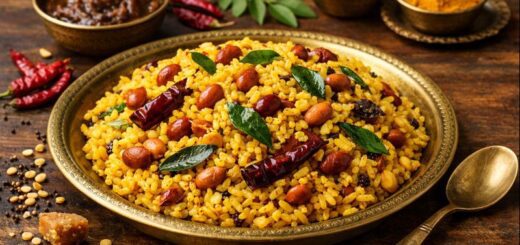
Also known as tamarind rice, Pulihora is tangy and aromatic — a favourite during festivals and often offered as prasadam. The tanginess of tamarind paired with seasoning and spices balances other rich dishes on the table.
Mamidikaya Pappu (Raw Mango Dal)
Mamidikaya Pappu uses raw mango to add zest and sour notes to cooked lentils. This dal is nutritious, comforting, and considered auspicious on Ugadi.
Sweet Prasadam Ideas
Sweets like Bobbattu (sweet stuffed flatbreads) or Poornam Boorelu (sweet lentil-filled dumplings) are popular festive prasadam items in many Telugu households. They create a balanced menu of sweet, sour and savoury tastes.
Personal Experience: My Ugadi Festival Table
When I visited my aunt’s home in Hyderabad for Ugadi, the table was laid out before sunrise. The highlight was a large bowl of Ugadi Pachadi surrounded by colourful dishes — pulihora, raw mango pappu, and soft, warm obbattu. What surprised me most was how every guest first tasted the pachadi with eyes closed, guessing which taste would come first — a delightful tradition rich in meaning.
Pro Tips From Personal Cooking Experience
- If you can’t find fresh neem flowers, soaked fenugreek seeds are a great alternative to mimic bitterness.
- For milder taste, reduce black pepper or replace with finely chopped green chilies.
- Always prepare the Pachadi just before offering it as prasadam so the ingredients are fresh and vibrant.
- Serve with a garnish of fresh coriander for colour if serving to guests.
Chef’s Notes: Substitutions And Storage Tips
Substitutions: Instead of neem, use fenugreek seeds or neem powder; jaggery can be replaced with raw sugar cane pieces for a rustic sweetness. For a spicy kick, use red chili powder instead of black pepper.
Storage: Because Ugadi Pachadi is made with fresh ingredients and no preservatives, it’s best consumed on the day of preparation. You can refrigerate leftovers in a sealed container for up to 6–8 hours but texture may change slightly.
Nutrition Information (Per Serving — Approximate)
| Nutrient | Amount |
|---|---|
| Calories | 95 kcal |
| Carbohydrates | 20 g |
| Protein | 1 g |
| Fat | 0.2 g |
| Fiber | 2 g |
| Sugar | 14 g |
Frequently Asked Questions About Ugadi Festival Prasadam Items
What Is The Meaning Behind Ugadi Pachadi?
The six-ingredient Pachadi represents the six tastes — each reflecting an aspect of life such as happiness, sadness, anger, fear, disgust, and surprise. Eating this dish at the start of the new year symbolises acceptance of all experiences ahead.
Can I Make Ugadi Pachadi Without Neem?
Yes. If fresh neem flowers are unavailable, use soaked fenugreek seeds or neem powder to add bitterness that balances the other flavours.