Sambar Without Pressure Cooker: Easy Stovetop Method
Sambar without pressure cooker is completely doable on an ordinary stovetop. The one thing that decides whether it works is when you add the tamarind. Add it too early and the toor dal stays grainy for another hour. Wait until the dal collapses, and you finally get the thick, tangy stew you were aiming for.
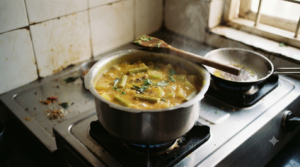
Toor dal sambar simmered slowly in an open pot, no pressure cooker needed.
This guide to sambar without pressure cooker gives you exact timings, the vegetable order, and a fix for every way a stovetop batch goes wrong.
Sambar Without Pressure Cooker at a Glance
- Total time: roughly 1 hour 15 minutes, although only about 15 minutes of that needs your hands.
- Dal stage: 40 to 50 minutes of open simmering after a 30-minute soak.
- Golden rule: tamarind and sambar powder go in only after the dal turns mushy.
- Yield: 4 rice-sized servings, or 6 smaller portions if you serve it with idli.
- Equipment: one heavy-bottomed pot, one small tempering pan, and a masher or whisk.
- Hardest part: patience, because sambar without pressure cooker needs time rather than skill.
Why Sambar Without Pressure Cooker Tastes Different
Sambar without pressure cooker is not automatically superior to the cooker version, whatever food blogs claim. What genuinely changes is control and concentration. Because the pot stays open, water leaves as steam while the dal softens, so the finished stew carries a denser body.
You also see every stage. A cooker hides the dal until the pressure drops, while an open pot lets you mash midway, judge the thickness, and correct salt before the tamarind goes in. That visibility is the real advantage for a beginner.
The trade-off deserves honesty. Stovetop cooking takes roughly three times longer and burns more fuel. If dal appears on your table daily, a cooker still wins on economy. For a weekend batch, though, the open pot gives you far better texture control.
Ingredients for Sambar Without Pressure Cooker
These quantities make four servings of medium-thick sambar for rice. If you want a thinner idli sambar, simply add one extra cup of hot water at the end.
- Toor dal (split pigeon peas) — 1 cup, rinsed and soaked 30 minutes
- Mixed vegetables (drumstick, bottle gourd, pumpkin, carrot) — 1.5 cups, cut into 2-inch pieces
- Tamarind — a lemon-sized ball soaked in warm water, giving roughly half a cup of extract
- Sambar powder — 2 tbsp, homemade or store-bought
- Turmeric powder — half tsp
- Salt — 1.5 tsp, adjusted at the end
- Water — 4.5 to 5 cups in total
- Jaggery — half tsp, optional but useful if your tamarind runs sharp
- Oil — 2 tbsp sunflower, groundnut or sesame
- Mustard seeds — 1 tsp
- Urad dal — 1 tsp
- Fenugreek seeds — a quarter tsp, optional
- Curry leaves — 10 to 12
- Dry red chillies — 2
- Asafoetida — a generous pinch
- Coriander leaves — a handful, chopped
Recipe Card
| Detail | Value |
|---|---|
| Prep time | 15 minutes, plus 30 minutes soaking |
| Cook time | 55 to 65 minutes |
| Total time | About 1 hour 15 minutes |
| Servings | 4 with rice, or 6 with idli |
| Cuisine | South Indian |
| Difficulty | Easy, though slow |
How to Make Sambar Without Pressure Cooker Step by Step
Follow the order below exactly. Sequence matters far more than quantities here, because acid added at the wrong moment stops the dal from softening at all.
Step 1: Soak, then simmer the toor dal
Drain the soaked dal and tip it into a heavy pot with 3 cups of water and half a teaspoon of turmeric. Add a few drops of oil so the foam settles quickly. Bring it to a rolling boil, then lower the flame to a steady simmer.
Leave the pot uncovered and stir every ten minutes. After 40 to 50 minutes the grains should mash flat between your fingers. Skim any grey foam that rises in the first ten minutes, since that foam carries a slightly bitter edge.
Step 2: Cook the vegetables separately
While the dal simmers, boil the cut vegetables in a second pot with 1 cup of water and a pinch of salt. Give them 10 to 12 minutes, until a knife slides in but the pieces still hold shape. Drain nothing, because that cooking water carries flavour straight back into the sambar.
Step 3: Mash the dal, then add the tamarind
Once the dal turns creamy, mash it with a whisk or a wooden masher for a smoother base. Only now pour in the tamarind extract and discard the pulp. Tip in the cooked vegetables along with their water, and stir everything together.
Step 4: Simmer with the sambar powder
Sprinkle in the sambar powder, the remaining salt and the optional jaggery. Add up to 1 cup of hot water until the consistency looks right to you. Simmer on medium heat for 12 to 15 minutes, so the raw spice smell disappears and the stew thickens slightly.
Step 5: Temper and rest
Heat 2 tablespoons of oil in a small pan. Add mustard seeds first, and once they crackle, follow with urad dal, fenugreek, red chillies, curry leaves and asafoetida. Pour the sizzling tempering straight into the sambar after about 30 seconds.
Turn off the heat, scatter the coriander leaves, and cover the pot. Give it 5 minutes before serving, because the flavours settle noticeably during that short rest.
The Timing Rule That Makes Sambar Without Pressure Cooker Work
Here is the correction that most recipes for sambar without pressure cooker never explain. Tamarind, tomato and lemon juice are acids, and acid keeps lentil cell walls locked together. Colorado State University Extension advises cooks to hold acidic ingredients until pulses have already softened, exactly because they prevent softening.
Without a cooker you have no high pressure to force the issue. So a batch that would forgive early tamarind in a cooker will simply refuse to soften in an open pot. That single sequencing error explains most complaints about grainy stovetop sambar.
Salt behaves differently, and the old kitchen warning about it is a myth. Salt actually shortens cooking time slightly and keeps the grains from bursting open. Hard water is the other genuine culprit, because extension guidance on cooking pulses notes that calcium-rich water slows softening.
Vegetable Timing Chart for Sambar Without Pressure Cooker
Vegetables collapse at very different speeds, so adding them all together is the second most common mistake here. Use the chart below as your order of entry.
| Vegetable | Boil time | Notes |
|---|---|---|
| Drumstick | 12 to 15 min | Add first, since the fibrous pods need the longest |
| Carrot, beans | 10 to 12 min | Cut thick so they survive the final simmer |
| Bottle gourd, pumpkin | 6 to 8 min | Turn mushy fast, so add them later |
| Brinjal | 5 to 6 min | Drop into the sambar directly during Step 4 |
| Okra | 4 to 5 min | Fry separately first, otherwise it turns slimy |
| Shallots | 8 to 10 min | Saute in the tempering for a deeper, sweeter taste |
How Long Does Sambar Without Pressure Cooker Take?
Plan on 1 hour 15 minutes from start to serving, including a 30-minute soak. The dal needs 40 to 50 minutes of open simmering, the vegetables need 10 to 12 minutes alongside, and the combined stew needs another 12 to 15 minutes. Active work stays under 15 minutes throughout.
| Method | Dal cooking time | Total time |
|---|---|---|
| Stovetop pot, soaked dal | 40 to 50 min | About 75 min |
| Stovetop pot, unsoaked dal | 60 to 75 min | About 100 min |
| Stovetop pressure cooker | 4 to 5 whistles | About 35 min |
| Electric pressure cooker | 9 to 10 min at high | About 40 min |
Skipping the soak costs you roughly 20 to 25 extra minutes and more fuel. If you forgot to soak, use hot water instead of cold at the boiling stage, because it shaves a few minutes off the total.
Sambar Without Pressure Cooker: What Can Go Wrong
This method is not guaranteed to work on the first attempt. Here are the four failures readers actually report, along with the fix for each.
The dal refuses to soften
First check whether tamarind, tomato or lemon went in early, since acid is the usual cause. If the dal is already sour, keep simmering with extra hot water and accept 20 to 30 more minutes. Old stock is the second cause, because dal stored over a year develops a hard-to-cook texture that no amount of simmering fully reverses.
A quarter teaspoon of baking soda will rescue a stubborn batch, although it softens the flavour and destroys some B vitamins. Use it only as a last resort. If your tap water is very hard, switch to filtered water next time.
The sambar turns out too thin or too thick
Thin sambar simply needs a longer uncovered simmer, so give it 5 to 10 more minutes on medium heat. Alternatively, mash two spoons of the cooked vegetables into the pot as a natural thickener. Thick sambar needs hot water rather than cold, added a quarter cup at a time.
It tastes raw or too sour
A raw, sharp taste means the tamarind has not simmered long enough. Give it another 8 to 10 minutes and the edge softens. If it stays aggressive, stir in half a teaspoon of jaggery, which balances acidity without making the sambar sweet. Our jaggery sambar method explains that balance in more detail.
It tastes flat or bitter
Flatness almost always traces back to an under-toasted spice blend. Warm the sambar powder in a dry pan for 20 seconds before adding it, and the difference is obvious. Bitterness usually comes from burnt fenugreek or scorched dal at the base, and unfortunately neither one can be fixed after the fact.
Insider Tips Most Sambar Recipes Skip
These small habits separate a decent pot from a memorable one, and none of them appear in a standard recipe card.
- Add a few drops of oil to the boiling dal, because it stops the foam from climbing over the rim.
- Stir the base every ten minutes, since a thin pot scorches dal long before you smell it.
- Keep a kettle of hot water beside the stove, so topping up never drops the temperature.
- Mash only half the dal if you like some texture, and mash all of it for hotel-style smoothness.
- Toast store-bought sambar powder briefly, as most brands lose aroma within weeks of opening.
- Salt the vegetables lightly while they boil, because seasoning them separately tastes better than salting at the end.
- Make double and freeze half, since the dal stage takes the same time either way.
Substitutions and Storage for Sambar Without Pressure Cooker
Moong dal replaces toor dal well and cooks 15 minutes faster, which suits an idli side dish. Our moong dal idli sambar uses that shortcut. Masoor dal works too, though it breaks down almost completely.
No tamarind at home? Use 2 tablespoons of lemon juice, stirred in only after you turn off the heat. Heat dulls lemon quickly, so late addition matters here. For a coconut-based version, our Kerala style sambar follows a different masala route.
Refrigerate leftovers in an airtight container for up to 3 days, and reheat on the stovetop with a splash of water. Sambar freezes for about a month, although the vegetables soften noticeably after thawing.
Thaw overnight in the fridge, then simmer before serving. Never leave a cooked pot at room temperature for more than two hours.
Nutrition Per Serving (Approximate)
The figures below come from calculating the listed quantities against USDA FoodData Central values for raw pigeon peas, which record 343 kcal and 21.7 g of protein per 100 g. An earlier version of this page listed lower numbers that did not account for the full cup of dal or the 2 tablespoons of tempering oil.
| Nutrient | Per serving (of 4) |
|---|---|
| Energy | 250 to 270 kcal |
| Protein | 11 to 12 g |
| Carbohydrates | 34 to 37 g |
| Fat | 7 to 8 g |
| Fibre | 8 to 9 g |
Treat these as estimates, because vegetable mix, oil quantity and portion size all shift the totals. Halving the tempering oil removes roughly 30 kcal per serving. This information is general and educational only, so anyone managing diabetes, kidney disease or a specific diet plan should speak to a qualified dietitian.
One caution on ingredients: most Indian asafoetida brands use wheat flour as a carrier, which matters if you cook for someone with coeliac disease. Compounded asafoetida labelled gluten-free solves that. Sambar is otherwise naturally vegan when you temper in oil rather than ghee.
Before You Cook
The stovetop route asks for time rather than technique. Soak the dal, simmer it uncovered until it collapses, and only then let the tamarind anywhere near the pot. Cook the vegetables separately so they keep their shape, and finish with a hot tempering poured in at the last moment. Get that order right and sambar without pressure cooker turns out as good as any cooker batch, with better texture control along the way.
Frequently Asked Questions
Can I make sambar without pressure cooker if I forgot to soak the dal?
Yes, although it adds 20 to 25 minutes. Rinse the dal, start it in hot water rather than cold, and expect 60 to 75 minutes of simmering. Stir more often, because unsoaked dal settles and scorches faster.
Why is my dal still hard after an hour?
Early tamarind is the most likely reason, since acid stops lentils from softening. Old dal and hard water cause the same problem. Keep simmering with extra hot water, and add a quarter teaspoon of baking soda only if nothing else works.
How much water does sambar without pressure cooker need?
Use 3 cups of water for 1 cup of soaked toor dal at the boiling stage. Because an open pot loses steam, keep another cup of hot water ready. The finished sambar usually needs 4.5 to 5 cups in total.
Can I cook the dal and vegetables in one pot?
You can, although the vegetables will disintegrate long before the dal softens. If you want a single pot, add the vegetables only in the last 12 minutes of the dal stage. Two pots give a much better texture.
Which vegetables work best in sambar?
Drumstick, bottle gourd, pumpkin, carrot and brinjal suit sambar without pressure cooker best. Shallots deliver the sweetest result of all. Avoid watery vegetables like cucumber, and fry okra separately before adding it.
Does sambar without pressure cooker really taste better?
It tastes slightly more concentrated, because steam escapes throughout the simmer. Whether that counts as better is personal preference, not established fact. The clearer advantage is control, since you can adjust thickness and salt at any point.
Can I use readymade sambar powder?
Absolutely, and most South Indian homes do exactly that on weekdays. Toast it for 20 seconds first to wake up the aroma. Our guide to sambar with readymade powder covers brand quantities in detail.
How long does sambar keep?
Sambar without pressure cooker keeps 3 days refrigerated in an airtight container, and about a month in the freezer. Reheat only the portion you need, because repeated reheating dulls the tempering. Cool it fully before refrigerating, since warm sambar sours quickly in an Indian kitchen.