Andhra Stuffed Brinjal Curry (Gutti Vankaya Recipe)
Andhra stuffed brinjal curry, or gutti vankaya kura, gets its rich flavour from small brinjals filled with roasted peanut-sesame masala. The goal is tender brinjals and a thick, tangy gravy. Careful slitting and a gentle simmer help the pieces hold together, although some may split during cooking.
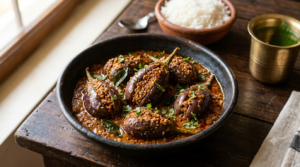
Traditional Andhra stuffed brinjal curry made with tender baby brinjals, roasted peanut-sesame masala and a rich, tangy gravy.
This coastal Andhra-style version keeps the original roasted spice mixture, tamarind and low-flame method. It also explains ingredient swaps more carefully, especially when peanut or sesame allergy matters.
Andhra Stuffed Brinjal Curry at a Glance
Gutti vankaya kura uses small brinjals cut from the base, stuffed with a coarse spice mix and simmered in gravy. In Telugu, vankaya means brinjal and kura means curry. Keeping the green crown intact can help the cut quarters stay attached.
- Cuisine: Andhra-style stuffed brinjal; variations also appear across Telangana and Rayalaseema.
- Estimated prep: 20–30 minutes, including a 10-minute brinjal soak while the spices roast.
- Estimated cook: 30–40 minutes, depending on brinjal size, pan and heat.
- Rest: 15 minutes after turning off the flame.
- Estimated total: 65–85 minutes, including the rest. These times are not kitchen-tested for this version.
- Estimated yield: 3–4 side portions from 8–10 small brinjals; serving size varies. This yield is not kitchen-tested.
- Allergens in the original version: peanuts and sesame seeds; the suggested oils can contain those allergens too.
- Texture target: soft brinjal flesh in a thick, tamarind-led gravy, with some pieces remaining whole.
Allergy warning: Omitting peanuts or sesame seeds is not enough if you still use groundnut oil, sesame oil or contaminated utensils. Check every ingredient and oil. Do not serve a modified version as allergy-safe unless it meets the diner’s individual medical guidance.
Andhra Stuffed Brinjal Curry vs Bagara Baingan
Gutti vankaya and Hyderabadi Bagara Baingan share brinjals, roasted ingredients and tamarind, but their flavour and texture can differ. Many Andhra home versions taste sharper and have a thicker peanut-led gravy. Bagara Baingan often uses a smoother, richer sauce with sesame and coconut.
There is no single fixed family recipe for either dish, so treat those differences as styles rather than rules. For this Andhra stuffed brinjal curry, a coarse masala helps the stuffing stay inside while the brinjals simmer.
Choosing Brinjals for Andhra Stuffed Brinjal Curry
Choose small, firm brinjals of similar size. Look for smooth skin and fresh green crowns, and avoid pieces with soft spots or deep bruises. Purple striped brinjals work well, but a fresh green or plain purple variety can also work.
Small brinjals are easier to stuff and tend to cook more evenly. However, no variety guarantees that every piece will remain whole. A mature brinjal may have larger seeds, while a very soft one can break when turned.
Ingredients for This Andhra Stuffed Brinjal Curry
Dry-roast the masala ingredients separately, then pulse them to a coarse powder. The ingredient amounts below come from the existing recipe. They are a starting point rather than a newly tested formula.
| Part | Ingredient | Amount |
|---|---|---|
| Main | Small tender brinjals | 8–10 |
| Masala | Raw peanuts | 3 tbsp |
| Masala | White sesame seeds | 2 tbsp |
| Masala | Coriander seeds | 1 tbsp |
| Masala | Cumin seeds | 1 tsp |
| Masala | Dried red chillies | 4–6, to taste |
| Masala | Grated dry coconut | 2 tbsp, optional |
| Masala | Fenugreek seeds | ¼ tsp |
| Gravy | Onion, finely chopped | 1 medium |
| Gravy | Thick tamarind pulp | 1 tbsp, adjust to taste |
| Gravy | Jaggery | 1 tsp, optional |
| Gravy | Turmeric powder | ½ tsp |
| Tempering | Sesame or groundnut oil | 4 tbsp |
| Tempering | Mustard seeds | 1 tsp |
| Tempering | Curry leaves | 1 sprig |
| Gravy | Water and salt | About 1 cup; salt to taste |
The four tablespoons of oil and cup of water come from the original method. Start with enough water to coat the brinjals in gravy, since different pans lose moisture at different rates. Oil collecting at the edges is one visual cue, but tenderness matters more than surface shine.
Sensible swaps: taste changes are not allergy clearance
If peanuts are unavailable, roasted chana dal can add body in place of the three tablespoons of peanuts. If sesame is omitted, dry coconut or another ingredient the diner can safely eat may replace some richness. These changes alter the taste and have not been tested here as exact equivalents.
For peanut allergy: also replace groundnut or peanut oil with an oil the diner already knows is suitable. Do not assume unrefined or cold-pressed peanut oil is safe. Highly refined peanut oil is different, but only an allergy specialist can advise on an individual’s risk.
For sesame allergy: omit both sesame seeds and sesame or gingelly oil, including any finishing drizzle. Check packaged masala, spice blends and oil labels for sesame ingredients or cross-contact warnings. Sesame oil is not a safe substitute for someone avoiding sesame.
Cashews introduce a separate tree-nut allergen. Even roasted gram, poppy seeds and coconut need an individual ingredient and cross-contact check. Wash the grinder, knives, spoons and pan thoroughly before making an allergy-modified meal. See Food Allergy Research & Education’s sesame guidance and its safe-kitchen checklist.
For a dedicated peanut-free recipe with its own ingredients and method, see our Gutti Vankaya Without Peanuts guide. That version uses roasted gram, sesame and coconut, so also check sesame ingredients and cooking oil if allergies matter.
No tamarind? Two chopped tomatoes offer a different, milder sourness. Jaggery is optional, so taste the gravy before adding more.
Andhra Stuffed Brinjal Curry: Step-by-Step Method
This Andhra stuffed brinjal curry has two stages: prepare the brinjals and coarse masala, then cook them in gravy. Keep the heat gentle after the brinjals enter the pan, because hard stirring can dislodge the stuffing.
Stage one: slit, roast and stuff
- Slit the brinjals. Keep the green crown and a short stem. Cut a cross from the rounded base, stopping before the crown so the four quarters remain attached.
- Soak briefly. Place the slit brinjals in lightly salted water for about 10 minutes while you roast the masala. Drain and pat dry before stuffing.
- Roast the masala. Toast peanuts gently, then remove them. Roast sesame separately until fragrant. Toast coriander, cumin, fenugreek and chillies, adding coconut last if using. Avoid darkening or scorching the spices.
- Cool and grind. Let the roasted ingredients cool enough for the grinder. Add turmeric and a little salt, then pulse to a coarse powder instead of making a runny paste.
- Stuff carefully. Open each brinjal cross with your fingers and spoon in masala without forcing the quarters apart. Save the leftover powder for the gravy.
Stage two: sear, simmer and rest
- Sear gently. Heat the oil in a wide pan. Add mustard seeds and curry leaves, then arrange the stuffed brinjals in one layer. Turn them carefully for roughly five minutes.
- Make the gravy. Lift the brinjals out briefly. Soften the chopped onion, then add the remaining masala, tamarind pulp, jaggery and about a cup of water.
- Simmer until tender. Return the brinjals and spoon gravy over them. Cover and simmer on low heat, checking after about 20 minutes. Cook longer if the thickest part still feels firm.
- Rest for 15 minutes. Turn off the heat after the flesh becomes tender. Let the covered pan stand for roughly 15 minutes before serving. This rest is part of the estimated total time, not an extra uncounted step.
Check tenderness with a small knife near the thickest part. If the gravy dries early, add a little hot water at a time. If a few pieces separate, serve them with the same sauce; the flavour need not suffer.
What Beginners Get Wrong
Cutting through the crown weakens the hinge that holds the quarters together. Yet even a correct cut cannot stop every brinjal splitting. Size, age, stuffing pressure and cooking time all change how the flesh behaves.
Another problem is stirring the pan too often. A spoon may break the softened quarters, so tilt the pan or gently move individual brinjals instead. Overfilling with wet masala can also push the stuffing out during cooking.
Finally, high heat may brown the outside before the centre softens. Keep the simmer gentle and judge the result by tenderness. The brinjals may finish at different times, especially when their sizes vary.
Quick troubleshooting
- Brinjals too soft: shorten the covered simmer next time and select firmer, evenly sized vegetables.
- Masala tastes bitter: check whether coconut, fenugreek or coriander browned too much.
- Gravy too thin: cook uncovered briefly while watching the soft brinjals.
- Stuffing falls out: avoid a cut through the crown and do not pack it too tightly.
- Flavour seems flat: taste first, then adjust salt and tamarind in small amounts.
Regional Versions of Andhra Stuffed Brinjal Curry
Families adjust the masala across Andhra Pradesh and Telangana. Some favour peanuts, while others increase coconut or sesame. Tamarind also varies, so one household’s gravy may taste sharper than another’s.
For an onion-free meal, skip the chopped onion and balance the tamarind with a little jaggery if needed. The masala will still thicken the sauce. North Karnataka’s ennegayi offers another stuffed-brinjal style, often with a different spice balance.
What to Serve With Andhra Stuffed Brinjal Curry
Serve this Andhra stuffed brinjal curry with plain steamed rice and mudda pappu, or with roti. Its thick sauce clings well to both. A little curd on the side can soften the chilli heat for diners who eat dairy.
For a fuller Andhra meal, add temple-style tamarind rice. You can also serve Andhra pesarattu for a different meal. On brinjal-free days, try this easy okra curry.
If anyone at the table avoids sesame, do not finish their rice with raw sesame oil. Use only a dressing or oil they have confirmed is appropriate.
Storing and Reheating Andhra Stuffed Brinjal Curry
Do not leave cooked curry on the counter until it becomes completely cold. Instead, transfer leftovers into shallow containers so they cool quickly. Refrigerate promptly, within two hours of cooking, or within one hour when the surroundings exceed 32°C. Keep the refrigerator at 4°C or colder.
US Department of Agriculture guidance allows three to four days for properly handled refrigerated leftovers. For this soft, rich curry, using it within two days is a sensible quality preference, not a special peanut-gravy spoilage rule. If the food stood out too long, refrigerating or reheating it later does not make that earlier handling safe.
Reheat only the portion you plan to eat. Add a small splash of water to loosen thick gravy, then heat until the centre reaches 74°C throughout. Check with a food thermometer, and reheat gravy thoroughly. When using a microwave, cover and rotate the dish and allow standing time before checking for cold spots.
Freezing is possible from a food-storage standpoint when handled safely, but thawed brinjal may lose its firm shape. See the USDA leftovers guidance and its reheating advice.
Nutrition and Allergy Notes
The brinjal brings vegetable fibre, while peanuts, sesame and oil add much of the richness. This is why a finished portion contains more energy than plain cooked brinjal. A dependable per-serving nutrition calculation would need measured ingredient weights and a verified yield.
Peanut and sesame allergies can cause serious reactions, even from cross-contact. This original Andhra stuffed brinjal curry contains both seeds and nuts in the masala, and the listed oils may also matter. Ask guests about allergies before cooking, not when the dish reaches the table.
A kitchen substitution is not a medical clearance. People with diagnosed food allergies should use their personal avoidance plan and seek professional advice when uncertain. Read the allergen cross-contact guide before preparing food for someone at risk.
Before You Cook
For a better Andhra stuffed brinjal curry, start with small firm brinjals and a coarse, cool masala. Keep the crown intact, avoid hard stirring and check the flesh before switching off the heat. These habits improve the chances of an attractive finish, but broken pieces are still possible.
Remember the 15-minute rest, and treat the published timings and portions as estimates until the recipe has been tested. If allergy substitutions are involved, check oils and every packaged ingredient first. After serving, chill leftovers promptly rather than waiting for the pan to cool fully.
Frequently Asked Questions
What does gutti vankaya mean?
Gutti vankaya means stuffed brinjal in Telugu. Kura refers to the cooked curry or vegetable side dish. The name describes the method, while the stuffing and gravy change by household.
Can I make Andhra stuffed brinjal curry without onion and garlic?
Yes. Leave out the onion and keep the roasted masala, tamarind and spices. The sauce may taste sharper, so adjust jaggery and salt gradually instead of assuming a fixed extra amount.
Which brinjal is best for stuffing?
Small, firm brinjals with fresh green crowns are easier to stuff than oversized ones. Choose pieces of similar size so they cook at a similar pace. Colour matters less than freshness and texture.
Why do stuffed brinjals break while cooking?
The slit may cut too far toward the crown, or the softened quarters may tear during stirring. Overstuffing and long simmering also raise the risk. Gentle cooking helps, but intact brinjals are not guaranteed.
Is Andhra stuffed brinjal curry the same as Bagara Baingan?
Not exactly. Both are stuffed brinjal dishes, but many Andhra versions have a coarser, thicker peanut-led masala. Hyderabadi Bagara Baingan often has a smoother sesame-and-coconut-rich sauce. Family methods overlap.
How long does this curry keep?
Refrigerate promptly in shallow containers and aim to enjoy it within two days for texture. USDA guidance gives three to four days for properly cooled leftovers kept at 4°C or colder. Reheat to 74°C throughout before serving.
Can I make it without peanuts?
Roasted chana dal can replace peanuts for a different flavour and texture. However, for a peanut allergy you must also check groundnut oil, labels and cross-contact. A peanut-free ingredient list alone cannot certify safety for every diner.
Can I omit sesame seeds but keep sesame oil?
Not when cooking for someone with a sesame allergy. Sesame or gingelly oil can still contain the allergen, so omit it too. Choose an oil the diner can safely use and check all packaged ingredients.
Should the brinjals be fried before stuffing?
Not for this version. Stuff the raw slit brinjals, then sear them gently in the tempered oil. Other recipes use a different order, but this method preserves the original article’s cooking approach.
Does the cooking time include the rest?
No. The estimated 30–40 minutes of cooking ends when you turn off the heat. Add a separate 15-minute rest. Together with prep, the estimated elapsed time is about 65–85 minutes, and the recipe has not been kitchen-tested.
How thick should the gravy be?
The gravy should cling to the brinjals and mix easily into rice. If it looks thin, simmer it briefly without the lid. If it becomes too thick before the brinjals soften, add a little hot water.