Pongal with Toor Dal: Easy Pressure Cooker Recipe
Pongal with toor dal is a savoury rice-and-lentil variation of South Indian ven pongal, finished with ghee, pepper, cumin and curry leaves. It uses split pigeon peas instead of the more usual moong dal. The key is to cook both the rice and dal until they mash easily, not to rely on a fixed number of cooker whistles.
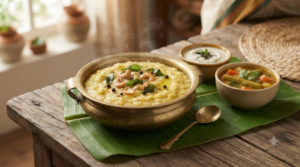
Soft and comforting pongal with toor dal, seasoned with ghee, black pepper, cumin and fresh curry leaves.
Recipe testing note: The quantities below come from this page’s earlier recipe. Its preparation time, cooking time, water ratio and yield have not been independently kitchen-tested, so treat them as starting estimates rather than guaranteed results.
Pongal with toor dal: recipe at a glance
| Item | Original estimate or method |
|---|---|
| Preparation | About 10 minutes; untested |
| Cooking | About 30 minutes; untested and cooker-dependent |
| Yield | About 4 portions; not measured |
| Equipment | Stovetop pressure cooker and small tempering pan |
| Texture to aim for | Soft rice and fully tender dal that mash together |
This pongal with toor dal method uses a stovetop pressure cooker, not a tested electric Instant Pot programme. Allow extra time for the pressure to drop safely. Older dal, different rice varieties and cooker sizes can all change the result.
Ingredients for pongal with toor dal
These are the original proportions, retained for continuity. Use the same measuring cup for the rice, dal and water. Since the batch has not been retested, adjust salt and final consistency after checking doneness.
- 1 cup raw rice, preferably Sona Masuri
- 1/2 cup toor dal (split pigeon peas)
- 4 1/2 cups water as an initial, untested quantity; follow your cooker’s liquid requirements
- Up to 1 1/4 teaspoons salt, according to taste
- 2 tablespoons ghee
- 1 tablespoon crushed peanuts, optional
- 1/2 teaspoon black peppercorns, lightly crushed
- 1/2 teaspoon cumin seeds, lightly crushed
- A few curry leaves, washed and dried well
- A pinch of asafoetida (hing), optional
Allergens: Ghee contains milk, and the optional peanuts are a peanut allergen. Some packaged hing mixes contain wheat flour, so read the label if you avoid gluten. Keep utensils separate and clean if cooking for someone with an allergy.
How to make pongal with toor dal in a pressure cooker
- Rinse the grains. Wash the rice and toor dal in fresh water, then drain. Remove any visible grit or damaged grains.
- Add water and salt. Place both in a stovetop pressure cooker. Add the original recipe’s 4 1/2 cups of water as a starting point. Check your cooker’s minimum liquid level and maximum fill line first.
- Cook until tender. Close the cooker and cook according to its instructions. The previous recipe suggested 4–5 whistles, but that count was not tested and cannot prove doneness across different cookers.
- Release pressure safely. Turn off the heat and wait until the pressure has fully released before opening the lid. Never force it open.
- Check and mash. Press a spoon into the rice and dal. The rice should break down easily, while the dal should have no firm or chalky centre. Mash gently to create a soft, spoonable mixture.
- Make the tempering. Warm the ghee in a small pan. Add the crushed peanuts, if using, along with pepper, cumin, curry leaves and hing. Stir over moderate heat until fragrant; do not burn the spices.
- Mix and serve. Fold the tempering through the cooked mixture. Taste, adjust the salt and serve hot with coconut chutney, sambar or tomato-onion chutney.
If the dal stays firm, the pongal needs more cooking even if the rice looks ready. Add a little hot water if needed, close the cooker correctly and continue cooking within the manufacturer’s instructions. Release pressure fully before checking again.
How do you know the rice and toor dal are done?
The best check is texture: both ingredients should yield to a spoon without hard bits. Rice grains may still look partly distinct, but they should mash easily. Split toor dal must lose its firm centre. A whistle count alone cannot confirm this because cookers and lentil batches differ.
Pongal thickens as it stands, so check the texture just before serving. Stir in a little hot water if it feels stiff, then heat and mix until evenly hot. For a thicker bowl, let the cooked mixture rest briefly instead of adding more water.
Fixing common texture problems
| Problem | Likely reason | What to do |
|---|---|---|
| Dal is firm | Not fully cooked | Add hot water if needed and cook longer; check after safe pressure release |
| Mixture is too thick | Water absorbed or pongal cooled | Stir in hot water gradually and heat through |
| Mixture is too thin | More liquid than desired | Simmer uncovered, stirring, until it thickens |
| Spices taste bitter | Tempering overheated | Make a fresh, gently heated tempering rather than using burnt spices |
Water changes affect the texture of pongal with toor dal, not just cooking speed. Toor dal may remain grainy if undercooked, so do not hide a firm centre with extra ghee. Start by fixing doneness, then adjust thickness.
What makes this version different from ven pongal?
Classic savoury ven pongal usually uses split yellow moong dal. This version keeps the familiar rice, ghee, pepper and cumin but substitutes toor dal. The flavour and cooking behaviour differ, so the two recipes should not share a guaranteed cooking time.
If you want the more familiar moong dal version, see our traditional ven pongal recipe. For stovetop cooking without a pressure cooker, the site’s no-pressure-cooker ven pongal guide offers a separate method, although it uses moong dal.
Practical tips and simple substitutions
- Roasting is optional. Lightly dry-roasting toor dal may add a nutty note, but this variation has not been tested with the stated water ratio.
- Use a fresh tempering. Add pepper, cumin and curry leaves near serving so the aroma stays noticeable.
- For a vegan bowl, replace ghee with a suitable plant oil and omit any dairy topping.
- For a peanut-free variation, leave out peanuts and check other ingredients for cross-contact warnings.
- Vegetables need extra attention. Small pieces of carrots, beans or peas can work, but added vegetables may change the liquid level and cooking time.
A little ghee on top is a traditional serving choice. However, it is optional. If you prefer another fat-free variation, the site’s pongal without oil uses a different ingredient approach.
Safe storage and reheating for rice-based pongal
Cooked rice needs prompt cooling because Bacillus cereus can grow if rice sits too long at room temperature. For this rice-based pongal, use the conservative Food Standards Agency rice guidance: cool it quickly, ideally within one hour, and refrigerate in shallow covered containers.
Keep the fridge at 4°C or colder and eat refrigerated pongal within 24 hours. Reheat only once, until steaming hot throughout. Stir in a splash of water to loosen the mixture, and heat every part evenly. If cooked pongal has sat out for too long, discard it rather than reheating it to try to make it safe.
General FoodSafety.gov chilling advice also stresses prompt refrigeration, clean utensils and safe temperatures. Do not leave the cooker on the counter while the whole batch cools slowly.
Nutrition information: what can be stated?
Pongal with toor dal contains rice, lentils, ghee and, if included, peanuts. However, the earlier calorie, protein, carbohydrate, fat and fibre values were not backed by a calculation for this exact batch. The recipe also lacks a measured cooked yield, so accurate per-serving numbers cannot be supplied.
For reliable nutrition estimates, weigh the actual ingredients and divide the calculated totals by the number of portions served. Changing the amount of ghee, peanuts or rice will also change the result.
Before serving
Pongal with toor dal works best when the rice and lentils are truly soft and the tempering stays fragrant. Keep the original quantities as an untested starting point, not a fixed promise. Serve it fresh where possible, and chill any leftovers promptly.
Frequently asked questions
Can I replace toor dal with moong dal?
Yes, moong dal is the more usual choice for savoury ven pongal. However, its cooking behaviour differs, so follow a moong dal recipe rather than assuming identical timing.
Do I need to soak toor dal first?
Soaking is optional. It may change the cooking time, especially with older dal, but this version has not been tested with a defined soaking period.
Why is the dal still firm after the rice is soft?
The dal has not cooked long enough. Add hot water if the cooker needs it and continue cooking safely until the lentils mash with a spoon.
Can I cook this pongal with toor dal in an Instant Pot?
An electric pressure cooker may work, but the recipe has no verified Instant Pot programme or time. Follow the appliance instructions and judge the finished rice and dal by softness.
Is this recipe vegan or gluten-free?
It is not vegan when made with ghee. Replace ghee with plant oil for a vegan variation, and check packaged hing for wheat if you need a gluten-free meal.
Can I leave out the peanuts?
Yes, the peanuts are optional. Omit them for a peanut-free ingredient list, but also check labels and avoid cross-contact if preparing food for someone with an allergy.
Can I add vegetables?
Yes, finely chopped vegetables can be added as a variation. However, the cooking time and water ratio may need adjustment, so make sure the vegetables and dal are fully tender.
How long can I keep leftover pongal in the fridge?
For this rice dish, the conservative choice is to refrigerate it promptly and eat it within 24 hours. Reheat only once until steaming hot throughout, and discard food that has stood at room temperature too long.