Bisi Bele Bath Ingredients: Exact List & Cooking Method
Bisi Bele Bath ingredients work best when rice, creamy toor dal, vegetables, tamarind and a warm spice blend come together in one spoonable meal. The key is not making it dry like pulao or thin like sambar rice. Keep it loose at the stove because the rice and dal continue to absorb water after cooking.
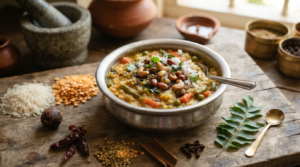
Rice, toor dal, vegetables, tamarind and aromatic masala come together in traditional Karnataka-style bisi bele bath.
Karnataka Tourism describes bisi bele bath as a popular Karnataka meal built from rice, lentils, vegetables and a special masala. Its official food guide also notes that the dish is commonly finished with ghee, curry leaves, hing and cashews, then served hot with chips or boondi. See the Karnataka Tourism overview.
Bisi Bele Bath Ingredients at a Glance
- Prep time: about 25 minutes
- Cook time: about 40 minutes
- Total time: about 65 minutes
- Servings: 5 to 6
- Rice: 1 cup sona masuri or another short-grain rice
- Dal: 3/4 cup toor dal
- Best texture: soft, creamy and slightly flowing
- Heat level: medium, then adjust to taste
This method cooks the rice, dal and vegetables separately before combining them. That takes a few more vessels, yet it gives much better control over texture. If you prefer a single-appliance method, use the rice cooker bisi bele bath method instead.
Ingredients for Authentic Karnataka-Style Flavour
These Bisi Bele Bath ingredients allow some flexibility, but the core balance is not optional. Rice and toor dal create the body, while tamarind gives sourness and the masala brings roasted spice notes. Vegetables add sweetness and texture, so use a mix rather than one vegetable alone.
Main ingredients
- 1 cup sona masuri rice, rinsed
- 3/4 cup toor dal, rinsed
- 1/2 teaspoon turmeric powder
- 2 1/2 cups water for the rice
- 2 cups water for the dal
- 2 to 2 1/2 cups mixed vegetables, cut small
- 1 medium carrot, diced
- 12 to 15 French beans, chopped
- 1/2 cup green peas
- 1 small potato, diced
- 1 small onion, sliced, optional
- 1 to 1 1/2 tablespoons tamarind, soaked in 2/3 cup warm water and strained
- 3 tablespoons bisi bele bath powder, plus more only after tasting
- 1 to 2 teaspoons grated jaggery, optional
- Salt to taste
- 1 to 2 cups hot water for final consistency, as needed
For the final tempering
- 2 tablespoons ghee, or neutral oil for a vegan version
- 1 teaspoon mustard seeds
- 1 dried red chilli, broken
- 10 to 12 curry leaves
- 1/4 teaspoon asafoetida, or hing
- 10 to 12 cashews, or 2 tablespoons peanuts
If you want a fully onion-free version, follow our bisi bele bath without onion recipe. If you use a packaged masala, follow the packet for salt and chilli because brands vary. For a brand-specific method, see the MTR bisi bele bath powder recipe.
How to Cook Bisi Bele Bath Ingredients Step by Step
With these Bisi Bele Bath ingredients, the easiest way to control the final texture is to cook each main component until fully tender. Then combine everything in a wide, heavy pan. This approach also makes troubleshooting easier because you can fix the masala, sourness and consistency before serving.
1. Cook the rice until soft
Rinse the rice until the water looks mostly clear, then soak it for 15 minutes if you have time. Cook 1 cup rice with 2 1/2 cups water until the grains are very soft. A slightly softer rice works better here than separate, fluffy grains.
If you use a pressure cooker, start with the water ratio that works for your cooker because models vary. After cooking, lightly mash a small portion of the rice. Do not turn it into a paste.
2. Cook the toor dal until creamy
Add the rinsed toor dal, turmeric and 2 cups water to a pressure cooker. Cook until the dal breaks down easily when pressed with a spoon. Let pressure release naturally before opening, then whisk or mash the dal until creamy.
Do not rely only on a fixed whistle count because cooker size and heat differ. The real test is texture: the dal should have no firm centre. If it is still grainy, add a little hot water and cook again.
3. Cook the vegetables
Add the chopped vegetables to a saucepan with about 1 1/2 cups water and a pinch of salt. Cover and simmer until they are tender but still hold their shape. If you use onion, sauté it first in a teaspoon of ghee or oil, then add the vegetables.
Carrot, beans, peas and potato form a dependable mix. Capsicum, chayote or turnip also work, although they change the flavour slightly. Karnataka Tourism likewise lists vegetables such as beans, capsicum and carrots in its description of the dish.
4. Build the tamarind and masala base
Heat a large heavy pan over medium-low heat, then add the strained tamarind water. Stir in 3 tablespoons of bisi bele bath powder and the jaggery, if using. Simmer for 3 to 4 minutes so the spice blend hydrates and the sharp raw tamarind taste softens.
Add the cooked vegetables with a little of their cooking liquid. Taste the base before adding rice and dal. It should taste slightly stronger than the finished dish because the rice will mute salt, sourness and spice.
5. Combine and simmer gently
Add the cooked dal first and stir until the masala looks even. Next, fold in the cooked rice. Add hot water in 1/2-cup amounts until the mixture is looser than your preferred serving texture.
Simmer on low heat for 5 to 8 minutes, stirring often because the bottom can catch quickly. The grains should lose their separate look, yet the vegetables should still be visible. Turn off the heat while the bath is still flowing slowly from the ladle.
6. Finish with the tempering
Heat ghee in a small pan, then add mustard seeds. Once they crackle, add the dried chilli, curry leaves, hing and cashews. Fry until the cashews turn golden, then pour the hot tempering over the finished bath.
Stir once and cover for 2 minutes. That short rest lets the aroma settle into the dish. Serve immediately because the mixture thickens as it cools.
Why These Bisi Bele Bath Ingredients Work
Three details make the biggest difference. First, fully cooked dal gives the dish a creamy base without needing extra starch. Second, a loose final consistency prevents the bath from turning stiff by the time it reaches the table.
Third, tamarind and masala need their own short simmer before the rice goes in. If you add everything at once, the spice blend can taste dusty and the sourness may feel sharp. Cooking the flavour base first produces a more rounded result.
The dish also needs balance rather than maximum spice. A small amount of jaggery can soften aggressive sourness, yet the finished bath should not taste sweet. Add it only when your tamarind is especially sharp.
Homemade Bisi Bele Bath Powder: A Small Batch
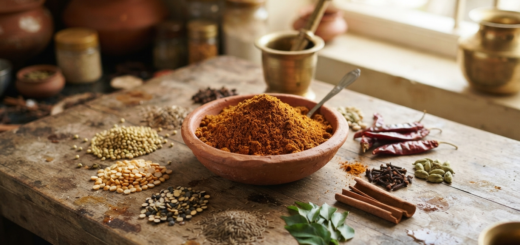
A fresh powder gives these Bisi Bele Bath ingredients more roasted aroma, although store-bought powder is convenient. Spice formulas vary between homes, so there is no single compulsory mixture. This small batch follows the common Karnataka pattern of coriander, lentils, chillies, warm spices and coconut.
- 2 tablespoons coriander seeds
- 1 tablespoon chana dal
- 1 teaspoon urad dal
- 1 teaspoon cumin seeds
- 1/4 teaspoon fenugreek seeds
- 4 to 6 Byadgi or mild dried red chillies
- 1 small piece cinnamon
- 3 cloves
- 2 green cardamom pods
- 1/2 teaspoon black peppercorns
- 1/4 cup dry coconut
Dry-roast the dals first on low heat until golden, then add the whole spices and chillies. Roast the coconut separately because it browns faster. Cool everything completely, then grind to a fine powder and use about 3 tablespoons for this batch.
Karnataka Tourism’s food page also describes bisi bele bath masala as a ground mixture containing chilli, cloves, cumin, chana dal, cinnamon, coconut, urad dal and coriander. That is why the flavour is deeper than regular sambar powder.
Bisi Bele Bath Ingredients and Texture Troubleshooting
This recipe is forgiving because most problems can be corrected before serving. The two most common issues are a dry texture and an unbalanced sour-spicy taste. Fix them gradually rather than adding a large amount of water, salt or masala at once.
Why did my bisi bele bath become too thick?
Rice and dal keep absorbing liquid after cooking, so a perfect stove-top texture can become stiff within minutes. Add hot water, 1/4 to 1/2 cup at a time, then simmer briefly. Recheck salt after thinning because extra water can flatten the seasoning.
What if it tastes too sour?
Add more cooked rice and dal if you have them, because dilution gives the cleanest fix. Otherwise, add a small pinch of jaggery and a little hot water. Do not add lots of sugar because sweetness can hide the sourness without restoring balance.
What if the flavour tastes flat?
Check salt first, since low salt often makes the masala seem weak. If salt is correct, simmer 1 teaspoon of extra bisi bele bath powder with a little water in a small pan, then stir it into the pot. Avoid sprinkling raw powder directly at the end.
How do I stop the bottom from sticking?
Use a heavy-bottomed pan and keep the heat low after adding rice and dal. Stir from the bottom every minute or two. If you notice scorching, transfer the unburnt portion to a clean pan immediately instead of scraping the stuck layer.
Bisi Bele Bath vs Sambar Rice
| Point | Bisi bele bath | Sambar rice |
|---|---|---|
| Spice base | Dedicated bisi bele bath masala | Sambar powder or sambar masala |
| Texture | Thick, creamy and spoonable | Usually looser and more sambar-like |
| Flavour | Roasted spices, tamarind, optional jaggery | Sambar-led lentil and tamarind flavour |
| Finish | Often ghee, nuts, curry leaves and hing | Tempering varies by household |
The two dishes share rice, dal, vegetables and tamarind, but their spice profiles are different. Calling bisi bele bath simply “sambar rice” misses the role of its dedicated masala. The special blend gives the Karnataka dish its warmer, more complex aroma.
Serving Ideas and Texture Timing
Serve these Bisi Bele Bath ingredients as a hot, finished meal with boondi, papad or potato chips for contrast. Plain curd or a mild cucumber raita also works well because it cools the spice. Karnataka Tourism notes chips and boondi as common accompaniments.
If you are cooking for guests, finish the dish a little thinner than usual. Keep a kettle of hot water nearby, since even 10 to 15 minutes of standing can tighten the texture. Add a small splash and stir just before serving.
For more background on Karnataka’s regional food, the Government of Karnataka’s tourism site includes bisi bele bath in its South Karnataka food trail.
Storage, Cooling and Reheating
After cooking the Bisi Bele Bath ingredients, cool leftovers promptly and refrigerate them in shallow, covered containers. The U.S. Department of Agriculture recommends refrigerating perishable cooked food within 2 hours and using most cooked leftovers within 3 to 4 days. See the USDA food-safety guidance.
When reheating, add a splash of water because chilled bisi bele bath becomes very thick. Heat until steaming hot throughout, stirring so the centre warms evenly. If the dish has been left at room temperature for more than 2 hours, discard it rather than refrigerating it for later.
Freezing is possible, but the vegetables may soften further after thawing. Freeze in meal-size portions, then thaw in the refrigerator. Reheat gently with water until the original spoonable texture returns.
Common Mistakes to Avoid
- Keeping the rice too firm: bisi bele bath needs soft rice, not separated grains.
- Undercooking the dal: grainy dal prevents the creamy finish.
- Adding too little water at the end: the dish thickens fast after the flame goes off.
- Using raw masala at serving time: simmer extra powder first so it does not taste dusty.
- Overdoing tamarind: sourness should support the spices, not dominate them.
- Skipping the tempering: the ghee, mustard, curry leaves and nuts add a final layer of aroma.
Another mistake with Bisi Bele Bath ingredients is treating every packet masala the same. Chilli and salt levels differ by brand, so start below the maximum suggested amount and taste. You can always add more after the mixture simmers.
Final Notes Before You Serve
Cooking Bisi Bele Bath ingredients well is less about a rigid whistle count and more about three visual checks: creamy dal, tender vegetables and a loose final consistency. Keep the spice-sour balance gentle, then finish with a fresh tempering. If the pot looks slightly too loose when you switch off the heat, it will usually be right by serving time.
This is a flexible Karnataka home dish, so vegetable choices and spice blends vary. Use the ratios here as a stable base, then adjust chilli, tamarind and jaggery to your family. The goal is a hot, comforting bowl with no single flavour overpowering the rest.
Frequently Asked Questions
What does bisi bele bath mean?
The name is commonly translated as “hot lentil rice” from Kannada. The dish combines rice and lentils with vegetables, tamarind and a special spice blend. It is closely associated with Karnataka and is widely served across the state.
Can I cook rice and dal together?
Yes, you can cook them together for convenience, especially in a pressure cooker. However, separate cooking gives more control because rice and toor dal soften at different rates. For the first attempt, separate cooking makes the final texture easier to judge.
Can Bisi Bele Bath Ingredients Work Without Onion?
Yes. Onion is optional, and an onion-free version still gets plenty of flavour from tamarind, masala, curry leaves and hing. Skip the onion and start directly with the vegetables, or use the dedicated onion-free method linked above.
Which rice is best for bisi bele bath?
Sona masuri or another short- to medium-grain rice works very well because it softens without adding the aroma of basmati. Basmati can still be used, but the flavour and texture will differ. Cook whichever rice you choose until softer than you would for plain rice.
Can I use ready-made bisi bele bath powder?
Yes. A good ready-made powder makes the recipe much faster. Start with about 3 tablespoons for this batch, then taste after simmering because spice strength varies. If the powder already contains salt, reduce added salt at first.
Why is my bisi bele bath not orange or deep brown?
Colour depends on the chillies, coriander, coconut and other spices in your masala. A paler batch can still taste correct, so do not add extra chilli only for colour. Byadgi chillies can deepen colour with moderate heat when used in homemade powder.
Can I make bisi bele bath vegan?
Yes. Replace ghee with a neutral oil or coconut oil for both cooking and tempering. The flavour changes slightly, but the rice, dal, vegetables, tamarind and spice blend remain the same. Check packaged hing and masala labels if you have dietary restrictions.
How long does bisi bele bath keep in the fridge?
Use refrigerated leftovers within 3 to 4 days under standard USDA guidance for cooked leftovers. Refrigerate promptly in shallow containers, then reheat until steaming hot throughout. Add water during reheating because the rice and dal absorb liquid in storage.