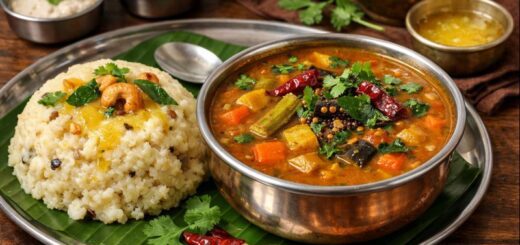
Sambar Recipe Without Tamarind: Easy Simple Sambar Recipe
Easy Simple Sambar Recipe Without Tamarind Home Cooking
Easy Simple Sambar Recipe Without Tamarind Home Cooking brings you a twist on the classic South Indian lentil stew, adapted for cooks who want tang and flavor without using tamarind. Traditionally, sambhar (or sambar) is known for its tangy tamarind broth and is a staple in homes across South India as well as served with rice, idli, dosa, and vada. According to culinary references, sambar is a spiced lentil and vegetable stew which traditionally includes tamarind, lentils, vegetables and sambar powder to create its characteristic taste and aroma. Sambar (dish) – Wikipedia plays an important role in traditional meals and modern homes alike. Yet, this version eliminates tamarind and substitutes other natural souring elements to suit dietary preferences without compromising nutrition or taste.
Recipe Card
| Prep Time | 15 mins |
|---|---|
| Cook Time | 40 mins |
| Servings | 4 bowls |
| Difficulty | Easy |
Ingredients With Exact Quantities
- Toor dal (split pigeon peas) – 1 cup (200 g)
- Water – 4 cups (for cooking & gravy)
- Mixed vegetables (drumstick, carrot, pumpkin) – 2 cups (300 g)
- Onion (medium, sliced) – 1
- Green chili (slit) – 1
- Sambar powder – 2 tbsp
- Turmeric powder – ½ tsp
- Asafoetida (hing) – ¼ tsp
- Salt – 1½ tsp (adjust to taste)
- Oil – 2 tbsp (vegetable or coconut oil)
- Mustard seeds – 1 tsp
- Cumin seeds – ½ tsp
- Curry leaves – 10–12 leaves
- Lime juice – 1 tbsp (for tang)
- Jaggery (optional, natural sweetener) – 1 tsp
- Coriander leaves (fresh, chopped) – 2 tbsp
Step-by-Step Instructions
1. Prepare The Dal (15 mins)
Wash the toor dal thoroughly under running water until the water runs clear. Transfer it to a pressure cooker and add 2½ cups of water, turmeric powder and a pinch of salt. Cook until the dal is soft and mushy (approximately 3–4 whistles or about 10–12 minutes on medium heat). Mash the dal well with a ladle once cooked and set aside.
2. Cook Vegetables (10 mins)
While the dal is cooking, heat 1 tbsp oil in a deep pan. Add the sliced onions and green chili. Sauté on medium flame for 2 mins until slightly soft. Add the mixed vegetables and stir well. Pour 1½ cups of water, add salt, and cook for 8–10 mins until the vegetables are tender. Understanding Sambar Recipe Without Tamarind is essential.
3. Combine Dal And Veggies (5 mins)
Once the vegetables are soft, add the cooked and mashed dal to the pan. Stir in the sambar powder and asafoetida, mixing until there are no lumps. Add extra water if needed to reach your desired consistency (sambar is usually slightly watery).
4. Season And Souring (5 mins)
For tang, sprinkle 1 tbsp of fresh lime juice into the simmering sambar. If you prefer a hint of balanced sweet-tang, stir in 1 tsp jaggery. Adjust salt and spice to taste. Let simmer for another 3–5 mins on low flame.
5. Tempering (Tadka) Finish (5 mins)
In a small pan, heat the remaining 1 tbsp oil. Add mustard seeds and wait for them to pop. Add cumin seeds and curry leaves, then quickly pour this tempering over the simmering sambar. Give it a good stir, and garnish with fresh coriander leaves before serving. This relates to Sambar Recipe Without Tamarind.
Pro Tips From My Kitchen
When I visited a friend’s home in Chennai, I noticed many cooks use fresh kokum or tamarind paste interchangeably to bring tanginess. But for this *easy simple sambar recipe without tamarind home cooking*, I personally recommend lime juice or a dash of raw mango pieces when in season — they give bright flavor without overpowering the dish.
What surprised me most was how well the balanced spices and vegetables make up for the missing tamarind tang; the trick is to not overcook the dal and maintain a slight bite in your vegetables.
Furthermore, for busy weekday meals, you can partially prepare the dal ahead of time and refrigerate it — it keeps for up to 24 hours. Learn more about Sambar Recipe Without Tamarind.
Chef’s Notes
Ingredient Substitutions
If you don’t have toor dal, you can use moong dal or a mix of toor and masoor dal. Coconut milk (¼ cup) adds creaminess if you prefer richer texture. If lime juice is not preferred, a small piece (about 1 inch) of raw mango during vegetable cooking adds a lovely natural sourness.
Storage Tips
Leftover sambar can be stored in an airtight container in the refrigerator for up to 3 days. Reheat on the stovetop with a splash of water to loosen up the consistency. Freezing is possible for up to a month, but note that vegetables may soften further when thawed.
Nutrition Information Per Serving (Approximate)
| Calories | 150–180 kcal |
|---|---|
| Protein | 6–8 g |
| Carbohydrates | 18–25 g |
| Fat | 4–6 g |
| Fiber | 4–5 g |
Based on nutrition data for a typical sambar serving, which provides approximately 150 calories per bowl with balanced protein from lentils and fiber from vegetables.
Frequently Asked Questions
Can I make this sambar without lime juice?
Yes — you can use raw mango pieces while cooking the vegetables to impart natural tanginess without using tamarind or lime.
Is this recipe healthy?
Absolutely. This sambar version is rich in plant-based protein, dietary fiber, and low in fat. Lentils also offer essential nutrients such as iron and slow-digesting carbohydrates.
What do I serve with this sambar?
This makes a perfect side for steamed rice, idli, dosa, or even chapati. Pairing it with idli adds wholesome breakfast or lunch comfort.
Before mastering the tamarind-based traditional sambar, this recipe serves as a fantastic introduction to South Indian flavors with simplicity and accessibility for any home cook.